



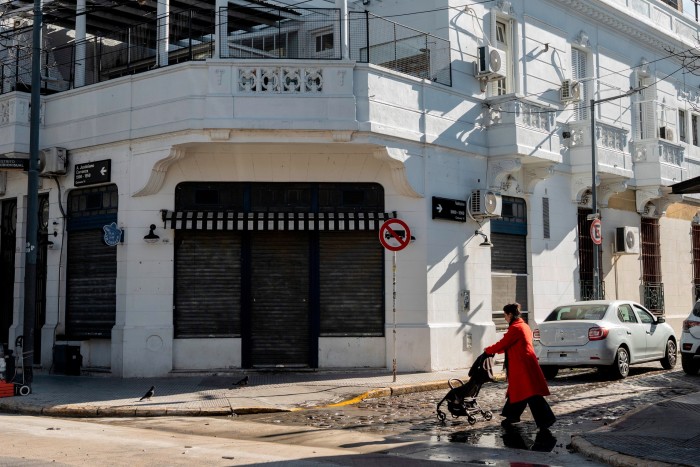
Ya Cabrón, a gourmet taco restaurant in Buenos Aires, saw its best days during Argentina’s worst inflation crisis in late 2023.
With prices rising rapidly, local residents rushed to spend on rapidly declining wages, while the weak peso attracted record numbers of tourists. The small restaurant in the chic Palermo neighborhood served 60 customers a day during a citywide gastronomic boom.
But Ya Cabrón has since become an unlikely victim of President Javier Milei’s success in stabilizing the economy.
As monthly inflation fell from 25.5 percent in December 2023 to about 2 percent this year, consumers cut back on short-term spending. In June, Ya Cabrón closed its doors due to declining demand, alongside a crowd of trendy eateries in the city.
“We tried everything, but it was just unsustainable,” says manager Nicolás Molano. “The last two months we were serving maybe fifteen people a day, sometimes one table.”
The restaurant’s plight reflects the dramatic transformation of Argentina’s economy under Milei’s two-year austerity program.
The slowdown in inflation has allowed many to borrow and save for big purchases, with sales of electronic devices rising nearly 400 percent in the first half of 2025 compared to the first half of 2023, the national statistics agency said.

But there is also widespread pain. Millions have cut back on spending as wages fell in real terms and energy and transport subsidies were cut. Three-quarters of Argentinians said in a survey in March that they had limited eating out.
Although GDP is on track to grow 4.5 percent in 2025, according to the IMF, activity peaked in May and has contracted since.
“People no longer feel like their money is burning in their pockets… but they don’t feel like they have more of it either,” says Sebastián Menescaldi, director of EcoGo consultancy in Buenos Aires.

Milei’s decision to dramatically strengthen the peso through various policy instruments has hit another major source of restaurant revenue: tourists. Argentina is now one of Latin America’s most expensive destinations and many are staying away.
“The stabilization was necessary for the country,” said Daniel Prieto, former president of the Buenos Aires Restaurant and Hotel Association. “But there is collateral damage, and our industry is one of the largest.”
According to the city government, restaurants in Buenos Aires served about 20 percent fewer people from July to September, compared to the same period in 2023 – just before Milei took office. While that was “not a collapse,” Prieto said, the average customer’s spending was also likely down, putting severe pressure on margins.
There are vineyards in the Mendoza wine region, Argentina’s other food and drink center reported a sharp decline in visitor numbers as the cost of a long weekend climbs into the thousands of dollars. As the peso strengthened, almost 62 percent more Argentines vacationed abroad in the first half of this year than last year, negatively impacting domestic tourism.
Argentina’s chronic inflation worsened after the coronavirus pandemic, when the previous government printed trillions of pesos to finance spending. From around 2022, the capital’s scene of mid-priced and upscale restaurants expanded rapidly as residents and tourists emerged from long lockdowns and the economy was flooded with cash.

These restaurants have been hit the hardest in recent months. “Margins have been destroyed,” said Marcelo Boer, owner of premium ceviche brands Barra Chalaca and La Mar and pizza chain Hells Pizza.
“Many did not expect such a big change in the economy when they opened, so now we have a surplus of places,” he added. “A large number are preparing to close.”
Boer said he had found locations available for a third of the normal rental price because of the closure.

Argentines are eating more affordable treats, meaning cheaper restaurants like pizzerias and diners are left relatively unscathed, industry leaders say.
But all restaurants have raised rates after the inflation crisis made labor, food and location costs extremely high, even as price pressures began to ease this year.
Fidel Pérez, owner of bars BierHof and Casa Seis, says suppliers had increased the cost of Patagonia local beer up to three times a month by 2024, pushing his menu price to nearly 11,000 pesos (then $9.30) for a glass earlier this year.
“It gets to a point where the customer won’t accept it anymore,” he said. Perez closed Casa Seis in August.

The average price of a strip steak and side dish in Buenos Aires increased from 7,200 pesos in September 2023 (then $9.40) to 30,500 pesos in September ($21.90), according to city government data.
Inflation has been eroding Argentinians’ purchasing power for a decade, and average incomes of civil servants, informal workers and poorer retirees remain well below where they were at early 2023, consultancy Equilibra says.
Meanwhile, visits by foreign tourists have fallen by a fifth in the first half of 2025 compared to the same period last year. official data shows.
Fogón, a steak restaurant popular with foreigners, has suffered a drop in customers of about 30 percent in recent months compared to last year, says owner Alex Pels.
“The last few years have been historic for tourism and restaurants, but it was a bit artificial,” says Pels. “The party was always going to end at some point.”
