A massive joint air campaign by the United States and Israel is dismantling Iran’s missile network in what officials and analysts describe as one of the most coordinated allied operations in modern warfare.
Secretary of War Pete Hegseth said the campaign is quickly establishing dominance over Iranian airspace.
“Starting last night and completing in a few days… the two most powerful air forces in the world will have full control of Iranian airspace,” Hegseth said on Wednesday. “Uncontested airspace.”
“We will fly all day, all night… fly over Tehran, fly over Iran, fly over their capital… Iranian leaders look up and see nothing but American and Israeli air power every minute of every day until we decide it’s over.”
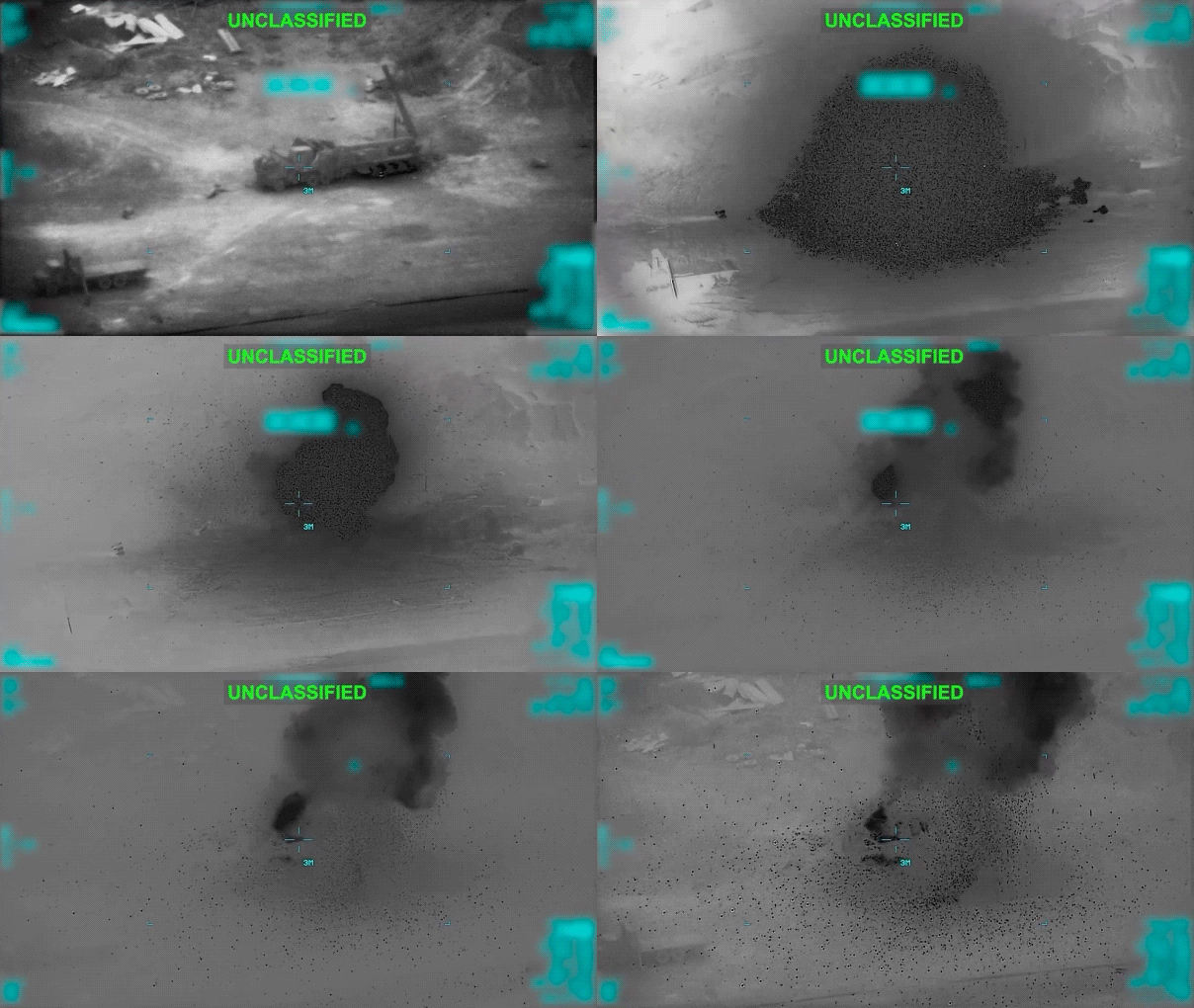
The US Central Command has released images of attacks on Iranian mobile missile launchers. (@CENTCOM via X)
“Israel matched the United States in the number of planes in the sky,” Spencer said. “For Israel, that represents roughly 80% of its air force capacity.”
He added that the level of coordination between Washington and Jerusalem represents a new model for allied warfare.
“This is not a separate work,” Spencer said. “This is combined work. Integrated, synchronized operations that combine forces.”
“In the past we’ve had coalitions of dozens of countries,” Spencer said. “But having a partner who is both willing and able to bring such tremendous capabilities is very rare.”
Largest Israeli air operation in history
The Israeli campaign, known as Operation Roaring Lion, began with approximately 200 fighter jets launching the largest coordinated air operation in the history of the Israeli Air Force.
According to the Israeli military, within the first 24 hours of the campaign, Israeli fighter jets had already opened a corridor allowing sustained operations over Tehran.
Israeli aircraft bombed missile launch sites and air defense systems in western and central Iran in an opening wave that targeted hundreds of sites simultaneously, using intelligence gathered by Israel’s Intelligence Directorate and the CIA.
During the joint operation, Israeli aircraft dropped hundreds of munitions on about 500 targets, including rocket launchers, command centers and air defense batteries.
According to the head of Israeli intelligence, Major General Shlomi Binder, the opening attack provided a level of surprise rarely seen in modern warfare.
“In 40 seconds we eliminated more than 40 of the most important people in Iran,” Binder said, referring to senior regime and military officials, including Iranian Supreme Leader Ali Khamenei. “We are sending a clear message to our enemies: there is no place where we will not find them.”
IRAN’S HIGH clerics ‘Exposed’ after build-up of strike in QOM, succession choice looms
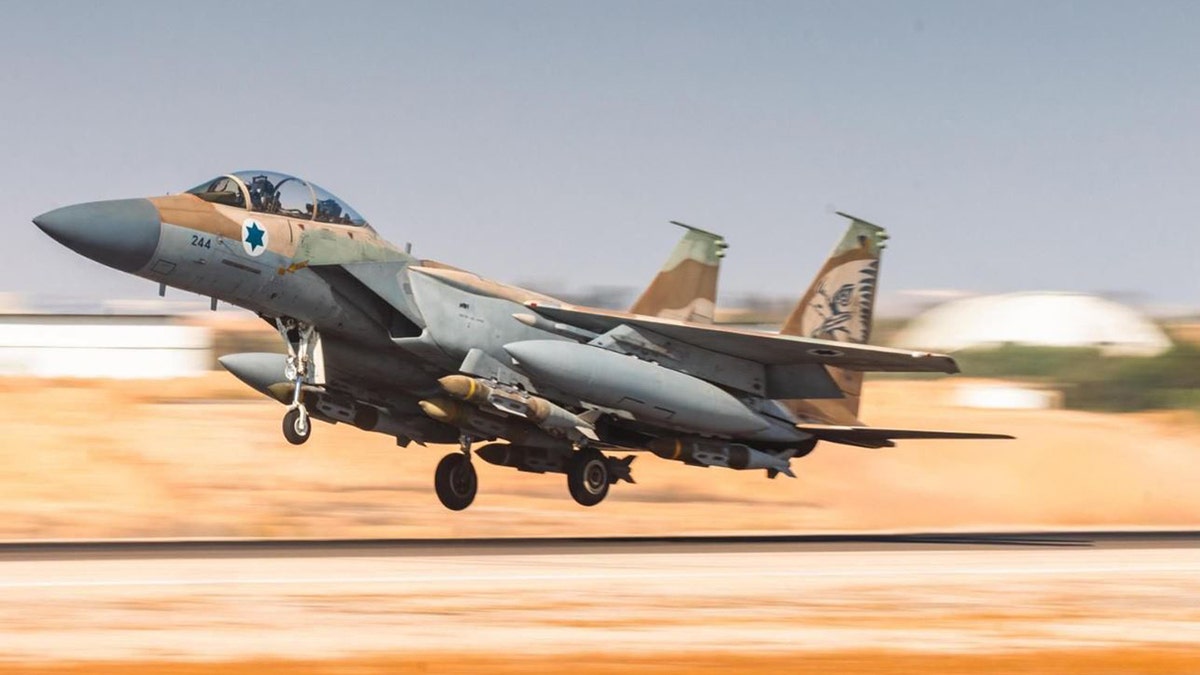
An Israeli fighter jet takes off to launch airstrikes against the Houthis in Yemen. (IDF)
Spencer said the strategy behind the opening attack represents a dramatic shift in modern warfare.
“What Israel did during this opening campaign was simply unthinkable in the history of war. It never happened,” he said. “To start by cutting off the brains… you usually target the military first. Here they targeted the political and military leaders and had the ability to wipe them out in a matter of hours.”
Spencer, a veteran of the 2003 Iraq War, said the operation reflects advances in intelligence and strike capabilities.
“I was part of the invasion in 2003,” he said. “Something like that was unthinkable even twenty years ago.”
Massive strike campaign
An IDF spokesman announced on Wednesday what he described as a historic milestone: an Israeli Air Force F-35 fighter jet shot down an Iranian aircraft. This is the first time anywhere in the world that an F-35 has downed a manned aircraft and the first time in 40 years that an Israeli aircraft has shot down an enemy aircraft in combat.
Since the start of the operation, Israeli aircraft have flown more than 1,600 missions and deployed more than 5,000 rounds of ammunition, according to figures released on Wednesday.
According to the IDF, the strikes destroyed approximately 300 rocket launchers and targeted more than 600 Iranian military infrastructure sites.
ISRAEL ASSISTS Iranian LEADERSHIP MEETING AND CHOOSE KHAMENEI SUCCESSOR
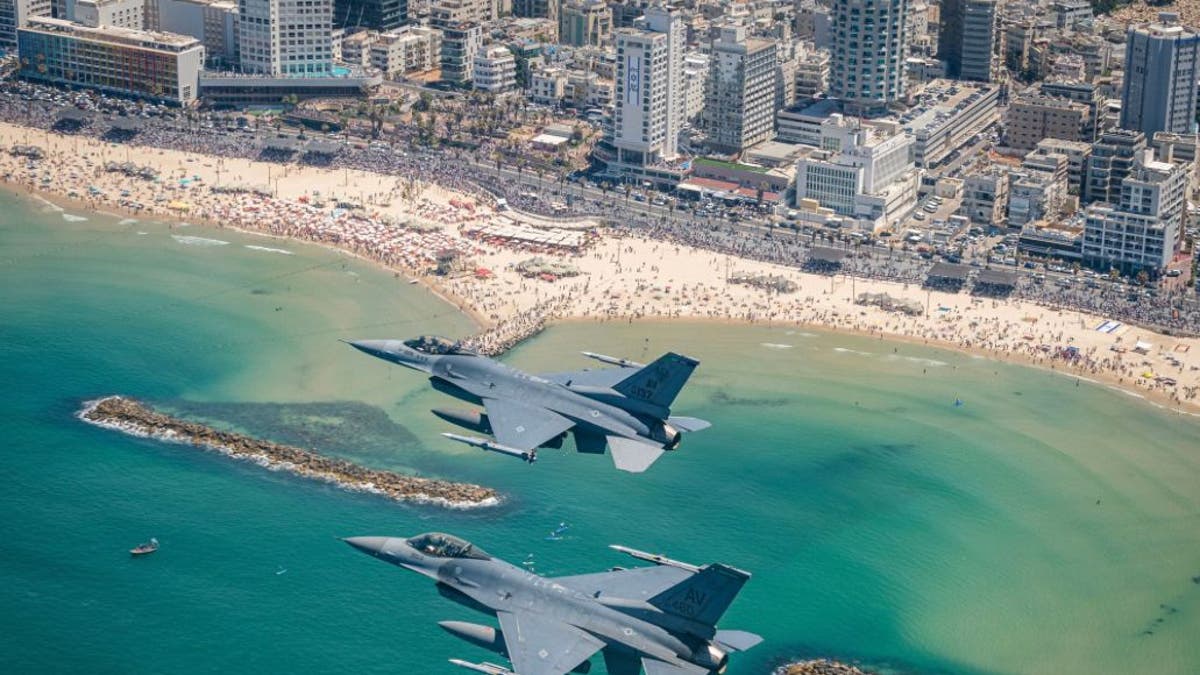
United States Air Force aircraft in a flyover commemorating Israel’s 75th Independence Day in May 2023. (IDF news agency)
Destroying Iran’s missile threat
Israeli intelligence assessments ahead of the operation showed that Iran was accelerating its production of ballistic missiles, with plans to reach 8,000 missiles by 2027. At the start of the campaign, Israel estimated that Iran possessed approximately 3,000 missiles.
According to the IDF, the strikes have already prevented the production of at least 1,500 ballistic missiles, while destroying hundreds already in Iran’s arsenal.
Israeli officials say the missile program posed a direct threat not only to Israel, but also to U.S. forces and allies in the region.
“The possession of missiles by a regime that openly declares its intention to destroy the State of Israel poses an existential threat,” the IDF said.
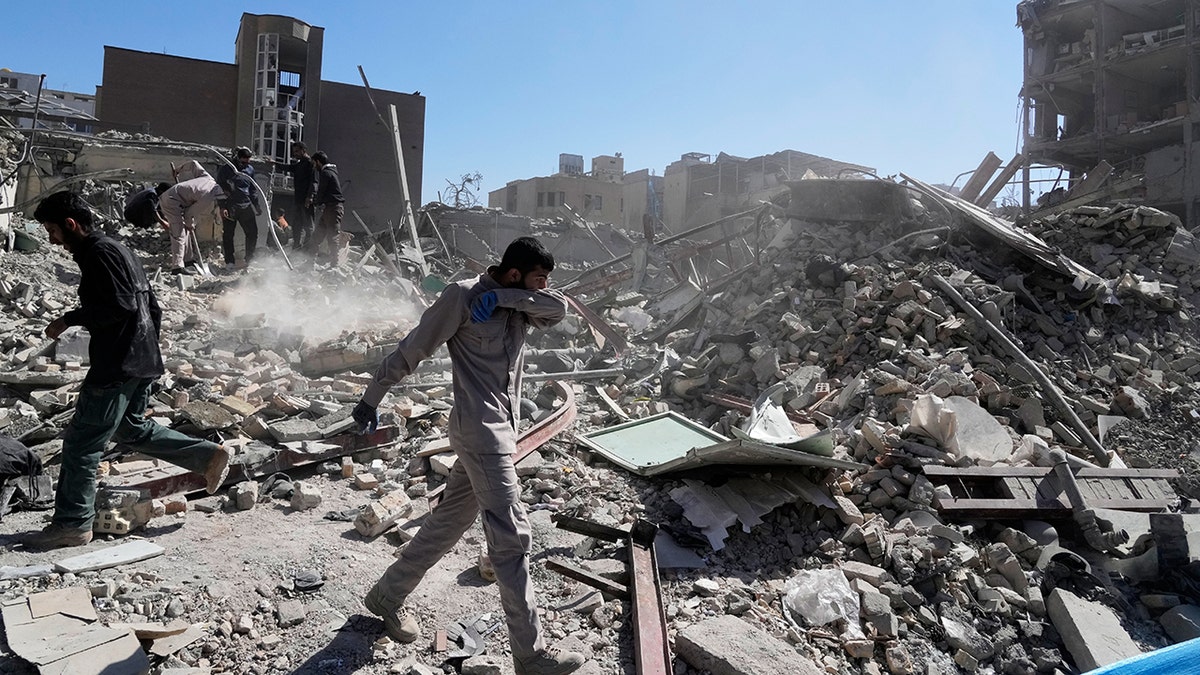
A group of men inspect the ruins of a police station that was hit Monday during the US-Israeli military campaign in Tehran, Iran, Tuesday, March 3, 2026. (Vahid Salemi/AP Photo)
Victims
Six U.S. service members were killed and several others were injured during Operation Epic Fury.
According to Israeli emergency services, thirteen civilians were killed and more than a thousand injured in Israel on Wednesday evening in Iranian missile and drone strikes launched in response to the operation.. The United Arab Emirates has reported three deaths and 68 injuries since the start of the war
Precise numbers of victims in Iran remain difficult to verify. According to media reports, dozens of senior Iranian commanders were killed in the opening phase of the campaign, along with additional military personnel and civilians following attacks on military facilities and infrastructure.
CLICK HERE TO DOWNLOAD THE FOX NEWS APP
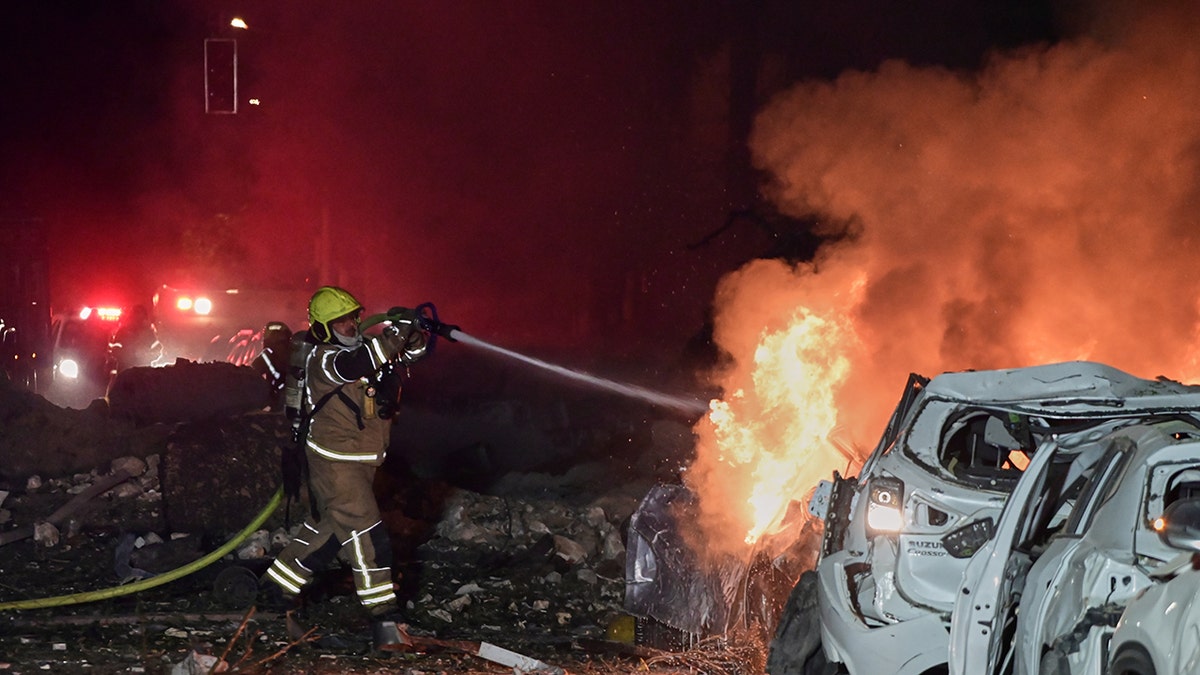
A firefighter tries to extinguish a burning car at the scene of a direct hit from an Iranian missile attack in Tel Aviv, Israel, February 28, 2026. (Tomer Neuberg/AP Photo)
Fight on multiple fronts
As the conflict spreads beyond Iran, Israeli forces have attacked more than 160 Hezbollah targets in southern Lebanon in recent days. To support the multi-front campaign, Israel has mobilized approximately 110,000 reservists.
“Wars are battles of wills,” Spencer said. “Iran’s strategy is to break the will of the United States and Israel to continue the operation. The question is whether they can withstand the pressure long enough to do that.”
Related article