



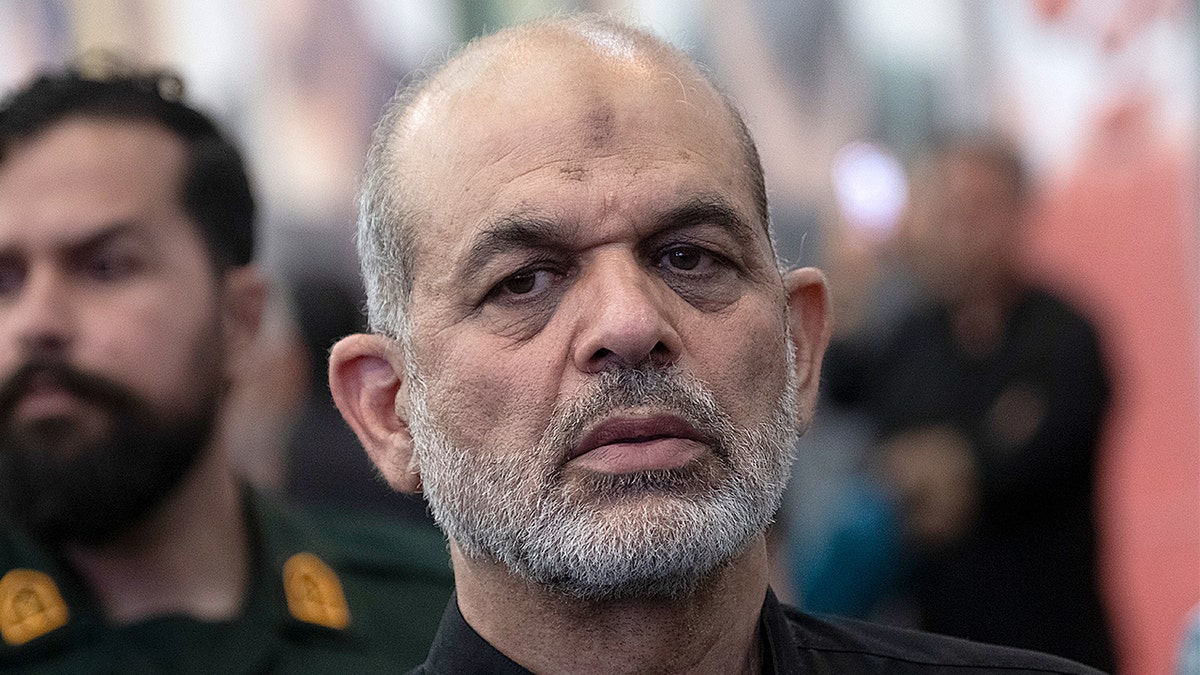
As President Donald Trump’s deadline for Iran to decide whether to extend the two-week ceasefire between the countries approaches, attention is increasingly turning not to Iran’s president, Masoud Pezeshkian, but to a shadowy Revolutionary Guard commander with a long record of terror, repression and hardline ideology.
Ahmad Vahidi, recently elevated to the top of the Islamic Revolutionary Guards Corps, the elite paramilitary force within the Iranian army, is emerging as one of the most powerful men in Iran and, according to analysts, one of the key figures likely to decide whether Tehran resumes fighting or continues talks.
“Adding someone with such a bloody and murderous record to the top of the Revolutionary Guards confirms that the regime is not backing down under pressure. On the contrary,” Daftari added, “it doubles the stakes of men whose careers have been built on hostage-taking, assassinations and domestic repression. Vahidi is considered a radical by any standard, even within the regime’s hardline elite, and his rise is a warning that Tehran’s war machine is now in charge.”
TRUMP’S APOCALYPTIC IRAN WARNING RAISES THE StakeS TO OVERCOME US STRIKE THREAT
Why it matters: Analysts say Vahidi’s rise could determine whether Iran moves toward peace or deeper conflict. For the US, this means greater risks to troops, allies and global stability as a hardliner with a history linked to terror networks now takes control in Iran.
Ahmad Vahidi, recently elevated to the top of the Islamic Revolutionary Guards Corps, the elite paramilitary force within the Iranian army, is emerging as one of the most powerful men in Iran. (Morteza Nikoubazl/NurPhoto)
Power increasingly concentrated outside formal institutions
Vahidi’s rise comes at a time when Iran’s formal political institutions appear weaker than ever.
Experts today describe the Islamic Republic as a system in which informal networks and personal relationships are more important than official titles.
Benham Ben Taleblu, a senior fellow at the Foundation for Defense of Democracies, described Iran as “a system of people, not laws, but a system whose success rested on institutionalizing their power,” where decisions increasingly flow through Revolutionary Guard figures rather than the civilian government.
Beni Sabti, an Iran expert at Israel’s Institute for National Security Studies, said Vahidi may now be even more influential than Parliamentary Speaker Mohammad Bagher Ghalibaf or even Supreme Leader Ali Khamenei’s son, Mojtaba Khamenei.
“In my opinion, he is more dominant at the moment, even though they are coordinated. This is not the time for internal competition,” Sabti said, adding that Vahidi is the only one to meet the new supreme leader in person.
VANCE ON WAY TO PAKISTAN FOR IRAN’S HIGH STATES SPEAKS AS ‘FRAGILE’ ARMS ARMED TEETERS
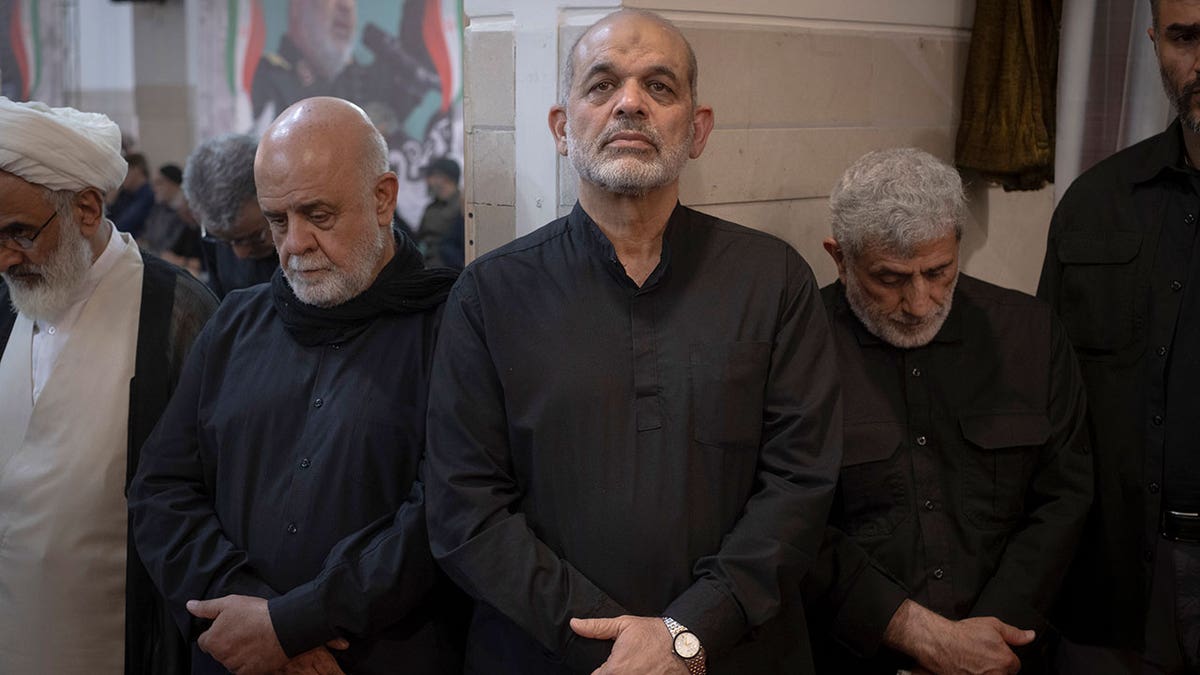
Ahmad Vahidi, commander of the Islamic Revolutionary Guard Corps Quds Force Esmail Qaani, and Iraj Masjedi, deputy coordinator of the Islamic Revolutionary Guard Corps (IRGC) Quds Force, take part in a ceremony in memory of former IRGC commander Hossein Salami, who was killed in Israeli attacks, at a mosque in an IRGC organization house complex in Tehran, Iran, July 25, 2025. (Morteza Nikoubazl/Nur photo)
He previously led the Quds Force before Qassem Soleimani
Long before the world knew the name Qassem Soleimani, Vahidi, the longtime commander of Iran’s elite Quds Force who was killed in a US drone strike in 2020, was among the men who helped build the infrastructure of Iran’s overseas terror operations.
He served as commander of the Quds Force in the 1990s, before Soleimani took over the elite unit responsible for foreign operations, covert actions and support for proxy groups.
Analysts say Vahidi played a central role in building Iran’s network of terrorist allies across the Middle East, especially in Lebanon.
Sabti said Vahidi was part of the original generation of Iranian operatives who forged ties with militant groups in Lebanon before and after the 1979 Islamic Revolution.
Some accounts suggest he trained in camps linked to Palestinian and Lebanese factions in southern Lebanon, helping to lay the foundation for Iran’s alliance with Hezbollah, the Iranian-backed terror group in Lebanon.
Vahidi has been linked by analysts and Western governments to some of the deadliest attacks carried out by Iranian-backed networks in the past four decades.
As commander of the Quds Force from 1988 to 1998, he was involved in the 1983 Beirut barracks bombing that killed 241 U.S. service members, the 1996 attack on the Khobar Towers in Saudi Arabia, and an attack on the U.S. Embassy in Yemen in 2008.
VANCE WARNS IRAN WILL FIND OUT TRUMP ‘IS NOT ONE TO MESS around’ IF LAUNDRY TEST DEAL FALLS OUT
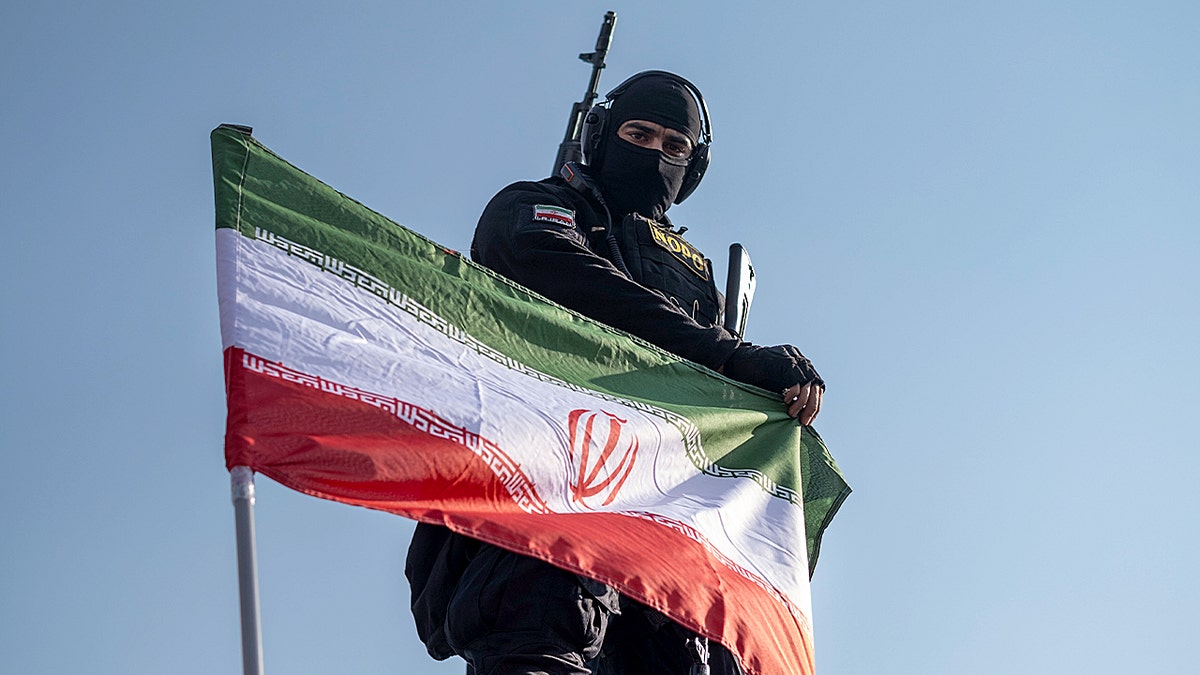
Iranian Supreme Leader Ayatollah Mojtaba Khamenei is receiving protection from the NOPO force after the assassination of his father during the US-Israeli attack on the complex in Tehran on February 28. (Morteza Nikoubazl/NurPhoto)
One of the world’s most wanted Iranian officials
Daftari noted that Vahidi “has been implicated by Argentine prosecutors in the 1994 bombing of the Jewish community center AMIA (Asociación Mutual Israelita Argentina) in Buenos Aires.” Eighty-five people were killed in the bombing.
Argentine investigators and courts have also linked Vahidi to the 1992 bombing of the Israeli embassy in Buenos Aires, although Interpol’s red alert against him relates specifically to his alleged role in the 1994 AMIA bombing.
In April, Argentina renewed its focus on him after President Javier Milei’s government designated the entire Islamic Revolutionary Guard Corps as a terrorist organization and singled out Vahidi by name.
In announcing the measure, the Argentine government said red notices are still in effect for several Iranian officials, “including former Defense Minister Ahmad Vahidi, who was recently appointed to lead the IRGC.”
Vahidi is facing multiple sanctions from both the United States and the European Union. The sanctions significantly limit his ability to travel, move money or do business internationally.
Washington first imposed sanctions on him in 2010 over ties to Iran’s nuclear and missile programs. Vahidi was redesignated in 2022 for being “an official of the Government of Iran who was responsible for, complicit in, or responsible for ordering, controlling, or otherwise directing the commission of serious human rights violations against persons in Iran or Iranian citizens or residents, or the relatives of the foregoing persons, on or after June 12, 2009, whether or not such violations occurred in Iran.”
He was redesignated by the United States in 2022 under Executive Order 13553 after the death of Mahsa Amini, when he served as Secretary of the Interior and oversaw the regime’s response to nationwide protests.
According to the U.S. Treasury Department, Vahidi was punished for orchestrating internet outages and directing Iran’s Law Enforcement Command, known as NAJA, during the crackdown.
The European Union first imposed sanctions on him in 2008, and imposed parallel sanctions in 2022 over the use of live ammunition, the arbitrary detention of protesters and journalists, and the violent repression of demonstrations.
Human rights groups accused Iranian authorities of using live fire, mass arrests and torture against protesters, resulting in more than 30,000 deaths.
Yigal Carmon, founder and chairman of the Middle East Media Research Institute (MEMRI), warned: “Under his leadership, more such crimes can be expected in the West against both Jews and non-Jews.”
PAKISTAN GENERAL SAYS IRAN DIPLOMACY STILL ALIVE DESPITE US BLOCKAGE, FAILED Talks
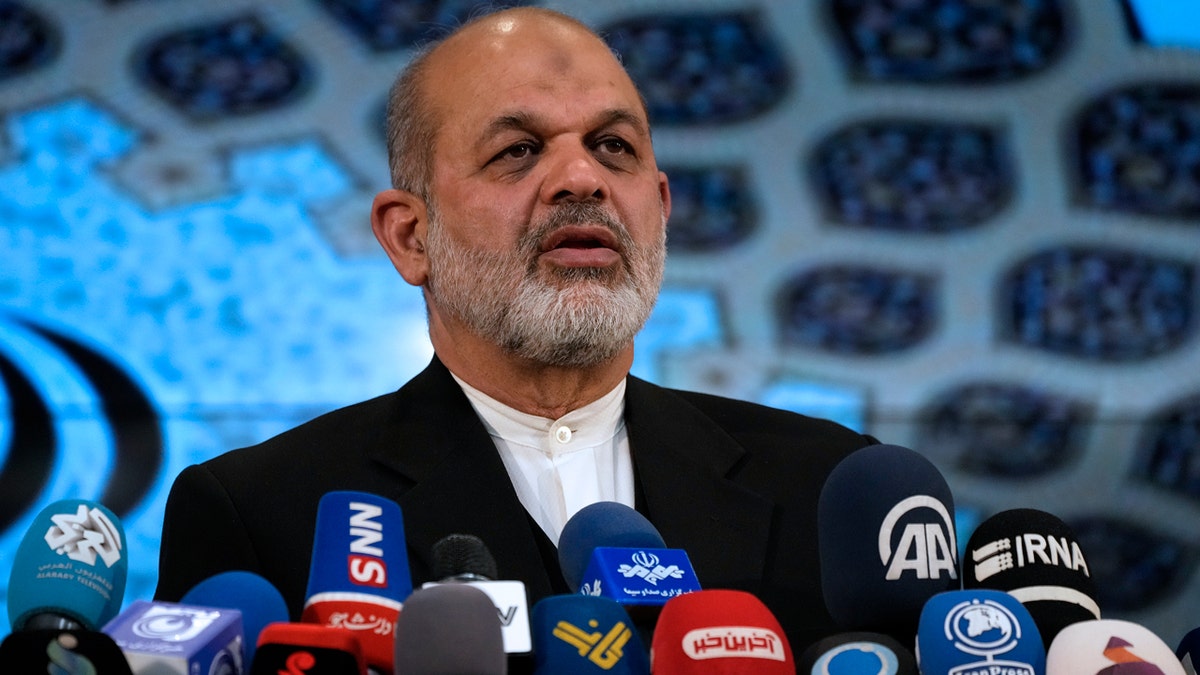
Iranian Interior Minister Ahmad Vahidi briefs the media on the elections in Tehran, Iran, March 4, 2024. Argentina requested Vahidi’s arrest on April 23, 2024 for his alleged involvement in the deadly 1994 bombing of the Jewish community center in Buenos Aires. (Vahid Salemi/AP)
Analysts say he represents the regime’s most radical faction
Experts say Vahidi is not just a hardliner, but one of the most extreme figures even within Iran’s already radical ruling elite.
Sabti warns that Vahidi’s growing influence could make Tehran less likely to agree to a real ceasefire.
“He is bringing even more radicalization into the system and may not want to stop the war because it serves the interests of the Revolutionary Guards to continue,” Sabti said.
One of the biggest concerns surrounding Vahidi is that even if Iran agrees to a ceasefire, he may only see it as an opportunity to regroup.
Those concerns have taken on new urgency as Trump’s deadline approaches.
CLICK HERE TO DOWNLOAD THE FOX NEWS APP
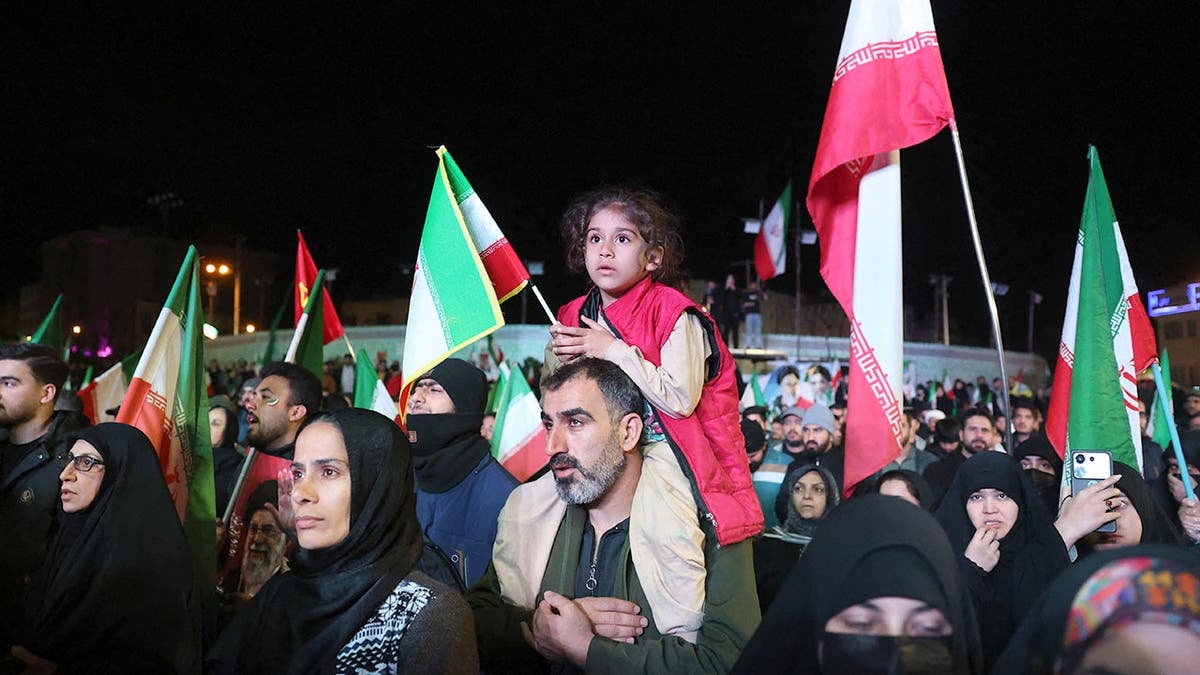
Iranians react after a ceasefire announcement in Tehran’s Enqelab Square, April 8, 2026. The United States and Iran agreed to a two-week ceasefire on Tuesday, just an hour before US President Donald Trump’s deadline to destroy the rival country was set to expire, with Tehran temporarily reopening the vital Strait of Hormuz. (AFP via Getty Images)
If Vahidi is indeed the man increasingly taking charge in Iran, analysts say the key question is not whether Iran wants a ceasefire, but whether the Revolutionary Guard commander believes continued confrontation better serves his interests.
Carmon said, “Trusting him is a serious mistake. He belongs to the hardline ‘DEATH TO AMERICA’ squad.’
Iran’s mission to the United Nations declined to comment.
