



Germany is facing a sharp rise in anti-Semitism, with officials warning that Islamist and left-wing extremist networks are exploiting the war in the Middle East to spread anti-Jewish rhetoric, mobilize supporters and contribute to intimidation and violence against Jewish communities.
These groups are using the war between Israel and Hamas and broader regional tensions as a pretext to amplify anti-Semitic narratives, according to a study by the Hessian State Office for the Protection of the Constitution, which includes accusations of “genocide” in Gaza and portrays Israel as a colonial state, which language authorities say is increasingly used to justify hostility and, in some cases, violence against Jews.
German Interior Minister Roman Poseck warned that the trend is escalating.
CALLS ON US TO DO MORE AS ANTI-SEMITIC ACTS STILL INCREASE IN EUROPE: ‘EXTREMELY PAINFUL’
“Anti-Semitism is one of the greatest threats to our social cohesion – especially from Islamism and the left-wing extremist spectrum,” Poseck said in a statement.
The developments are raising broader concerns outside Germany, as officials and Jewish leaders warn that similar patterns of anti-Semitic rhetoric linked to conflicts in the Middle East are emerging in Western democracies including the United States. With Germany long seen as a bellwether for its history and legal framework surrounding hate speech, the findings are seen as a warning sign of how extremist narratives can move from the margins into mainstream discourse.
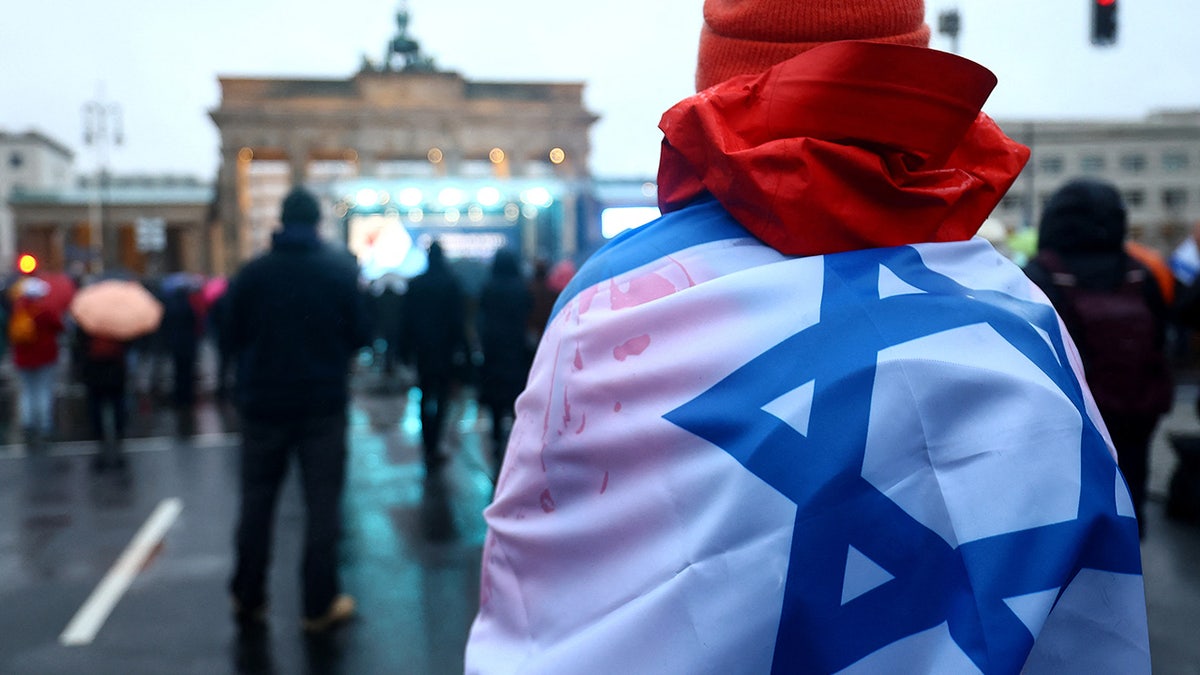
A person carries an Israeli flag during a protest against anti-Semitism at the Brandenburg Gate, amid the ongoing conflict between Israel and the Palestinian Islamist group Hamas, in Berlin, Germany, December 10, 2023. (Lisi Niesner/Reuters)
Poseck, who commissioned the report from the Hessian State Office for the Protection of the Constitution, warned of a deteriorating social climate and said that “anti-Semitic feelings are becoming increasingly unbearable, even in public spaces.”
“I am deeply ashamed of what the Jews of Germany have to endure eighty years after the end of the Second World War,” he continued. “We Germans in particular bear a lasting responsibility never to forget what happened.”
US ally warns another anti-Semitic attack is highly likely within the next six months
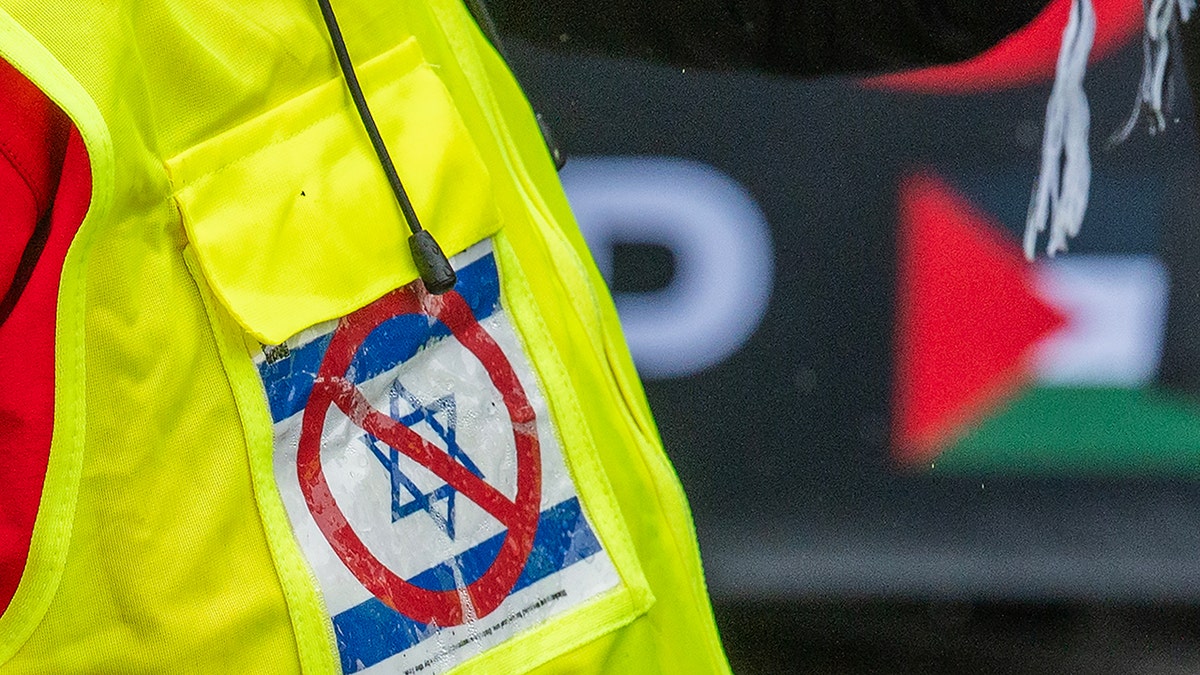
An anti-Israel protester wears a hi-vis jacket during a march near the Sydney Harbor Bridge in Australia in August 2025. (Ayush Kumar/SOPA Images/LightRocket)
Forty-six of 102 Jewish communities surveyed in Germany reported anti-Semitic incidents, underscoring the growing scale of the threat, a new nationwide threat. report found by the Central Council of Jews in Germany.
Among the most common incidents identified in the Central Council investigation were verbal abuse, threatening phone calls, vandalism and anti-Semitic graffiti. Sixty-eight percent of respondents said they feel less safe in Germany since the October 7, 2023 Hamas-led attack on Israel.
“After the explosive rise in anti-Semitism after October 7, a ‘new normal’ has emerged,” Central Council Chairman Josef Schuster said in the press statement. “A situation where Jewish communities need constant protection and anti-Semitism has become normalized as part of the public sphere.”
The report also shows that broader geopolitical developments continue to have a direct impact on Germany’s Jewish communities. Sixty-two percent of respondents said their sense of insecurity has worsened after the recent war against Iran, while two-thirds said a ceasefire in Gaza has not improved their security.
RECORD ANTI-SEMITIC INCIDENTS IN CANADA BREEDS CRITICISM OF CARNEY GOVERNMENT RESPONSE
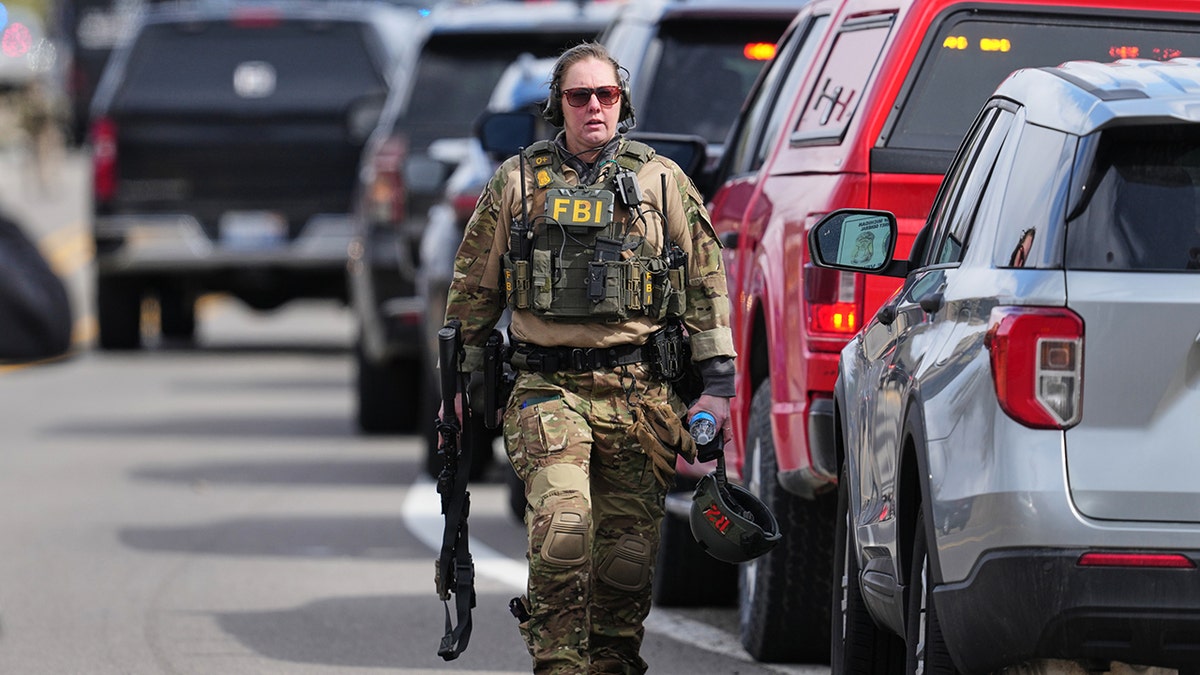
Law enforcement officers respond to a call at the Temple Israel Synagogue in West Bloomfield Township, Michigan, on March 12, 2026. (Paul Sancya/AP)
Jewish leaders say the consequences are felt in everyday life. Many Jews increasingly avoid visible signs of their identity, such as wearing a Star of David, a yarmulke or a Jewish skullcap, for fear of harassment. In some cases, communities have canceled events due to safety concerns.
At the same time, the report highlights a sharp decline in perceived social support. Only 35% of communities said they felt solidarity with broader civil society, down from 62% in 2023.
Officials say the normalization of such rhetoric pushes the boundaries of acceptable public discourse.
CLICK HERE TO DOWNLOAD THE FOX NEWS APP
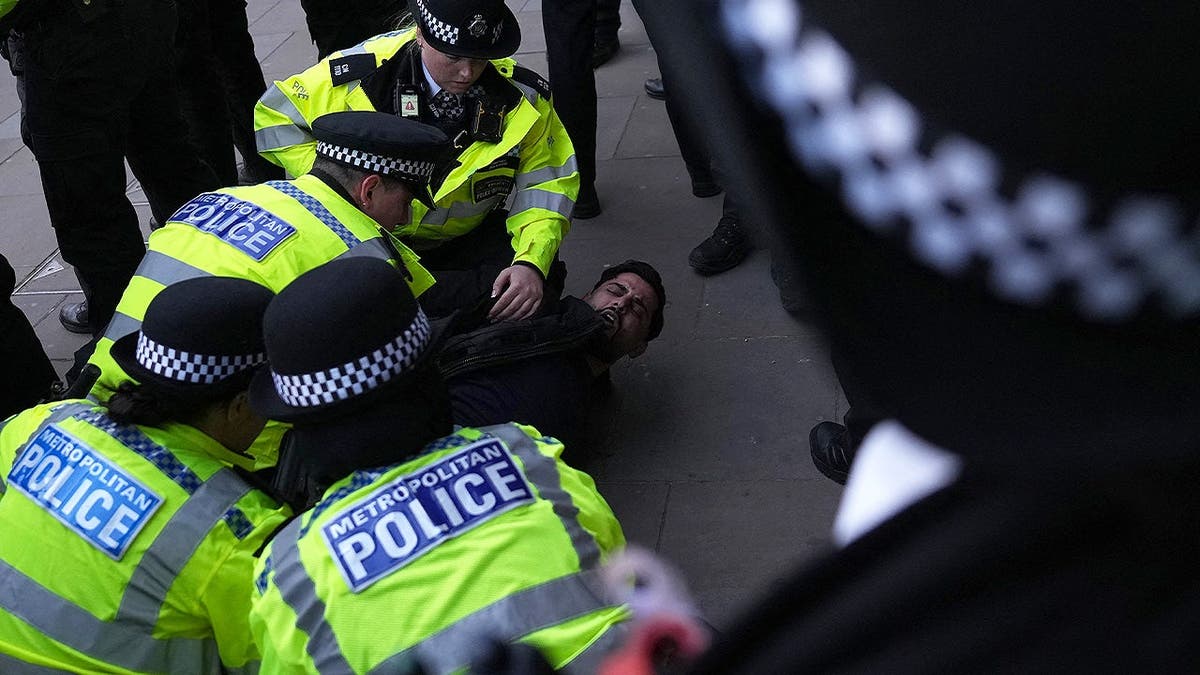
Police arrest a protester at a rally organized by the Campaign Against Antisemitism, opposite Downing Street in central London on April 30, 2026, after the stabbing of two Jewish men the day before in the Golders Green area of north London. (CARLOS JASSO/AFP via Getty Images)
The findings underscore growing concerns that anti-Semitism, once seen as confined to the margins, is becoming increasingly visible in public life, leaving Jewish communities feeling increasingly isolated and threatened.
