



The Shire.
That’s where I grew up, the American equivalent of the Shire. The name is Warren, Ohio, and any other place like it in the US. The American Shire was the setting for television’s “The Wonder Years,” and its children were loosely patrolled — though we didn’t know it — because FDR and the Greatest Generation had made that blanket of security possible for a time.
My part of the Shire allowed very little sound from the much larger, much more dangerous world to interrupt its remarkable tranquility. My father had gone to war with his two brothers to faraway places, but, as the cliché goes, “they honestly didn’t talk about it” and they certainly didn’t want to relive it or let their children know what war was actually like.
HOW THE TRUMP TEAM EJECTED THE LEGACY OF GREAT 1960s RADICALS AND THEIR SPIRITUAL HEIRS
“Vietnam” passed by our family and those of our friends because Richard Nixon ended the draft and took home the half million Americans at war there in 1969 when he took over from LBJ and JFK, who had sent them to Southeast Asia. My cousin was at Kent State that terrible day, and our neighbor is on the infamous cover of Time Magazine. That was as close as I got to reality. The echoes of civil unrest were in the air, and the civil rights riots even reached abolitionist lands in northeastern Ohio. Yet my teachers would do their best to talk about communism and the world, but only a handful of them really “got it.” And the veterans among them would rather burn their hands on a stove than talk about the Great War or the Korean War.
It was a real Tolkien shire, as was most of the United States, with the exception of the families who actually fought in Vietnam. Not the protesters and the Woodstock partiers, but the families who worried about their sons in battle and especially those who bled and died there.
(This was not the case for my wife’s family and a small percentage of other American families—the “Warrior class” that had been “Born Fighting,” as former Senator and author James Webb so aptly described them. My wife’s mother, sister, and brother had lost their husbands and fathers when the destroyer he commanded, the Twiggs, was trapped and sunk by a kamikaze pilot during the Battle of Okinawa. My brother-in-law went from Annapolis to the Marines’ Basic School and then to the jungles of Vietnam and returned a second time as a ‘Covan’ in time for the ‘Easter Offensive’ even as Richard Nixon had reduced our forces to a very low level. There were two Americas in the 1970s fighting the USSR and its allies at the tip of the spear, and everyone else.)
So college in the second half of the 1970s had nothing more dangerous than disco to worry about. The SDS quickly faded away – the original cosplayers. Once their future was secure, they settled into a comfortable life and looked for steady employment.
But some voices then worked even harder than others—around the clock, in fact—to warn naive Americans about evil in the world. William F. Buckley, of course, and such outstanding professors as Edward Banfield, Harvey Mansfield, and James Q. Wilson, to name three who knew the state of affairs at Harvard. There were hundreds of other serious men and women teaching in those years. Many of the sports legends of that era—Ted Williams, manager of the Washington Senators, for example—had fought in real wars (plural), not baseball battles or gridiron battles. They knew it too. But the collective agreement not to talk about evil in the world stifled much of the news and debate about the real conflicts of the post-Vietnam era.
But for me, who had cut my teeth on “One Day In the Life of Ivan Denisovich” when my eldest brother brought it home from college, there was Commentary Magazine and its editor, Norman Podhoretz. Throughout high school, National Review and Sports Illustrated had been my questions at Christmas. In college I added Commentary.
Commentary has never been a part of my intellectual life since I learned it in college. By the time Jeanne Kirkpatrick published “Dictators and Double Standards” in 1979, I had been reading and learning from the magazine’s intellectual equivalents of the 1927 Yankees for years.
The year after Kirkpatrick dropped her truth bomb, the editor of Commentary published a memoir, “Breaking Ranks,” that finally put the puzzle together. How much the Hobbits didn’t know about the intellectual battles in post-World War II America.
CLICK HERE FOR MORE FOX NEWS ADVICE
That editor/author was Norman Podhoretz, and in that book he laid out that ideas mattered in the real world, that they had to be fought for, that communism was evil and could be contained and even defeated, and—something the ever-cheerful Buckley never quite explained, but Podhoretz did—ideological debates could be fierce, that is, actual, heated discussions—not dorm room debates—and it was worth losing friends for, even good friends. Ideas mattered because those ideas were about how countries would choose to live – or die.
CLICK HERE TO DOWNLOAD THE FOX NEWS APP
Ultimately, I would be fortunate enough to interview, but not meet, Norman Podhoretz and his remarkable wife Midge Decter. Their son John now runs Commentary and has kept the company afloat with the help of a new generation of intellectual heavyweights, charting a fraught course through difficult times, especially in this Trump era, even if it costs friends, even if you may be booed for pointing out that “Midnight Hammer” was the real deal and 45-47 pulled it off, as did the U.S. Embassy in Jerusalem, while many others promised but didn’t deliver, and still others simply felt withdrew from reality.
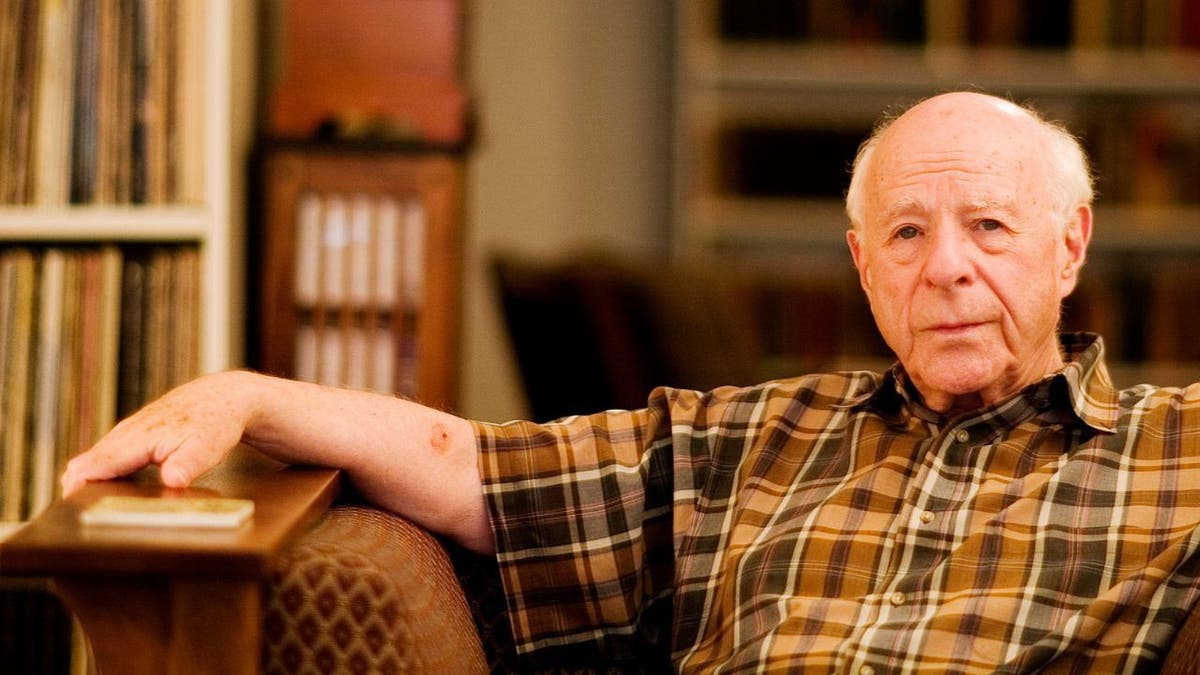
Some Americans will look up at the announcement of Norman Podhoretz’s death and have no idea what he meant. It may or may not be true that “no Podhoretz, no President Reagan,” but that it may be true is enough to say: what a great American Norman Podhoretz was.
CLICK HERE TO BY HUGH HEWITT
