




The first time I asked a room full of Jewish teenagers if they were dealing with anti-Semitism, not a single hand went up.
It was just weeks after October 7, a time when Jewish students across America were being harassed, yelled at, and targeted simply because of who they were. I was asked to “take the temperature” of anti-Semitism in both public and private schools in Atlanta. As someone who meets more Jewish teens than anyone else in the region (more than 4,142 students last year through our Jewish Student Union (JSU) programs), I expected to hear stories of fear, anger, and isolation.
“No,” they said. “We don’t really deal with anti-Semitism.”
At first I was relieved. Maybe Atlanta was different. Perhaps our teenagers were somehow protected from the wave of hatred sweeping the country. But then I asked another question.
ANTISEMITISM: FACE. FIGHT IT. Finish it
Anti-Israel protesters burn an American flag, on the day of Israeli Prime Minister Benjamin Netanyahu’s speech to a joint session of Congress, on Capitol Hill in Washington, US, July 24, 2024. (Nathan Howard/Reuters)
“How many of you have ever heard someone make a Jewish joke at your expense?”
Every hand went up.
“How many of you have heard someone talk about Jews and money, or say that Jews control the media?”
Every hand went up again.
“How many of you have had someone say something negative about Israel or about Jews because of Israel?”
Every hand.
Then I realized something far more alarming than overt hatred: Our teenagers no longer recognize anti-Semitism when they experience it.
SIGN UP FOR THE NEWSLETTER ON ANTISEMITISM

Columbia University students participate in an anti-Israel and pro-Palestinian protest. (Spencer Platt/Getty Images)
The new normal of hate
What does it mean when a generation of Jewish youth believes that being mocked, criticized or attacked because of their Jewish identity is just part of life? It means that anti-Semitism has become so pervasive, so embedded in the social fabric of our schools and online spaces, that it no longer registers as abnormal.
It means conditioning the next generation to feel not outrage but resignation.
Today’s Jewish teens are growing up in an environment where old stereotypes are recycled as humor, where anti-Israel chants are broadcast via TikTok, and where classmates repeat hateful slogans without understanding their origins. This steady drumbeat of bias has numbed our youth to what is happening around them.
When anti-Semitism no longer shocks us, it begins to define us.
The silent erosion of identity
In conversations with teenagers I have heard things that were unthinkable just a few years ago. Some have asked me, “Can we take the word Jewish out of the name of our club? It offends people who hate Israel.” Others have wondered, “Can we talk about something other than Jewish topics at our meetings? It makes people uncomfortable.”
These requests are not born of apathy; they come from exhaustion. From a generation so accustomed to hostility that their survival strategy is to hide in plain sight.

Hundreds of students protest outside the Palestine Solidarity Encampment on the UCLA campus in Los Angeles on Wednesday, May 1, 2024. (Keith Birmingham/MediaNews Group/Pasadena Star-News via Getty Images)
CLICK HERE FOR MORE FOX NEWS ADVICE
But the real offense isn’t the name “Jewish Student Union.” The real insult is the idea that a Jewish teenager should ever feel the need to erase their identity to make it easier for others.
The stakes couldn’t be higher
If Jewish teens accept anti-Semitism as “normal,” then we as a community have failed to teach them what is not normal. The normalization of hate is how hate spreads unchecked. It erodes self-esteem, weakens solidarity and invites escalation.
The crisis is not just anti-Semitism itself; it is the insensitivity to it.
That’s why our work at JSU is more important than ever. We meet teens where they are, in their schools, cafeterias and friend groups, and help them rediscover pride in who they are. We teach them not only to recognize anti-Semitism, but also to respond with dignity and knowledge. We remind them that being Jewish is something to be embraced and not hidden.
Our teens need to be proud of who they are as Jews and confident in recognizing when that identity is under attack. Because if we don’t help our teens define what anti-Semitism is, the world will define it for them, or worse, convince them it doesn’t exist.
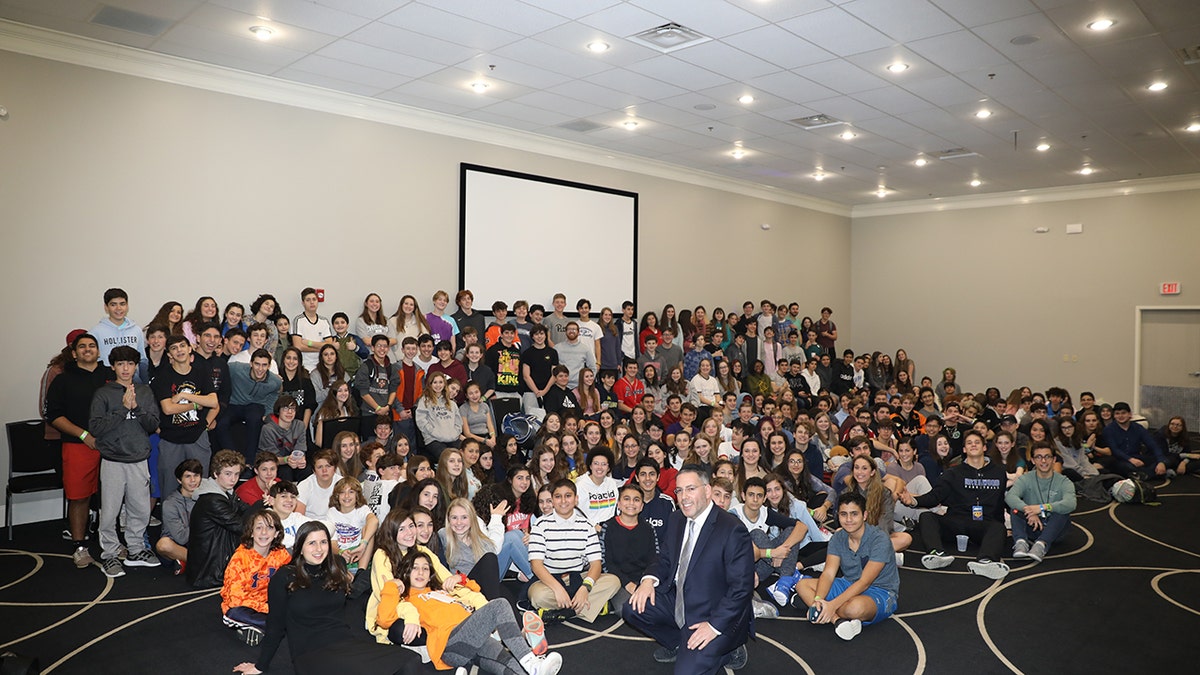
Rabbi Chaim Neiditch with a group of students in Atlanta, Georgia. (Rabbi Chaim Neiditch)
A call for awareness
Parents, educators and community leaders must take action. We cannot assume that our children “know” what anti-Semitism looks like, nor can we trust that schools will address it adequately. We need to have the hard conversations, teach our history, and create spaces where Jewish teens feel proud and supported, not silenced or alone.
After October 7, we saw how quickly age-old hatreds resurfaced. But we also saw how powerful Jewish resilience can be. That same power must be passed on to our teenagers, not through fear, but through pride.
CLICK HERE TO DOWNLOAD THE FOX NEWS APP
The future of Jewish identity in America will not be shaped by those who hate us, but by whether our children have the courage and confidence to stand up as Jews, unapologetic and fearless.
Because the only thing more dangerous than anti-Semitism itself is a generation that no longer recognizes it.
