



President Donald Trump announced Thursday that Israel and Lebanon have agreed to a 10-day ceasefire effective at 5 p.m. Eastern Time, in what he described as a major step toward ending weeks of fighting between Israel and Hezbollah.
Trump said he had spoken separately with Lebanese President Joseph Aoun and Israeli Prime Minister Benjamin Netanyahu and that both sides had agreed to begin formal talks with the aim of reaching a broader peace deal.
“I just had excellent conversations with the highly respected President Joseph Aoun of Lebanon, and Prime Minister Bibi Netanyahu of Israel,” Trump wrote on Truth Social Thursday.
Trump said he has instructed Vice President J.D. Vance, Secretary of State Marco Rubio and Chairman of the Joint Chiefs of Staff Gen. Dan “Razin” Caine to work with both sides to achieve what he called a “lasting peace.”
IDF DISCOVERS HEZBOLLAH ARMS STASH AT LEBANON HOSPITAL
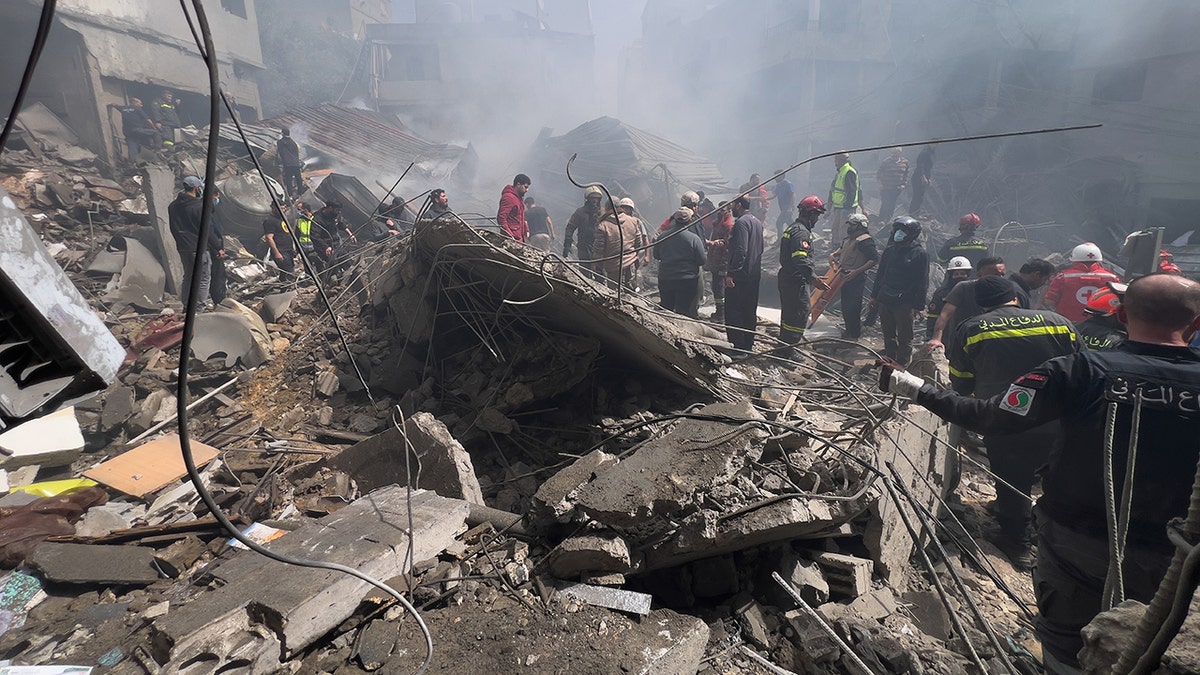
Rescue workers search for victims at the site of an Israeli airstrike that hit a busy neighborhood south of Beirut, Lebanon, on April 5, 2026. (Hussein Malla/AP Photo)
The president later said he plans to invite Netanyahu and Aoun to the White House for what he described as the first meaningful talks between Israel and Lebanon since 1983.
“Both sides want to see PEACE, and I believe it will happen soon!” Trump wrote.
The announcement came after days of intense US diplomacy and appeared to resolve an earlier dispute over whether Aoun would speak directly to Netanyahu.
“We’re trying to create a little breathing room,” Trump wrote on Truth Social Wednesday, adding that the leaders of Israel and Lebanon had not spoken in some 34 years and saying, “It will happen tomorrow.”
Earlier Thursday, Lebanese officials had insisted that Aoun not speak directly to Netanyahu until a ceasefire was reached.
Three Lebanese officials told Reuters that Aoun had no plans to speak with Netanyahu in the near future, and two of the officials said the Lebanese embassy in Washington had conveyed that position to the Trump administration before Aoun had a phone call with Rubio.
According to the official, many in Lebanon believed that the government had already started negotiations without getting anything in return, making a ceasefire a condition for any direct contact.
But shortly afterwards, the Lebanese presidency announced that Aoun had spoken directly to Trump.
According to the Lebanese presidency official X accountAoun thanked Trump for his efforts to broker a ceasefire in Lebanon and achieve what it described as lasting peace and stability that could pave the way for a broader regional peace process.
Aoun, who served as commander of Lebanon’s US-backed armed forces before becoming president in 2025, said an Israeli withdrawal from southern Lebanon would be a necessary first step before Lebanese forces could be fully deployed to the border area.
The diplomatic dispute comes as the White House pushes for a broader deal to end the regional war that erupted after the Iranian-backed terror group Hezbollah entered the conflict on March 2 in support of Iran.
Hezbollah’s intervention opened a new front in Lebanon, just fifteen months after the last major war between Israel and Hezbollah.
Pakistan, which helped mediate the April 8 ceasefire between Israel and Iran, said an end to the fighting in Lebanon is essential to preserving that agreement.
ISRAEL WARNS HEZBOLLAH ‘PLAYING WITH FIRE’ PRESSES LEBANON TO ACT ON ARMS PROMISE
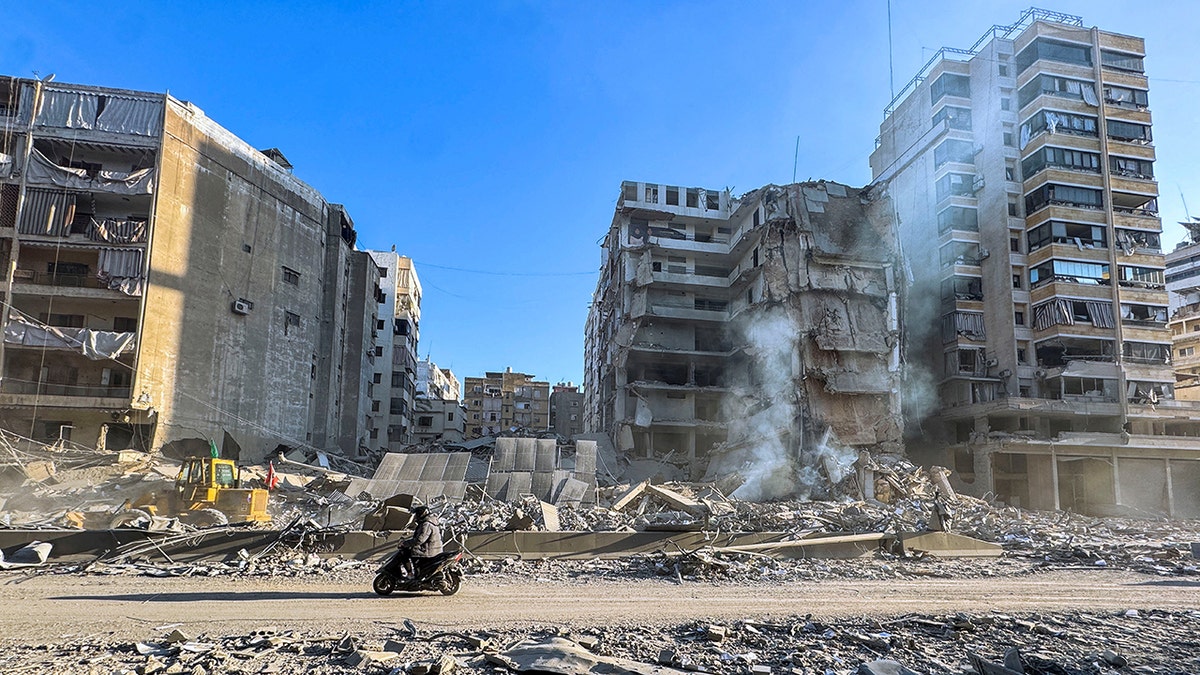
A damaged building after an Israeli attack, following renewed hostilities between Hezbollah and Israel amid the US-Israeli conflict with Iran, in Beirut, Lebanon, March 6, 2026. (Stringer/Reuters)
“Peace in Lebanon is essential for peace talks,” said Pakistani Foreign Ministry spokesman Tahir Andrabi.
According to Israeli media, the Israeli security cabinet met late on Wednesday to discuss a possible ceasefire in Lebanon.
Israeli officials have indicated they are open to negotiations, but they are also pushing for continued military operations until Hezbollah is driven from the border.
Israeli Minister Gila Gamliel told Israeli media that Netanyahu was expected to speak with Aoun for the first time after so many years of no contact between the two countries.
Israel and Lebanon are still formally at war and have had no direct contact between leaders in decades.
The latest US diplomatic effort follows a rare meeting Tuesday in Washington between Lebanese Ambassador Nada Hamadeh Moawad and Israeli Ambassador Yechiel Leiter.
These talks, held at the State Department under US mediation, were the first face-to-face talks between senior Israeli and Lebanese officials in more than three decades.
Yet the prospect of a direct call between Netanyahu and Aoun faces strong opposition within Lebanon.
Hezbollah, which has opposed any contact with Israel, remains publicly opposed to negotiations.
At the same time, the Lebanese government has increasingly distanced itself from Hezbollah since the terrorist group entered the war.
The Lebanese government formally banned Hezbollah’s military activities on March 2 and has spent the past year trying to disarm the Iran-backed group without sparking a wider civil conflict.
Meanwhile, fighting intensified in southern Lebanon on Thursday.
IRAN THREATENS TO END STRUGGLE OVER HEZBOLLAH’S EXCLUSION FROM WALK AGREEMENT
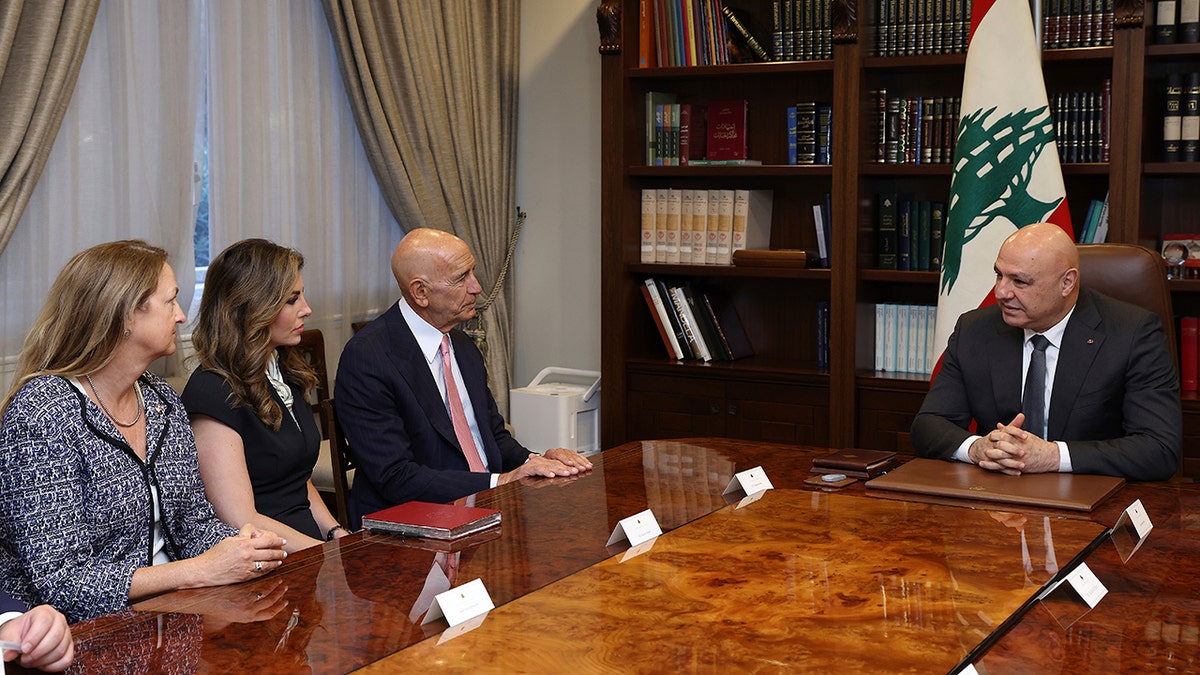
In this photo released by the Lebanese Presidency’s press service, Lebanese President Joseph Aoun, right, meets with U.S. Ambassador to Turkey and Special Envoy to Syria Tom Barrack, third from left, with U.S. Deputy Special Presidential Envoy for the Middle East Morgan Ortagus, second from left, and U.S. Ambassador to Lebanon Lisa A. Johnson, left, at the Presidential Palace in Baabda, east Beirut, Lebanon, Monday, August 18 2025. (Lebanese Presidency Press Service/AP)
Fighting continued around the border town of Bint Jbeil, Lebanon, a longtime stronghold of Hezbollah – an Iranian-backed terror group – which Israeli officials see as a key target in the current offensive.
Netanyahu said on Wednesday that Israeli forces were on the verge of “defeating” Hezbollah in Bint Jbeil.
He said that several kilometers inside Lebanon, Israeli forces are now taking up what the army calls “defensive lines” in positions intended to prevent Hezbollah gunmen and anti-tank units from again overlooking Israeli towns.
“We’re going to make sure we continue to reduce them,” Shoshani said.
Lebanese security officials also said an Israeli airstrike destroyed the last remaining bridge over the Litani River leading to southern Lebanon.
The attack effectively cut off almost a tenth of the country from the rest of Lebanon, after previous Israeli strikes destroyed other border crossings.
HEZBOLLAH AND IRAN LEAVE COORDINATED CLUSTER BOMB ATTACKS ON ISRAEL IN MAJOR ESCALATION
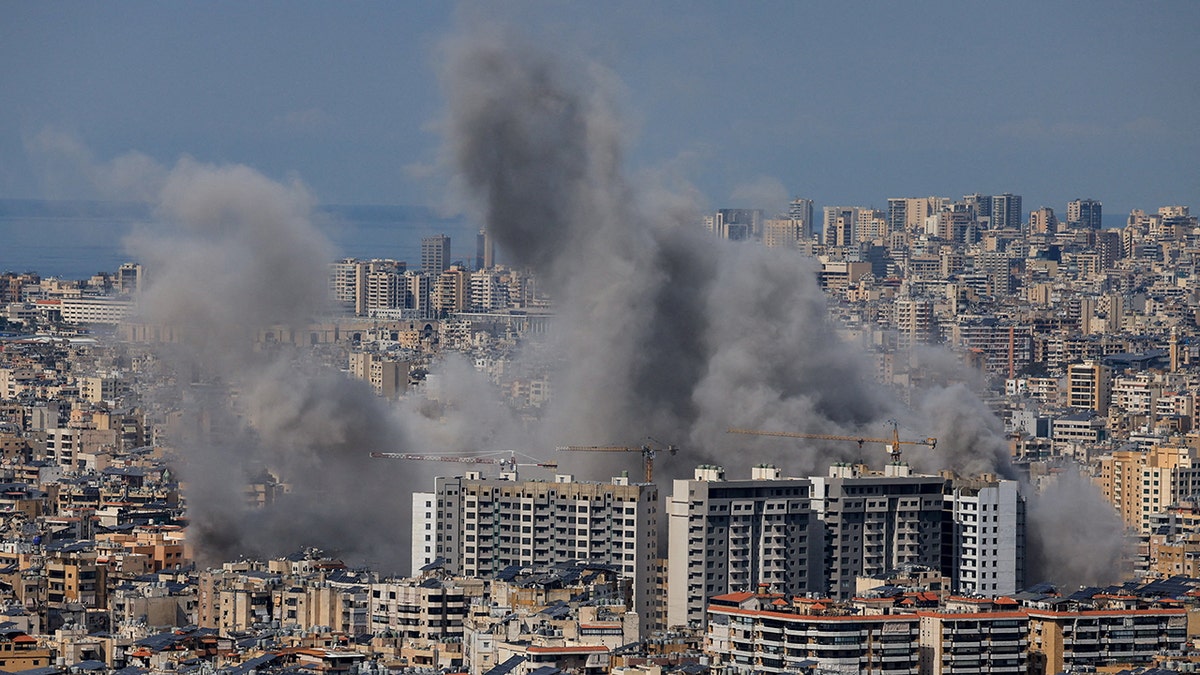
Smoke rises after reported attacks on Beirut’s southern suburbs, following an escalation between Hezbollah and Israel amid the US-Israeli conflict with Iran, seen from Baabda, Lebanon, March 6, 2026. (Mohamed Azakir/Reuters)
Israel has pledged to turn the area south of the Litani River into a ‘no-go zone’ for Hezbollah.
Israeli military chief of staff Lieutenant General Eyal Zamir said on Wednesday that Hezbollah operatives would no longer be allowed to operate south of the river.
The Litani River, which runs about 30 kilometers north of the Israeli border, has long been viewed by Israel as the border beyond which Hezbollah forces are not allowed to operate.
Hezbollah responded on Thursday with new rocket fire into northern Israel.
Warning sirens sounded in several Israeli communities, sending residents to bomb shelters. There were no immediate reports of injuries.
According to Lebanese authorities, more than 2,100 people have been killed in Lebanon since March 2 and more than 1.2 million people have been displaced.
Israeli officials say Hezbollah attacks killed two Israeli civilians and 13 Israeli soldiers during the same period.
CLICK HERE TO DOWNLOAD THE FOX NEWS APP
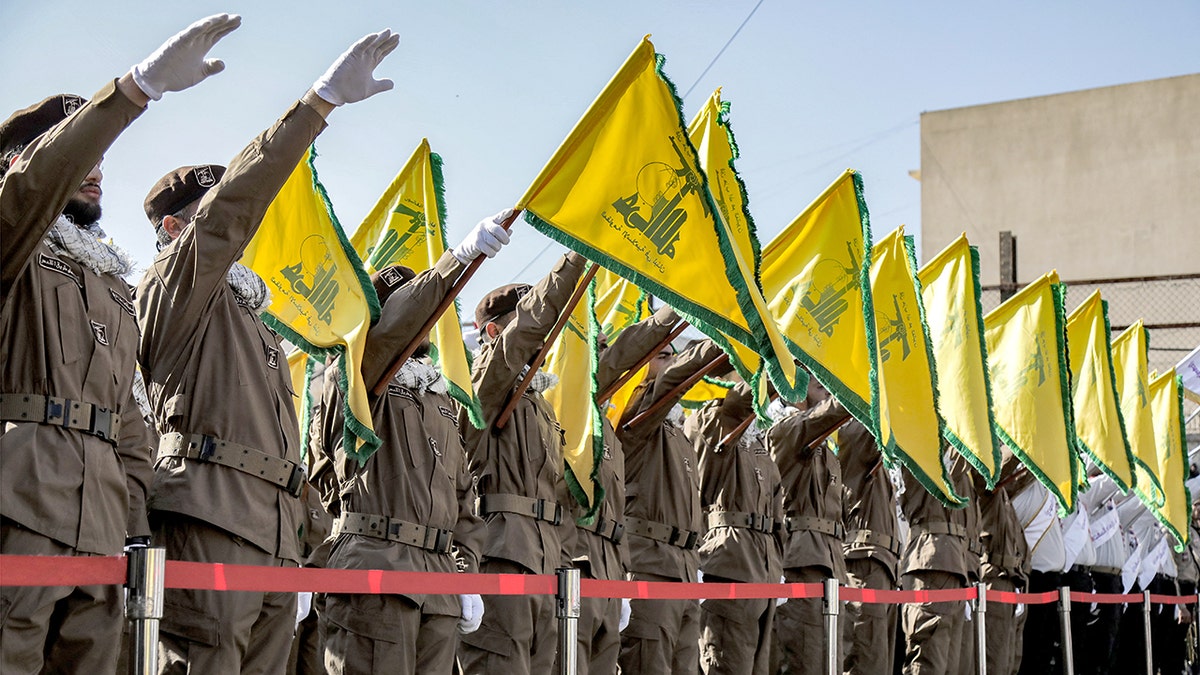
Hezbollah members salute and raise the group’s yellow flags during the funeral of their fallen comrades Ismail Baz and Mohamad Hussein Shohury, who were killed in an Israeli attack on their vehicles, in Shehabiya in southern Lebanon on April 17, 2024. (AFP via Getty Images)
Reuters contributed to this report.
