



Christianity is, by an order of magnitude, the most persecuted religion in the world. Between 360,000,000 and 380,000,000 Christians face high levels of hostility. Conservative estimates are that tens of thousands of Christians are murdered every year for their faith, especially in places like Nigeria, Burkina Faso, North Korea and China. But the killings, torture and imprisonment are happening all over the world.
In many Western countries, a less deadly but still severe form of persecution is perpetrated on Christians by ideological secularists, who see Christianity as their main intellectual and cultural opponent. In many ways, today’s attacks on believers are a continuation of the anti-Christian violence of the twentieth century, which produced more Christian martyrs than all previous centuries combined. However, the source of the hostility has shifted significantly. While in the last century hostility to Christianity arose largely from a depraved totalitarianism, which was largely secularist and materialist in nature, today’s opposition stems significantly from militant forms of Islam in the Middle East, Asia, but especially in Africa.
Why should Christianity in particular be the object of such opprobrium and violent opposition? We could certainly identify sociological, economic and political factors, but it mainly has to do with the Founder and his manner of death.
JOHN CLEESE DESTROYS THE SILENCE OF THE WORLD OVER THE EASTER MASSACURE OF NIGERIAN CHRISTIANS BY ISLAMIC TERRORISTS
It is instructive to note the difference between the way Jesus died and the way many of the other great religious founders did. The Buddha died at an old age, surrounded by his disciples, convinced that his spiritual movement had been successful. Muhammad died in his bed after a brief illness, certain that his religion had spread throughout the Arabian Peninsula. Confucius died peacefully in his bed of old age. His many followers decided to continue his ethical teachings. The Bible says that Moses died at the age of 120, after successfully leading his people from slavery to the borders of the Promised Land.
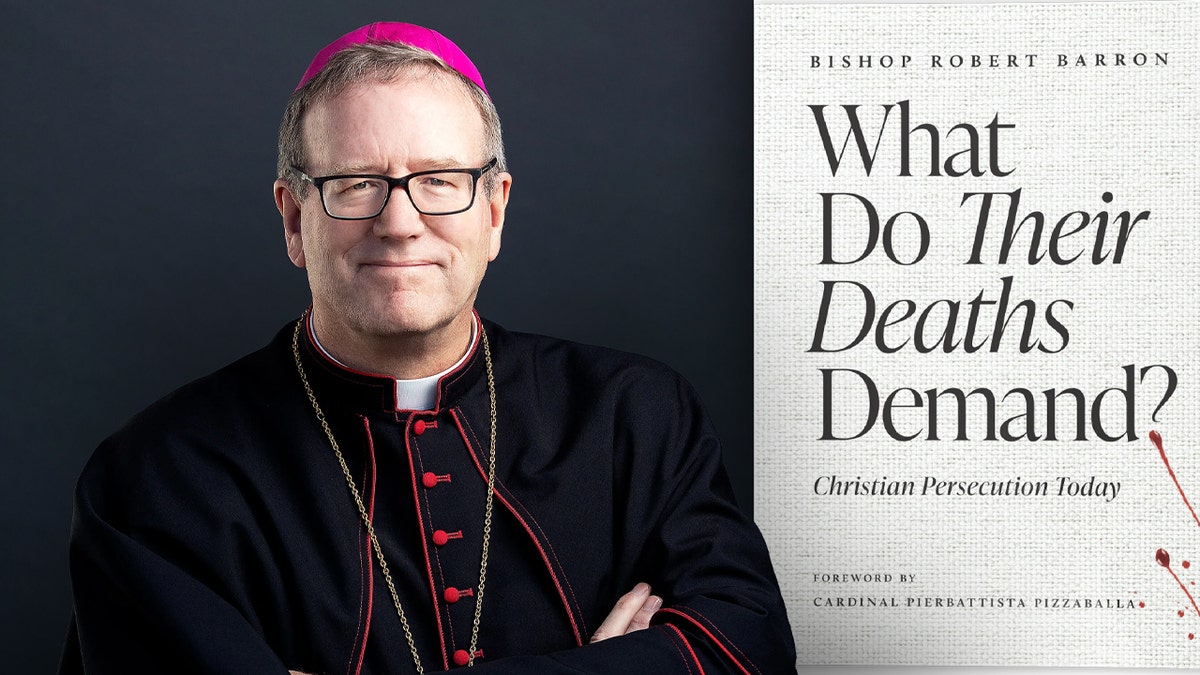
Bishop Robert Barron’s latest book is: ‘What Do Their Deaths Require? Christian persecution today.’ (Word on Fire/FNC)
And then there is Jesus. The founder of Christianity died at the age of thirty from a cruel instrument of torture, with an animal cry of desolation on his lips. All but one of his disciples denied, betrayed, or abandoned him. And it seemed that his religious revolution had proved a shipwreck. Why did this young rabbi die the way he did?
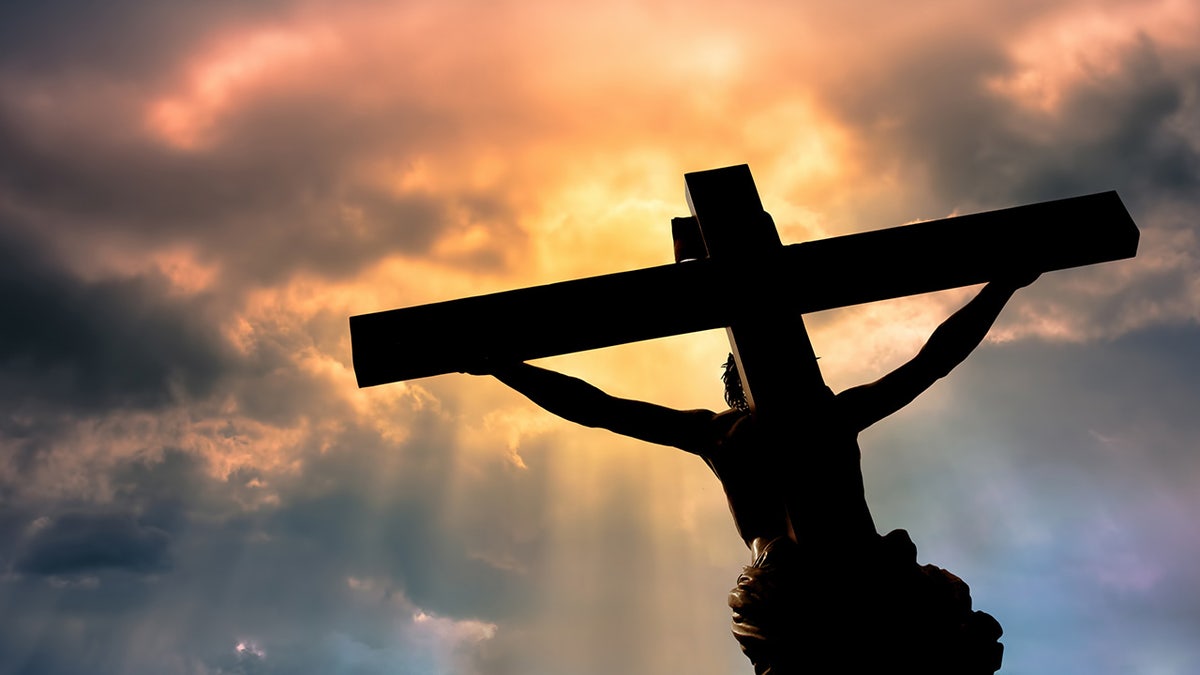
The founder of Christianity died at the age of thirty from a cruel instrument of torture, with an animal cry of desolation on his lips. (iStock)
The simple answer is that he declared himself divine: some of the surprising things he said include: “I and the Father are one;” “He who sees me sees the Father;” “Unless you love me more than your mother and your father, you are not worthy of me;” and “Heaven and earth will pass away, but my words will never pass away.”
AFRICA’S CHRISTIAN CRISIS: HOW THE DEADLY ATTACKS OF 2025 FINALLY GOT GLOBAL ATTENTION AFTER TRUMP’S INTERVENTION
You might be tempted to say, “Well, he was clearly misled and got what he deserved.” But what makes his story extremely strange is that the first proclaimers of the Christian faith did not hide the shame of the cross; on the contrary, they shouted it from the rooftops. St. Paul says, “I know one thing: Christ and Him crucified!” They could have found this confidence only because God raised from the dead the one who had claimed to speak in his name and act in his person.
If he is who he said he is, then you should give your whole life to him; if he is not, you must oppose him. In short: Jesus forces a choice in a way that no other religious founder does. Didn’t he himself say: ‘You are for me or against me?’ It is precisely the unnerving and radical claim about Jesus that has provoked opposition throughout the centuries and continues to provoke opposition today.
CLICK HERE FOR MORE FOX NEWS ADVICE
So what can we do about the scandal of anti-Christian persecution?
First, we must pray.
I know it’s fashionable these days to mock “thoughts and prayers,” but believers understand that authentic prayer is incomparably powerful. Saint John of Damascus defined prayer as “raising the mind and heart to God,” meaning that prayer is the way we connect ourselves to the creative source of the world’s existence. In the Bible, nothing of substance is ever accomplished without this explicit connection of the soul with God.
Second, we must stay informed.
I vividly remember the evening when Bishop Alfred Abramowicz, an auxiliary bishop of Chicago and a friend of John Paul II, told a room full of seminarians about the death of a heroic young Polish priest at the hands of the communists. His moving story was my first awareness of the fact of anti-Catholic persecution in my own time. So subscribe to a trusted source like Aid to the Church in Need, check the Internet for updates and information, or perhaps invite a victim of persecution to speak to your church.
Third, provide assistance, both directly and indirectly, to those who suffer the burden of persecution.
Support charities that rebuild churches and schools, provide food and medicine to the persecuted, and donate money to train seminarians in countries facing anti-Christian hostility.
CLICK HERE TO DOWNLOAD THE FOX NEWS APP
Fourth and finally, defend religious freedom at home.
Believe me when I tell you that people who are persecuted because of their religion look to our political system as a model and a source of hope. If religious freedom can flourish in the most powerful nation in the world, then it can flourish anywhere. But if we allow this to be compromised here, we greatly discourage those who desire it abroad.
The persecution of Christians is one of the greatest violations of human rights today. Those who value freedom and human dignity cannot remain silent.
Editor’s Note: Bishop Robert Barron’s latest book is “What does their death demand? Christian persecution today” (Word on Fire, April 13, 2026).
CLICK HERE TO BISHOP ROBERT BARRON
