




The U.S. House of Representatives will soon vote on the most important piece of food and agriculture legislation in nearly a decade. Congress hasn’t passed a farm bill since 2018, and the new legislation touches nearly every corner of the food system, from farm subsidies and crop insurance to food assistance, conservation, research and rural development.
The vote comes at a time when food prices are still painfully high, farms are going bankrupt at an alarming rate and Americans across political divisions are waking up to the toll toxic agricultural chemicals are taking on the nation’s health.
The problem is: the Republican farm bill would make all of these challenges worse.
LAWMAKERS INVESTIGATE NATIONAL FFA OVER CHINESE COMMUNIST PARTY TIES AND DEI PROGRAMS
A farmer picks up soil with his hands. (iStock)
At its best, a farm bill should do something simple and practical. It should help keep farms financially solvent, reduce costs for consumers, strengthen rural communities and improve access to healthy and sustainable food. It is one of the primary ways the federal government decides what types of agriculture it rewards, what types of food it makes it easier to purchase, and what types of risks it is willing to tolerate in the name of production.
This year’s Republican bill is unfortunately all about giveaways to the largest industrial producers and chemical companies, as well as cuts to important anti-hunger programs and healthy investments in food and agriculture to pay for unpopular priorities like the war in Iran. The bill enshrines the Republican Party’s deep cuts to SNAP and other food assistance programs for hungry children. It would reduce funding for federal conservation and healthy soil programs. And it includes language that would strengthen legal immunity for chemical companies and undermine local standards, including around schools and parks.
The legislation is especially reckless in the context of what is happening now. USDA says food prices were 3.1 percent higher in February than a year earlier. The number of bankruptcies in agricultural companies will increase by 46 percent in 2025. USDA also predicts that net farm income will decline again in 2026. Now is the time when Congress must help farmers get off the expensive chemical treadmill and make healthy food affordable.
This week’s vote coincides with oral arguments at the Supreme Court Monsanto vs. Durnellwhere a major chemical company is seeking a ruling that could make it much more difficult for farmers and families to sue after documented evidence of cancer from chemical exposure.

Tractor with combine on farm field and chimney rock, Scotts Bluff National Monument; Scottsbluff, Nebraska, United States of America. (Photo by: Hawk Buckman/Design Pics Editorial/Universal Images Group via Getty Images) (Hawk Buckman/Design Pics Editorial/Universal Images Group via Getty Images)
Trump’s Justice Department has filed an amicus brief with Monsanto against American farmers. This is not a technical legal dispute. The question is whether people harmed by toxic pesticides can still claim responsibility. Trump is on the wrong side of that argument.
This is not an isolated case. In February, the president signed an executive order to expand the domestic supply of cancer-causing glyphosate-based herbicides. Around the same time, the EPA reapproved dicamba for over-the-top use on cotton and soybeans, despite years of controversy over its spread to neighboring crops and wild plants. Meanwhile, the branch of USDA that farmers rely on for help adopting organic, lower-input and soil-building practices has lost nearly one in four staff members.
That’s why this farm bill debate is such an important test of whether Republicans are serious about making America healthy again. If so, they should be working across the aisle on a farm bill that makes healthy food more affordable for Americans.
What would that look like?
First, a responsible farming law would take corporate power instead of entrenching it. No pesticide immunity shield. No special protection for companies that leave hazards out of labeling, while families, farmers and farm workers bear the costs. A serious MAHA farm law would keep the courts open to compensate farmers for proven damage caused by toxic chemicals.
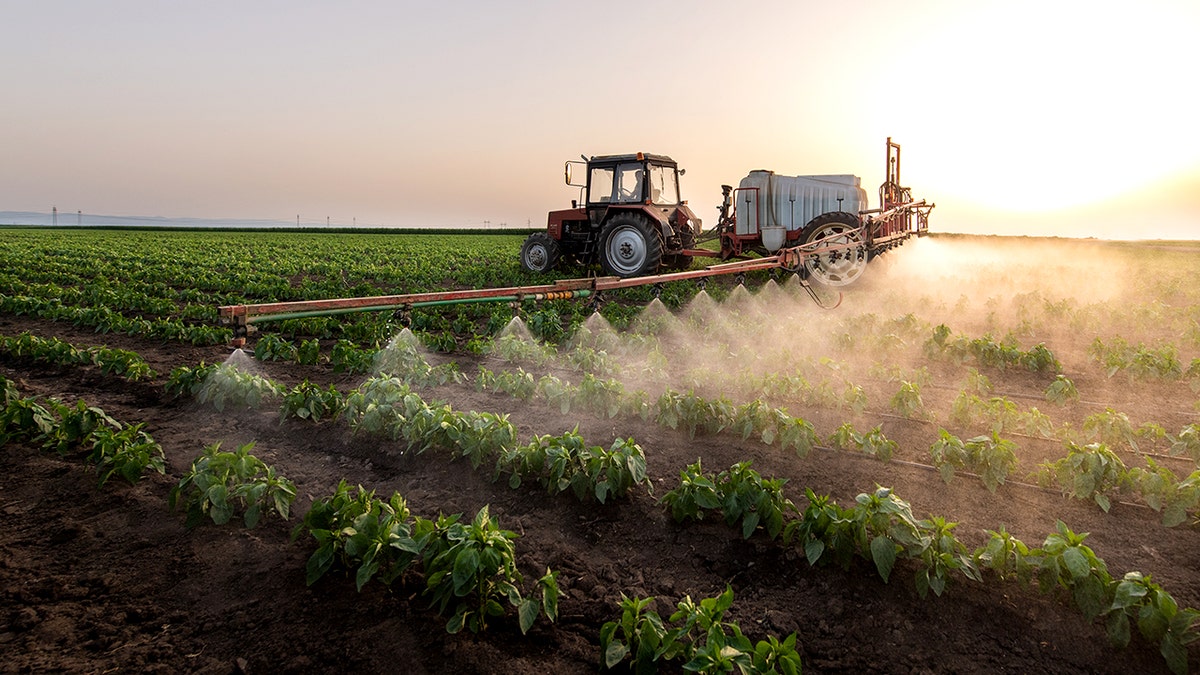
Tractor sprays pesticides on vegetable field (iStock)
CLICK HERE FOR MORE FOX NEWS ADVICE
Secondly, it would help farmers get off the expensive chemical treadmill. This means that conservation, technical assistance and organic transition programs should be fully funded to adopt cheaper methods with fewer inputs. It means supporting cover crops, crop rotations, buffer strips and other practices that improve soil health while reducing long-term costs. It means strengthening local and regional markets so that farmers can keep a greater share of the food dollar instead of sending it to a handful of large corporations.
Third, it would make healthy food more affordable for American families. That means restoring support for healthier school meals, expanding access to fresh, local, and less toxic foods in public settings, and aligning federal purchases with the goal of making healthier foods more readily available. It also means that we need to seriously look at concrete measures, such as limiting the dehydration of glyphosate before harvest and expanding pesticide-free food purchasing.
CLICK HERE TO DOWNLOAD THE FOX NEWS APP
If Republicans really want to claim the mantle of MAHA, now is the time to prove it.
Justin Talbot Zorn is a senior advisor at the Center for Economic and Policy Research in Washington.