



During my last CIA overseas assignment as a station chief in a South Asian war zone, our team was relentlessly focused on detecting and preventing terrorist threats long before they could damage the American homeland. We conducted many clandestine operations unilaterally, but we also worked closely with host government intelligence. We did not always agree on everything, but we enjoyed robust intelligence sharing on our mutual adversaries, shared analytical judgments, and collaborated on a number of joint tactical counterterrorism operations.
On one occasion, our CIA team successfully located and pinpointed the location of a senior Al Qaeda terrorist who was on the FBI Most Wanted list for planning terrorist attacks. We shared our sensitive intelligence with the host government, whose military launched a well-planned attack and killed the Al Qaeda terrorist in a firefight.
If there’s one thing I learned at the CIA, especially when it comes to counterterrorism operations, it’s that our allies can be a tremendous force multiplier for our sacred mission to protect our country from those who would do us harm.
Today, the Trump administration is deploying a similar strategy to ensure secure supply chains for crucial minerals and reduce risks from communist China, which is the world’s largest miner and processor of rare earths. China has made a habit of extorting its commercial adversaries by restricting exports of crucial minerals.
TRUMP THREATENS ‘HUGE’ CHINA TARIFFS, SEES ‘NO REASON’ TO MEET XI
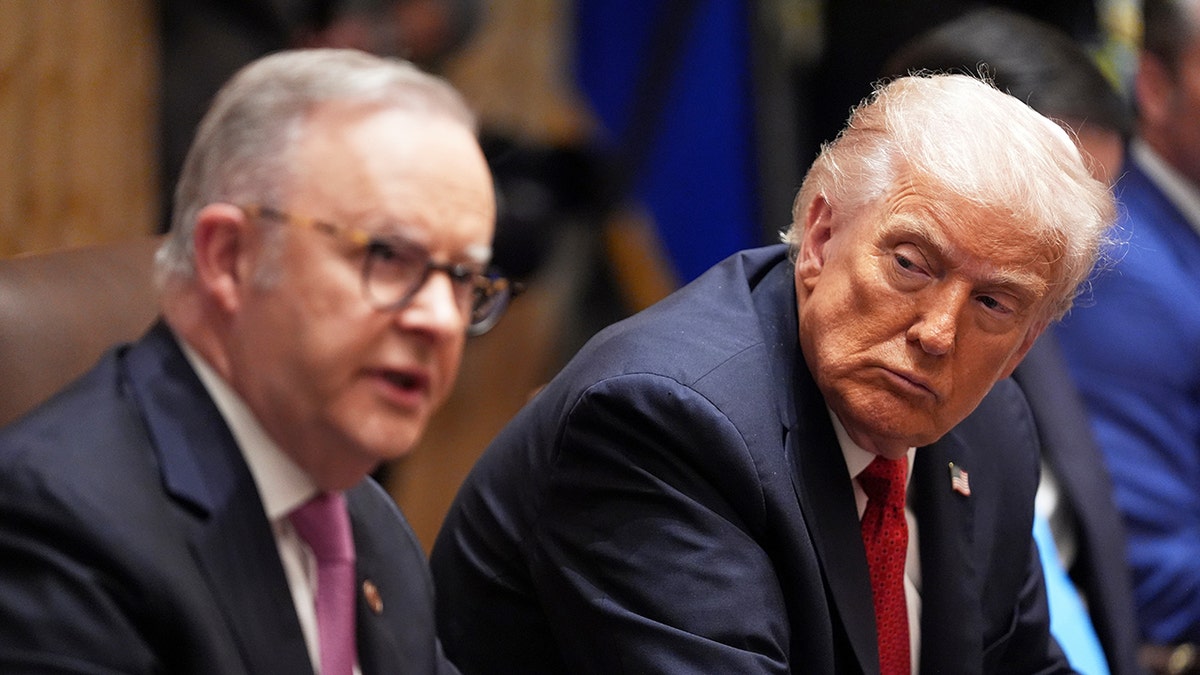
President Donald Trump, right, listens as Australian Prime Minister Anthony Albanese speaks in the Cabinet Room of the White House, Monday, Oct. 20, 2025, in Washington. (AP Photo/Evan Vucci)
Rare earth minerals are essential for making semiconductors, engines and fighter jets, all critical to our national security. The last thing we would want is to have to depend on communist China for supplies.
China’s blatantly unfair trade practices involve dumping vast, excess rare earth production onto the global market, deliberately to drive down prices and drive competing mining companies out of business, eliminating any long-term competition.
But the Trump administration has deployed a counterplay to reduce China’s influence in rare earths markets. Trump is rightly concerned that China is trying to control the global economy by imposing its will on its high-tech supply chain and recently signed an $8 billion deal on rare earths with Australian Prime Minister Anthony Albanese. And during his recent trip to Asia, Trump signed rare earth deals with Thailand and Malaysia.
The Trump administration is also deftly applying the same risk reduction principle to critical materials and minerals, including polysilicon, a pure form of silicon essential for the production of microchips and integrated circuits. In an effort to minimize the risk of China’s dominant global polysilicon market share, the Trump administration is cleverly relying on NATO member Germany for the bulk of our polysilicon imports.
CLICK HERE FOR MORE FOX NEWS ADVICE
Furthermore, the Trump Administration is investigating national security threats posed by imports from other countries, including, but not limited to, those with ties to China. China dominates global polysilicon through state subsidies, deliberate overproduction and other nefarious trade practices – a well-known Chinese Communist Party playbook used for strategic materials.
“When an enemy has alliances,” wrote the Chinese philosopher Sun Tzu, “the problem is serious and the enemy’s position is strong.”
CLICK HERE TO DOWNLOAD THE FOX NEWS APP
The US is leading the way in building a global network for key technological components essential to protecting our national security from communist Chinese mercantilist aggression.
Dictators like Chinese President Xi Jinping want their enemies to be weak and divided. That’s because together, the U.S. and our commercial partners are stronger and better able to protect the internationally recognized borders, freedom of navigation and free trade on which the U.S. and the global economy depend.
CLICK HERE TO DANIEL HOFFMAN
