



The debate over how to tackle violent crime continues as President Donald Trump authorizes the deployment of the National Guard in cities including Washington, D.C., Portland, Memphis and Chicago to protect federal officers and buildings and assist state and local police with their law enforcement duties. The White House states that efforts are desperately needed to keep crime in these areas under control. At the same time, officials in some of these jurisdictions, including Portland and Chicago, have filed suit to block the deployments, claiming they are unconstitutional and unnecessary.
While deployments are debated, we know that the National Guard cannot be deployed everywhere and indefinitely. Crime is local, and state and local officials must take the lead in implementing permanent solutions to combat violent crime. There are many proven strategies leaders can implement, starting with supporting police.
For example, our country is in a law enforcement staffing crisis. It is estimated that the number of officers will have decreased by approximately 5% between 2020 and 2024. Although modest gains have been made in the past year, these are being achieved by smaller agencies; major agencies continue to struggle. Los Angeles is short 1,000 officers, Chicago 1,300, New York 3,000, Philadelphia 1,200, and Washington, DC needs about 500 officers. California’s workforce is at its lowest level in 30 years.
TRUMP’S USE OF NATIONAL GUARD IN DC IS A MODEL FOR SAVING AMERICA’S CITIES
It is no surprise that during this police staffing crisis, we have seen one of the largest increases in crime in our history. More police means less crime. Research shows that increasing police presence in high-crime areas will dramatically reduce crime. During the federal intervention in Washington DC, an influx of federal officers and guardsmen (approximately 500 additional officers per night) led to a significant drop in crime. Compared to the same period last year, violent crime fell by 39% and property crime by 12%, while car thefts fell by 40%.
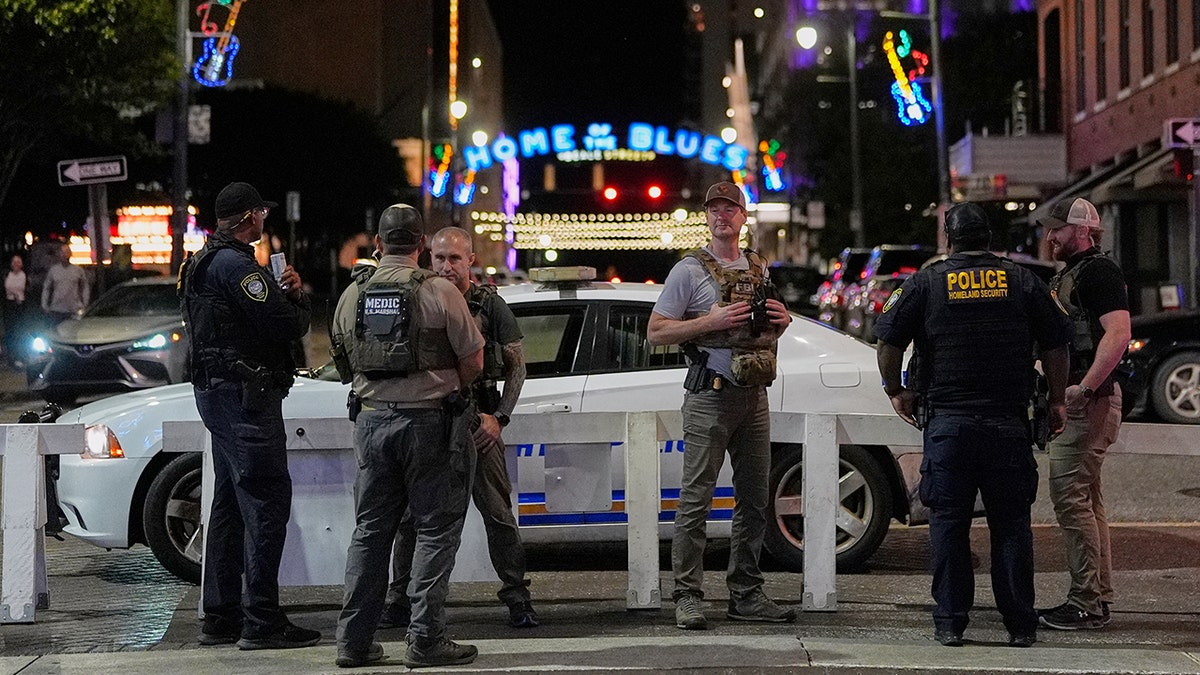
Federal law enforcement officers stand at the intersection of Beale St. and N. Second St., Wednesday, Oct. 8, 2025, in Memphis, Tennessee. (AP Photo/George Walker IV)
In 2022, Nebraska passed the Law Enforcement Attraction and Retention Act, allowing resident law enforcement officers to receive full tuition credit at local colleges and community colleges. The Nebraska State Patrol had its largest recruiting class in five years this year.
The Omaha Police Department has a new recruiting unit and the city budget increased officer pay. Omaha has more than doubled the number of applications this year.
VANCE SAYS NATIONAL GUARD IS ‘THEIR A–‘ IN WASHINGTON, DRIVES MISSION EXPANSION
Birmingham, Alabama, included $15.8 million in its recruitment and retention budget. Since January, the department has hired 202 officers and expects to be fully staffed next month. In August they had their largest academy class in history.
CLICK HERE FOR MORE FOX NEWS ADVICE
In 2022, the state of Florida implemented the Law Enforcement Recruitment Bonus Payment Program, providing new officers with $5,000 after taxes. Since its founding, it has awarded more than 9,400 bonuses and attracted more than 1,900 officers to relocate to Florida. Their legislature also funded $49 million in wage increases.
It’s more than just paying. Strategies matter, and many cities and states have shown that focusing resources on high-crime areas can yield remarkable results. In 2021, Dallas implemented “hotspot policing”. One study concluded that Dallas experienced a greater decrease in violent crime compared to nearby cities.
Furthermore, a “targeted deterrence” strategy focuses police attention on those at highest risk, in an effort to either intervene before a new crime occurs or to deliver swift justice if the crime continues. This approach has been shown to significantly reduce violent crime. States like Tennessee and Virginia have allocated state funding and resources for this strategy.
NATIONAL GUARD TROOPS FROM SIX RED STATES GO TO DC TO HELP TACKLE CRIME
Local communities can benefit from working with federal agencies. Louisiana’s Republican Governor Jeff Landry, along with Justice Department officials, recently announced that a joint operation called “Operation Violent Crime Takedown” among federal, state and local law enforcement personnel and resources in Baton Rouge this summer resulted in 52 federal indictments. It is part of a larger national operation against violent crime.
CLICK HERE TO DOWNLOAD THE FOX NEWS APP
In 2022, Nebraska passed the Law Enforcement Attraction and Retention Act, allowing resident law enforcement officers to receive full tuition credit at local colleges and community colleges. The Nebraska State Patrol had its largest recruiting class in five years this year.
Republican Texas Governor Greg Abbott recently announced a task force of state and local law enforcement to reduce violent crime in the city of Houston, where local judges have been criticized for consistently releasing bail on dangerous offenders who then commit new crimes.
President Trump deserves credit for putting the need to stop violent crime in the national spotlight. It’s time for state and local leaders of cities with high crime rates to stop playing political games and instead support police, use proven strategies and make their streets safe again.
Ja’Ron Smith is a senior advisor to Americans for Public Safety and former Special Assistant for Domestic Policy to President Trump.
