



Treasury Secretary Scott Bessent recently stated that President Donald Trump’s administration is considering declaring a housing emergency. He pointed to the weakest summer home sales in a decade, with more than 15% of transactions falling through in July, the highest cancellation rate since records began in 2017. Prices, while below pandemic levels, are still too high for working- and middle-class Americans.
Bessent is right to sound the alarm, and a housing emergency declaration is long overdue.
For far too long, politicians have extolled the virtues of homeownership while supporting policies that make it harder to achieve. America is no longer producing enough homes to meet demand, and existing homes have become more expensive than they otherwise would have been due to government restrictions on building and investing.
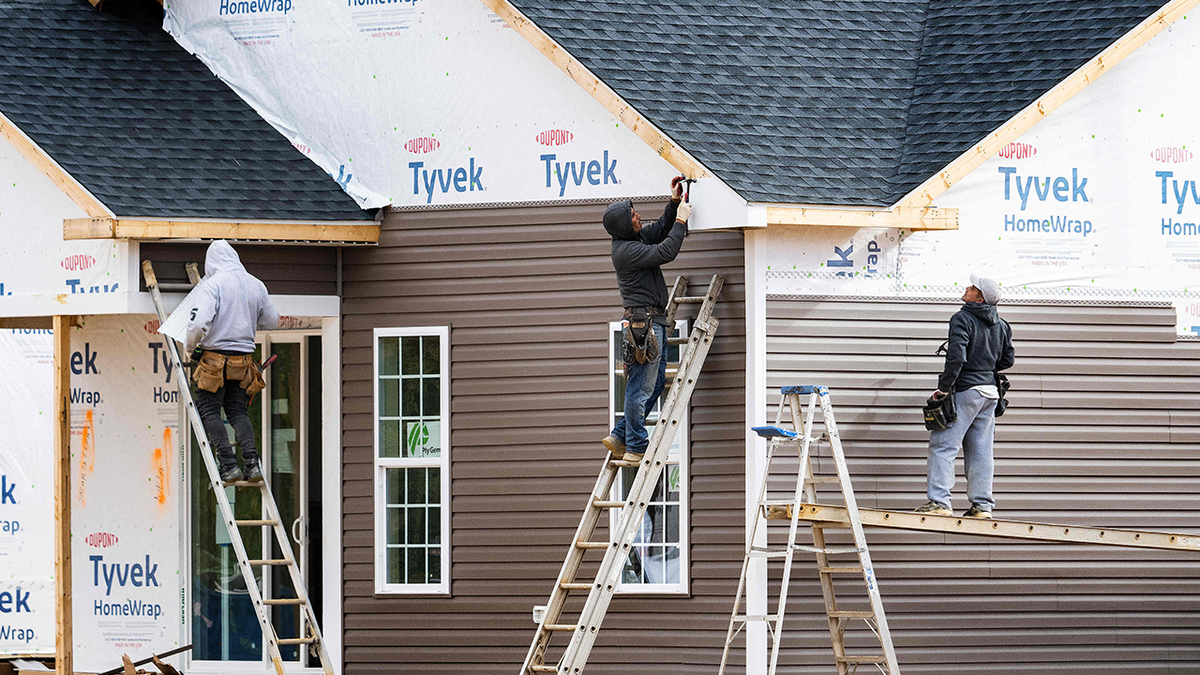
America is no longer producing enough homes to meet demand, and existing homes have become more expensive than they otherwise would have been due to government restrictions on building and investing. (Jim Watson/AFP via Getty Images)
National housing experts estimate that the United States has a shortage of between 3.2 million and 5.5 million housing units, depending on the methodology used. Freddie Mac estimates the gap at roughly 3.8 million homes, while the National Low Income Housing Coalition reports a shortfall of more than 7 million affordable and accessible homes. This gap between supply and demand is precisely the reason for rising house prices.
DEI IS THE REAL CAUSE OF AMERICA’S HOUSING CRISIS
Government regulations have been largely responsible for creating the shortage.
Research from the National Association of Home Builders shows that federal, state and local regulations account for nearly 24% of the price of a new single-family home and more than 40% of the cost of new multi-family homes. Zoning restrictions that limit density, lengthy permitting programs that stretch projects over years, and building codes that vary significantly from one jurisdiction to another all add unnecessary costs and time. For some metropolitan regions, it takes more than a decade to move a project from conceptualization to completion.
If the Trump administration does indeed choose to declare a national housing emergency, the resulting contingency plan should not attempt to micromanage local housing markets or build new federal bureaucracies. Instead, it should focus on removing the obstacles that make it more difficult for the private sector to meet today’s growing demand for housing.
HOUSE PRICES ARE RISING UNDER BIDEN. Guess who the Democrats want to blame?
Where strict restrictions have been imposed on developers or landlords, the availability of housing has decreased and affordability has fallen further out of reach. Conversely, where markets have the freedom to act – when permits are streamlined, financing is accessible and development is allowed to respond to demand – housing has become more abundant and prices have stabilized.
California shows how this plays out. For decades, strict zoning regulations and environmental scrutiny brought construction to a near standstill, leaving the state nearly 1.3 million units short, according to a recent estimate. In contrast, states like Texas, which have moved more quickly to allow and permit higher-density development, have seen faster supply growth and more moderate price increases even as their populations grew. In fact, home prices in Texas are falling faster than in any other state.
Instead of following Texas’ example and addressing the root causes of the housing shortage, Washington DC continues to scapegoat the private sector.
Take, for example, the trend of blaming software for rental prices.
SCAMMER ZOHRAN MAMDANI WANTS TO IGNORE THE REAL CAUSES OF NYC’S AFFORDABILITY CRISIS
This effort, launched under President Joe Biden, wrongly blames technology tools that provide real-time home prices. Targeting AI can make for nice-sounding press releases, but it’s nothing more than blaming the weatherman for the rain. This technology merely reports what the market has to offer, and eliminating it does nothing to bring more homes to market or reduce costs for families.
Or what about the federal and state lawmakers who have chosen to point the finger at residential investors? A study led by Joshua Coven of New York University found that markets with greater institutional investment saw both an increase in available rental properties and a measurable decline in rents. This is because large-scale investors contribute to the pool of available rental properties, which can ease competition and moderate costs.
In other words, when investments are welcomed and new units are built, families benefit directly through lower costs and more options.
What does this all mean?
CLICK HERE FOR MORE FOX NEWS ADVICE
Well, instead of seeing its role as limiting market activity, the Trump administration should see its job as one of increasing it. Because the only way to solve the shortage of affordable housing is to build and invest more.
One approach could be to catalyze reforms at the state and local level by making some programs and subsidies conditional on removing artificial restrictions on construction, such as outdated zoning restrictions that prohibit the development of multifamily housing in high-demand areas.
Another could be streamlining federal permitting for infrastructure projects that support housing, such as roads, utilities and public transportation. These projects are often delayed and become more expensive or less likely to be built as they languish, and streamlining would encourage builders to build more.
CLICK HERE TO DOWNLOAD THE FOX NEWS APP
The White House has already prioritized implementing economic policies that have freed workers and businesses from unnecessary burdens – ending taxes on tips and overtime, cutting red tape and promoting growth through opportunity. Housing deserves the same treatment: less government intervention and more room for private investment.
This approach has worked before. Federal leaders just need to make it work again.
CLICK HERE TO FROM BAY BUCHANAN
