



Waltz says Trump robbed Iran of its “power” with the blockade of the Strait of Hormuz
US Ambassador to the UN Mike Waltz describes US strategy towards Iran, claiming that President Donald Trump has removed Iran’s economic influence through the blockade of the Strait of Hormuz. Waltz emphasizes that Iran must stop supporting terror and abandon its nuclear ambitions for normality. He points to the strong American military presence, which forces Iran to participate in direct peace negotiations.
The United States is pursuing a new United Nations Security Council resolution targeting Iran’s actions in the Strait of Hormuz as the administration seeks to bolster its ongoing maritime operation with international support.
U.S. Ambassador to the United Nations Mike Waltz said Monday that the effort is aimed at holding Iran accountable for mining international waters, threatening global shipping and attempting to disrupt one of the world’s most critical trade routes.
“The President and Secretary Rubio have instructed us to come to the Security Council in full cooperation and to craft a resolution with Bahrain and the GCC countries,” Waltz said at a news conference. “We are working on a parallel effort at the Security Council that is separate from Project Freedom, but clearly related.”
“The resolution includes holding Iran accountable for its flagrant violations of international law,” he added, including demanding Tehran to stop laying naval mines, disclose their locations and work with the United Nations to establish humanitarian corridors used by dozens of U.N. agencies to deliver aid worldwide.
RUSSIA AND CHINA VETO UN RESOLUTION AIMING REOPENING STRAIT OF HORMUZ, HOURS BEFORE TRUMP DEADLINE
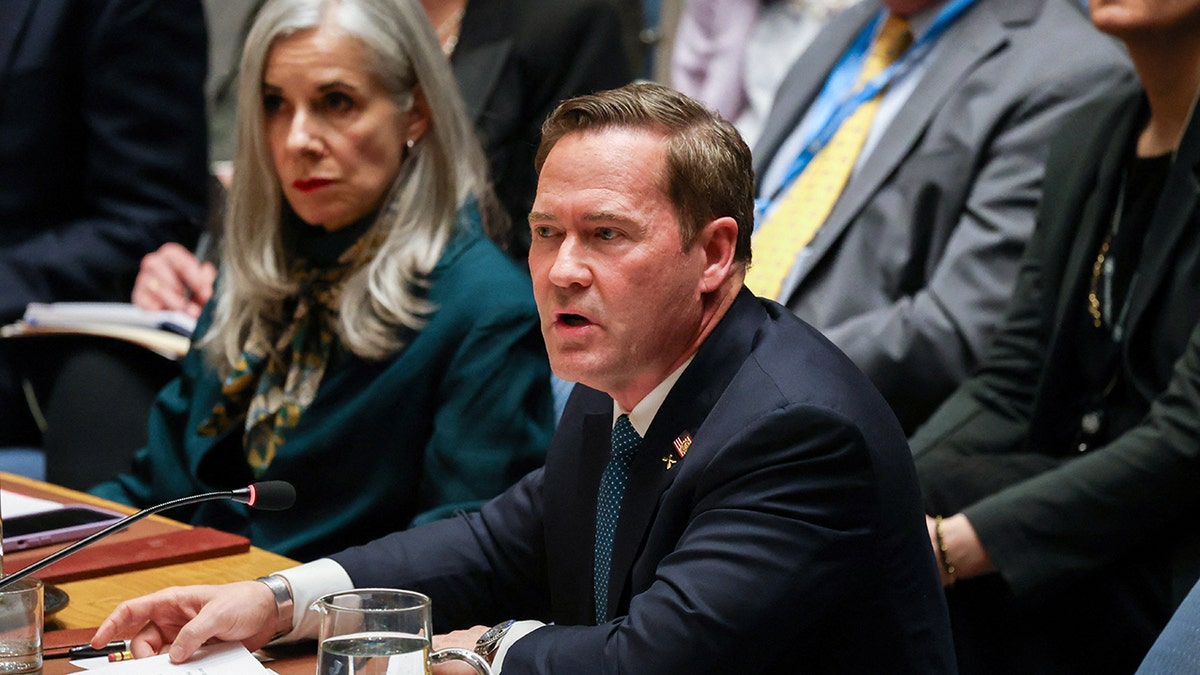
U.S. Ambassador to the United Nations Mike Waltz speaks during a United Nations Security Council meeting at U.N. Headquarters in New York City on February 28, 2026, following U.S. and Israeli attacks on Iran. (Heather Khalifa/Reuters)
The diplomatic push comes as U.S. forces moved Monday to secure commercial shipping through the strait under President Donald Trump’s Project Freedom. The US Central Command confirmed that US forces sank six Iranian small boats threatening ships, underscoring the fragility of the ceasefire and continued risks to global energy flows.
Waltz framed the effort as part of a broader effort to set a global precedent.
“We cannot set a standard that if two countries have a conflict, you can then start collectively punishing the economies of the rest of the world,” he said.
IRAN TAKES SHIPS IN HORMUZ AS US TALKS FALTER AFTER CITY STOCK EXTENSION
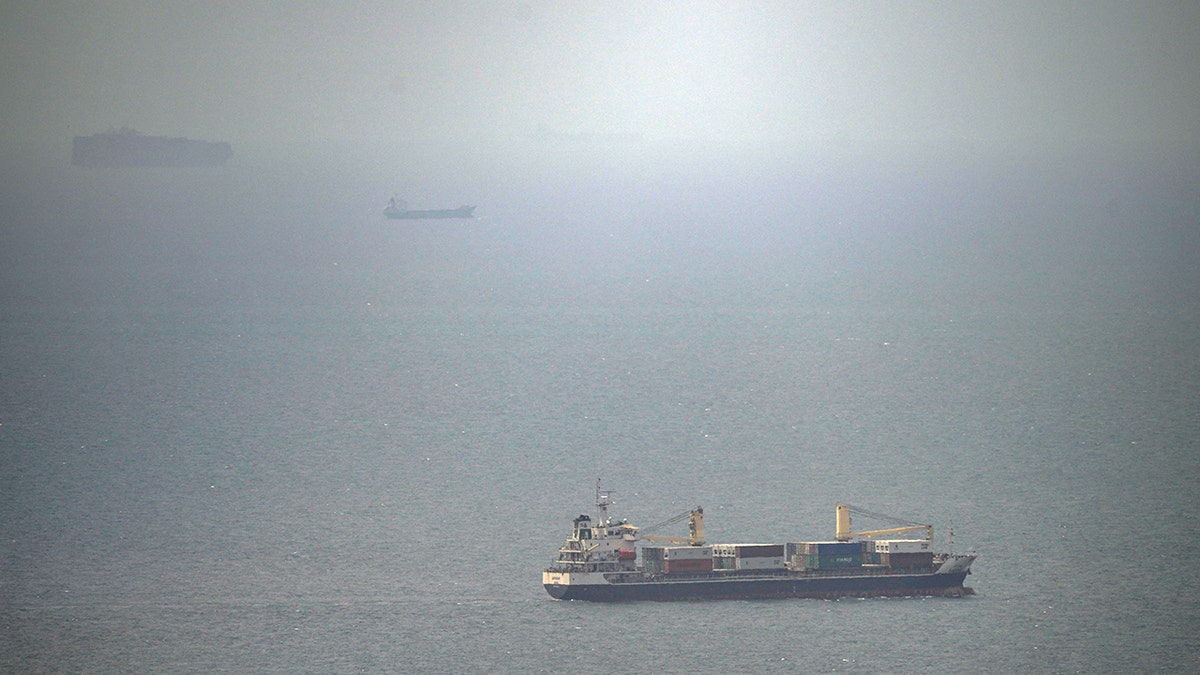
The United States is working on a new United Nations Security Council resolution targeting Iranian actions in the Strait of Hormuz. (AP photo)
“You can’t just start throwing sea mines into the ocean to sow doubt and fear in the international maritime community,” he said. “And you certainly can’t see it as a source of income… no country has the right to punish the rest of the world as part of a conflict.”
He also highlighted the human toll of the crisis, noting that thousands of civilian sailors are trapped in the escalating tensions.
“These are captains, engineers, cooks, sailors … they had no part in this conflict. They should not be forced to suffer,” Waltz said, adding that the government emphasizes the humanitarian aspect of ensuring safe passage and relief.
“I know our Gulf partners and allies are seriously considering that,” Waltz said, referring to existing infrastructure such as Saudi Arabia’s east-west pipeline and export routes through the Gulf of Oman.
“I know they are looking at additional alternatives to, frankly, diversify their trajectories and diversify their economies,” he added.
CLICK HERE TO DOWNLOAD THE FOX NEWS APP
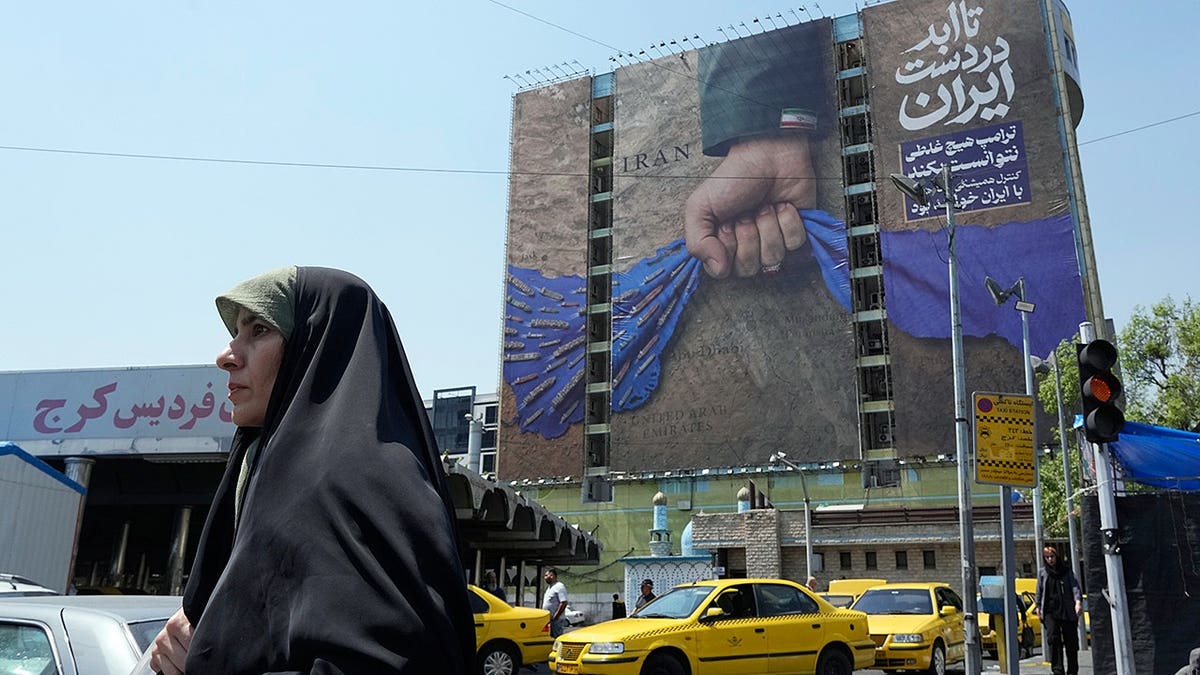
A woman walks past a billboard showing a military hand holding the Strait of Hormuz with Farsi text reading: “Forever in Iranian hands”, “Trump could do nothing”, “Control of the Strait of Hormuz will forever belong to Iran”, in Vanak Square, northern Tehran, Iran, on April 16, 2026. (Vahid Salemi/AP)
While U.S. military efforts are focused on immediate stabilization, including escorting ships and deterring Iranian intimidation, Waltz emphasized that the U.N. resolution is intended to address the broader international implications and prevent similar crises in the future.
Despite the pressure, questions remain over whether Russia and China will support the measure, after an earlier attempt in April failed.
Waltz said the current proposal is more limited in scope and specifically targets clear violations of international law, which he said should make opposition less likely.
