



Russia has built what human rights researchers describe as a global pipeline recruiting vulnerable foreigners for its war against Ukraine, drawing tens of thousands of people from more than 130 countries through what groups say are coercive, deceptive and in some cases human trafficking-like practices.
After suffering major battlefield losses and trying to avoid another politically risky domestic mobilization, Moscow has institutionalized a global recruitment system that targets some of the world’s most vulnerable populations to sustain its war machine, argues a new report from the International Federation for Human Rights (FIDH), Truth Hounds and the Kazakhstan International Bureau for Human Rights.
According to the report, Russia has recruited at least 27,000 foreigners from countries in Central and South Asia, Africa, the Middle East and Latin America since February 2022. Ukrainian authorities cited in the report that Russia alone could recruit an additional 18,500 foreigners in 2026, which would be the highest annual total since the large-scale invasion began.
With war losses approaching 2 million, Russia was accused of trafficking in foreign recruits from Africa and Asia
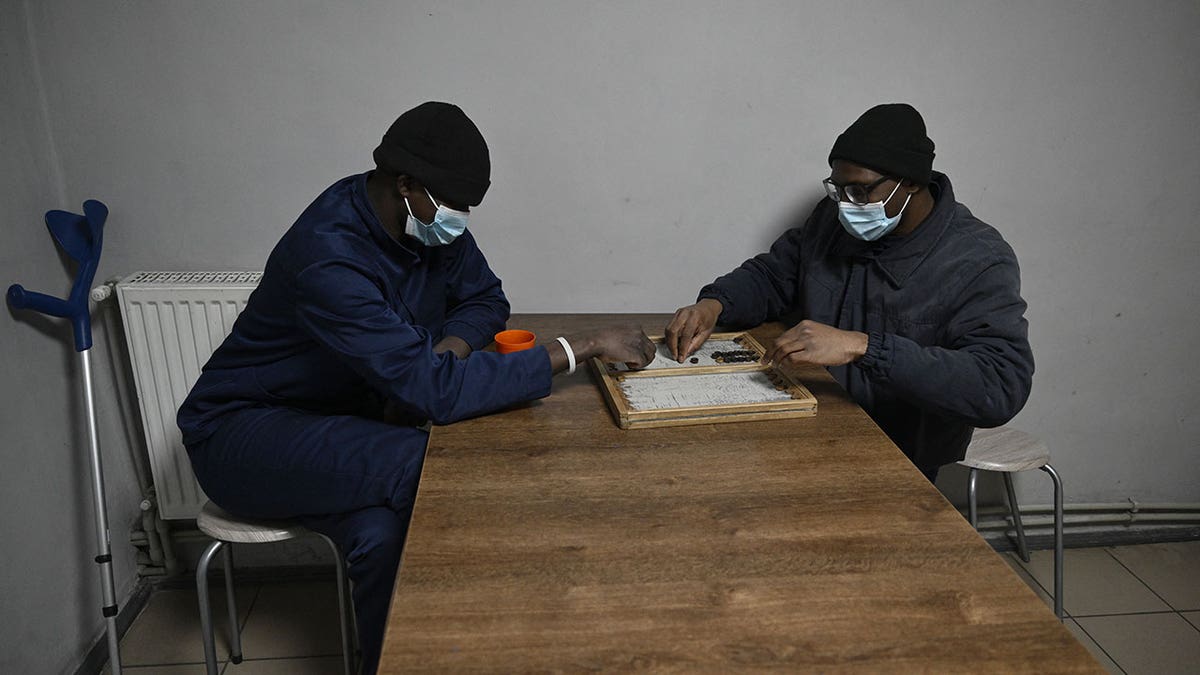
Nationals of African countries sit in a section of a detention center holding foreign fighters serving in the Russian army on the Ukrainian front in western Ukraine on November 26, 2025. (Genya Savilov/AFP via Getty Images)
“This report highlights something fundamental: that Russia’s use of foreign fighters is neither a marginal nor a spontaneous phenomenon. Russia has built a global recruitment system that deliberately targets the most vulnerable populations – undocumented migrants, detainees, precarious workers or even foreign students – in dozens of countries in Asia, Africa and Latin America,” said Alexis Deswaef, President of the International Federation for Human Rights.
“Many of these men, in some capacity, knew what they were signing up for. But some were also deceived or coerced. But in all cases, it is a state that has instrumentalized them as part of its war machine and sent them to the most dangerous positions on the front lines.”
The report’s central claim is that Russia’s recruitment apparatus extends far beyond traditional mercenary networks and instead functions as a state-enabled global system that exploits poverty, legal vulnerability and migration insecurity.
Researchers say recruitment evolved from primarily relying on ideologically motivated volunteers early in the war to a more broadly institutionalized model by mid-2023, after Russia expanded legal eligibility to foreign nationals, relaxed language and residency requirements and offered citizenship and financial incentives in exchange for service.
NORTH KOREAN WORKERS DESCRIBE BRUTAL FORCED LABOR IN RUSSIA: “WORK LIKE A COW AND EARN NOTHING”
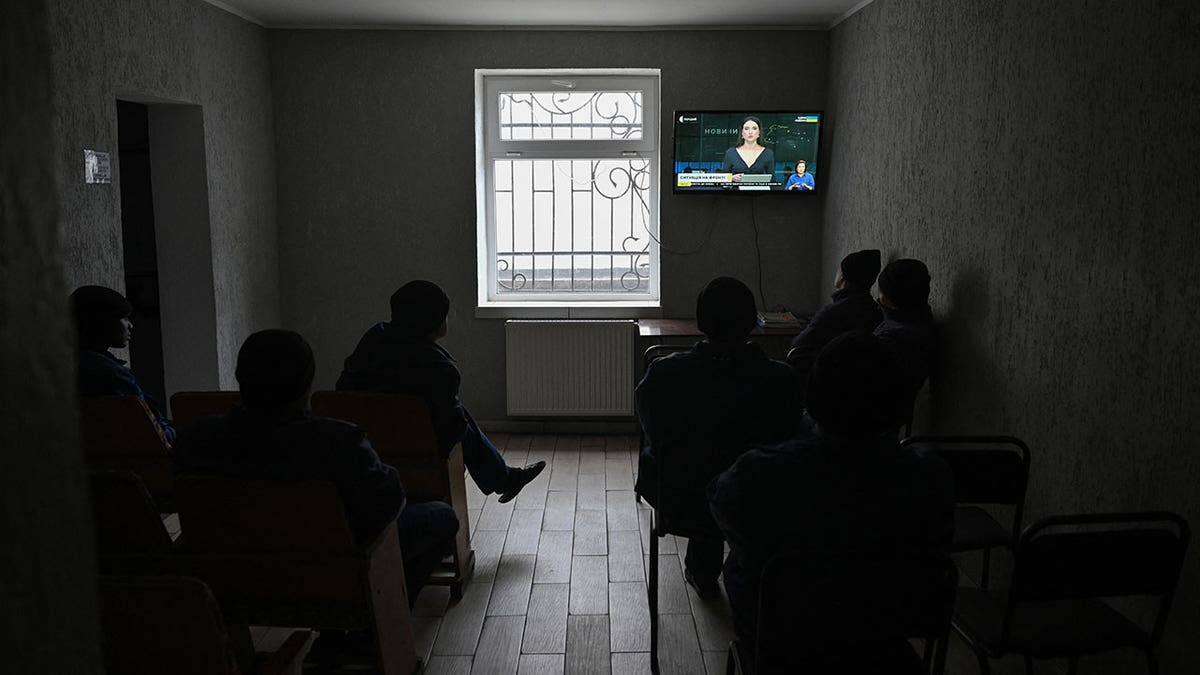
Nationals of African countries watch television at a detention center in western Ukraine, where foreign fighters are being held captive while serving with Russian forces on the Ukrainian front on November 26, 2025. (Genya Savilov/AFP via Getty Images)
According to the report, migrants in Russia have in some cases been pressured to enlist through raids, threats of detention, confiscation of documents, trumped-up criminal charges and abuse. Outside Russia, recruits were often reportedly lured through promises of civilian jobs, non-combat positions or routes to Europe, only to be lured into military contracts that they often could not read.
Of the sixteen POWs interviewed for the report, thirteen said they were told they did not have to fight, but were later deployed to front-line positions, often within weeks.
The report also claims that many foreign recruits were used for so-called ‘meat attacks’ – high-risk frontal assaults associated with serious casualties. According to Ukrainian estimates cited in the report, at least 3,388 foreign fighters have been killed, with some estimates suggesting that one in five recruits may not survive the deployment.
HEGSETH WARNS RUSSIA AS SIGNS TO MOSCOW SHARING INTEL WITH IRAN
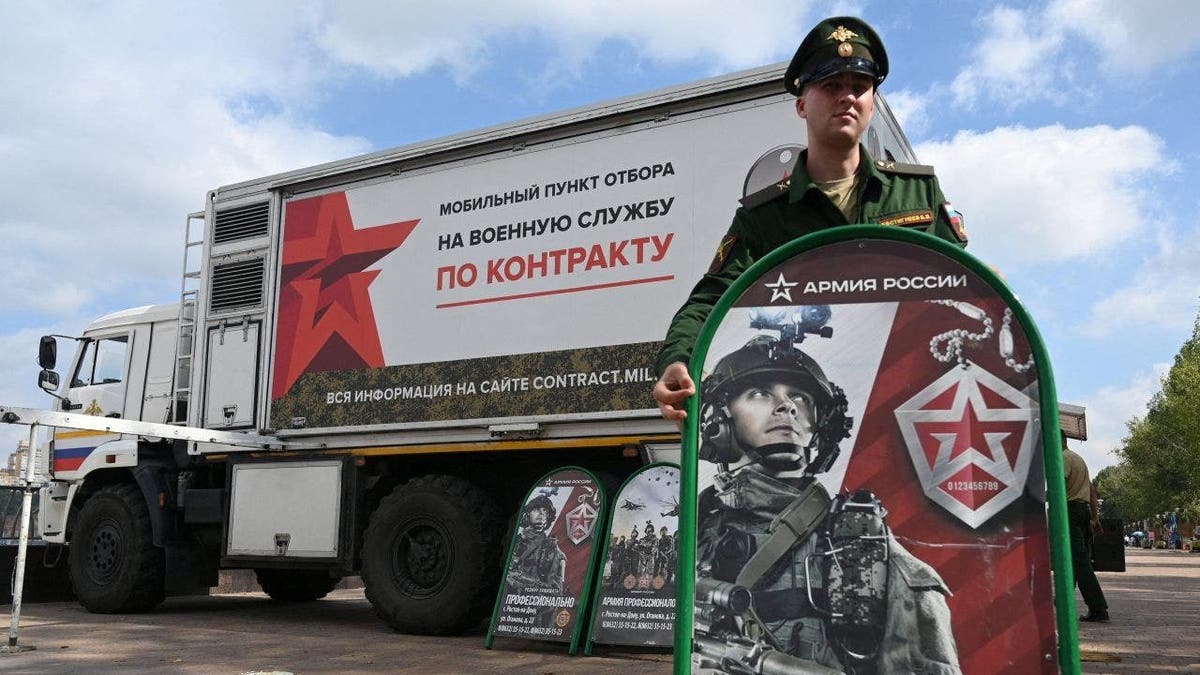
A Russian soldier stands next to a mobile recruitment center for military service under contract in Rostov-on-Don, Russia, September 17, 2022. (Sergei Pivovarov/Reuters)
“Despite many states taking measures to curb recruitment, and even though Russia claims it is no longer recruiting citizens from certain countries, predatory recruitment continues. Ukrainian authorities predict that Russia will recruit more than 18,500 foreigners by 2026, the highest annual figure since 2022,” said Maria Tomak, associate researcher and advocacy expert at Truth Hounds.
“This underlines the continued relevance of our report. Our main goal remains clear: to stop recruitment and force Russia to repatriate those already recruited.”
The report does not claim that every foreign fighter was trafficked, noting that some volunteered for financial gain, but concludes that there are reasonable grounds to believe that at least some cases meet international definitions of trafficking through deception, coercion and exploitation.
For researchers, the broader concern is that Russia’s war effort may now depend in part on a transnational manpower pipeline that weaponizes global inequality and draws economically desperate men from around the world into one of Europe’s deadliest conflicts.
CLICK HERE TO DOWNLOAD THE FOX NEWS APP
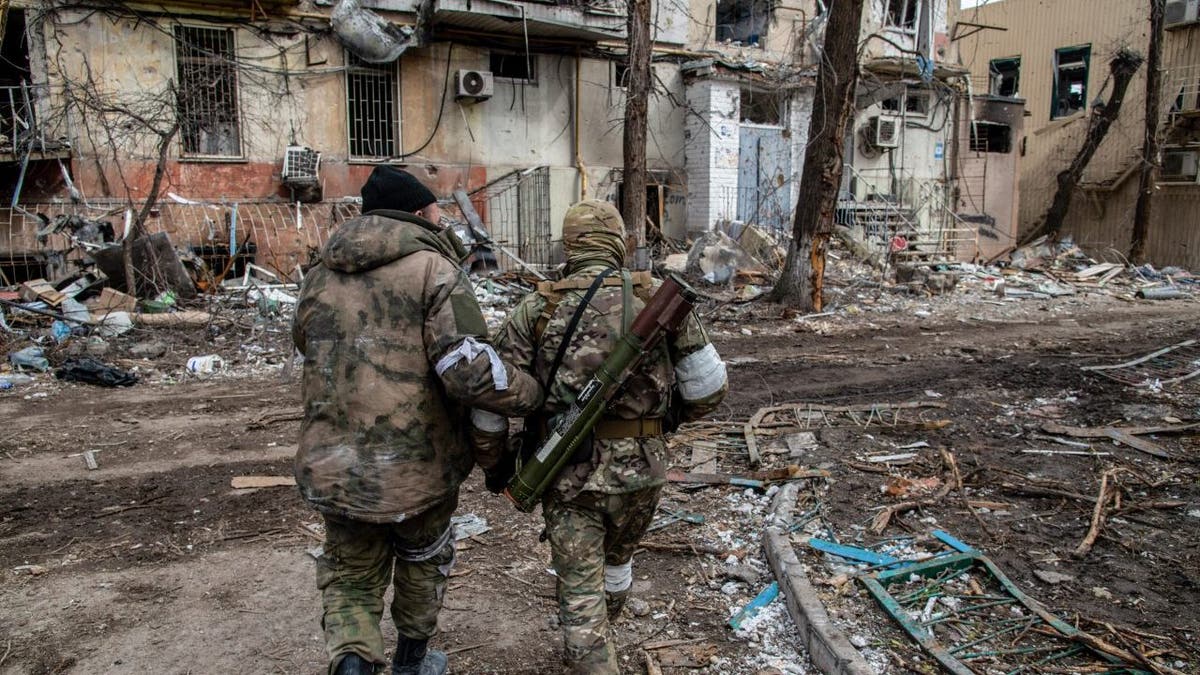
Russian and Chechen soldiers in a devastated Mariupol district, close to the Azovstal front line. (Maximilian Clarke/SOPA Images/LightRocket via Getty Images)
The report calls on governments, international organizations and allies of Ukraine to crack down on recruitment networks, put diplomatic pressure on Moscow and push for the repatriation of foreign nationals already trapped in Russia’s military system.
