



U.S. economic pressure on Iran has reached one of its strongest points in decades, but inconsistent enforcement has prevented sanctions from reaching their full impact, a former Treasury Department sanctions expert said.
Miad Maleki, who played a central role in the Treasury Department’s sanctions campaigns against Iran and its network of proxy groups, said in an on-camera interview that the current moment reflects a rare convergence of economic, political and diplomatic influence against Tehran.
“We have never had as much influence in the history of our conflict as we do now with Iran, since 1979,” Maleki said.
His assessment comes as President Donald Trump signaled the escalating pressure on Thursday, writing on Truth Social that the United States has “full control of the Strait of Hormuz” and that it is effectively “tightly closed” until Iran agrees to a deal.
IRAN’S PRESIDENT PROMISES CHALLENGE AS ANTI-REGIME PROTESTS Build UP AGAINST US ARMY BUILD-UP
Maleki argues that the current moment marks a turning point, as for the first time in years, multiple instruments of pressure – sanctions, a US naval blockade and stricter enforcement – are being applied simultaneously. Unlike previous cycles, he said, the strategy now focuses directly on Iran’s oil exports and the networks that help move them, raising the risk of rapid economic pressure.
He said Iran could run out of oil storage in just two to three weeks, necessitating production cuts, while gasoline shortages could hit at a similar time due to its heavy dependence on imports. Combined with an estimated $435 million in daily economic losses, the pressure could permeate the financial system, leaving the regime struggling to pay salaries and raising the risk of renewed unrest.
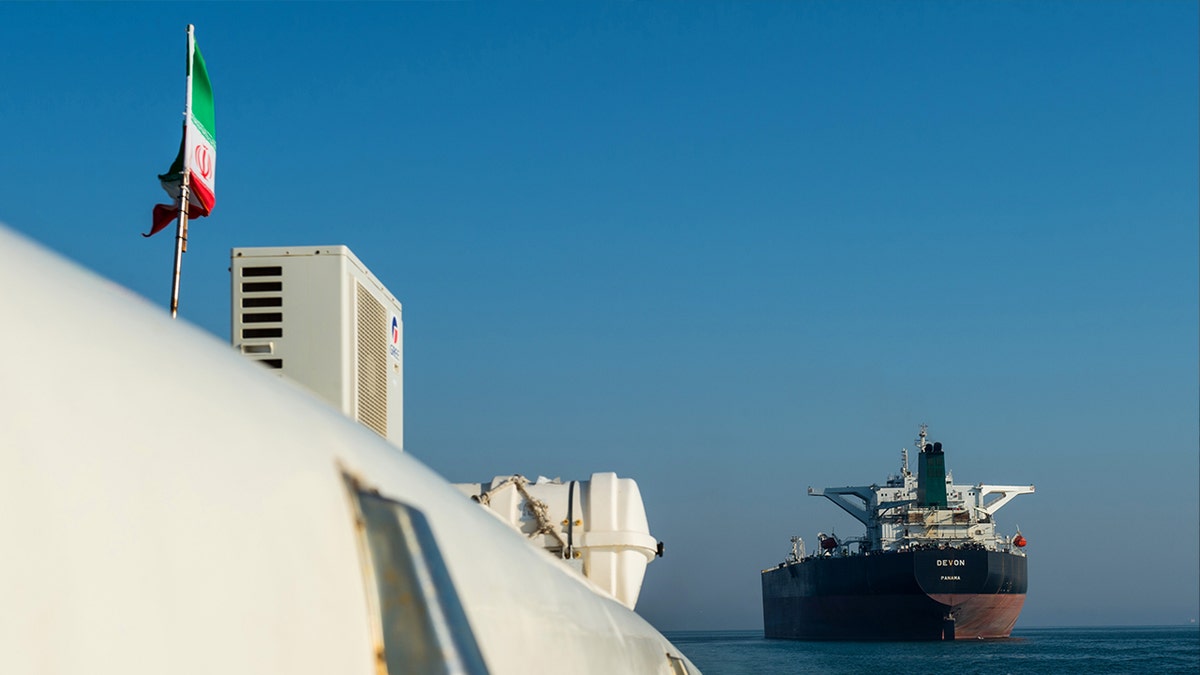
An oil tanker is seen near the terminal on Kharg Island, Iran, as US officials and analysts consider whether the island’s seizure could have a significant impact on Iranian oil exports. (Ali Mohammadi/Bloomberg)
Maleki said the real impact lies in sustained economic pressure and enforcement.
At the heart of those pressures is an Iranian economy he describes as “on the brink of collapse,” driven by years of sanctions and exacerbated by recent disruptions.
He pointed to triple-digit food inflation, a deeply devalued currency and a roughly 90% collapse in purchasing power, along with potential long-term oil revenue losses of up to $14 billion a year.
Maleki, who is currently a senior fellow at the Foundation for Defense of Democracies, estimated that current conditions are costing Iran “approximately $435 million per day in combined economic damage… with the blockade and closure of the Strait of Hormuz.”
A key driver of that pressure is the Strait of Hormuz, long seen as one of Iran’s most important tools to influence global energy markets. Maleki said the dynamic has changed.
IRAN IS TRYING TO GIVE THE GLOBAL ECONOMY A HEART ATTACK BY CLOSING THE STRAIT OF HORMUZ, SAYS UAE MINISTER
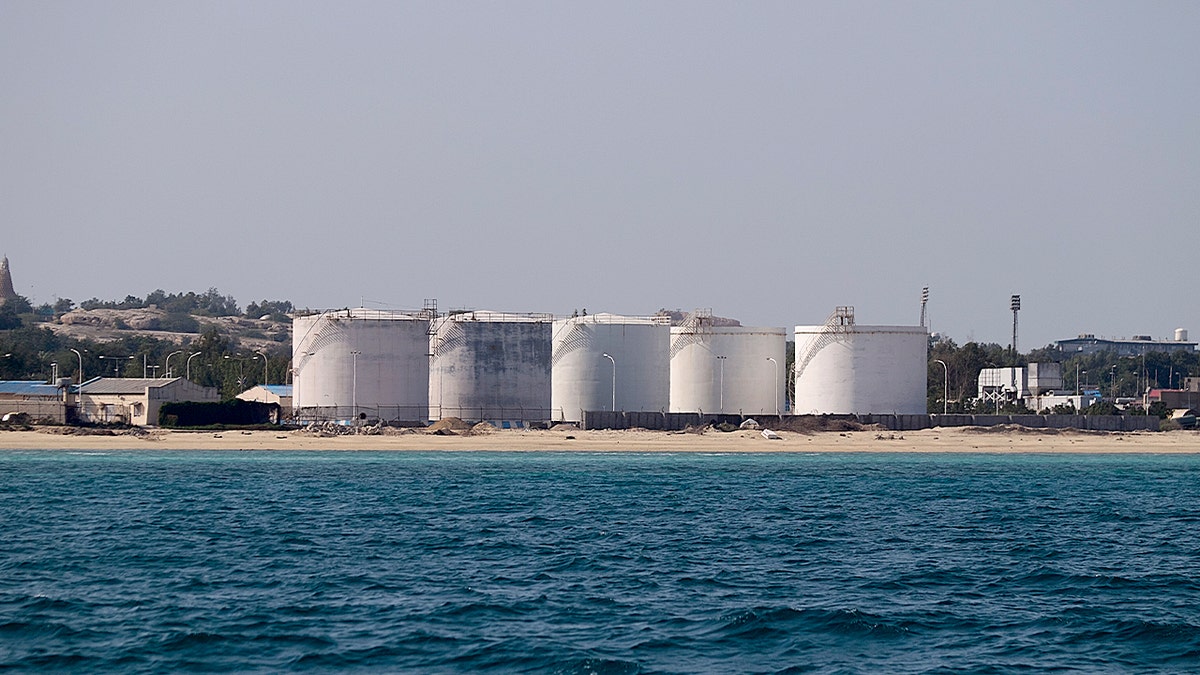
Former President Donald Trump is considering a possible attack on Iran’s oil hub on Kharg Island, amid expert predictions of market chaos. (Morteza Nikoubazl/NurPhoto)
“Iran’s economy is more dependent on the Strait of Hormuz than any other economy,” he said, calling its closure a form of “economic self-sabotage.”
While countries in Asia – including Japan, South Korea, India and China – are the most exposed to disruptions, many have built up reserves. “Japan’s oil reserve is quite large. The same goes for China,” Maleki said.
Yet the region remains heavily dependent on the waterway, with about 75% of liquefied natural gas supplies to countries such as India, China and South Korea passing through the strait.
Within Iran, however, the vulnerabilities are more pressing. Despite its vast oil reserves, the country imports between 30 and 60 million liters of gasoline per day to cover a domestic deficit of up to 35 million liters.
“If they run out of gasoline, they will have a major crisis at home,” Maleki said, noting that past shortages and price hikes have sparked widespread protests.
NUCLEAR EXPERTS WARNING IRAN’S URANIUM ‘RIGHT’ IS A MYTH, SAY TRUMP HAS THE RIGHT TO BE STRONG
The economic pressure is being reinforced by a US naval blockade targeting Iranian oil exports, the regime’s main source of income.
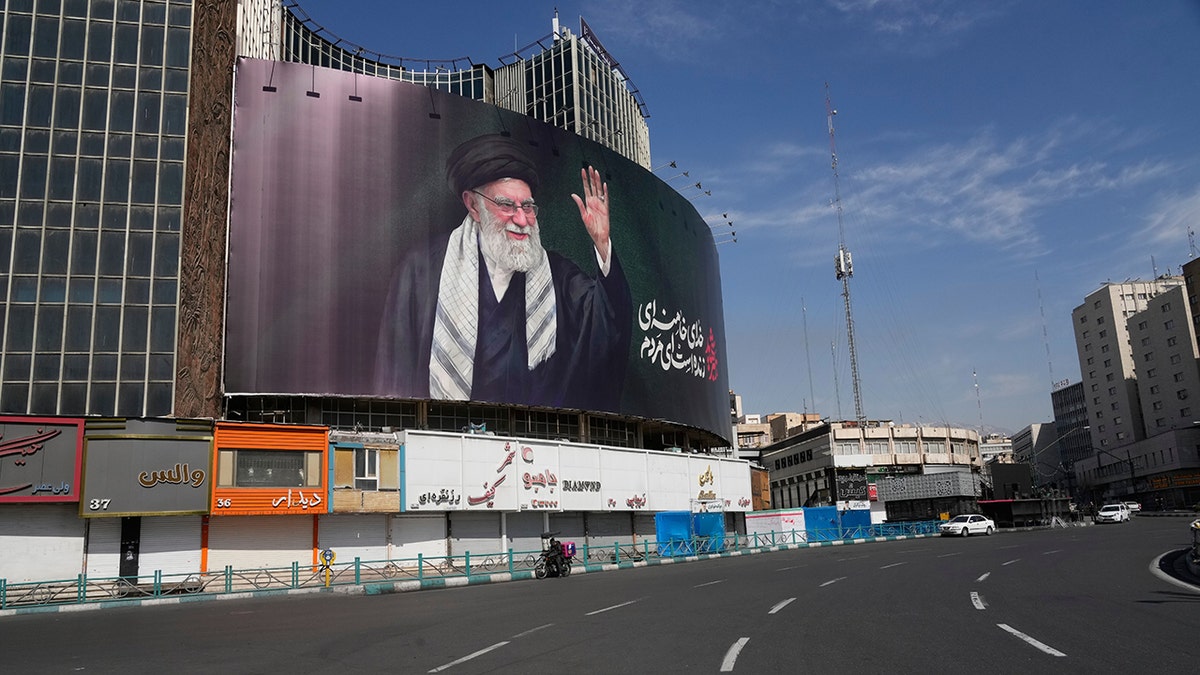
A billboard with a portrait of the late Iranian Supreme Leader Ayatollah Ali Khamenei, who was killed in US-Israeli attacks, looms over an empty square in Tehran, Iran, on Thursday, March 5, 2026. (Vahid Salemi/AP Photo)
A senior government official said the Treasury Department is stepping up enforcement under what it described as an “Economic Rage” campaign, simultaneously using financial and maritime tools to squeeze Iran’s revenue flows.
The official said the strategy aims to “systematically reduce Iran’s ability to generate, move and repatriate funds,” including by restricting maritime trade through the naval blockade, which targets Iran’s main source of oil export revenue.
Financial pressure is also increasing worldwide. The official said the Treasury Department has warned banks in China, Hong Kong, the United Arab Emirates and Oman that facilitating Iranian trade could expose them to secondary sanctions, signaling a more aggressive approach to enforcement beyond Iran’s borders.
The Treasury Department has imposed sanctions on more than 1,000 targets since 2025 under the current maximum pressure campaign, the official said, aimed at disrupting Iran’s oil trade and financial networks.
The official added that Iran faces immediate logistical constraints, warning that storage capacity on Kharg Island – the country’s main oil export terminal – could be filled within days if exports remain blocked, potentially leading to production shutdowns.
“The Treasury will continue to freeze the funds stolen by the corrupt leadership on behalf of the Iranian people,” the official warned.
A new analysis from United Against Nuclear Iran shows that the blockade is already deterring high-value shipments, even as some Iran-linked ships continue to transit the region.
TRUMP CLAIMS IRAN ‘HANGING FOR CASH’, ‘FINANCIALLY COLLAPSE’ AFTER STRIKE TEST EXTENSION
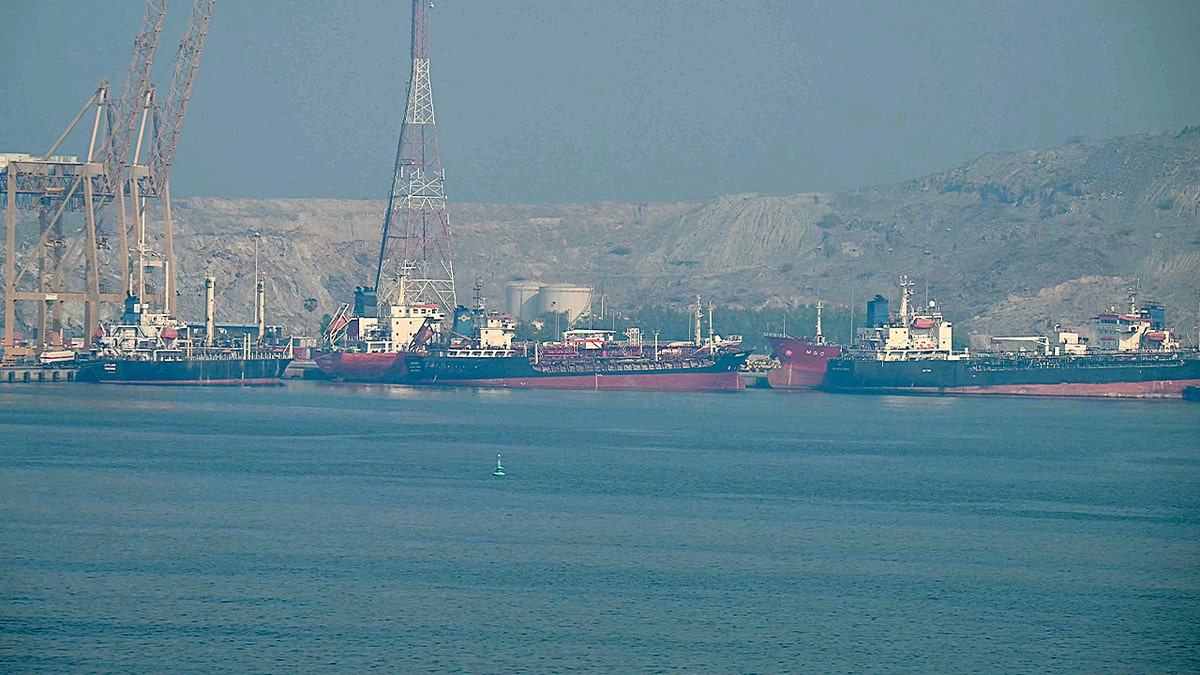
Iran seized two oil tankers on Thursday, while former Iranian minister Ezzatollah Zarghami threatened to make the Strait of Hormuz a “bloodbath and hell” for US forces. (Giuseppe Cacace/AFP)
“Its effectiveness should not be measured by the total number of Iran-linked ships at sea,” the group said in an April 22 statement. “But whether the US is disrupting high-quality Iranian oil exports… and deterring large-scale illicit shipments.”
At least 29 ships were turned around or returned to port, including several very large oil tankers, the report said.
The blockade, announced on April 12 and enforced by the US Central Command, aims to cut off Iranian crude oil exports, particularly shipments to China, while prioritizing high-impact targets.
While the sanctions are clearly biting, Maleki said their impact has been limited by inconsistent enforcement by successive US administrations.
US sanctions on Iran have been in place for years in various forms, targeting the country’s oil exports, banking sector and access to global financial systems.
Under the Obama administration, pressure on sanctions under the nuclear deal was partially lifted. The first Trump administration again applied “maximum pressure,” but enforcement was gradually increased and lasted only a limited period. The Biden administration later relaxed enforcement in its push for diplomacy.
He argued that cycles of tightening and easing — including the rollback of sanctions under the Iran nuclear deal and pauses in enforcement — have allowed Tehran to adapt.
“What is different now,” Maleki said, is the combination of continued sanctions with real-time enforcement measures that directly limit Iran’s ability to export oil — a step that was largely missing in earlier phases.
To maximize pressure, Maleki said Washington should maintain enforcement, especially through secondary sanctions on foreign banks and companies that facilitate Iranian trade.
Crucially, he downplayed the likelihood that external powers could offset the pressure.
CLICK HERE TO DOWNLOAD THE FOX NEWS APP

Anti-regime protests flood the streets of Tehran, Iran, on January 6, 2025. (Reuters)
“I can’t really point to another country that will step in and give the Iranian regime a lifeline,” he said.
“At some point in the next few weeks to a few months, they will face not only gasoline shortages and oil production disruptions, but also a major banking problem to pay the salaries of government employees and IRGC personnel,” he said. “The Iranians’ patience has run out again, just like before, and they are back on the streets. I am not sure if there will be any unpaid IRGC troops willing to take to the streets again and kill their fellow Iranians who have the same grievances as now, namely a collapsed economy.”
