



A decision to allow a major Chinese company to buy a bankrupt chemical factory in Teesside has been condemned by an alliance of European and US manufacturers who warn they face an existential threat from Chinese industrial subsidies.
The Venator Materials UK factory declared bankruptcy last October, with the loss of 270 jobs after more than 50 years of titanium dioxide production. The industrial brightener is used in paints and plastics, as well as in strategic defense and green energy supply chains.
On Thursday, British competition authorities cleared the way for a $70 million takeover by China’s LB Group, formerly Lomon Billions Group, the world’s largest titanium dioxide producer, after a three-month investigation.
The deal highlights the growing dilemma Western governments face in accepting Chinese investment to save jobs in the short term, with the risk of undermining strategic industries in the long run.
The European Ad Hoc Coalition for Titanium Dioxide, which represents almost 90 percent of EU production, said it was “extremely disappointed” by the Competition and Markets Authority’s decision and warned it could pose a threat to local producers.
“The likely outcome of LB’s acquisition of Venator’s UK factory will be a significant reduction in competition in both the UK and EU as LB Group aims to leave UK and EU manufacturers unable to invest in their businesses and remain viable,” they said.
LB Group has pledged to restart production at its factory in Teesside, an area in the north-east of England, potentially saving hundreds of jobs.
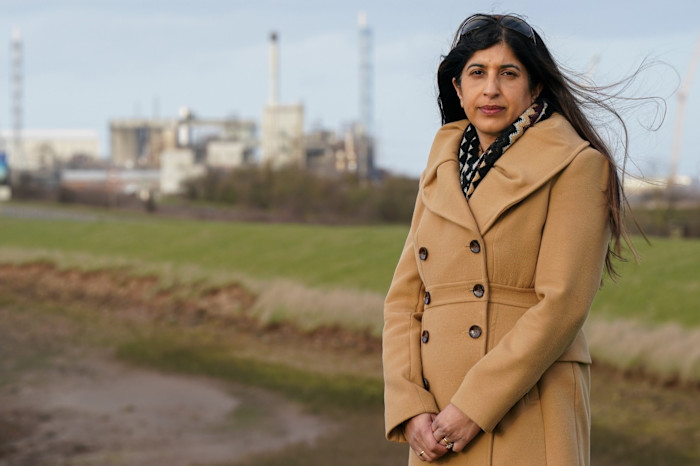
Unite local union representative Fazia Hussain-Brown welcomed the decision to approve the purchase of a factory that was a major employer in the region.
“We want to establish a good working relationship between the union and the LB Group in the future,” she said, “to ensure the future viability of the site and ensure that well-paid union jobs are available.”
However, industry insiders warned that LB Group’s access to industrial subsidies in China opened the door to undercutting of rival factories, including Britain’s only other titanium dioxide plant at Stallingborough, Grimsby, 100 miles along Britain’s east coast.
The plant’s American owner, Tronox, announced in January that it would close its own Chinese production facilities, citing “continued overproduction and unsustainable prices” from its Chinese competitors.
Three industry insiders told the FT they feared LB Group would be able to cross-subsidise its new UK operations, selling into the European market at well below actual UK production costs.
LB Group did not respond to a request for comment.
One of the insiders estimated that the LB Group was producing titanium dioxide for $1,500 per ton in China, including subsidies, almost half the estimated $2,800 per ton production cost in Britain.

Melanie Onn, MP for Great Grimsby, said ministers should consider how the UK government should protect a capability that is also part of the supply chain for titanium metal, a key component in the defense industry.
“The danger is that by cutting prices, China will make it unsustainable to produce this product in Britain,” she said. “These are important jobs for skilled workers. Our local schools encourage children to take up voting subjects, but they must have a job.”
China became a net exporter of titanium dioxide after 2010, with exports rising from just 48,000 tons that year to more than 1.7 million tons in 2025, creating a global overproduction that coincided with a wave of factory closures outside China.
During that 15-year period, plants with a combined capacity of nearly 1.3 million tons were closed in Asia, Europe and the U.S., according to data compiled by industry analyst Reg Adams, who has tracked titanium dioxide markets since 1993.
“China’s capacity stood at 5.7 million tonnes at the end of 2025. The market is growing but is not yet close to absorbing the surplus that has weakened producers outside China, hence Venator’s bankruptcy,” he said.

In January 2025, Brussels announced it would impose significant duties on Chinese imports of titanium dioxide in an effort to level the playing field.
Britain has yet to follow suit, but last month the UK Trade Remedies Authority – the body that advised the government on the need for protective duties – announced it had begun an investigation into anti-dumping duties on titanium dioxide.
The coalition has said the EU’s anti-dumping duties have cleared the way for non-Chinese companies to buy two other Venator facilities – one in Huelva, Spain, and the other in Scarlino, Italy.
LB Group has been explicit about using its overseas investments as a hub to avoid duties, noting in its most recent half-year results that a number of trading blocs had launched anti-dumping investigations or imposed restrictions on Chinese titanium dioxide.
“By establishing new factories abroad, the company can connect directly to end markets for production and sales, radiate into surrounding markets… and avoid high anti-dumping duties,” the report said.
While industrial producers are demanding more protection from China, downstream users of titanium dioxide, such as the paint and printing ink industries, oppose anti-dumping duties, arguing they would increase costs.
The British Coatings Federation said its members are still dealing with the impact of the Covid-19 pandemic and Russia’s large-scale invasion of Ukraine. “The majority of my members do not want anti-dumping duties,” said Tom Bowtell, CEO of the BCF.
The Department for Business and Trade and the European Commission declined to comment.
Data visualization by Janina Conboye And Haohsiang Ko
