



President Donald Trump made a difficult but ultimately correct decision by attacking the Islamic Republic. For years, the regime’s nuclear advances, missile expansion and regional terrorism were allowed to grow while the world wavered. Domestically, it carried out one of the most brutal crackdowns on street demonstrators in modern Iranian history. None of this was theoretical. The regime became more dangerous by the year.
The strikes changed that trajectory. Iran suffered serious military losses. The nuclear infrastructure was severely damaged. The missile capacity was greatly reduced. Senior figures were eliminated. For the first time in years, the regime was forced on the defensive.
That alone is not a victory.
The real danger now is not the war itself, but how it ends. A half-finished war gives the Islamic Republic what it has always relied on. Time. Time to rebuild his capabilities, reassert control at home and present survival as strength.
GORDON SONDLAND: STAY THE COURSE WITH IRAN, PRESIDENT TRUMP. It’s like breaking a horse
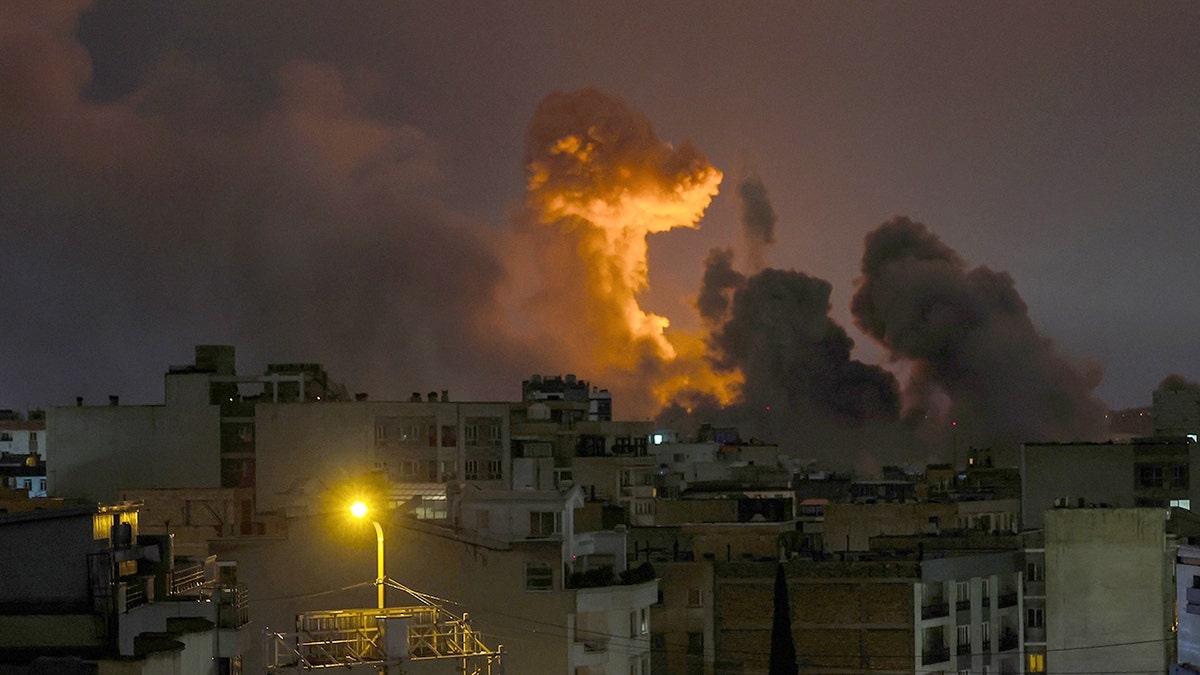
A large plume of smoke rises over Tehran after explosions were reported in the city on the night of March 28, 2026. (Getty Images)
That’s all Tehran is trying to do.
The regime is acting as if it has taken the blow without changing course. It has not relinquished its nuclear stance or its regional ambitions. Instead, it shifts from direct confrontation to leverage, especially through the Strait of Hormuz.
This is familiar territory for Iran. When it is stressed, it increases costs for everyone else. It disrupts shipping, creates uncertainty in energy markets and converts that pressure into bargaining power. We are already seeing the first signs of that shift, alongside new demands from Iranian officials, including the release of blocked assets before negotiations even begin.
MIKE POMPEO: OPERATION EPIC FURY IS JUSTICE – AND REGIME CHANGE MUST FOLLOW
This is less a bargaining position than an attempt to make concessions after a blow.
And it highlights the central issue. Iran does not offer an exit. It tests whether the United States wants a real outcome or just a pause that resembles de-escalation.
Inside Iran, the mood is clearer than many think. People may not support widespread strikes on infrastructure, but their greatest fear is not escalation. It is survival of the regime. After all that has happened, what worries many most is the idea that the Islamic Republic could once again absorb the pressure and emerge intact.
IRAN WAR NEARS ‘COMPLETION’ AS TRUMP EYES DEADLINE – WHAT THE END GAME MIGHT LOOK LOOK LIKE
Iranians have seen this pattern before, and it is precisely why so many are feeling uneasy now.
The regime’s strategy has always been patience. It absorbs the pressure, waits out the political cycles in Washington and emerges when the moment is right. A temporary concession today often leads to renewed escalation later.
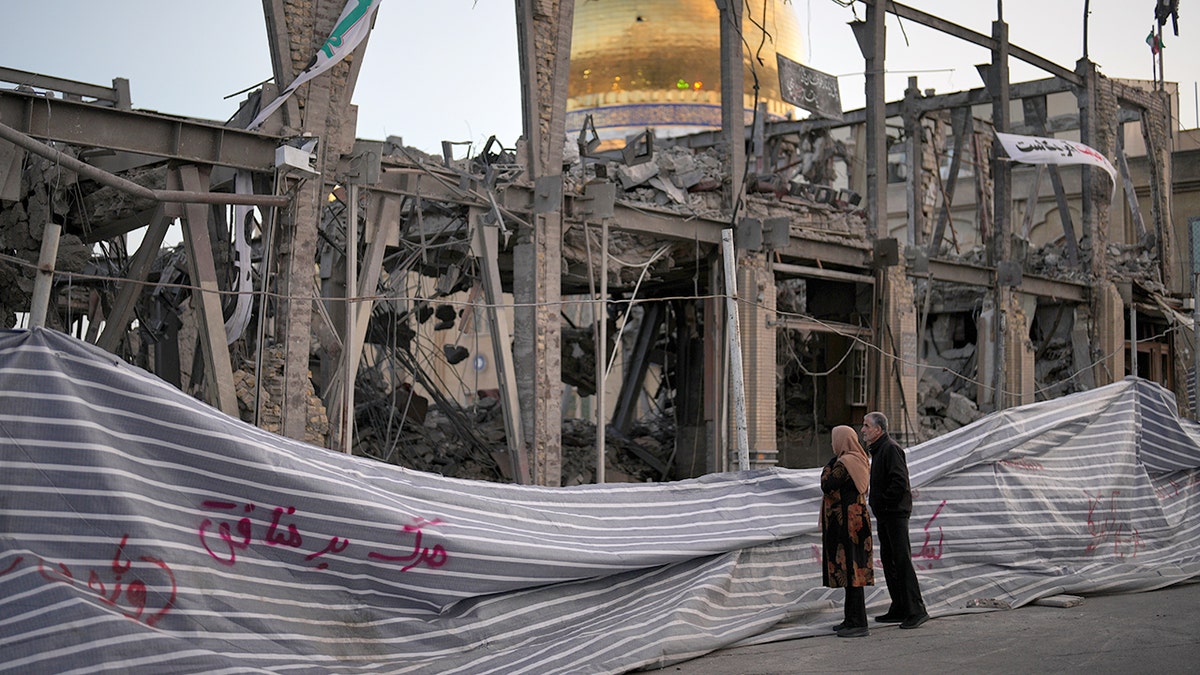
Pedestrians look at a destroyed building that officials say was hit by US-Israeli airstrikes in Zanjan, Iran, on April 4, 2026. (Francisco Seco/AP Photo)
This is also what makes the regime different. Islamic systems with apocalyptic worldviews tend to have a higher tolerance for pain and loss. Their resilience is not only institutional, but also ideological. You cannot simply test that resilience. It must be broken.
DOUG SCHOEN: TRUMP’S IRAN STRATEGY COULD BRING LONG-ANTIPATED REGIME CHANGE. MY SERBIA EXPERIENCE IS A GUIDE
Therefore, it would be a mistake to stop now. It would allow the regime to turn survival into recovery, and recovery into renewed strength.
If the goal is to truly neutralize the threat, six measures are important.
First, Iran’s stockpile of enriched uranium must be removed from the country. As long as it remains within Iran, the nuclear issue is not resolved. It’s delayed.
The regime’s strategy has always been patience. It absorbs the pressure, waits out the political cycles in Washington and emerges when the moment is right. A temporary concession today often leads to renewed escalation later.
WHY TRUMP FACES A PRINCIPAL DECISION ON CUTTING OUT IRAN’S OIL SUPPLY IF HE CAN’T GET A DEAL
Second, the military operation should decimate the regime’s ballistic missile arsenals, launchers, and missile and drone production facilities.
Third, the Strait of Hormuz must reopen, but not through negotiations and diplomacy; it would have to reopen through military force and the decimation of Tehran’s ability to exploit the threat of closure in the future.
Fourth, the regime’s ability to generate oil revenues must be limited. Without oil money, which generates much of the hard currency under the direct control of the government, military recovery and internal repression will be much more difficult.
WHY THE MIDDLE EAST AGREES MORE WITH PRESIDENT TRUMP THAN AMERICA REALIZES
Fifth, pressure on the regime’s leadership structure must continue. This is not about symbolism. It’s about breaking the chain of command and the sense of untouchability it maintains. This must include military, political and economic leadership. Ideological regimes do not respond to pressure the way normal states do. They adapt, absorb and continue unless their core structures are disrupted.
Sixth, the regime’s oppressive forces must be targeted and degraded. The Israeli initiative to attack the security checkpoints was important and effective. The regime uses its oppressive powers to terrorize the people. The terrorists should feel the fear, the fighters should feel chased.
CLICK HERE FOR MORE FOX NEWS ADVICE
If the war stops here, the regime will survive with fewer resources, but with its core intact. It will rebuild. It will reconfirm the check. And the next confrontation will take place under worse conditions.
Second, the military operation should decimate the regime’s ballistic missile arsenals, launchers, and missile and drone production facilities.
Trump was right to act. But acting is only half the story. What matters now is whether the outcome matches the decision.
CLICK HERE TO DOWNLOAD THE FOX NEWS APP
At this point, the United States still has the advantage. Iran is weakened, vulnerable and on the defensive. Now is the time to translate that position into a lasting result.
Because unfinished wars don’t end. They take a break and return later on worse terms.
Navid Mohebbi is an independent Iran expert based in Washington, DC, and advisor to the Iran Prosperity Project. Follow him on X: @navidmohebbi.
