



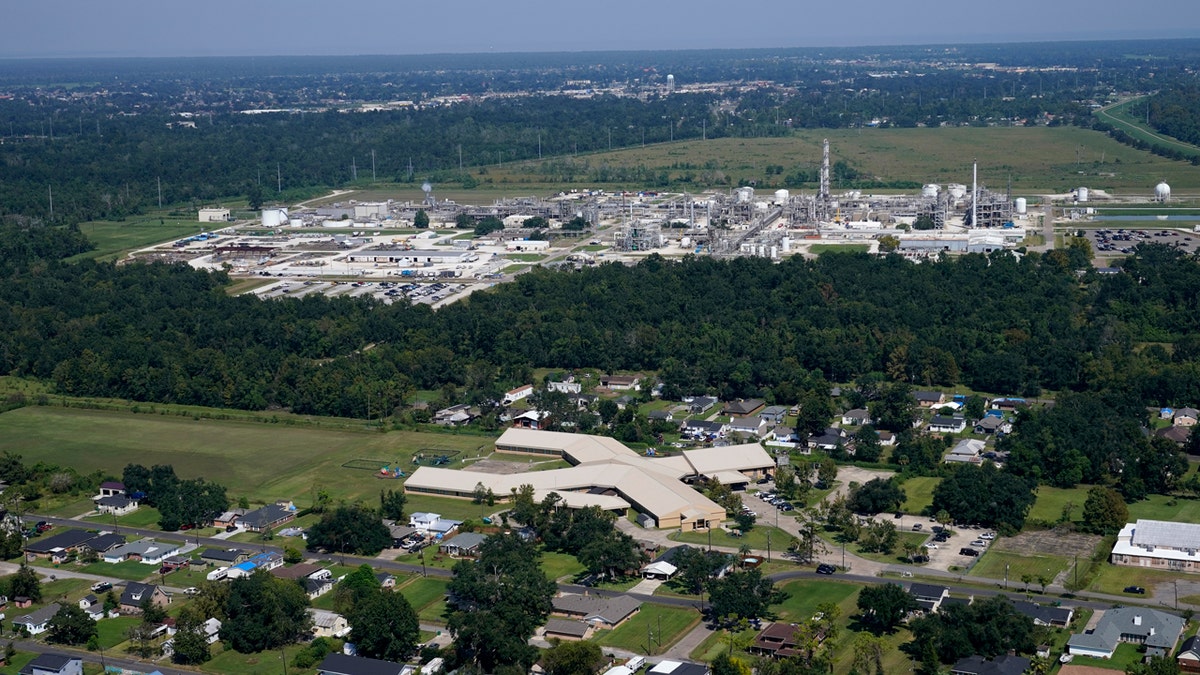
The European chemical industry is quietly falling apart, and the Americans should pay close attention to this. What is happening across the Atlantic is not simply a story of industrial decline. It’s a warning sign for the United States about what happens when overregulation collides with global competition, especially from China. If Washington does nothing, the same pressures now eroding Europe’s chemical base could undermine America’s position as a global chemical producer in the next decade. After all, it is as true in the United States as it is in Europe that excessive regulation combined with a flood of Chinese imports is a double whammy that few industries can withstand for long.
The numbers alone are staggering. A recent story in the Financial Times shows that investment in the European chemicals sector will fall by more than 80% by 2025, from 1.9 million tonnes of new capacity in 2024 to just 0.3 million tonnes last year. At the same time, factory closures doubled. Since 2022, around 20,000 jobs have been directly affected and 37 million tonnes of production capacity – equivalent to around 9% of Europe’s chemical production capacity – has disappeared. What we are witnessing is the structural decline of the European chemical manufacturing sector, which produces all the building blocks for modern life.
Market leaders in Europe are clear about the cause of this decline: high energy prices, suffocating bureaucracy, aggressive regulations and a flood of cheaper imports from China. Chemicals are among the most energy-intensive products in the economy, with energy accounting for a significant portion of petrochemical production costs. Chinese producers benefit from access to competitively priced oil from sanctioned suppliers, effectively creating a parallel trade network that provides cheap raw materials for Chinese petrochemical production. This gives Chinese chemical manufacturers a structural cost advantage in global markets and allows them to undercut Western competitors who do not have access to those cheaper raw materials. Add to that carbon pricing, painfully slow permitting and a veritable maze of regulatory requirements linked to the EU neutrality agenda, and it becomes clear why investment capital and employment have gone elsewhere.
TRUMP’S $12BILLION RARE EARTH PLAN TARGETS CHINA, AS EXPERTS WARNING US IS ‘ONE CRISIS AWAY’
The consequences extend far beyond the chemical companies themselves. Chemicals are the building blocks of modern economies. As Marco Mensink, director general of the European Chemicals Industry Council, warned: “If you want a defense sector… an automotive sector, it is completely dependent on chemicals that provide the materials.” Europe is already 80% dependent on China for vitamins, and increasingly dependent on Chinese inputs for basic economic needs. This dependence makes Europe not only economically vulnerable, but also strategically vulnerable to China when it comes to the building blocks of its economy.
For Americans, the temptation is to simply see this as a problem that Europe itself has created. After all, the US enjoys relatively lower energy costs, abundant natural gas and a more market-oriented approach to industrial policy. At Olin we see that this sense of security is more fragile than people would expect. Many of the same pressures are already visible here: increasing regulatory burdens, allowing delays for industrial projects, growing dependence on Chinese-made chemicals, and an uneven playing field in the trade market. Recent Biden-era EPA rules related to the Toxic Substances Control Act (TSCA), particularly around risk assessment and unreasonable risk determinations, have significantly expanded federal authority over chemicals, increasing the regulatory burden companies face here at home. This, in turn, has threatened domestic production of chemicals essential to economic growth in the United States. As recent congressional testimony has highlighted, as recently as 2009 the United States was the world leader in chemical production. Yet today China is responsible for 50% of all global chemical sales, with the United States a distant second. Without deliberate action, the US could follow Europe down the same path, losing investment, capacity and, most importantly, good-paying American jobs, one factory at a time.
CLICK HERE FOR MORE FOX NEWS ADVICE
The recent closure of our epoxy plant in Brazil provides a striking illustration of this broader trend. Although Brazil is not Europe, the logic is the same. And while Europe is experiencing these troubling dynamics on a large scale, US-based producers are not immune to the same calculus. In recent years, Olin has had to close chemical capabilities at our plants in the United States, as well as in Europe and Asia, as global markets changed. Other chemical companies have taken similar steps as rising costs and unequal trading conditions reshape the industry.
Yet all is not lost. The United States still has a strategic advantage in chemical production. When it comes to resources, technology, safety and our workforce, the United States is well positioned to continue making progress in the chemical sector. At Olin, we strive to advance this sector of the economy and leverage chemical manufacturing to strengthen the economic and national security interests of the United States.
CLICK HERE TO DOWNLOAD THE FOX NEWS APP
As American policymakers consider our future direction, the lesson from Europe’s decline is not that environmental goals or worker protections should be abandoned. The truth is that policy choices involve trade-offs, and ignoring competitiveness has real consequences. The dramatic decline in chemical production in Europe shows what happens when regulations get ahead of market reality and when governments underestimate how quickly global supply chains can change. Once capacity is gone, it is extremely difficult, time-consuming and very expensive to rebuild.
If the United States wants to avoid becoming dependent on China for the chemicals that underpin defense, health care, agriculture and advanced manufacturing, we need a coherent strategy now. That means faster permits, predictable regulations, realistic timelines for climate policy and a serious approach to trade enforcement. It means that chemicals must be recognized as a strategic sector, and not just as part of environmental regulation. Europe offers our nation a cautionary tale in real time. The question is whether America will learn from it or Europe will follow on the road to job losses and Chinese dependence.
