



Iranians were able to make some international phone calls on Tuesday for the first time since authorities imposed a sweeping communications freeze amid a violent crackdown on anti-government protests.
Tehran residents said calls to numbers outside the country were briefly connected, although text messaging remained disabled and internet access was still limited to government-approved domestic websites, leaving Iran largely cut off from the outside world.
The partial restoration came as security forces maintained a strong presence in central Tehran, according to residents, with riot police, Revolutionary Guard units and plainclothes officers deployed at key locations as authorities tried to contain the unrest.
IRAN’S KHAMENEI ISSUES DIRECT WARNING TO UNITED STATES IN RUSSIAN-LANGUAGE POSTS
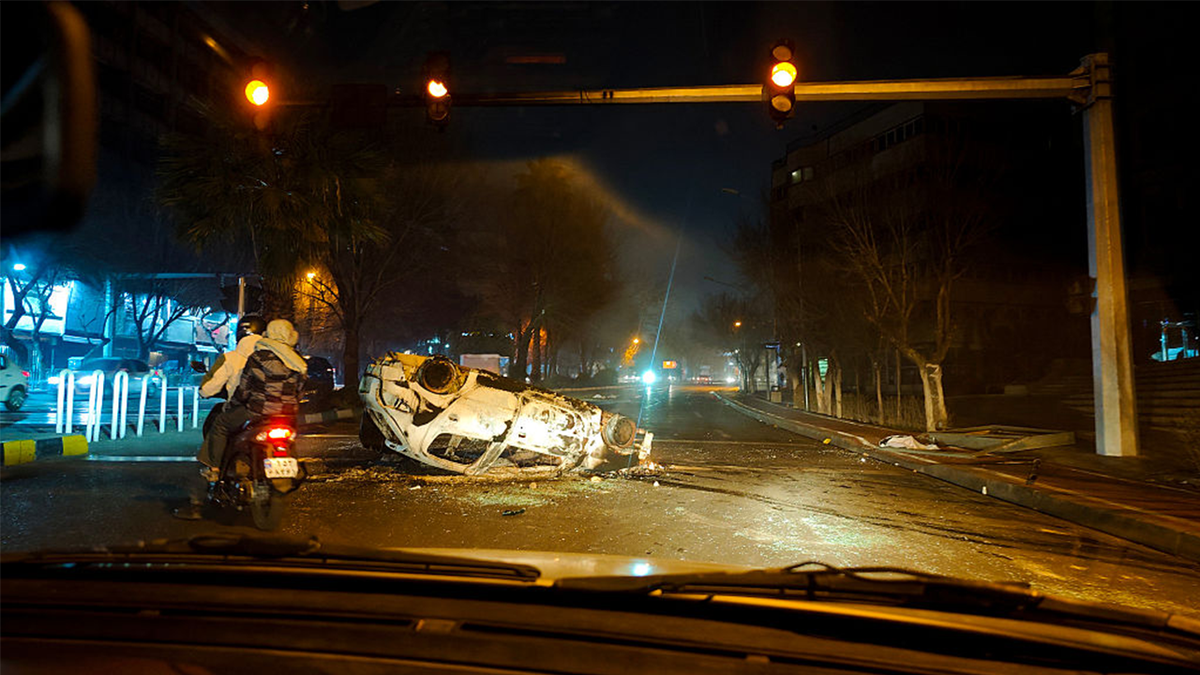
On January 8, 2026, an overturned car is seen in Tehran, Iran. (Getty Images)
Protests have erupted in recent weeks over Iran’s deepening economic crisis, with demonstrators increasingly calling for regime change. Activist groups say hundreds of people have been killed, although the actual toll remains difficult to verify because of the internet blackout and strict state controls on information.
Some government buildings and financial institutions were damaged during the unrest, residents said, while traders reported being ordered to reopen businesses despite ongoing security operations. Pedestrian traffic remained sparse in many parts of the capital.
The unrest has attracted increased international attention as tensions rise between Tehran and Washington. US President Donald Trump has said Iran wants to negotiate with his government following his threat to bomb the country over its response to the protests.
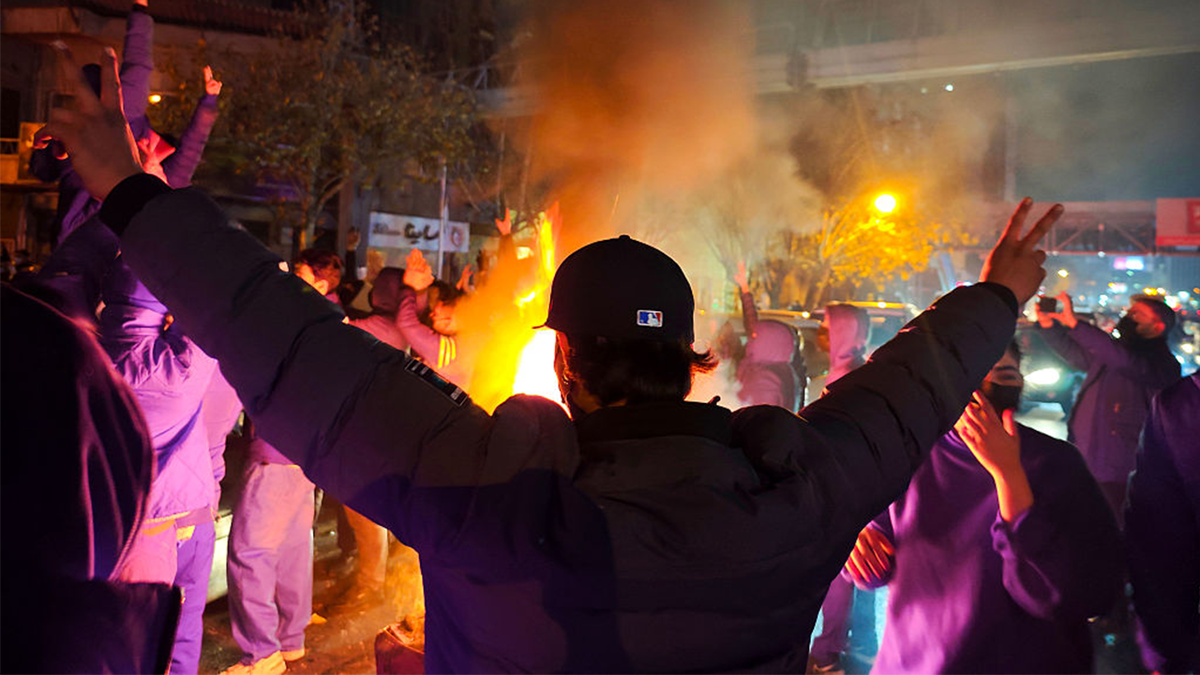
Fires are lit as protesters gather in Tehran, Iran, on January 8, 2026. (Getty Images)
Iran “better not start shooting, because we’re going to start shooting too,” Trump said on Friday.
Iranian Foreign Minister Abbas Araghchi told Al Jazeera in an interview broadcast Monday evening that he continued to communicate with US envoy Steve Witkoff.
The communication “continued before and after the protests and is still ongoing,” Araghchi said, adding that “the ideas and threats proposed by Washington against our country are incompatible.”
Araghchi also said Tehran is “fully prepared for war” in the event the US attacks.
White House Press Secretary Karoline Leavitt told reporters that diplomacy remains Trump’s first option, but that the president “has shown that he is not afraid to use military options if and when he sees fit, and no one knows that better than Iran.”
“He certainly doesn’t want people to be killed on the streets of Tehran. And unfortunately that is something we are seeing now,” she added.
IRAN TO HANG PROTESTER IN WHAT WOULD MARK THE FIRST EXECUTION TIED TO ANTI-REGIME DEMONSTRATIONS
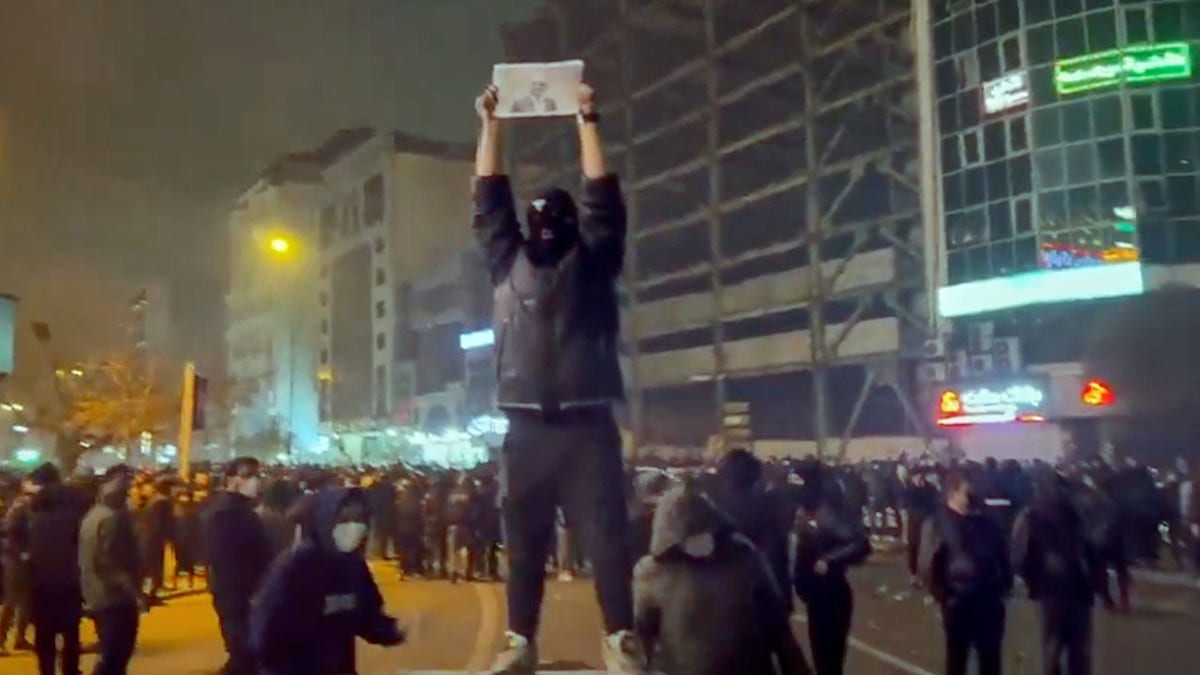
A masked protester holds a photo of Iranian Crown Prince Reza Pahlavi during a protest in Tehran, Iran, on January 9, 2026. (UGC via AP)
Tens of thousands of pro-government demonstrators also took to the streets on Monday after days of protests against the rule of Supreme Leader Ayatollah Ali Khamenei. Iranian state television broadcast chants from the crowd shouting: “Death to America!” and “Death to Israel!” as well as “Death to the Enemies of God!”
Iran’s attorney general has warned that anyone participating in protests will be considered an “enemy of God,” a crime punishable by death.
CLICK HERE TO DOWNLOAD THE FOX NEWS APP
Trump announced Monday that countries doing business with Iran would face 25% tariffs that would be “effective immediately” in response to Tehran’s crackdown on protests.
The Associated Press contributed to this report.
