



Even as aid continues to flow into Gaza following President Donald Trump’s ceasefire, one expert is questioning the veracity of the Integrated Food Security Phase Classification (IPC) claims that famine occurred in Gaza this summer – and the agency’s organizational ties.
On August 22, the IPC claimed that famine was occurring in one Gaza governorate and was expected to reach two additional governorates by September 30.
ISRAEL ACCUSES UNSUPPORTED GAZA HUNGER REPORT OF POLITICAL MANIPULATION, DEMANDS WITHDRAWAL
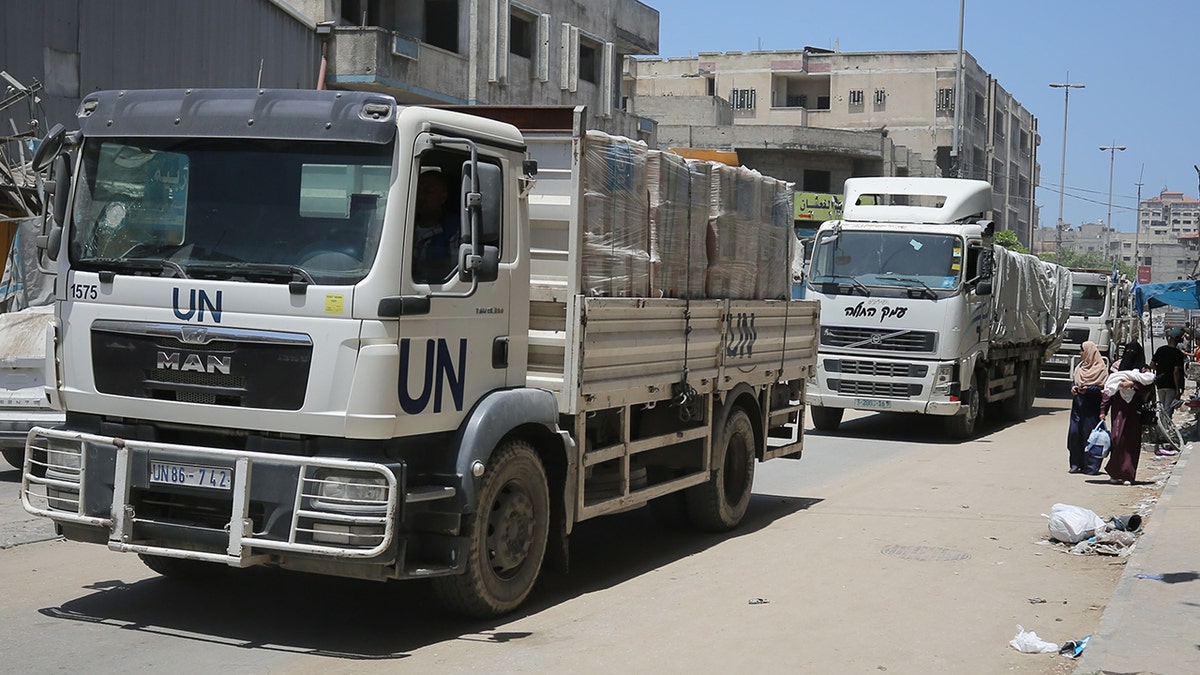
Aid trucks from the United Nations Relief and Works Agency for Palestinian Refugees in the Near East (UNRWA) deliver aid near Gaza City on June 19. (Dawoud Abo Alkas/Anadolu via Getty Images)
On August 22, the Hamas-led Health Ministry in Gaza said that 273 Palestinians had died from famine and malnutrition during nearly two years of conflict. On October 7, the company claimed, the number was 460, a difference of 187.
“I imagine it was a gruesome end for those 187 individuals. But an accusation of starvation is supposed to be based on evidence,” Adesnik said.
He noted that “the IPC predicted a major deterioration in the food security situation,” which he said “should drive prices up significantly. But in fact we have seen the opposite.”

Days after a ceasefire took effect, Gazans shop at a market in central Gaza on October 18, 2025. (TPS-IL)
The World Food Program’s Palestine Market Monitor shows that prices for 60 of 89 major food and non-food staples in three Gaza governorates remained flat or fell between the last week of August and the third week of September.
Sources also question whether there may be bias in the IPC’s famine forecasts. The IPC does not name the non-governmental organizations, government institutions and UN agencies that are part of its overarching governance structure. These organizations also provide staff who “support the financing, implementation and institutionalization of IPC at the country level” as members of the Technical Working Group (TWG).
The IPC did not respond to questions about which NGO and UN entities are part of the organization or how their salaries are paid.
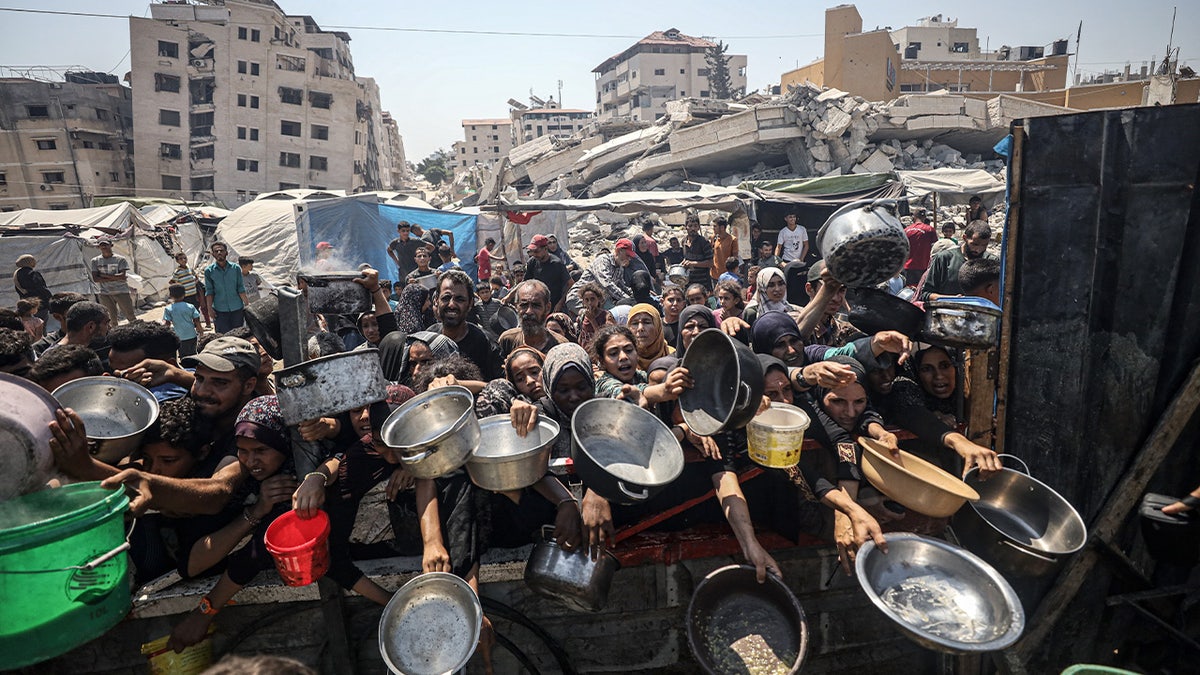
Gazans await food aid in Gaza in July. Critics have questioned the Integrated Food Security Phase Classification’s famine rating for one Gaza governorate and expected it to reach two others by September. July 23, 2025. (Khames Alrefi/Anadolu via Getty Images))
Recently, UN agencies and international NGOs have come under fire over accusations of joining Hamas.
UNICEF official says malnutrition in Gaza is reaching ‘famine levels’ as humanitarian aid trickles in
The UN’s food distribution model has been questioned due to the severity of looting by both armed and unarmed actors. The United Nations Office for Project Services (UNOPS) shows that 80.5% (6,800 out of 8,440) of UN trucks have been intercepted since May 19.
“That can’t possibly be the fairest way to distribute aid,” Adesnik said. “There are indications that in such a situation, the strongest can take their share of the aid. And that’s kind of the opposite of what we probably like to see, and it doesn’t seem like the UN is doing anything to resolve the situation.”
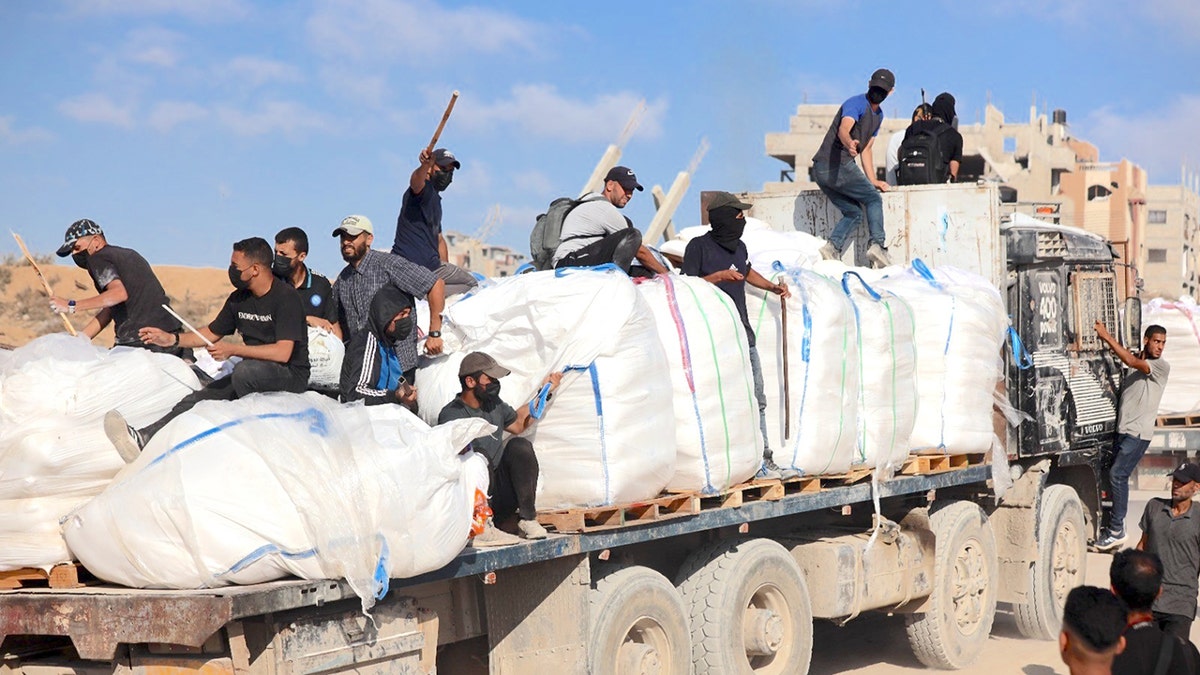
Hamas terrorists with clubs and firearms secure and direct humanitarian aid trucks in the northern Gaza area of Jabaliya in June. 25 (TPS-IL)
Kaneko said the interception of aid “is a serious concern.” According to Kaneko, the UN plan to scale up operations focuses on resuming distributions at community and household levels – the most effective way to ensure that aid reaches the most vulnerable.”
She said that in addition to the ceasefire, “for our plan to succeed, we also need open border crossings; safe traffic for citizens, including emergency responders; unrestricted access of goods; visas for humanitarian personnel; space to operate; and a revival of the private sector.”
Since the ceasefire began, OCHA reported that there was “a possible reduction in the number of interceptions.” As of October 17, UNOPS shows that just over 75% of goods shipped to Gaza since May have arrived at their destination.
UNRWA SCHOOLS ‘HIPPED BY HAMAS’, WATCHDOG REPORT WARNS

A Hamas police officer patrols a market in central Gaza days after a ceasefire was signed on October 18, 2025. (TPS-IL)
Adesnik also raised concerns about changes to OCHA’s Humanitarian Situation Reports, which previously detailed the proportion of aid seekers she said died near Gaza Humanitarian Foundation (GHF) distribution sites versus those who died near UN aid convoys.
Not long after reports between July 21 and August 18 indicated that more aid seekers were killed at UN convoy sites (576) than near GHF distribution sites (259), Adesnik said: “we noticed that for the first time, [OCHA] the number of people who died while seeking help was omitted. Adesnik said he wonders if, because the numbers turned against them, they will simply stop reporting them.

U.S. Ambassador to Israel Mike Huckabee and Special Envoy Steve Witkoff speak with an air force working in Gaza as they visit a distribution site operated by the U.S.-Israeli-backed Gaza Humanitarian Foundation. (Gaza Humanitarian Foundation)
Indicating that the change is temporary, Kaneko explained that data on deaths around convoys and distributions is “typically provided by two sources and always attributed accordingly” and that “if no new data has been received from either source by the time an update is completed, figures from that source may not appear until a subsequent update.”
CLICK HERE TO DOWNLOAD THE FOX NEWS APP
Adding further confusion to the issue of hunger in Gaza was an explanation on X from UNRWA Commissioner General Philippe Lazzarini, who recently said, while praising the ceasefire agreement, that his organization “has enough to feed the entire population for the next three months.”
In response to the claim, Adesnik noted: “Over the past five months, the UN has sent thousands of trucks, knowing that eight or nine out of ten would be looted. If they had coordinated with Israel on security, that aid could have gotten into the hands of those who needed it most.”
