




President Donald Trump faces a crucial decision that could determine the next phase of his Middle East policy: whether to allow Turkish troops into Gaza as part of a US-backed stabilization force. The move, which Ankara is lobbying for, has caused alarm in Israel and among Arab allies who view Turkey’s ambitions and Islamist ties as a threat to regional stability.
According to Middle East Eye, Turkey is preparing a brigade of at least 2,000 soldiers drawn from multiple branches of the military to join the mission once a UN Security Council mandate is approved. Israel has flatly rejected the idea. “There will be no Turkish boots on the ground,” an Israeli government spokesman told reporters.
Trump has publicly praised Turkish President Recep Tayyip Erdogan as “a very strong leader,” in a sign of renewed confidence and raising questions about whether personal diplomacy could outweigh Israel’s concerns. His decision will test Washington’s ability to balance its closest ally in the Middle East, Prime Minister Benjamin Netanyahu, with a NATO partner that has long hosted Hamas leaders and positioned itself as their defender.
TRUMP SIGNALS NEW CONFIDENCE IN ERDOGAN, CAUSING CONCERNS ABOUT TURKEY’S AMBITION IN GAZA AND BEYOND
President Donald Trump speaks with Israeli Prime Minister Benjamin Netanyahu at Ben Gurion International Airport before boarding his plane to Sharm el-Sheikh on October 13, 2025 in Tel Aviv, Israel. President Trump visits the country just hours after Hamas released the remaining Israeli hostages captured on October 7, 2023, as part of a US-brokered ceasefire agreement to end the war in Gaza. (Photo by Chip Somodevilla/Getty Images.)
Dan Diker, chairman of the Jerusalem Center for Security and Foreign Affairs, said Trump must recognize the depth of the ideological divide between Israel and Erdogan’s government.
“Trump is an economic warrior and a dealmaker. He wants to include everyone in his Middle East regional deal by embracing enemies and allies alike,” Diker said. “But he does not take into account the deep-seated enmity that Erdogan’s government embodies. Turkey is no friend of the United States and the Western alliance, even though it is a NATO member. The country is currently on a mission to assert itself as an Islamic imperial power in the Middle East.”
Diker warned that Erdogan’s ambitions, combined with his support for Hamas, pose a direct challenge to both Israel and NATO. “You want to talk about an occupier? They are the main occupiers of Syria right now, and they see themselves as the defining Islamic power in Gaza. This is a very dangerous moment, and the president would do well to support Israel without conditions,” he said.
He warned that Erdogan is “publicly supporting and financing an international Islamic terrorist organization.” Diker said NATO “must not allow this” and that Trump “cannot allow himself to compromise America’s principles first, which is Israel first and the West first.”
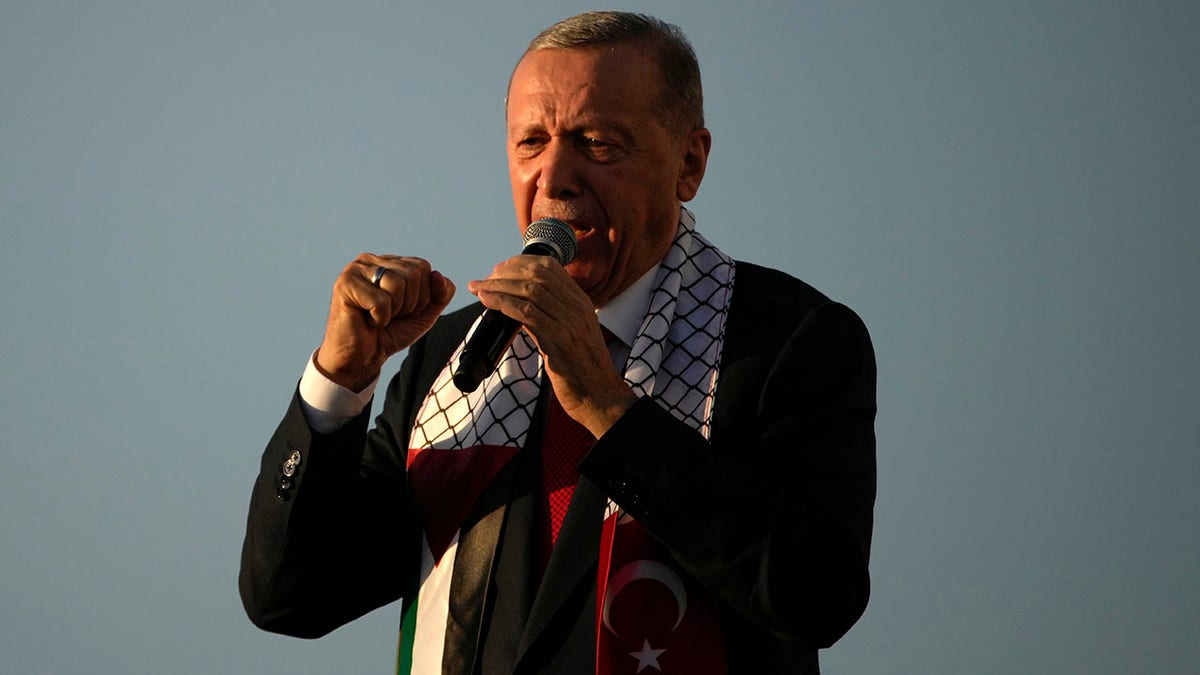
Turkish President Recep Tayyip Erdogan addresses attendees during a rally to show solidarity with Palestinians in Istanbul, Turkey, on Saturday, October 28. (Emrah Gurel/AP)
The reported preparations come as Trump has described Erdogan as “highly respected” and “a very strong leader,” signaling renewed trust between Washington and Ankara and raising concerns within Israel over Turkey’s growing influence. In recent months, Erdogan has intensified his rhetoric against Israel, while positioning himself as the indispensable force for Gaza’s reconstruction and future governance.
WHILE TRUMP’S ADMIN SUPPORTS GAZA PEACE PLAN, HISTORY SHOWS UN PEACEKEEPING’S MIXED RECORD
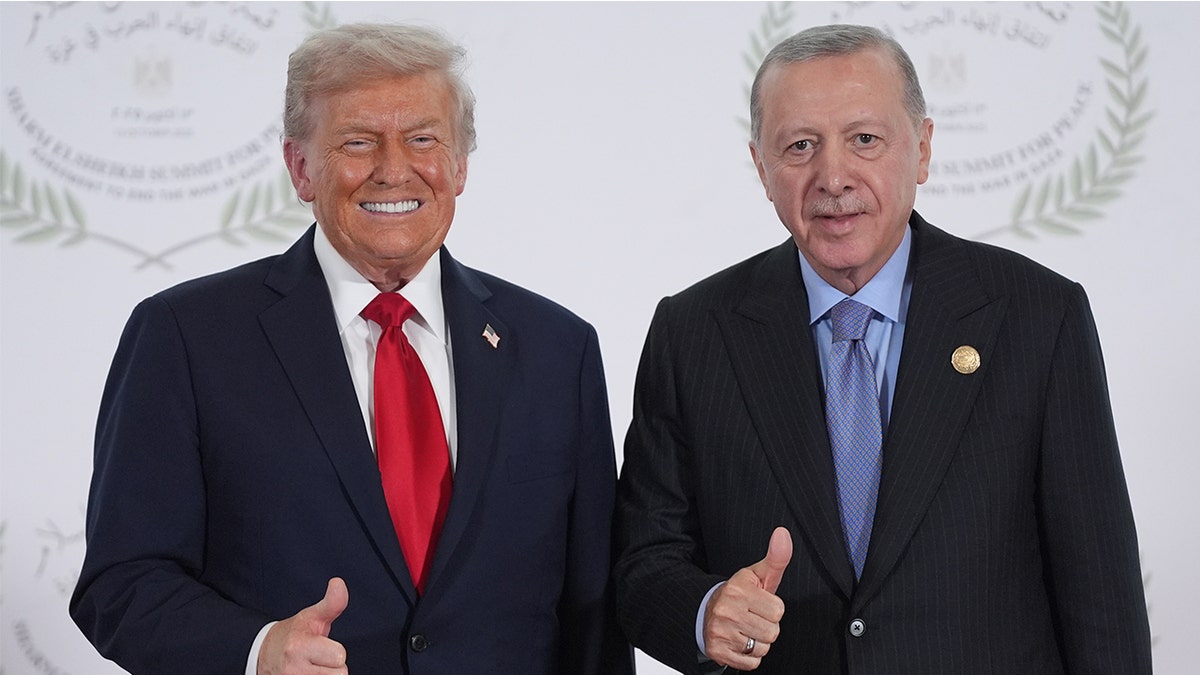
President Donald Trump greets Turkish President Recep Tayyip Erdogan during a summit in support of ending the more than two-year war between Israel and Hamas in Gaza after a landmark ceasefire, Monday, Oct. 13, 2025, in Sharm El Sheikh, Egypt. (Evan Vucci AP photo/pool)
Amidror said Turkey’s ambitions are incompatible with Israeli security needs. “Turkey is a power with a desire to expand its borders and its influence into areas that are relevant to us, and therefore we should not accept a Turkish army in Gaza.”
He added that Israel must maintain operational freedom within Gaza even after the war. “Israel must not give up Israel’s freedom of action, as it did in Lebanon. When Hamas rebuilds itself, we will act as we do in Lebanon.”
Israel’s concerns are rooted in years of tensions with Ankara, including Erdoğan’s support for Hamas, his political embrace of the Muslim Brotherhood and clashes over Syria, where Ankara opposed Israeli- and Western-backed Kurdish forces and backed Islamist militias that Israel saw as destabilizing. The bilateral relationship has been marked by repeated diplomatic crises and years of heated personal exchanges between Erdogan and Netanyahu.
Gonul Tol, a senior fellow at the Middle East Institute and author of “Erdogan’s War: A Strongman’s Struggle at Home and in Syria,” said Turkey’s aggressive stance in Gaza is closely linked to Erdogan’s domestic political survival and his long-standing support for Islamist movements across the region.
“The primary goal there is domestic politics,” she said. “Erdogan has always portrayed himself as the champion of the Palestinian cause, and he is often pushed by his most conservative constituency to take a strong stance against Israel.”
TRUMP’S SWIPE ON ‘WEAK’ LEADERS UNDERLINES THE CHANGING GLOBAL INFLUENCE OF WESTERN COUNTRIES
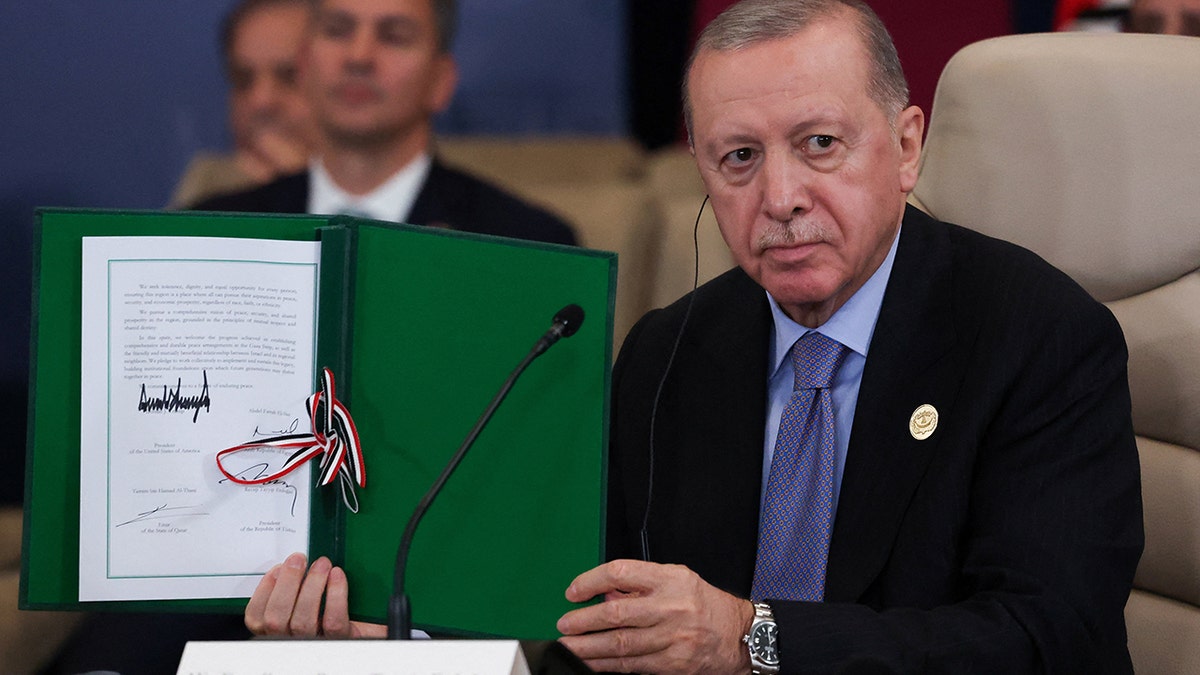
Turkish President Recep Tayyip Erdogan holds a signed document during a summit in support of ending the more than two-year war between Israel and Hamas in Gaza after a landmark ceasefire, Monday, Oct. 13, 2025, in Sharm El Sheikh, Egypt. (Suzanne Plunkett/Pool via AP)
Tol said Erdogan hardened his tone after suffering major losses in Turkey’s 2024 municipal elections. “His party lost all the major cities to the opposition, and one of the lessons Erdogan learned from that loss was that he thought he had not done well for his constituency on Gaza.”
Competing Islamic parties used Gaza to attack him politically. “They criticized Erdogan during the campaign and said that Erdogan says all these things, but when it comes to taking steps that would punish Israel, Erdogan hasn’t done much.”
But Tol noted that Erdogan has also been pragmatic behind the scenes, especially in his dealings with Washington. “People in his circle say the Hamas leadership has been asked to leave Turkey quietly. They are doing everything they can not to anger the Trump administration,” she said. She added that Erdogan even urged Hamas to accept Trump’s Gaza proposal, noting that it contained provisions that did not favor the organization.
TRUMP’S PEACE PLAN FOR GAZA MAY ONLY BE A ‘PAUSE’ BEFORE HAMAS STRIKES AGAIN, EXPERTS WARNING
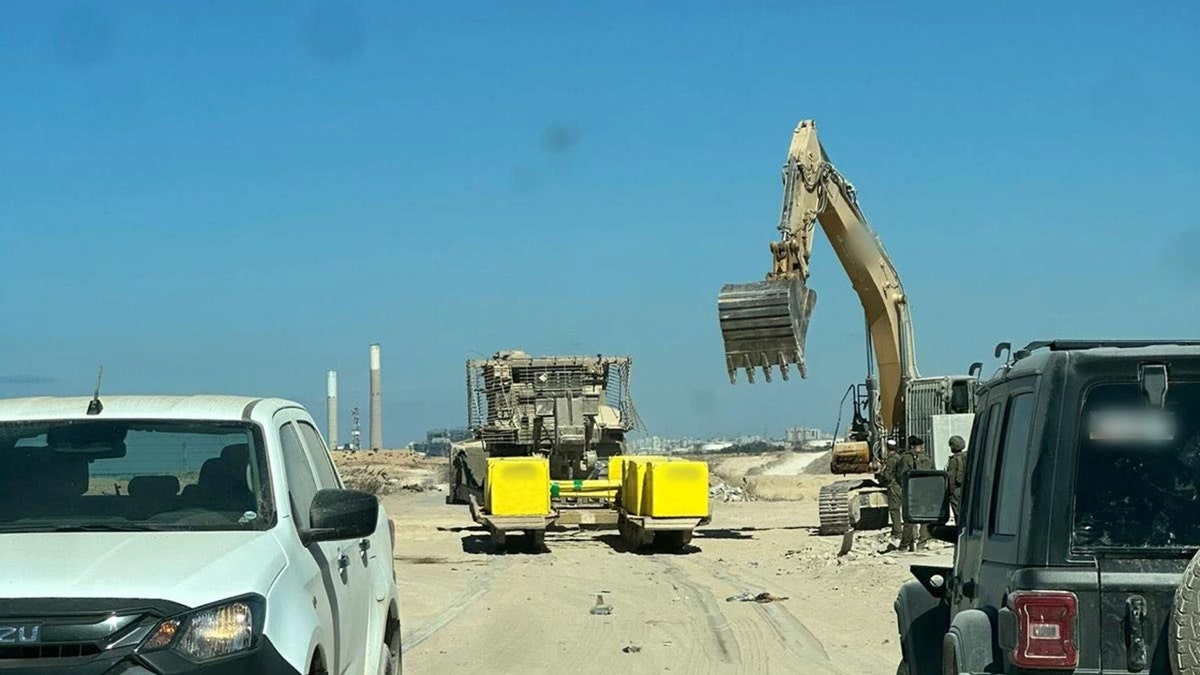
The IDF announced that as part of the ceasefire and in accordance with the directives of the political echelon, IDF forces under the Southern Command have begun marking the Yellow Line in the Gaza Strip to achieve tactical clarity on the ground. (IDF)
Yet Erdogan’s ideological record fuels regional distrust. For years, Turkey has openly supported the Muslim Brotherhood, from Libya to Syria and Egypt. “There is an Arab revolt package that Turkey carries with it,” Tol explained. “Turkey supported, logistically and militarily, Muslim Brotherhood groups that opposed these regimes.” This history, she said, casts doubt on Ankara’s intentions in Gaza in the eyes of Arab partners such as Egypt and Saudi Arabia.
Galia Lindenstrauss, a senior researcher at Israel’s Institute for National Security Studies, said Turkey’s ideology and political goals clash with Israel’s goals. “Turkey has a very pro-Palestinian stance. And not only that, it also has a pro-Hamas stance. It wants Hamas to remain a relevant player even the day after,” she said.
She also pointed to actions that have eroded trust, including Ankara’s trade restrictions against Israel in 2024 and the arrest warrants issued for dozens of Israeli officials. She said Turkey continues to meet Hamas leaders in public, and there is “no sign of any change in the Turkish position.”
The combination of Islamist sympathies, political ambition and hardening anti-Israel rhetoric “raises suspicion that any Turkish action is disingenuous in its attempt to weaken Hamas,” she said.
The United States is now navigating the power struggle. According to a State Department briefing, Secretary of State Marco Rubio met with Turkish Foreign Minister Hakan Fidan on Monday to discuss “the ceasefire in Gaza and the next steps to ensure stability in the region.” The meeting emphasized close cooperation with Ankara, even though Washington has not yet decided whether to involve Turkish troops.
CLICK HERE TO DOWNLOAD THE FOX NEWS APP
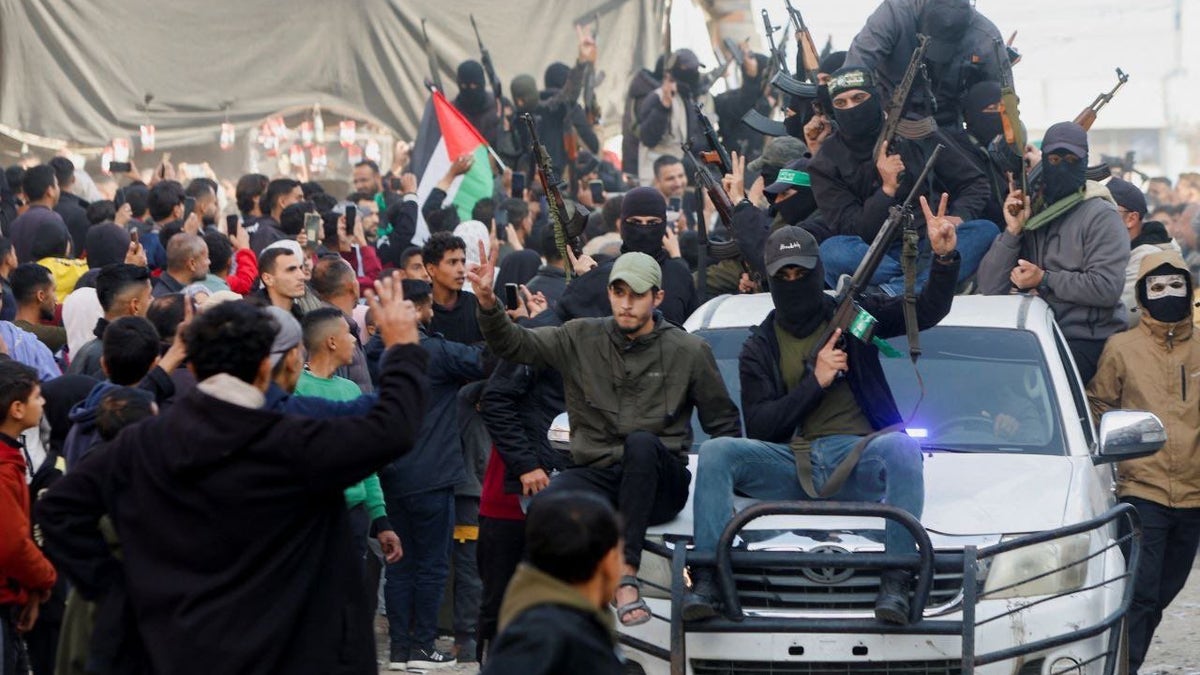
Suspected terrorists in Gaza are coming out of hiding as the ceasefire for hostages in Gaza’s Deir al-Balah area begins. (TPS-IL)
Tol said the outcome “will all depend on how strongly President Trump is willing to push all parties to accept” or reject Turkey’s participation. Lindenstrauss added that Ankara expects Trump to resolve disputes with Israel over Gaza and in Syria that the country cannot resolve alone.
Requests for comment from the spokesperson for the Turkish embassy in Washington, DC, were not returned.
