



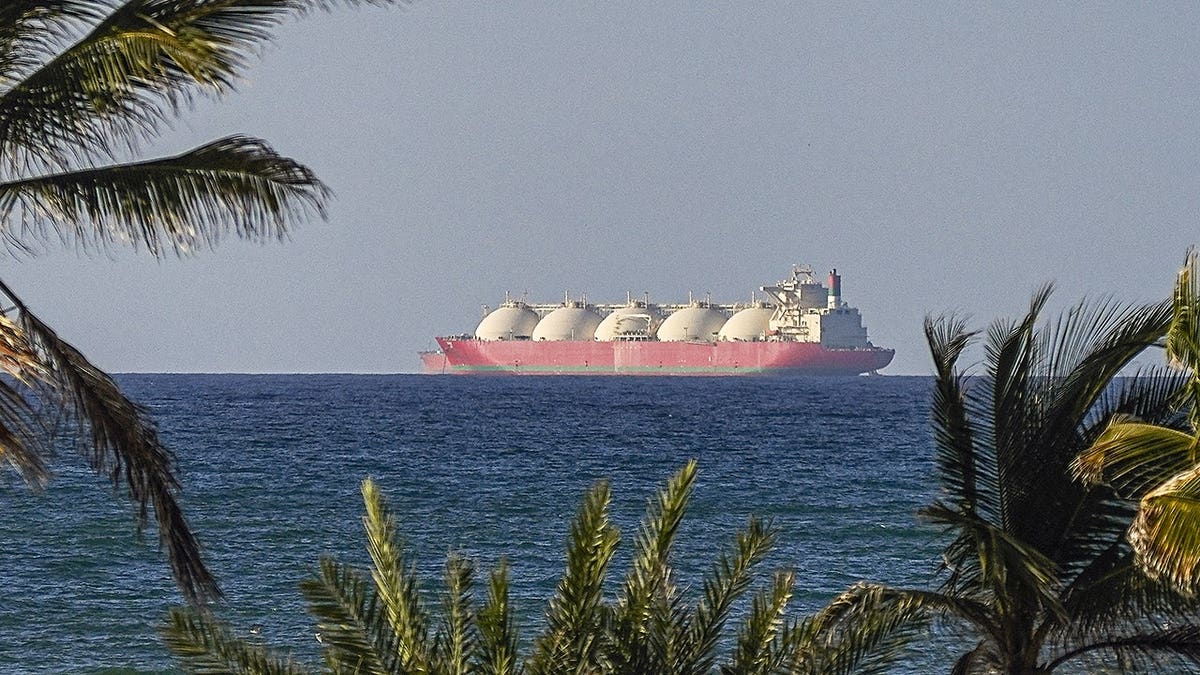
The Strait of Hormuz is often described as a choke point in the Gulf. That is too narrow a framework for too big a fact. Hormuz is not simply a regional waterway between Iran and the Arab Gulf states. It is a piece of global economic infrastructure, a narrow corridor through which much of the world’s oil and gas trade passes. It is also a route on which shipping, insurance, fertilizer supplies, industrial production and food security in much of the world depend. This is not a local matter. It is part of the operating system of global growth.
Therefore, one principle must be absolute: freedom of passage in Hormuz is non-negotiable. If President Donald Trump were to accept any restrictions on transit through the Strait, whether in the form of tolls, quotas, selective clearances, inspections manipulated for political purposes, or any de facto Iranian right to decide who passes through the Strait and under what conditions, it would be a major defeat for the United States and for the global economy. It would mean that Washington had accepted the transformation of a global artery into an instrument of coercion.
That cannot be dismissed as a temporary compromise. Once the principle is accepted, the damage is permanent. The problem isn’t just the immediate cost of a few delayed shipments. It sets the precedent that the world’s most important maritime chokepoints can be politically priced, selectively restricted, and used as bargaining chips by the power that threatens them. If the United States accepts that in Hormuz, every revisionist state will take note.
IRAN WAR NEARS ‘COMPLETION’ AS TRUMP EYES DEADLINE – WHAT THE END GAME MIGHT LOOK LOOK LIKE
The dependence on Hormuz is greatest in Asia. Much of the oil and LNG passing through the strait is destined for Asian markets, mainly China, India, Japan and South Korea. A closure of the waterway, or even an Iranian claim to regulate access, would therefore do much more than just inconvenience Gulf exporters. It would directly affect the industrial heartlands of Asia. Chinese industry, Indian refinery, Japanese utilities and Korean industry would all soon feel the shock, through fuel prices, factory output, inflation and investor confidence.
The vulnerability is even greater on the gas side. LNG exports from Qatar and the UAE are largely dependent on the strait. For countries like Bangladesh, India and Pakistan, disruption would not just be an energy problem. It would become a power problem, an industry problem and then a food problem. Gas shortages do not stop at the power plant. They extend to fertilizer production, factory production and household budgets.
Europe is less directly exposed, but far from isolated. In a tight market, marginal supply determines price. Europe would become embroiled in more intense bidding wars for replacement gas, just as it did after Russia’s invasion of Ukraine. The secondary effects would extend far beyond Europe. Higher energy prices affect transportation, insurance, fertilizer and food. The result is inflation in advanced economies and fiscal stress in poorer and more import-dependent economies. Countries far from the Gulf would still pay a high price for any attempt to arm Hormuz.
That is why Hormuz cannot be treated as a Gulf security problem to be outsourced to the Gulf states. Its disruption ripples through energy markets, transportation costs, fertilizer supply chains and food security in the global south, as well as in the industrial world. This is not a regional dispute with international implications. It is an attack on a shared economic artery.
WHY TRUMP FACES A PRINCIPAL DECISION ON CUTTING OUT IRAN’S OIL SUPPLY IF HE CAN’T GET A DEAL
For that reason, the answer should not be formulated primarily as a question of whose navy will escort which tanker. Violence may sometimes be necessary to deter immediate aggression, but this is not the sustainable answer. Even limited force, or the credible threat of it, can skyrocket insurance costs and effectively shut down the situation commercially. A militarized Hormuz is in practice a partially closed Hormuz. The more lasting answer is economic and global: a sanctions mechanism so comprehensive and so credible that Iran concludes it has more to lose by threatening Hormuz than it could ever gain by forcing the world through it.
CLICK HERE FOR MORE FOX NEWS ADVICE
That does not mean another Western sanctions package with known loopholes, but a real economic quarantine prepared in advance: no Iranian oil purchases, no shipping services, no insurance, no access to ports, no banking channels, no petrochemical trade, no barter deals and no backdoor facilitation through third countries. More importantly, it means making it clear in advance that these measures would automatically result from any blockade, systematic harassment of commercial traffic or attempts to impose de facto access fees.
Such a regime should include China. Without Chinese participation, the exercise would not be strategically serious. A sanctions coalition that excludes one of the Gulf states’ most important energy end markets would be tantamount to announcing that the world is willing to tolerate coercion as long as it is selectively monetized. The same logic applies to India, Japan and South Korea. They are not bystanders. They are among the main beneficiaries of the waterway’s continued openness and among the biggest victims of disruptions.
CLICK HERE TO DOWNLOAD THE FOX NEWS APP
The same principle applies to Russia and any other state tempted to help Iran evade pressure. The purpose of a real sanctions regime is to force a choice: Is protecting Iran worth endangering more valuable relationships with the Gulf states, India and other countries in the global south? A serious global threat of sanctions should make this calculation inevitable.
Hormuz is not Iran’s lever, much less its toll road. It is part of the basic infrastructure of global trade. If Tehran tries to weaponize this fact, the world must ensure in advance that the peaceful costs to Iran will be overwhelming. But the first thing to reject is the idea that America can negotiate access. If Trump agrees to any restrictions in Hormuz, the United States will have legitimized extortion on one of the world’s central economic arteries. That wouldn’t be a deal. It would be a strategic defeat.
