



As the coordinated attacks by the US and Israel on Iran continue, one thing is clear: this is not the kind of war we have been planning for decades. There are no assembled formations or battle groups exchanging volleys. This conflict is being fought with swarms of relatively cheap one-way drones. Adaptation and rapid innovation now determine how conflicts are fought.
Iran has been perfecting the saturation war for years. The concept is simple: flood the skies with enough drones and missiles to deplete the enemy’s interceptors, force impossible triage decisions, and ultimately break through. Iran has targeted hotels, tourist centers and locations without hardened counter-drone systems. The Iranian kamikaze drones, called Shaheds, are low, slow and persistent. They are not technically advanced, but they are difficult to stop in large numbers. This is not a failure of American technology. It is a logistical and economic problem that we must solve and adapt to. And we already do that.
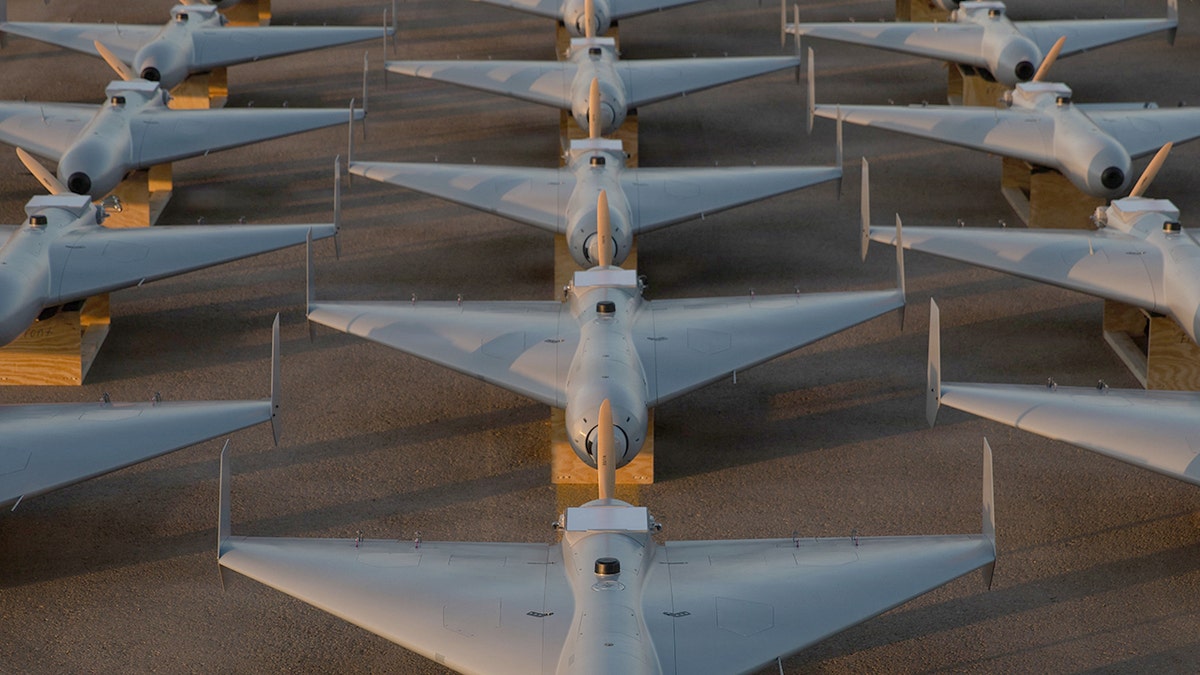
For the first time, the US has deployed the LUCAS system – a one-way drone modeled directly on Iran’s own Shahed design – in combat. The system was developed by reverse engineering downed Iranian drone systems in Ukraine and rebuilding them with U.S. guidance systems, enhanced navigation and real-time targeting integration into our intelligence, surveillance and reconnaissance (ISR) networks. Then we sent them back to Iran to destroy their infrastructure.
KEANE WARNS IRAN STRIKE WILL BECOME ‘REGIONAL WAR’, SAYS THREE GULF STATES PREPARING FOR FIGHT
LUCAS was used in the opening strike, hitting Iranian drone production sites and other weapons infrastructure before advanced fighters followed suit. These drones are not just ammunition; they are nodes in a combat cloud, receiving real-time targeting updates and connected to intelligence services in ways that Iran’s drones cannot match.
While Iran is building volume, the US is building systems. This distinction is important.
This operation also marked the largest deployment of AI models in the US War Department in history. From intelligence assessments to target identification to combat scenario simulation, AI has been part of the decision-making cycle at every level. This precision was another point of demarcation between the two sides. While Tehran responds with indiscriminate barrages that hit civilian areas, U.S. attacks are driven by layered intelligence, sophisticated targeting, and a disciplined operational picture. This gap in approach is not only strategic, but also ethical.
This conflict with Iran will be decided by the side that adapts fastest, identifies problems and finds solutions within a compressed timeline.
But there are still areas where we are adapting. The cost dynamics of this new approach remain unresolved. The US has traditionally favored high-tech, expensive weapons systems that require extensive training and planning. But if the opponent has more drones than you have interceptors, the math quickly turns against you.
CARGO SHIP HIT BY PROJECTILE IN THE STRAIT OF HORMUZ AS IRAN LAUNCHES FRESH ATTACKS ON THE MIDDLE EAST
Relying on expensive interceptors to counter cheap, easy-to-produce drones is not a sustainable equation. The answer is not to outsmart; it’s about adapting intelligently – and doing it quickly. Cheaper, fast, battle-proven interception platforms designed to counter one-way attack drones, including the Shahed-136, Geran-2 and other Group 3-class unmanned threats, are what this new battlefield requires.
That’s the lesson Ukraine has been learning for years — and one that this conflict is amplifying in real time: No military in the world is adequately prepared to stop cheap, mass-produced one-way drones at scale. Not yet. America’s industrial base has the ability to change that. The limitation is understanding the new reality and deciding to move forward with it.
CLICK HERE FOR MORE FOX NEWS ADVICE
Iran has spent years developing and spreading the Shahed as a tool of destabilization, deploying it in Yemen, Iraq and Ukraine, and against US forces across the region. Now a version of that same weapon has been turned against the factories that produce it.
Low-cost drones of the Unmanned Combat Attack System (LUCAS) are placed on the tarmac of a base in the US Central Command (CENTCOM) area of operations on November 23, 2025. (US Central Command Public Affairs)
Currently, the Islamic Republic is in unprecedented internal chaos. Leadership is shaky, and the regime’s command and control picture is unclear even to those within the regime. This uncertainty creates both opportunities and risks. Precision is more important in these moments – not less.
This conflict will be decided by the party that adapts fastest, identifies problems and finds solutions within a compressed timeline. While the U.S. drone industry is not yet where it needs to be, hands-on, proven deployment is how the capability gaps are being closed. What we learn here will shape doctrine, acquisition and industrial strategy for the coming decade.
CLICK HERE TO DOWNLOAD THE FOX NEWS APP
America just delivered one of the most significant demonstrations of adaptive military capability in modern history. The question is not whether we can innovate, but whether we are prepared to build the industrial and defense infrastructure at the scale and speed this new era requires.
The answer to that question will not be decided on a battlefield. It is decided here at home: where we invest and how seriously we take the threat. The conflict with Iran has made that choice inevitable.
CLICK HERE TO BRETT VELICOVICH
