



Critics once called it isolationist. But national security experts now say that Donald Trump’s “America First” strategy is turning out to be something very different: a tough deterrence policy built on strong alliances, especially with Israel.
He said supporting Israel is not about sentiment. “Supporting Israel is in our strategic interest,” he said. “Israel is dealing with enemies in the region that the US would have to deal with if it weren’t there. So it’s in our strategic interest.”
STATE DEPARTMENT UNVEILS PATRIOTIC ‘AMERICA FIRST’ REBRAND AS PART OF MAJOR MAKEOVER
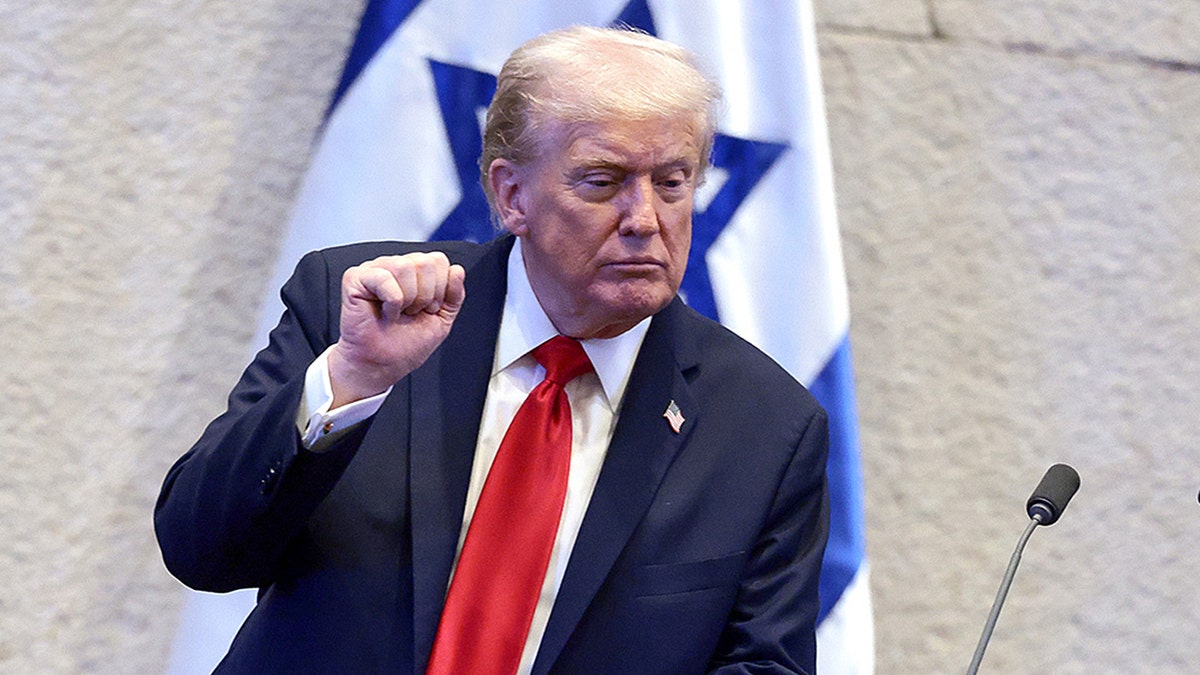
President Donald Trump delivers a speech to the Knesset, Israel’s parliament, on October 13, 2025 in Jerusalem. (Evelyn Hockstein/Pool/Getty Images)
Israel as America’s forward defense
Mike Makovsky, CEO of the Jewish Institute for National Security of America (JINSA), said Israel is effectively absorbing threats that would otherwise require US military action. “Historically, there are about three reasons why we have interests in the region,” he said. “One is Israel. Two is oil. And three is Islamic extremism: terrorism, Shiites and Sunnis.”
Makovsky said it is ironic that the America First debate has resurfaced “just a few months after Israel smoked America’s enemies out of the Middle East.” He pointed to Iran’s nuclear progress and the role of its allies. “They’re building ballistic missiles… They could reach the east coast of the United States,” he said. “You’re combining missiles with nuclear weapons that could hit the US – you have the North Koreans on the west coast; do you really want Iran to be able to hit the east coast?”
According to Makovsky, Israel’s campaign against these threats demonstrates the strategic value of the alliance. “What did the Israelis just do? They took care of it. The United States came in at the very end with the B-2… but it was Israel that did all that work,” he said.
He added that Israel has “virtually finished off Hamas,” weakened Hezbollah – “which has the blood of hundreds of American soldiers on their hands” – and continues to confront the Houthis to “guarantee freedom of navigation.” That, he argued, is deterrence in action: “As long as we support Israel, we give them some help, we give them the weapons they need, they are really doing our job.”
Against Iran and its allies
Fleitz called Iran “the biggest threat,” and included “Iran and Iranian allies in the region. This includes Hamas, Hezbollah in Syria, Iranian-backed militias in Iraq, and then Iran itself, with its nuclear weapons program and its sponsorship of terror.”
He said Israel’s actions “destroyed Hamas’ allies and significantly weakened Iran,” adding that “in June we joined Israel in taking over Iran’s nuclear program, which posed a threat to global security.”
Both analysts saw Iran as part of a broader power axis alongside Russia and China, each of which is exploiting instability in the Middle East to undermine American influence — by fueling proxy wars, driving up energy prices and threatening trade routes through the Gulf and Red Sea. Fleitz said Trump’s willingness to act decisively “to attack Iran’s nuclear program” was an example of using force to prevent more costly wars later.
TRUMP’S IRAN gambit pays off as World War II DOOM SAYERS now praise ISRAEL and HAMAS ceasefire
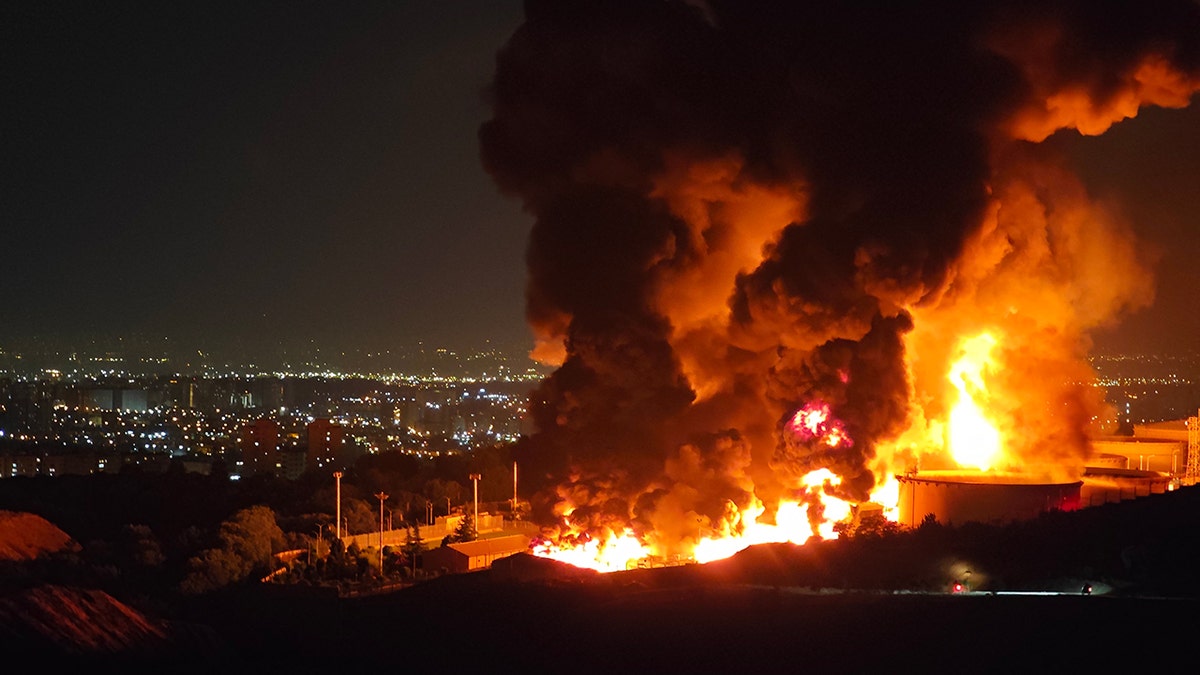
Fire and smoke rise into the sky after an Israeli attack on the Shahran oil depot on June 15, 2025 in Tehran, Iran. Iran’s foreign minister said the country would respond “decisively and proportionately” to a wave of attacks launched by Israel in the early hours of June 13. The attacks targeted multiple military, scientific and residential sites, as well as senior government officials. (Stringer/Getty Images)
Energy and economic security
Both agree that energy policy is where America First becomes measurable. Fleitz said that “energy independence is a very important part of President Trump’s America First policy to free Americans from high energy bills.” At the same time, he noted, energy diplomacy abroad strengthens economic security at home. “By pushing the Saudis – and the Saudis, I think, are happy to help us do this – to produce more oil, it could actually help us end the war in Ukraine,” he said.
Makovsky made a similar plea for regional stability: “The biggest threat to Gulf Arab oil exporters… is Iran,” he said. Without Israel’s containment of Tehran, “Iran would most likely have taken over the Middle East. And if you care about oil prices, that’s not so good.”
Both experts said that if Israel takes on the burden of defending energy corridors and trade routes, the Americans can save both dollars and deployments.
TRUMP’S GAZA ‘Takeover’ Ranks AMERICA FIRST CONSERVATIVES, ALLIES SUGGEST NEGOTIATION-IN-CHIEF IS AT WORK
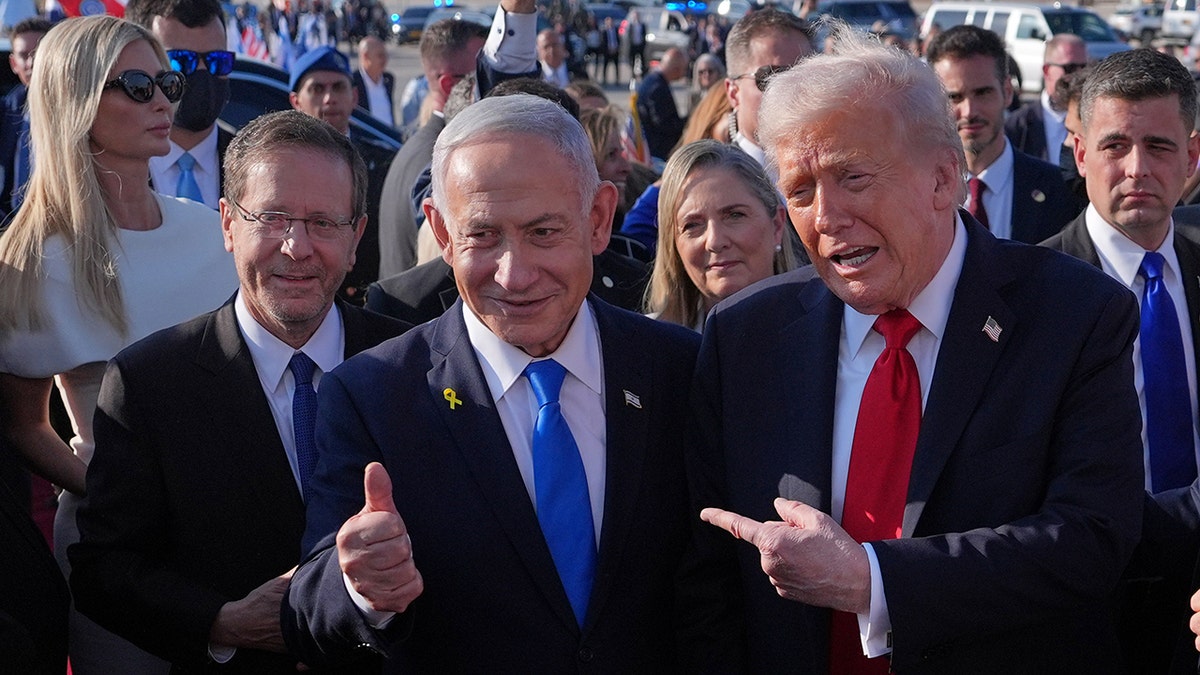
President Donald Trump poses for a photo with Israeli Prime Minister Benjamin Netanyahu before boarding Air Force One at Ben Gurion International Airport, Monday, Oct. 13, 2025, near Tel Aviv, as Israeli President Isaac Herzog, left, looks on. (Evan Vucci/AP Photo)
Avoiding unnecessary wars
Fleitz said Trump’s doctrine is about selective force, not withdrawal. “He wants to keep our country out of new and unnecessary wars, but he will use military force cautiously to defend our national security,” he said. “He’s going to avoid sending U.S. troops into certain situations and using military force. But that doesn’t mean he won’t do these things if it’s in the U.S. strategic interest.”
He pointed to American personnel currently stationed in Israel but “will not go to Gaza” and “will not be involved in combat operations against Hamas.” Their mission, he said, fits the model of minimal footprint and maximum impact.
Credibility and global deterrence
Makovsky warned that leaving Israel would damage America’s credibility worldwide. He recalled what a senior Arab leader once told him: “If America does not help Israel attack Iran’s nuclear facilities, it will be one of the great catastrophes.”
“That’s because everyone in the Middle East, everyone in Asia, knows that the relationship between the US and Israel is one of the closest in the world,” Makovsky said. “If we don’t help Israel, it undermines our credibility. The Chinese, the Russians and the North Koreans know that if we don’t support Israel, we’re not going to help other allies… and it would undoubtedly make us more vulnerable to the Chinese.”
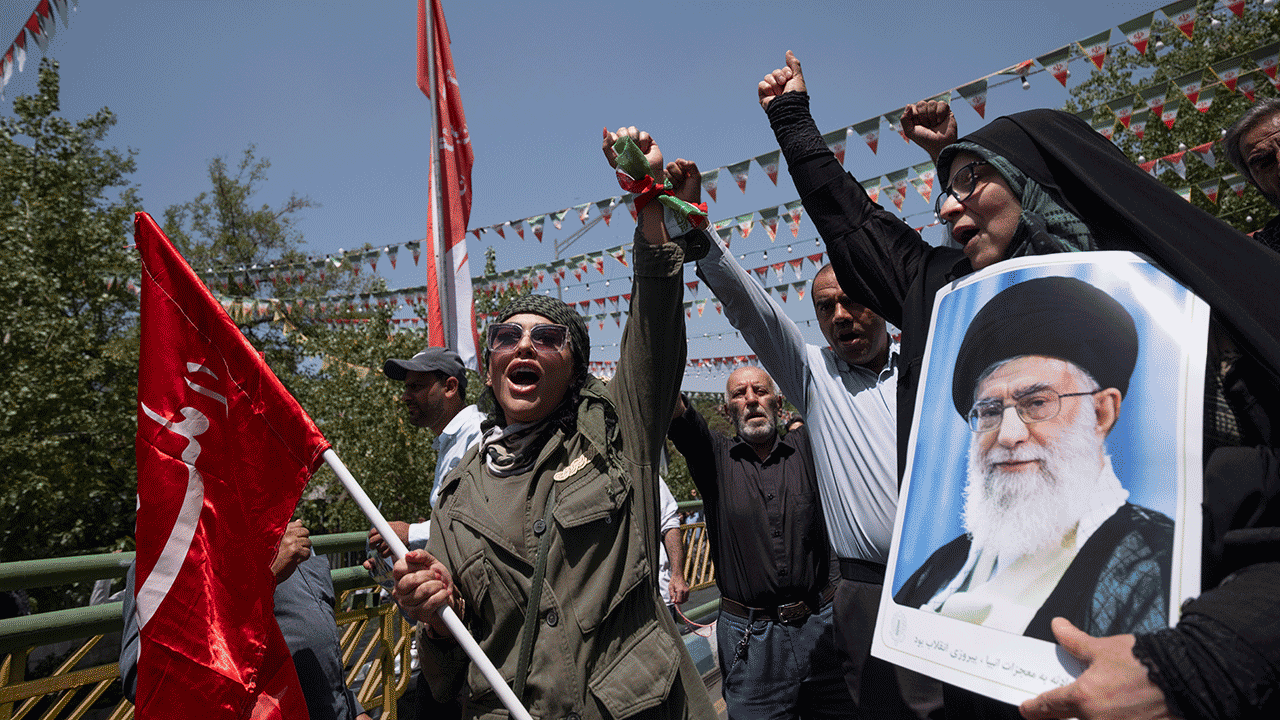
Iranian worshipers shout anti-American and anti-Israel slogans as one of them holds a portrait of Iran’s Supreme Leader, Ayatollah Ali Khamenei, during an anti-Israel rally to condemn Israeli attacks on Iran, after Tehran’s Friday prayers in Tehran, Iran, on June 20, 2025. (Photo by Morteza Nikoubazl/NurPhoto via Getty Images)
Peace through strength
Fleitz said Trump’s “20-point peace plan” for Gaza exemplifies the America First balance between toughness and diplomacy. “It has achieved its two main objectives: to remove all living hostages from Israel and to establish a ceasefire,” he said, acknowledging that “the ceasefire is quite shaky.” The next step, he added, is “an international stabilization force” – a complex process still under negotiation.
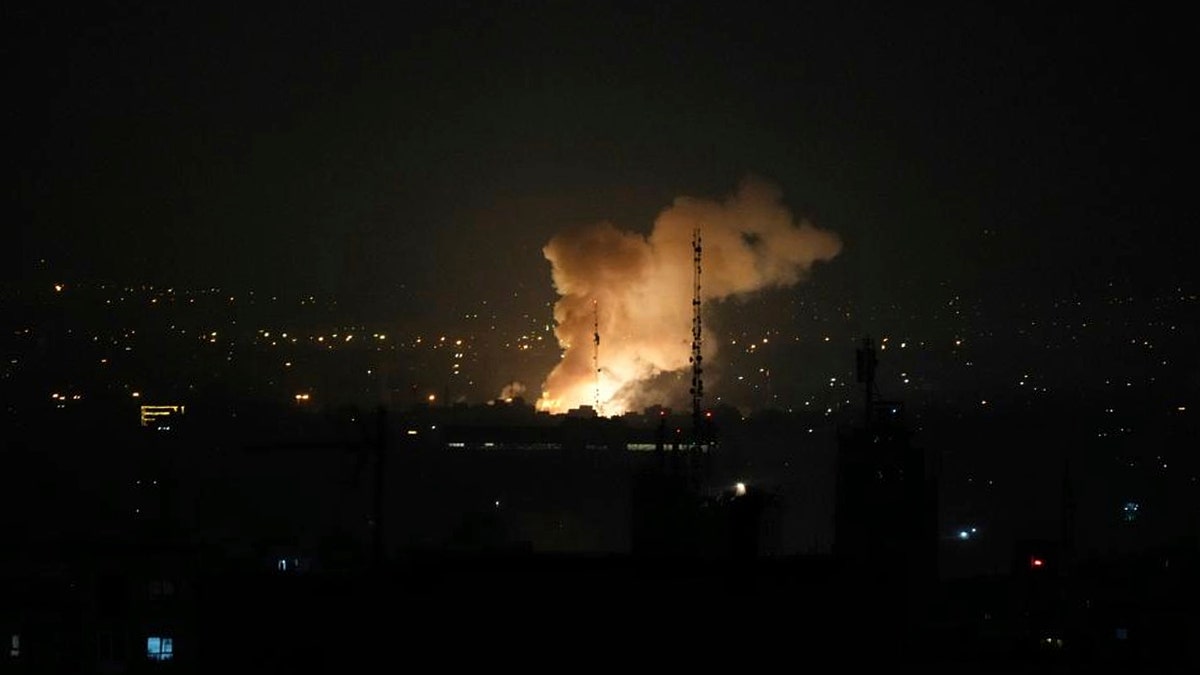
Smoke rises after an explosion in Tehran, Iran, Friday, June 13, 2025. Israel attacked Iran’s capital early Friday, sending explosions roaring throughout Tehran. (Getty)
CLICK HERE TO DOWNLOAD THE FOX NEWS APP
For both experts, the conclusion is the same: America First does not mean isolation. It means strategic partnerships that keep American forces out of long wars while maintaining American dominance.
