



The United States’ strategy toward the Islamic Republic has crossed a threshold that marks the definitive end of half a century of Western hesitation.
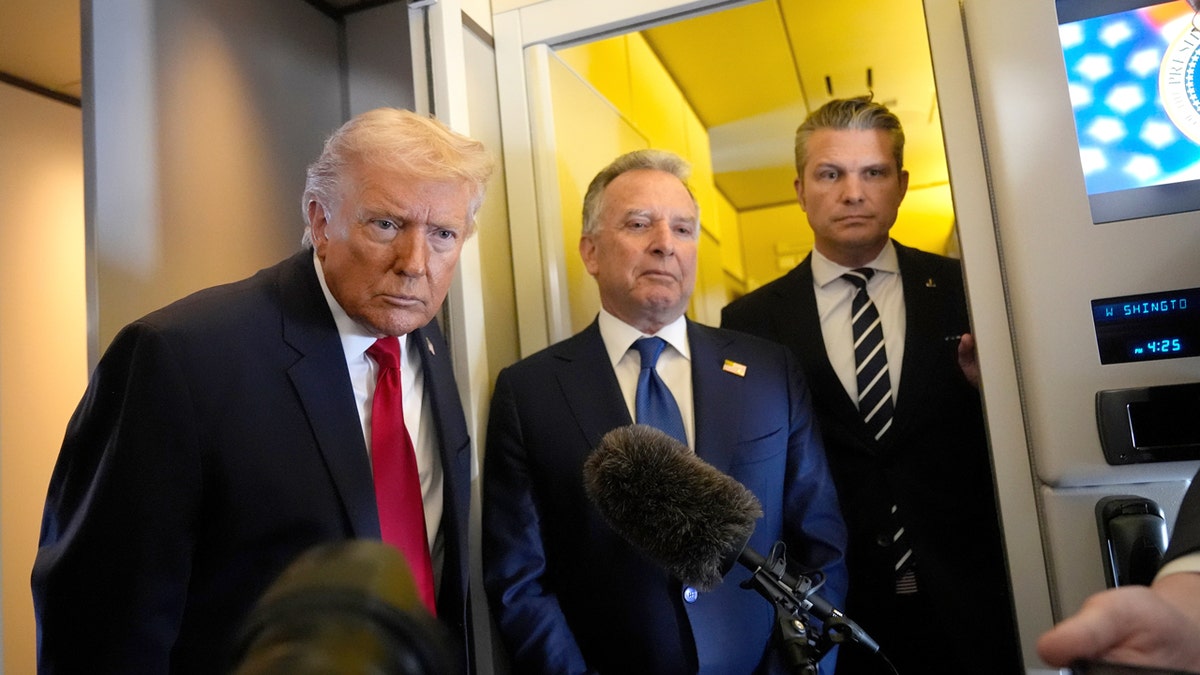
At a major press conference at the White House, the president – flanked by CIA Director John Ratcliffe and Secretary of War Pete Hegseth – dismantled the long-standing policy of “managed stability” in favor of a strategy aimed at the structural collapse of the regime. By reaffirming the systematic dismantling of the administrative security apparatus, highlighted by the death of IRGC intelligence chief Majid Khademi in a joint US-Israeli attack, and ending the regime’s unhindered control over strategic corridors such as the Strait of Hormuz, the government has put the failed diplomatic cycles of 1979 and 2009 behind it.
While mediators may continue to offer the “off-ramp” of a short-term ceasefire, history warns us that such agreements will never be a bridge to peace for the mullahs. They are a tactical survival mechanism designed to protect a nuclear escape. As this new era of clarity unfolds, the lesson remains: keeping any part of this administrative structure in power, even in a state of ‘negotiated’ weakness, is not a solution – it is merely a postponement of implementation.”
TRUMP’S HEALTH IN THE MIDDLE EAST REVEALS WHAT LED TO THE BREAKDOWN IN IRAN TALKS FOR OPERATION EPIC FURY
We must face the reality that the regime created this crisis as a calculated escape strategy. According to March 2026 intelligence, the leadership produced regional chaos to serve as a shield for their final sprint toward a bomb. The latest IAEA reports are chilling: the regime possesses more than 450 kg of 60% enriched uranium – enough for nine to eleven nuclear weapons – with a breakout time now measured in days. For a clerical elite that sees a nuclear weapon as their only ticket to longevity, military attacks on infrastructure are only a temporary solution if the core of the regime remains intact. If any part of this structure remains in power, they will find a way to rebuild the weapon.
History provides a road map for how the church’s power is systematically displaced—and it never happens through a polite deal. Even the most powerful secular rulers have fallen into the trap of the spiritual exit. Napoleon Bonaparte and Benito Mussolini both attempted to tame religious institutions through concordats, but found that the clergy’s institutional memory and divine mandates outlived their secular authority. True secular sovereignty was achieved in France and Turkey only through the dismantling of the political and institutional monopolies of the clergy.
In Iran, this administrative structure is not limited to those wearing turbans; it includes the mullahs in suits – the commissars and generals who remain fervently committed to the theocratic path. They have swallowed up the national infrastructure, leaving no internal reform mechanism. A spiritual elite does not evolve; they only relinquish power if it is structurally stripped from them. The mullahs are students of this history; they know that in a secular republic they don’t just lose a seat at the table, they lose the table entirely.
For a theocracy, a deal is a tactical pause. They have watched the North Korean model with envy and learned that a nuclear shield is the only guaranteed deterrent to Western-led regime change and a permanent tool for coercive power projection across the region. Historically, the mullahs have repeatedly sacrificed Iran’s democracy and independence to protect their own position – from securing kickbacks in 19th-century British monopolies over Iran’s infrastructure to siding with the Shah to put down the 1906 Constitutional Revolution.
NEXT MOVE AGAINST IRAN: CONFIRM KHARG ISLAND, SECURE URANIUM OR RISK OF GROUND WAR ESCALATION
Growing up in Iran, many in the diaspora learned a cynical proverb: “A mullah will exchange every sacred principle for a qeran – the smallest coin.” For the IRGC, the commitment to a transition is existential. Because they control the country’s key industries and shadow markets, any shift to a secular state would mean the total loss of their accumulated wealth, social status and legal immunity. They have every reason to hold a nuclear sword over the international community to protect their corruption from domestic uprisings and to project power abroad.
CLICK HERE FOR FOX NEWS ADVISORY
Understanding the mullahs means understanding the concept of heroic flexibility. This is not moderation; it is a survival strategy rooted in the Treaty of Hudaybiyyah (628 AD). At that crucial moment, the Prophet Muhammad signed a crooked, 10-year peace treaty with his enemies from the Quraysh tribe in Mecca to buy time for his community to grow in strength. Today, the regime is hijacking this legacy as bait, offering temporary concessions to ease the pressure while waiting for the geopolitical winds to shift.
CLICK HERE TO DOWNLOAD THE FOX NEWS APP
Ultimately, the Islamic Republic cannot be governed; it needs to be disassembled. The only path to a stable Middle East and the world is to support the Iranian people in overthrowing a regime that has held them hostage for half a century. This requires a strategy that links the total economic isolation of the clerical and IRGC apparatus to the current military pressure. The UAE’s recent attempt to push the coalition to continue the campaign until the regime is definitively weakened presents a historic opportunity. By using the war to disempower the IRGC’s enforcement structure and cut the financial arteries that sustain their repression, we are creating the necessary vacuum for the Iranian people to reclaim their sovereignty.
The mullahs are not looking for an exit; they are looking for a nuclear shield to ensure their own survival. As long as the administrative structure remains, the bomb will continue to exist. We need to stop giving them a lifeline to build it.
