



Following the ouster of Nicolás Maduro on January 3, after he and his wife were taken to appear in court in New York, ordinary citizens of Venezuela are reacting with a mix of relief, shock and uncertainty after three decades of a brutal socialist dictatorship that has bankrupted their country.
While what will happen next remains largely uncertain and Washington is still exploring several options, the celebratory tones seen across the country and among the nearly nine million citizens in the diaspora on Saturday were largely submerged in muted and cautious joy expressed only in private circles among those longing for an end to years of economic hardship and political repression.
PRESIDENT TRUMP SAYS THERE WILL NOT BE A ‘SECOND WAVE OF ATTACKS’ AGAINST VENEZUELA BECAUSE OF THEIR ‘COOPERATION’
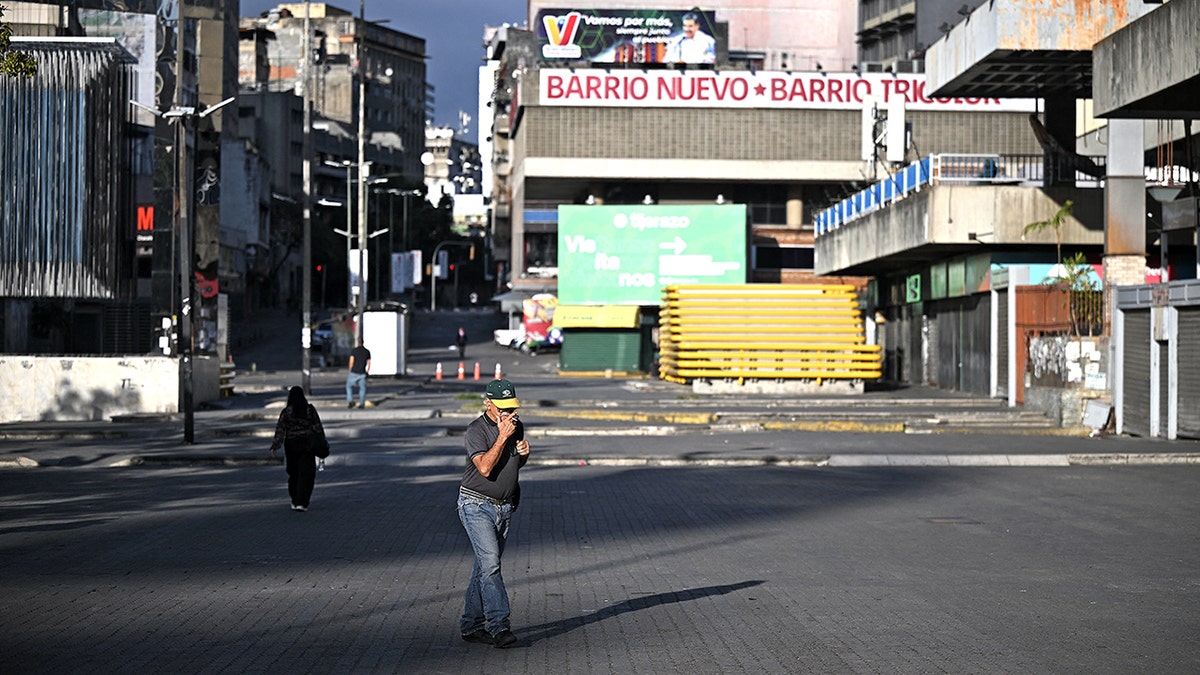
People walk on the street in Caracas on January 4, 2026, a day after Venezuelan dictator Nicolas Maduro was captured in a US attack. (Federico Parra/AFP via/Getty Images)
Yet the fear remains. The government has decreed any celebration of current events – and even expressions of approval of the US operation in written text messages – as a crime equivalent to national treason. Worse still, it has given every law officer the power to randomly monitor citizens and their phones at hundreds of checkpoints across Caracas and other regions of the country.
Anyone who violates the decree could be immediately arrested without trial, turning the promise of change into a state of dread about what comes next and raising questions about sovereignty, day-to-day survival and how to overcome yet another crisis.
For Jesús, a 23-year-old university student from a middle-class family in Caracas who also works for a local company, one word defines the past week: stress. For security reasons, he and other Venezuelans interviewed for this story requested partial or full anonymity due to the security situation.
“We cannot afford the luxury of staying at home and waiting to see how things will develop. I have my own private car and drive around Caracas a lot to get back and forth from work, school and running errands,” he said.
AFTER Maduro, VENEZUELA POWER VACUUM EXPOSES BRUTAL INSIDERS AND ENFORCERS
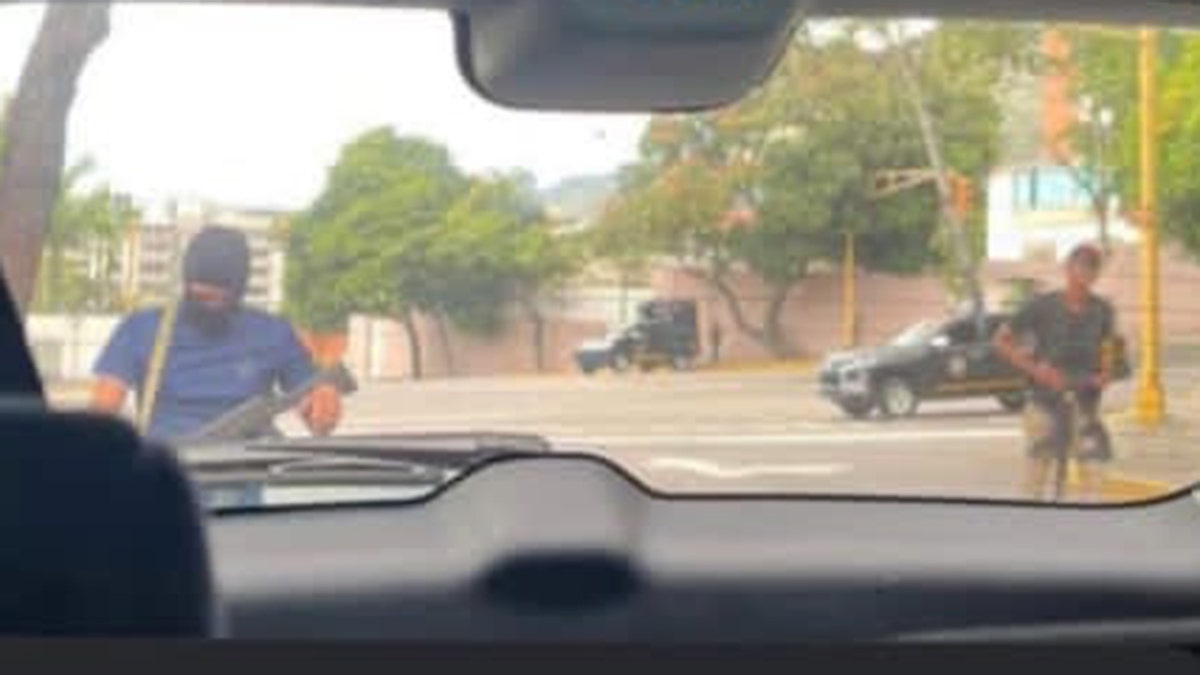
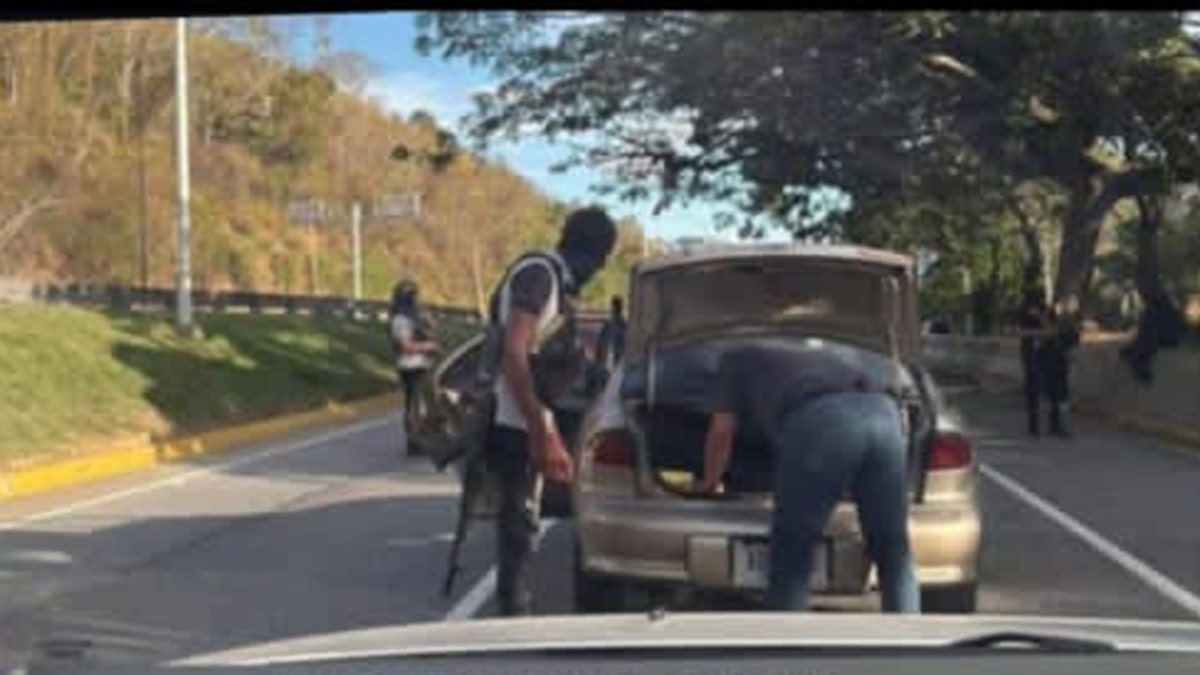
“Police cars and officers from national, municipal and local authorities are stationed in every corner. Hundreds of checkpoints have sprung up in Caracas since the decree banning any celebration of the US operation that captured Maduro. In the first few days, there were also pro-government, publicly armed colectivos. (state-sanctioned citizen collectives) going around capturing and violently repressing everyone, but also expressing relief that Maduro is gone. It was extremely difficult to stay alert at all times. From previous experience I have learned to avoid most checkpoints by alternative means and avoid main roads. People are sending texts telling us where the checkpoints are and telling us to delete anything from our phones that shows our support for American actions.”
He continued: “For me personally, it is a time of mixed feelings. I am relieved to see that Maduro is gone and to finally see a promise or discourse from local or foreign governments happening in Venezuela. While I clearly understand that this only happened because of foreign interference, I much prefer an American action that ends this dictatorship than the preservation of Venezuela’s sovereignty at the expense of our country. On the other hand, I am also afraid because once you start dismantling the established structures, you get ultimately chaos and in such a case the population suffers the most.”
Jesús adds that he travels through three major groups of people: his college friends, his family and older relatives, and his job. He adds that among his friends, the mood is largely hopeful that the U.S. could reform and develop the Venezuelan market into what he calls a “developed” system where people can actually live better lives. “We will finally stop being a Cuban colony and either be truly independent or a US-led country like the Dominican Republic. There’s nothing wrong with that. We will still be better off and more stable,” he added.
TRUMP SUPPORTS MADURO LOYALIST OVER VENEZUELA OPPOSITION LEADER IN TRANSITION AFTER CAPTURE
Among his relatives, the overarching tone is fear. So far, many of Maduro’s henchmen remain in power and they do not know how they might suddenly react under paranoia, people with private property and, above all, a possible mandatory military conscription.
“Finally, at work there is apathy. I work in a wealthy neighborhood where many government officials and military personnel frequent. Police officers and other government officials who have benefited from corruption and crime are clearly against what has happened, but most military personnel say they will not die for something they did not sign up for because of a dictatorship. At my work, we have seen so many broken promises that we are just bracing ourselves to stay afloat,” he concluded.
For Hannah, a recent graduate, there is relief that Maduro is no longer there. “It is clear that things should not be this way, and that Venezuelans should be the ones who decide the future of their own country, but Maduro had to leave somehow, and now he is gone,” she added.
One entrepreneur who asked to speak anonymously said there was very little inclination among Venezuelans in his position to speak to the press because of government smear campaigns and possible reprisals.
Based in Caracas, he said that stocks have reached record highs both in trading and value since Saturday, with some gaining almost 20% since then.
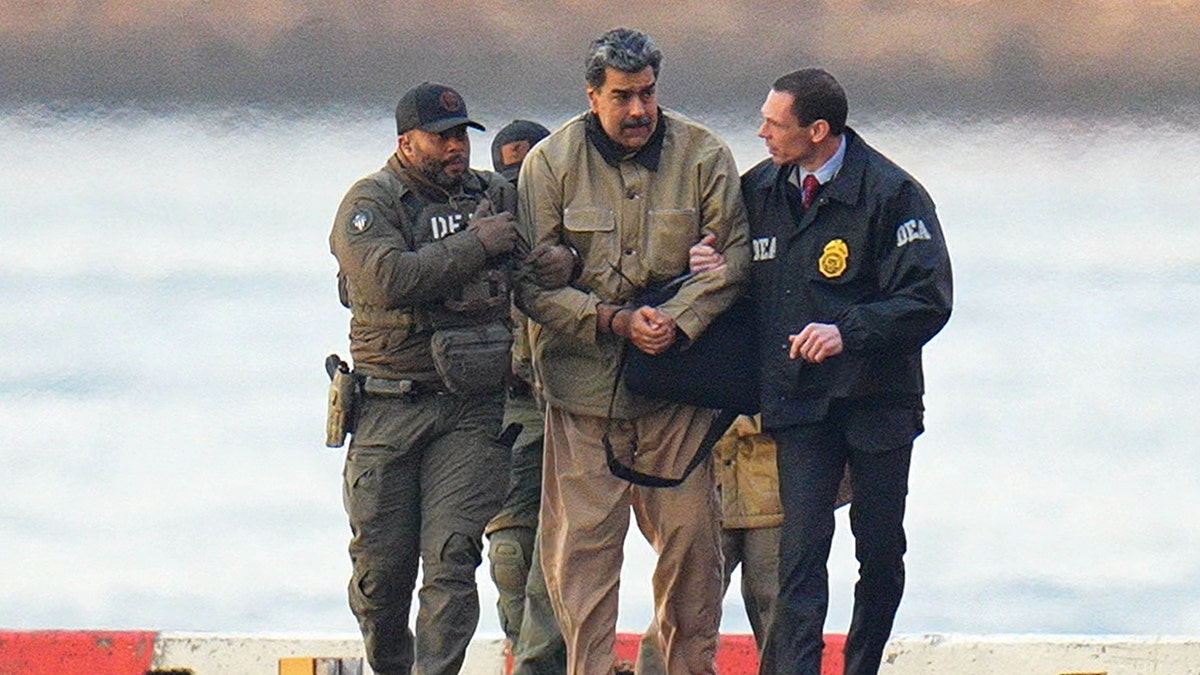
Nicolas Maduro is seen in handcuffs after landing on a helipad in Manhattan, escorted by heavily armed federal agents as they make their way into an armored car en route to a federal courthouse in Manhattan on January 5, 2026 in New York City (XNY/Star Max/GC Images via Getty Images)
“There is a lot of hope among Venezuela’s more pragmatic business elite that a more normal business environment will emerge now that Maduro is gone and if the US plays the cards of regime change and economy development right, even if it is primarily to benefit itself. But even then this would be a better environment for private companies and a huge market ripe for renewed activity. In that sense, most people are hopeful that Maduro is finally gone, but it is obviously difficult to see your own country under attack from a foreign power,” he says.
Vera, the professor, says she has been traveling in Caracas since January 4 and none of the collective. She describes a general sense of relief and joy at seeing Maduro gone despite the many uncertainties.
CLICK HERE TO DOWNLOAD THE FOX NEWS APP
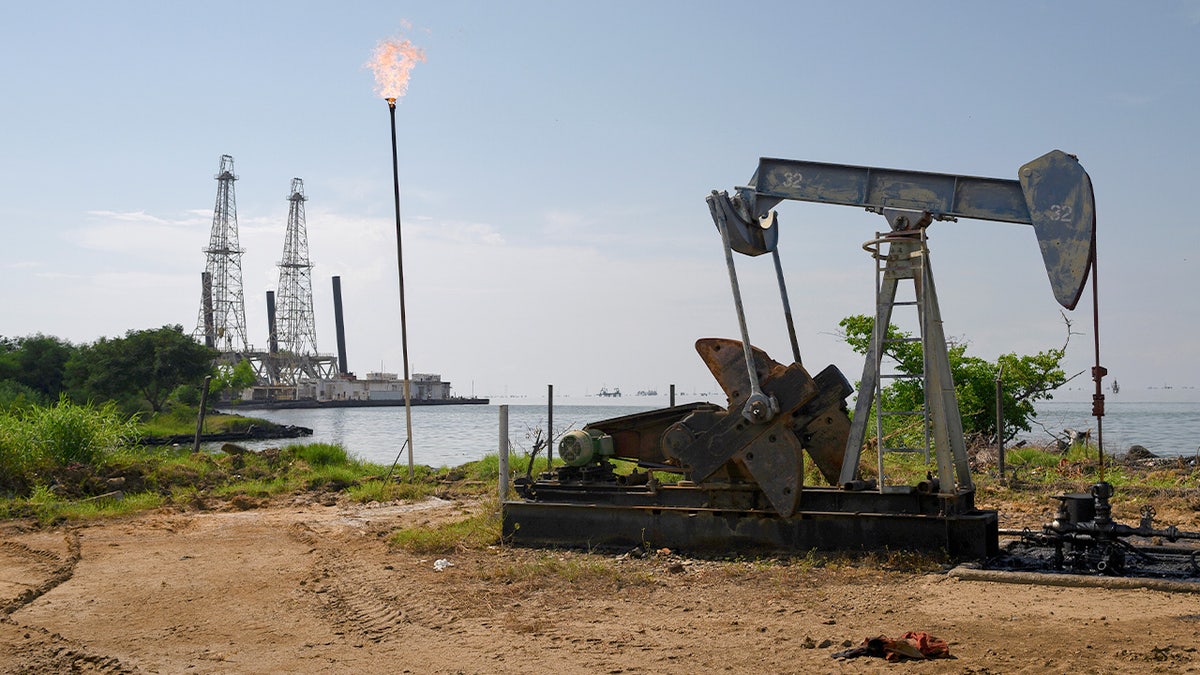
President Donald Trump is meeting with a group of oil executives to discuss investments in Venezuela following the arrest of Nicolas Maduro. (Gabby Oraa/Bloomberg/Getty Images)
“There is general uncertainty, but the collective feeling is relief. For the first time in 26 years of oppression, there is political change. I do have my personal reservations about Trump and the US, because there apparently is an economic interest on their part. We have one of the largest extra-heavy oil reserves in the world, in addition to our reserves of gas, gold and coltan..”
She continued: “The US actions are not free, and we have yet to see what the actual costs – which could be very high – will be. I am very sorry that this happened in my country and I would be lying if I said I agreed with foreign incursions, but I also believe that our own armed forces should have listened to the majority of citizens in the 2024 elections. [when Maduro retained power despite losing the vote]but they chose to continue oppressing their own people. This is therefore part of the costs we have to pay for its non-functioning,” she said.
Vera warns that reactivating Venezuela’s economic growth will be a medium- to long-term task, but that when the sense of political change is real, everything flows better and the sense of opportunity in the country right now is real.
