



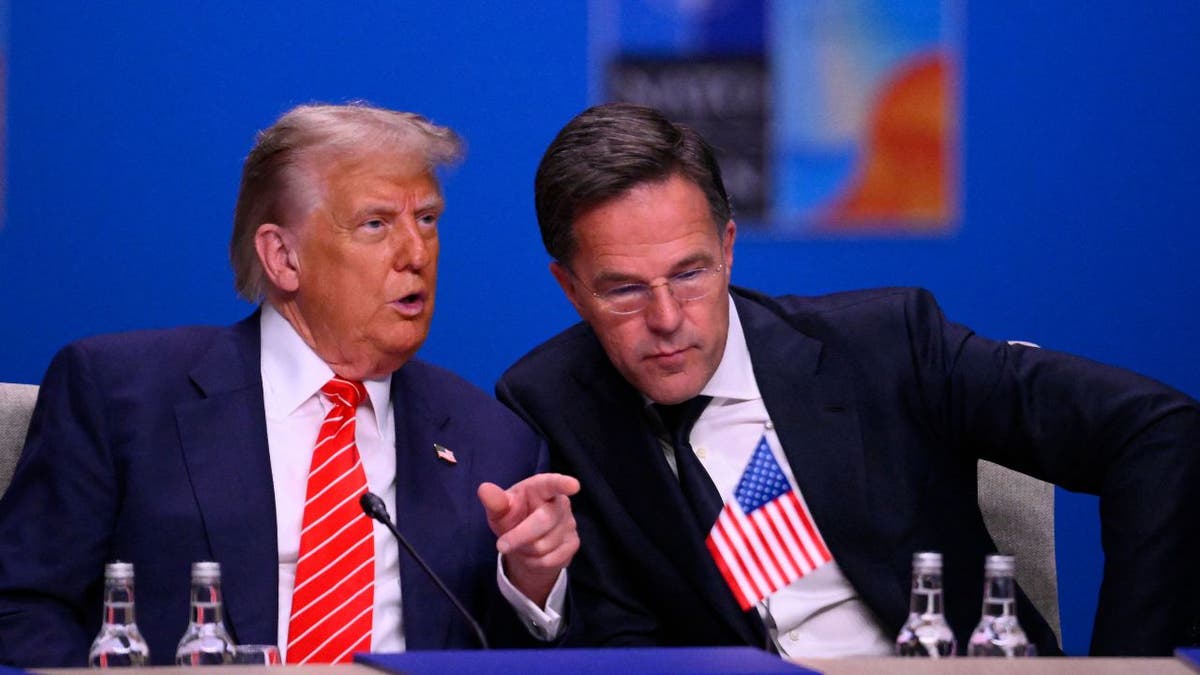
When President Trump told The Daily Telegraph that NATO is a “paper tiger” and that the United States’ withdrawal is “beyond reconsideration,” the foreign policy establishment erupted. That shouldn’t have happened. Trump said out loud what many in the Pentagon have known for years. The surprise is not the criticism. The surprise is how long Washington waited to have this conversation.
I know this alliance inside out. During the Cold War, I served as a U.S. Army infantry officer in West Germany, where I drew up contingency plans to blunt a Soviet armored attack long enough for reinforcements that might never arrive.
Later, as a Pentagon strategist, I spent years watching alongside NATO colleagues as the alliance expanded its reach, added members, and quietly lost the clarity of purpose that once made it formidable. No one in authority asked tough questions about what we were building toward. We now live with the consequences.
OFFICIAL PENTAGON MARKS RETURN OF ‘COLD WAR MENTALITY’ AS TRUMP ADMIN REFORMS NATO ALLIANCE
The Strait of Hormuz put an end to that pretext. When Washington called on NATO allies to help reopen a chokepoint through which about 20% of the world’s oil normally flows, Germany’s defense minister said bluntly: “This is not our war, we did not start it.” Spain has denied us airspace and bases.
Most of Europe stood back as Brent crude rose above $107 a barrel and American households paid $4 at the pump. These are the countries that we must defend without a doubt according to the treaty. When we asked for something in return, the answer was silence.
But NATO was founded in 1949 to defend Europe against Soviet aggression, not to project force into the Persian Gulf. The Allies knew nothing about the Iran operation before the first attacks. Washington took action and then demanded their support. Asking an alliance to follow you into a war of choice about which it was never informed, and then calling its hesitation cowardly, is not a test of trustworthiness. It is a test of obedience. Those are different things, and putting them together weakens an otherwise legitimate complaint.
The alliance’s membership lists deserve the same hard look. NATO has grown from twelve founding countries to 32 members, and expansion has not always served military logic.
Many post-Cold War additions brought political symbolism rather than combat power – small nations with minimally deployable forces and armies that exist largely on paper, joining the fight not because they could contribute to the fight, but because membership brought with it a security guarantee and a European identity. An alliance that cannot distinguish between members who can fight and those who offer little more than a flag on a briefing slide has a credibility problem that runs deeper than spending rates.
The figures confirm what the rhetoric conceals. The United States accounts for roughly 62% of NATO’s total combined defense spending, many times more than the next largest contributor.
In 2014, only three members met the 2% of GDP pledge; All thirty-two countries are expected to achieve this soon, with a new commitment of 5% by 2035. Progress under force, not persuasion, and commitments made under pressure can soften once the pressure subsides.
Ukraine makes the same point. The United States has committed $66.9 billion in direct military aid to Kiev — the backbone of Ukraine’s survival — since 2022 for a conflict on European soil on the richest continent in history. That’s not generosity. It’s a habit that neither party has had the will to break. Trump’s frustration is deserved.
Withdrawal is still the wrong answer. It requires congressional involvement. No president dissolves a treaty through a press release. What is more important is what we lose. The walkout gives Vladimir Putin the biggest strategic windfall of his career, signals to Beijing that American obligations have expiration dates, and dismantles 75 years of basic rights, intelligence networks and military interoperability built at enormous cost.
NATO is a flawed institution. It’s also infrastructure. Experienced commanders don’t blow up infrastructure because it needs to be repaired. They fix it.
TRUMP WARNS NATO OF ‘VERY BAD’ FUTURE IF ALLIES DO NOT HELP SECURE THE STRAIT OF HORMUZ
Dissolving NATO means confronting all three problems without backing down. Membership standards should reflect military reality, not political ambition. Countries that cannot deploy credible military forces or meet their spending obligations should not have the same status as those that do. Burden sharing requires teeth: enforceable standards with real consequences, not ambitious targets that members can ignore until Washington loses patience.
And the consensus rule that lets each government veto collective action must make way for coalition structures that allow willing, capable countries to move without waiting for unanimity from thirty-two capitals with as many different threat assessments.
CLICK HERE FOR MORE FOX NEWS ADVICE
There is a bigger question here. NATO was built to serve U.S. strategic interests, just like the United Nations and most of the post-World War II architecture that Washington built and has maintained ever since. Do these institutions still do that? If NATO has become a vehicle for European security on American credit and the UN has become a forum where adversaries limit American action more than advance American interests, then the Hormuz crisis is not an anomaly. It is a diagnostic.
A serious administration should conduct that assessment across the board, not only threatening to leave NATO in frustration, but also evaluating which postwar obligations still benefit the country that subscribes to them, and which have quietly become obligations without reciprocity.
CLICK HERE TO DOWNLOAD THE FOX NEWS APP
The underlying problem will not resolve itself. Either European NATO members decide that the survival of the alliance depends on their willingness to act as partners rather than clients – including honest conversations about which members can actually fight – or the United States concludes that maintaining the fiction of shared burdens costs more than changing the terms.
The Iran crisis did not create that choice. It made it impossible to ignore. The question for the future is whether the Allied capitals regard this as a real turning point or will stick around until American pressure has subsided. History says they will stick around. The bet says they can’t afford it.
I served in this alliance when the mission was clear and the commitment was mutual. The Cold War ended without a shot being fired across the Fulda Gap because the deterrent was real and everyone on our side believed we meant business.
That credibility has been eroding for 35 years. Trump did not create this problem. Washington built toward it, one deferred hard question at a time. Those questions – about membership, mission, reciprocity and whether these institutions still serve the nation that built them – are now on the table. The only thing worse than asking them too late is walking away before we get the answers right.
CLICK HERE TO FROM BOB MAGINNIS
