



U.S. and partner forces have killed or captured nearly 25 Islamic State fighters in Syria in the days after a massive U.S.-led attack on Dec. 19, according to a new statement from U.S. Central Command, underscoring Washington’s assessment that ISIS remains an active and persistent threat in the country.
CENTCOM said these forces conducted 11 follow-up missions between December 20 and 29, killing at least seven ISIS members, capturing the rest and eliminating four ISIS weapons caches. The operations followed Operation Hawkeye Strike, when US and Jordanian forces struck more than 70 ISIS targets in central Syria using more than 100 precision munitions, destroying infrastructure and weapons sites linked to the group.
“We will not relent,” said CENTCOM Commander Admiral Brad Cooper, adding that U.S. forces remain “steadfast” in working with regional partners to dismantle ISIS networks that threaten U.S. and regional security.
The scope of the follow-up attacks highlights a reality that U.S. commanders and analysts have been warning about for months: ISIS no longer controls large swaths of territory, but retains the ability to organize, attack and recover within Syria’s fragmented security landscape.
SYRIANS MARK FIRST YEAR SINCE THE FALL OF ASSAD, AS US SIGNALS A NEW ERA IN RELATIONS
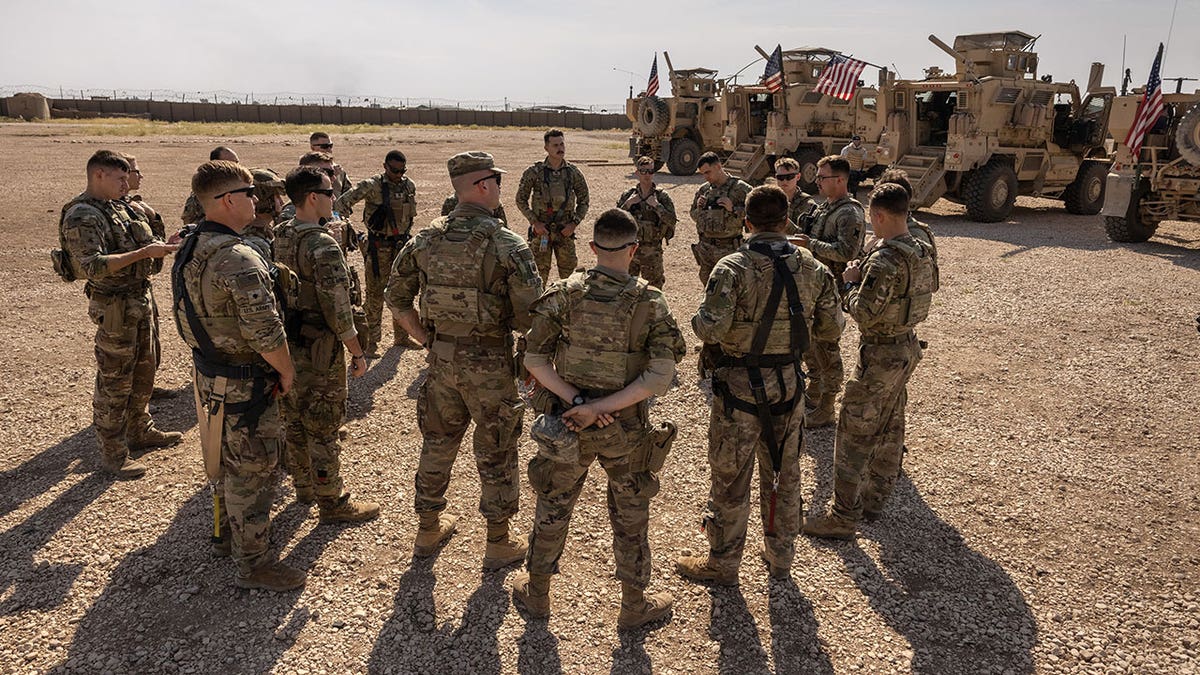
U.S. Army soldiers prepare to go on patrol from a remote combat outpost in northeastern Syria on May 25, 2021. U.S. forces, part of Task Force WARCLUB, operate from combat outposts in the area and coordinate with the Kurdish-led Syrian Democratic Forces (SDF) in combating remaining ISIS extremists and deterring pro-Iranian militias. (John Moore/Getty Images)
Syria remains divided between competing armed forces, militias and foreign-backed armed groups, with no single authority exercising full control over large parts of the country. Analysts say the vacuum continues to provide space for ISIS cells to operate quietly and recruit and exploit overstretched local forces.
Analysts note that Syria’s security environment continues to be defined by former jihadist networks that were never fully demobilized after the war. The country’s transitional leadership, including President Ahmed al-Sharaa, emerged from armed Islamist factions that relied heavily on foreign fighters and militias, according to regional security assessments. While these groups are not synonymous with ISIS, experts say the incomplete dismantling of extremist networks has left gaps that ISIS cells continue to exploit.
Roggio said the group has adapted rather than disappeared, shifting from holding territory to smaller, more secretive cells that can carry out deadly attacks. He pointed to continued ISIS activities not only in Syria and Iraq, but also in Afghanistan and other regions, citing United Nations reports that it is estimated that approximately 2,000 ISIS fighters remain active in Afghanistan alone.
“This is not what a defeated group looks like,” Roggio said, noting that ISIS continues to recruit, indoctrinate and inspire attacks even without the visibility it once had.
FROM SYRIA TO SOMALIA, U.S. troops remain deployed this holiday season in missions that never formally ended
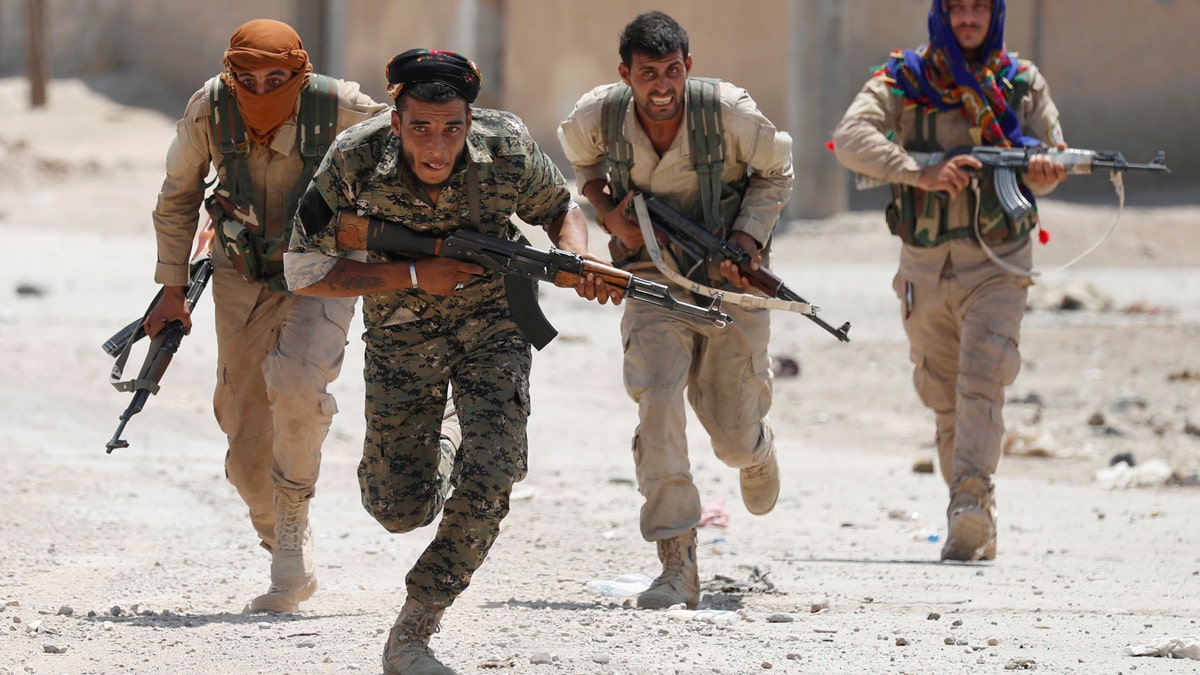
ISIS terrorists in Syria. (Reuters)
One of the most sensitive vulnerabilities remains the network of detention centers in northeastern Syria where thousands of ISIS terrorists and supporters are being held. These prisons are mainly guarded by Kurdish-led forces, backed by a small US military presence estimated at around 1,000 men, according to Reuters.
U.S. and coalition officials have repeatedly warned that any major disruption in prison security could allow hardened ISIS operatives to escape and rebuild networks across Syria and beyond. Kurdish officials have also expressed concerns about funding shortages, manpower pressures and pressure from rival militias operating nearby.
While U.S. officials have not publicly linked the recent strikes to prison-related threats, analysts say the broader environment of fragmented control increases the risk of coordinated attacks, insider help or prison unrest.
The danger is not theoretical. ISIS has previously staged mass breakout operations in Syria and Iraq, including a 2022 attack on al-Sinaa prison in Hasakah that required days of fighting.
The US attacks also take place amid ongoing instability in Syria, where multiple armed actors operate with overlapping powers. Analysts note that clashes between militias, sectarian violence and unresolved command structures have weakened overall security and diverted attention from counter-terrorism efforts.
US and Syrian troops come under fire during their patrol: report
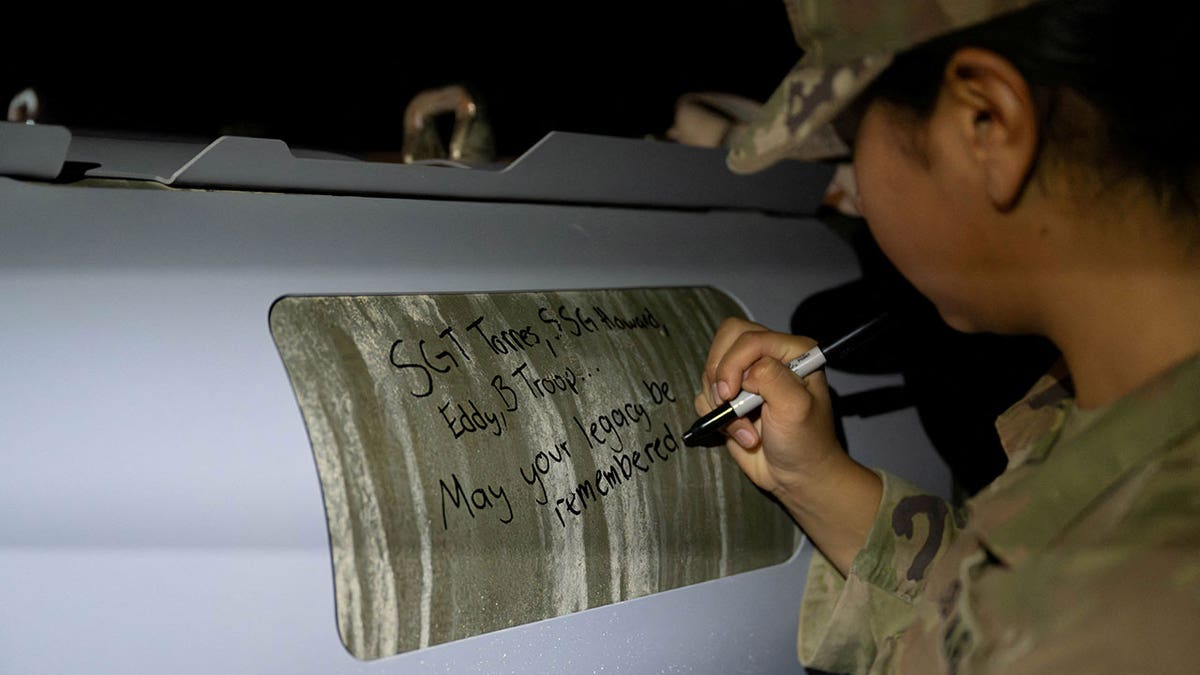
U.S. soldiers from the Iowa National Guard sign GBU-31 ammunition systems in the U.S. Central Command area of responsibility. On December 18, 2025, the US military launched large-scale strikes on dozens of Islamic State targets in Syria in retaliation for an attack on US personnel, US officials said. (Air Force photo/handout via Reuters)
Bombings in neighborhoods of Damascus, including Mezzeh, and unrest in minority areas have further illustrated the gaps that ISIS and other extremist groups can exploit, according to regional security assessments and open-source reporting.
“The chaos in Syria is the accelerator,” Roggio said. “ISIS thrives where no one is completely in charge.”
U.S. officials and analysts emphasize that ISIS’s activities in Syria are part of a broader pattern and not an isolated flare-up.
In Turkey, security forces recently clashed with Islamic State militants during counter-terrorism operations, leaving several officers injured, Reuters said on Monday. Turkish authorities said the raids targeted ISIS cells suspected of planning attacks in the country.
DEADLY ATTACK ON US TROOPS TEST TRUMP’S COUNTER-ISIS PLAN – AND HIS TRUST IN SYRIA’S NEW LEADER
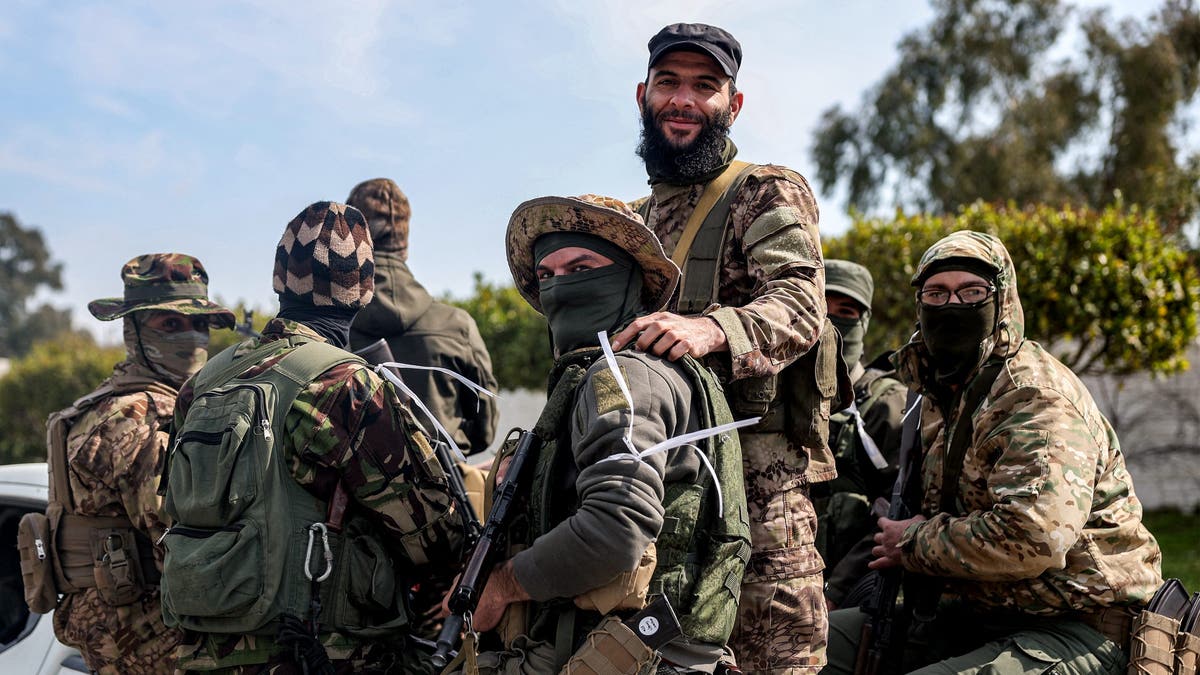
Security forces loyal to Syria’s interim government ride into the back of a vehicle traveling along a road in Syria’s western city of Latakia on March 9, 2025. Syria’s interim President Ahmed al-Sharaa called for national unity and peace on March 9, amid growing international backlash following the killing of civilians along the country’s coast in the worst violence since the overthrow of former President Bashar al-Assad. (Omar Haj Kadour/AFP via Getty Images)
“These are signals, not spikes,” Roggio said. “ISIS operates in different regions, adapting to pressure and exploiting weak governance wherever it finds it.”
The renewed US military action raises difficult questions for policymakers about how long the current containment strategy can last.
While U.S. officials say the Dec. 19 attacks dealt a significant blow to ISIS infrastructure, they have also acknowledged that counterterrorism operations alone cannot eliminate the underlying conditions that allow the group to persist.
CLICK HERE TO DOWNLOAD THE FOX NEWS APP

People wave weapons in the air as they gather to celebrate the fall of the Syrian regime in Umayyad Square on December 8 in Damascus, Syria. (Ali Haj Suleiman/Getty Images)
“Just because we want to declare the war on terror over does not mean it is over,” Roggio said. “The enemy gets a vote.”
