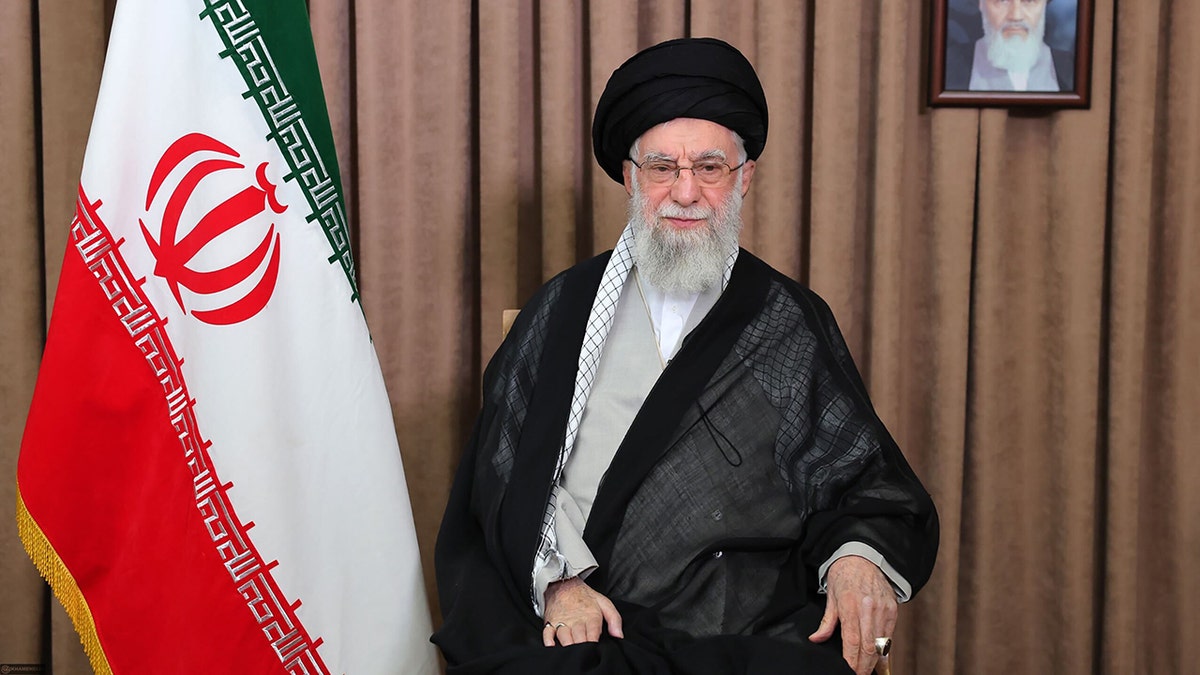
Iran entered a new chapter on Saturday after Supreme Leader Ayatollah Ali Khamenei was assassinated. This abruptly ended more than three decades of authoritarian rule and set in motion a leadership transition that the regime has long been preparing for.
A senior Arab diplomat told The Times of Israel that while Khamenei’s demise is a “huge blow” to the Islamic Republic, Tehran anticipated the possibility and took steps to deal with such a scenario.
“Just surviving would be considered a victory at this point,” the diplomat said of the regime, according to the newspaper, after US and Israeli attacks across the country.
A recent report of the Council on Foreign Relations (CFR) outlined three broad trajectories for a post-Khamenei Iran: managed regime continuity, an overt or stealthy military takeover, or a systemic collapse.
Iranian Supreme Leader Ali Khamenei was killed in an Israeli attack on Saturday. (Office of the Supreme Leader of Iran via Getty Images)
CFR warned that even a leadership change at the top would not necessarily translate into meaningful political reforms in the short term, given the regime’s deeply institutionalized power structure and its record of using force to maintain control.
The report notes that the real balance of power lies within a narrow circle of clerical elites and the Islamic Revolutionary Guard Corps (IRGC).
It describes a likely “continuity” scenario that produces a “Khamenei-ism without Khamenei,” in which a successor from within the regime maintains the ideological framework of the Islamic Republic while relying on established security institutions to maintain stability.
LEAKED DOCUMENTS REVEAL KHAMENEI’S SECRET DEADLY BLUEPRINT FOR DESTROYING IRAN PROTESTS
“Should a leadership vacancy arise in the meantime, an interim leadership council consisting of the President, the Chief Justice and a member of the Guardian Council selected by the Expediency Council will be formed,” he added. “The IRGC is a key stakeholder in this process and will strongly influence its outcome.”
Over the past thirty years, the Bayt-e Rahbari, or Office of the Supreme Leader, has grown into something a February report described by UANI as a “vast parallel state” operating alongside Iran’s formal institutions.
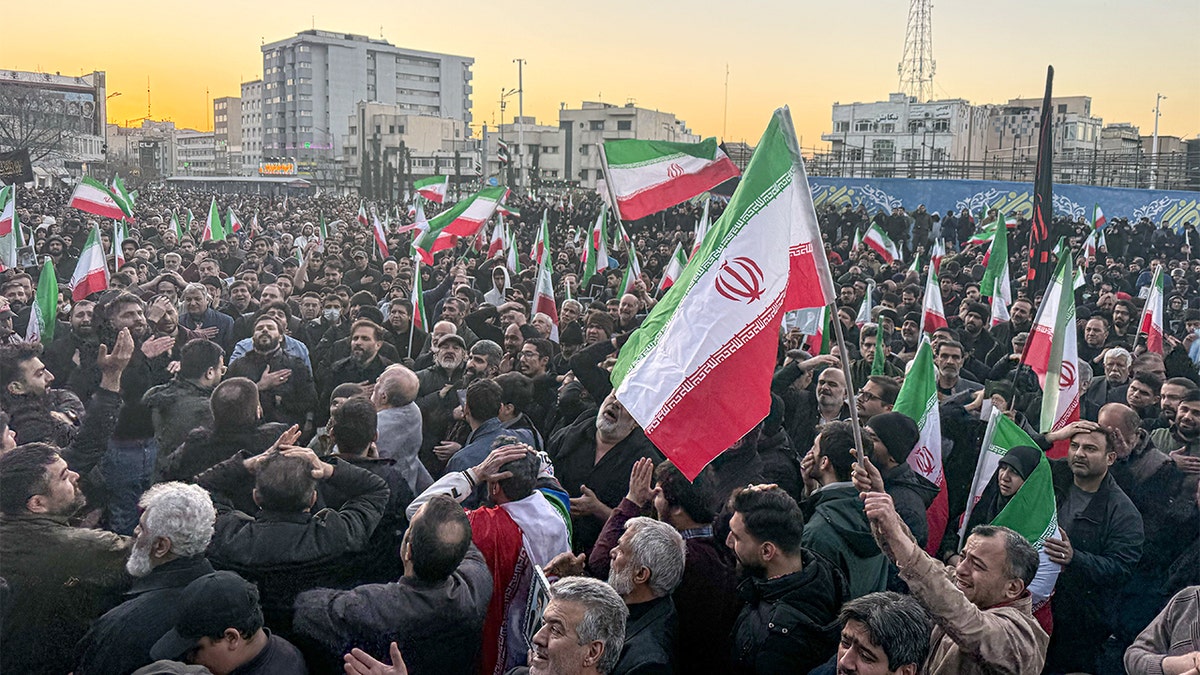
Large crowds gather in Tehran’s Enghelab Square on Sunday after Iranian state television announced that Supreme Leader Ayatollah Ali Khamenei had been killed in an Israeli attack. (Fatemeh Bahrami/Anadolu via Getty Images)
The analysis characterizes the Bureau as the regime’s “hidden nerve center,” expanding control over the military, security establishment, and major economic foundations in a way that makes the system’s authority institutional rather than dependent on Khamenei’s physical presence.
CLICK HERE TO DOWNLOAD THE FOX NEWS APP
“Today’s supreme leader is no longer just one man; he is represented by a comprehensive institution that consolidates power, directs succession and ensures continuity,” the nonpartisan policy organization said. “The Islamic Republic’s most enduring strength lies in this hidden architecture of control, which will continue to shape the country’s future long after Khamenei himself has disappeared from the scene.”
Related article