A new report from the Foundation for the Defense of Democracies (FDD) raises concerns about Iran’s opaque chemical weapons program, claiming that policymakers have paid little attention to it compared to Iran’s more scrutinized nuclear weapons program.
The FDD report outlines how the Iranian regime may have resorted to the unconventional use of chemical weapons as it faced an unprecedented uprising that began in December 2025, a wave of unrest not seen by Tehran since the 1979 Islamic Revolution. Any use of chemical weapons by Iran would violate their obligations under the 1997 Chemical Weapons Convention.
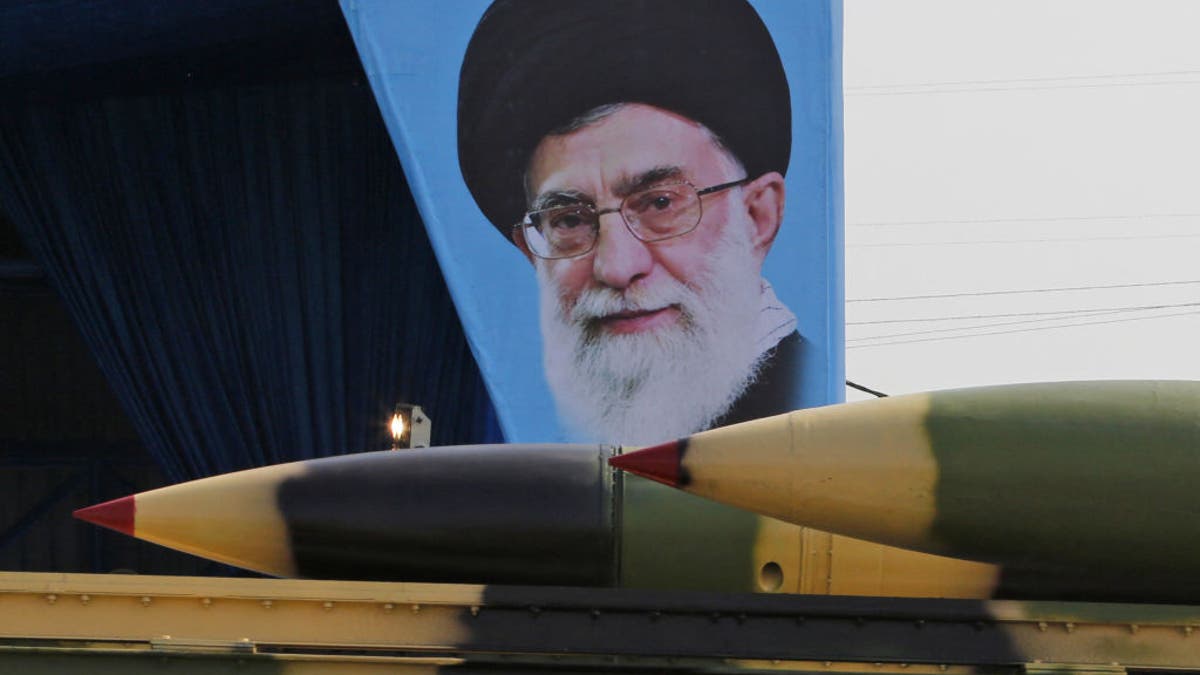
An Iranian military truck carries surface-to-air missiles past a portrait of Iranian Supreme Leader Ayatollah Ali Khamenei during a parade marking the country’s annual Army Day on April 18, 2018 in Tehran. (Atta Kenare/AFP via Getty Images)
Iran’s illegal chemical weapons program is under renewed scrutiny as the Trump administration appears closer to taking military action against Iran and its nuclear weapons program.
While the US holds indirect talks with Iranian officials mediated by Oman in Geneva, the US has increased its military presence in the Persian Gulf, sending the USS Gerald R. Ford to the region to join dozens of other warships.
On Tuesday, Iranian Foreign Minister Seyed Abbas Araghchi posted on X that “Iran will resume talks with the US in Geneva with the determination to reach a fair and just deal – in the shortest possible time.”
The foreign minister asserted that Iran will not pursue nuclear weapons under any circumstances, but stressed that Iran will not waive its right to peacefully pursue nuclear technology.
ISRAELI OFFICIALS ARE EXPECTED TO WARN THAT IRAN’S BALLISTIC MISSILES COULD TRIGGLE A SOLO MILITARY ACTION AGAINST TEHRAN
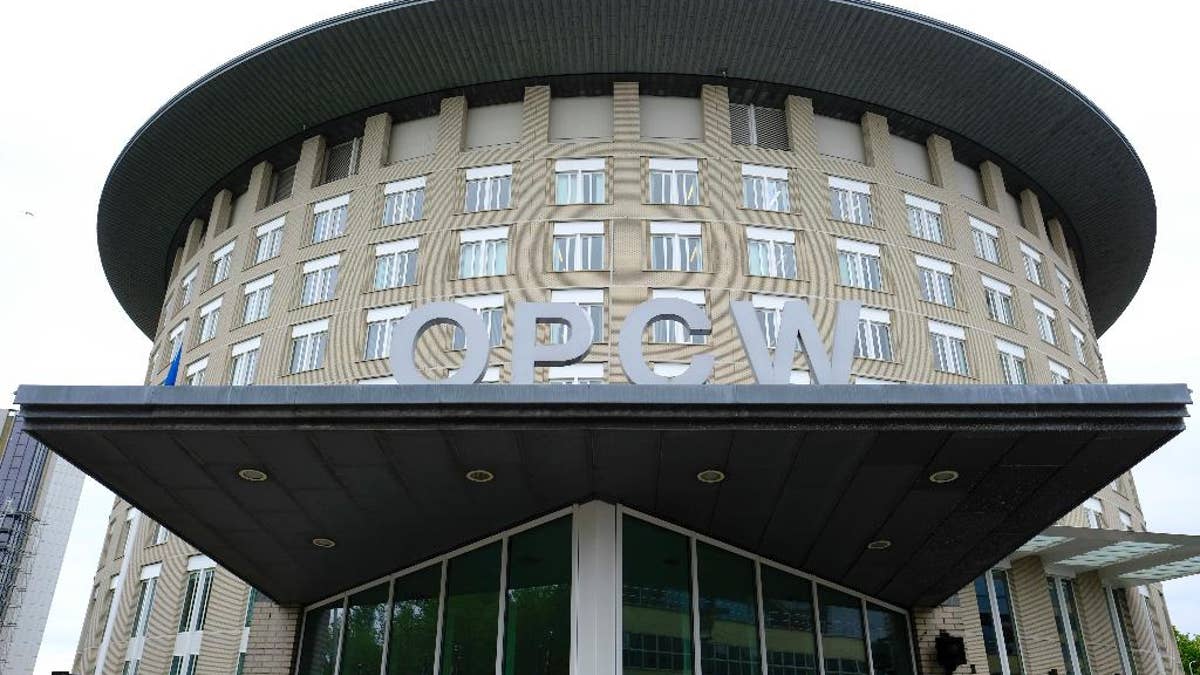
Exterior view of the headquarters of the Organization for the Prohibition of Chemical Weapons, OPCW, in The Hague, Netherlands, Friday, May 5, 2017. (Peter Dejong/The Associated Press)
“A deal is within reach, but only if diplomacy is prioritized,” he added.
Despite the optimism and push to continue talks, fears remain that Iran will not make any meaningful concessions on its nuclear program, which could lead to US military strikes on the country.
A broader regime change campaign to overthrow the Islamic Republic’s government led by Ayatollah Ali Khamenei is also off the table, according to some reports.
“If Washington launches strikes against Iran, it should seriously consider targeting the regime’s chemical weapons research and production facilities. Such action would help halt the further development and potential use of these weapons while sending a clear message that the regime cannot commit atrocities with impunity,” Stricker said.
The Chemical Weapons Convention (CWC), to which Iran is a party, enforces norms against state-owned chemical weapons, specifically the ban on the development, stockpiling, production and use of chemical weapons by states, even for retaliatory reasons, as well as their receipt from or transfer to anyone.
US assets in Middle East positioned for ‘highly kinetic’ war, ex-Pentagon official warns
Israel’s deputy ambassador to the Netherlands, Yaron Wax, said in July 2025 before a special meeting of the OPCW that “Iran has developed a chemical weapons program based on weaponized pharmaceuticals over the past twenty years.”
These agents, Wax said, affect the central nervous system and can be fatal even in small doses.
The ambassador said Iran’s Shahid Meisami Group (SMG) was working on tactical ammunition derived from fentanyl opioids for military use at the Shahid Meisami Research Complex, which was destroyed by Israel in June 2025. Israel believes the pharmaceutical-based agents have been handed over to Syria’s longtime and now deposed dictator Bashar al-Assad as well as Iraqi Shiite militias.
Iran began developing its chemical weapons program in 1983 during the war with Iraq in response to chemical attacks by Saddam Hussein’s regime, the U.S. intelligence community said.
As recently as 2024, the US has repeatedly determined that Iran is not complying with its obligations under the CWC.
In a message on X in November 2024, the Iranian mission to the United Nations dropped the charges against her.” Not a single case of Iranian violation has been recorded in recent decades. The current baseless reports are merely an outgrowth of psychological warfare propagated by the Zionist regime in the wake of its recent defeat on the Lebanese front.”
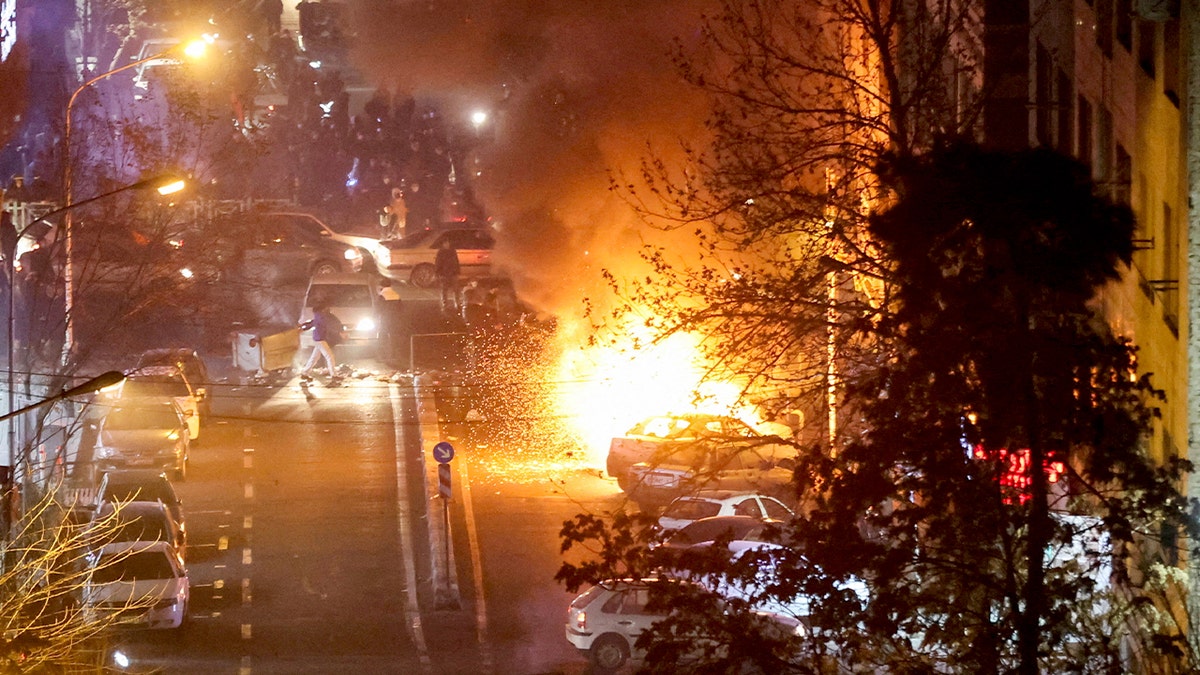
Cars burn in a street during a protest against the collapse of the currency in Tehran, Iran, January 8, 2026. (Stringer/WANA (West Asia News Agency) via Reuters.)
TRUMP WARNS IRAN, SLOWS STRIKES AS RED LINE DEBATE REFLECTS OBAMA’S SYRIA MOMENT
Stricker says the U.S. and the international community have failed to hold Iran accountable for its illicit chemical weapons program, and that meaningful action must be taken to prevent Iran from transporting banned substances to Iran’s nefarious proxy actors in the Middle East.
The report notes that the US and the OPCW should launch a pressure campaign against Iran, calling out the regime and publicizing any violations. The report recommends that the Trump administration should demand a formal ultimatum to demonstrate compliance with the convention and accept monitoring and verification mechanisms.
FDD also suggests that Israel should ratify the CWC and work within the OPCW, which would give Israel more credibility in combating Iranian violations.
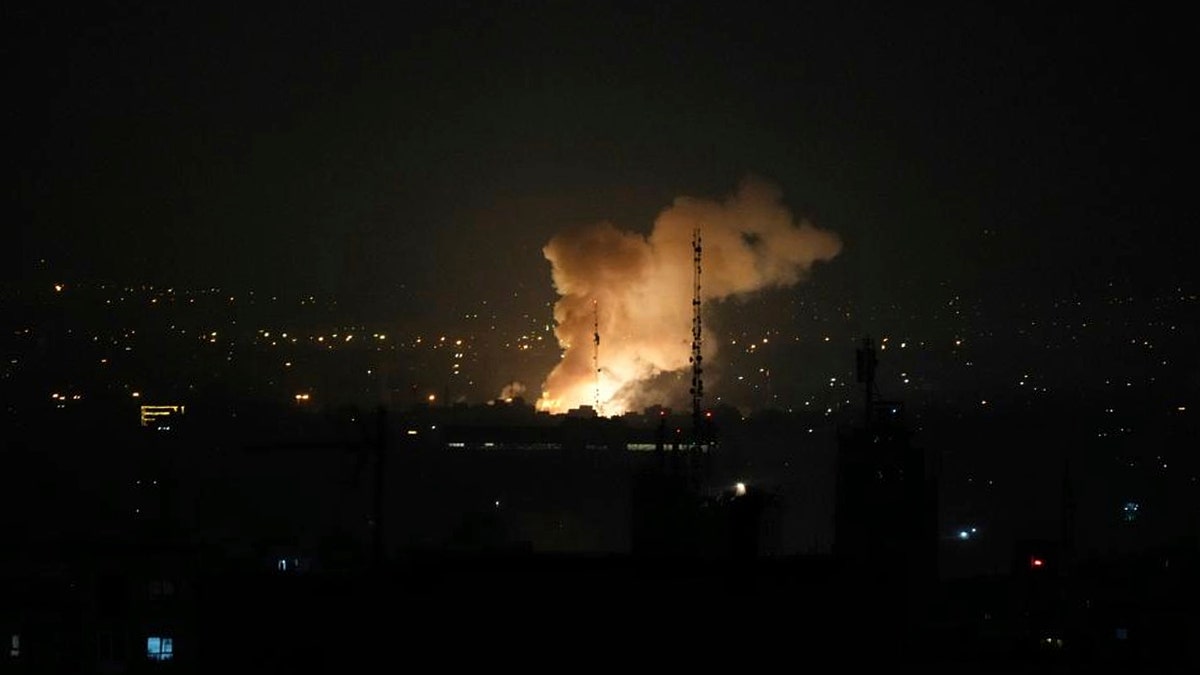
Smoke rises after an explosion in Tehran, Iran, Friday, June 13, 2025. Israel attacked Iran’s capital early Friday, sending explosions roaring throughout Tehran. (Getty Images)
CLICK HERE TO DOWNLOAD THE FOX NEWS APP
The report says that as a last resort, the U.S. should consider launching strikes on regime chemical weapons facilities, or supporting Israeli efforts, if actionable intelligence indicates movement in Iran’s chemical weapons efforts or renewed regime pressure to use such illegal weapons to put down anti-government protests.
“The only solution to Iran’s persistent weapons of mass destruction threat is for the United States and Israel to undermine the regime’s hold on power. Until then, the two nations will periodically be forced to play with Tehran’s capabilities when they threaten regional peace,” Stricker said.
Related article