



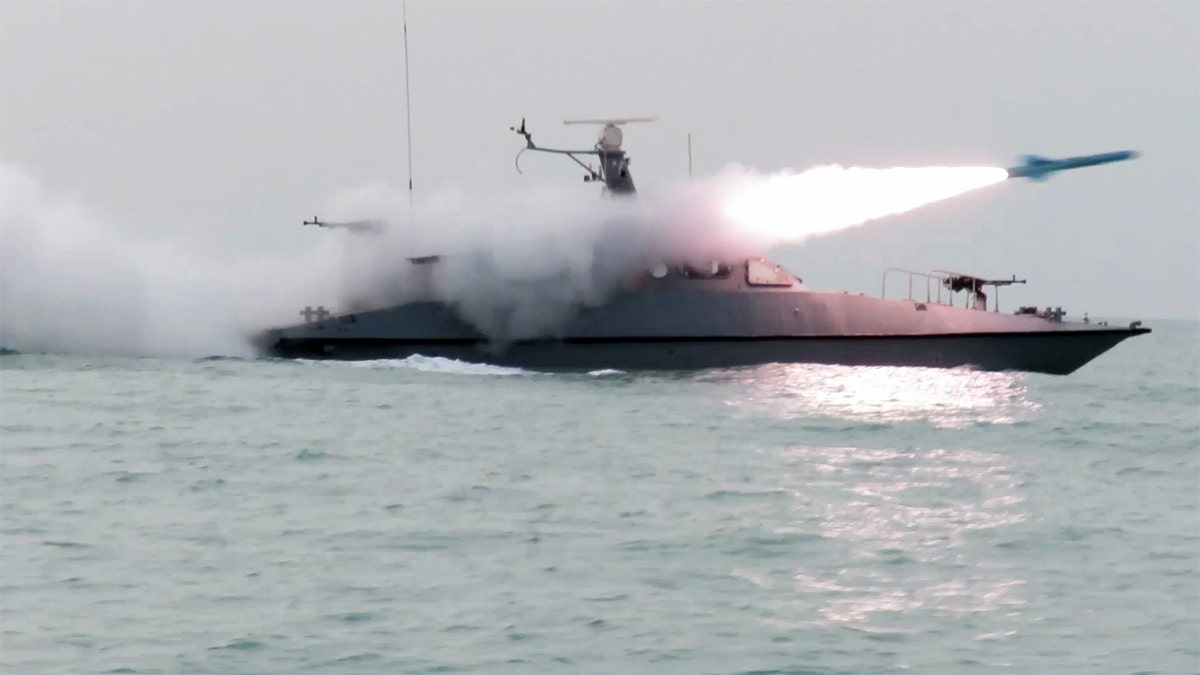
Iran fired live missiles into the Strait of Hormuz during naval exercises on Tuesday, according to Iranian state media, signaling its readiness to close the strategic waterway on orders from senior leaders.
The exercises come as President Donald Trump’s envoys, Steve Witkoff and Jared Kushner, meet senior Iranian officials in Geneva for a second round of nuclear talks.
Vice Admiral Alireza Tangsiri, commander of the Islamic Revolutionary Guards Corps (IRGC) Navy, said Tehran is ready to close the strait, a crucial global oil transit route, according to Tasnim News Agency, an IRGC-affiliated broadcaster.
Tasnim said traffic through the shipping corridor was suspended for several hours during the “Smart Control of the Strait of Hormuz” exercise, which included missile launches from ships, coastal positions and inland locations, as well as drone operations conducted in signal jamming conditions.
TOP IRAN SECURITY OFFICIAL SEEN IN OMAN DAYS AFTER INDIRECT NUCLEAR TALKS WITH US
Iranian military personnel participate in the exercise ‘Smart Control of the Strait of Hormuz’ on February 16, 2026 in the Persian Gulf and the Strait of Hormuz. (Islamic Revolutionary Guards Corps Press Office/Handout/Anadolu via Getty Images)
The US Central Command (CENTCOM) in late January previously urged the IRGC to conduct the announced two-day live-fire naval exercise “in a manner that is safe and professional and avoids unnecessary risks to freedom of navigation for international maritime traffic.”
“U.S. military forces recognize Iran’s right to operate professionally in international airspace and waters. Any unsafe and unprofessional conduct near U.S. military forces, regional partners, or commercial vessels increases the risk of clashes, escalation, and destabilization,” the report said.
GLOBAL PROTESTS CALL FOR REGIME CHANGE IN IRAN IN MAJOR CITIES WORLDWIDE AFTER BLOODY CRACKDOWN

Iranian military personnel participate in the exercise ‘Smart Control of the Strait of Hormuz’ on February 16, 2026 in the Persian Gulf and the Strait of Hormuz. (Islamic Revolutionary Guards Corps Press Office/Handout/Anadolu via Getty Images)
The Trump administration has built up a large military presence in the Middle East as talks over Iran’s nuclear program continue, with U.S. officials signaling that any deal must go beyond enrichment and address broader security concerns.
Secretary of State Marco Rubio said in February that negotiations would only be “meaningful” if they addressed Iran’s ballistic missiles, sponsorship of terrorist organizations across the region, its nuclear program and the treatment of its own people.
UK, FRANCE AND GERMANY LAUNCH UN SANCTIONS AGAINST IRAN DUE TO ‘SIGNIFICANT’ NUCLEAR PROGRAM DEFIANCE
CLICK HERE TO DOWNLOAD THE FOX NEWS APP
Trump told reporters aboard Air Force One on Monday that he would be “indirectly” involved in the talks.
“They will be very important and we will see what can happen. Iran is typically a very tough negotiator. They are good or bad negotiators. I would say they are bad negotiators because we could have made a deal instead of sending the B-2s out to destroy their nuclear potential,” he said. “And we had to send the B-2s. I hope they will be more reasonable. They want to make a deal.”
