



ROME, Jan 29 (Reuters) – Italy has laid out a sweeping security plan for the Winter Olympics, stressing it will remain in charge of all operations after news emerged that U.S. Immigration and Customs Enforcement personnel would assist the U.S. delegation.
The Games will be one of the most complex security operations Italy has had to undertake, with the event being split between two main hubs, Milan and Cortina d’Ampezzo, while additional events are held elsewhere in the north.
About 3,500 athletes will take part in the event, which runs from February 6 to 22. The government expects around 2 million visitors, including 60,000 for the opening ceremony at Milan’s San Siro stadium.
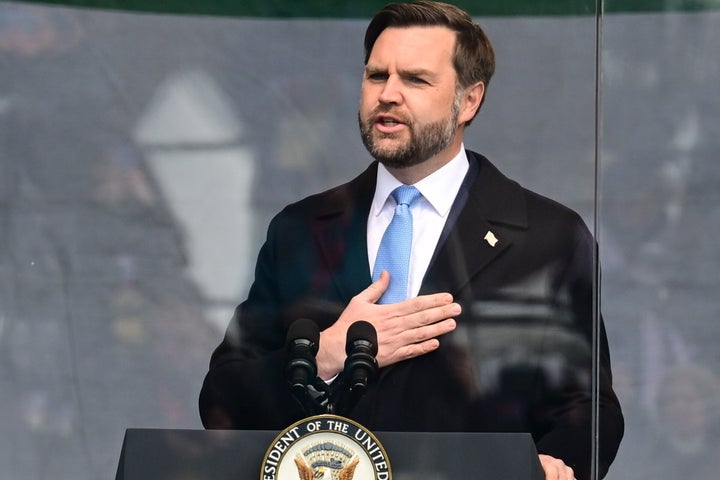
The US delegation will be led by US Vice President JD Vance and Secretary of State Marco Rubio.
SIX THOUSAND LAW ENFORCEMENT OFFICERS
Interior Minister Matteo Piantedosi said the security operation is a combination of field deployment, intelligence-based prevention and, for the first time at a major event in Italy, a 24-hour cybersecurity control room.
Approximately 6,000 law enforcement officers will guard multiple Olympic venues, supported by no-fly zones and restricted access areas.
Competing countries often bring their own security personnel. Along those lines, the U.S. State Department said Tuesday that several federal agencies, including ICE, would help protect the visiting Americans, as they have done at previous Olympics.
ICE and Border Patrol agents have come under heavy criticism in the United States for their enforcement of President Donald Trump’s immigration policies, with images of their actions shocking many in Italy, traditionally a close US ally.
In a statement, the Interior Ministry said ICE staffers would only work in US diplomatic offices such as the consulate in Milan, and “not on the ground”.
It added: “All security operations on Italian territory remain, as always, under the sole responsibility and direction of the Italian authorities.”
ICE will be present through its Homeland Security Investigations (HIS) division, but its role “will be strictly advisory and intelligence-based, without patrol or enforcement involvement,” Tilman J. Fertitta, the U.S. ambassador to Italy, wrote on X.
“At the Olympic Games, HIS investigators will contribute their expertise in providing intelligence on transnational criminal threats, with a focus on cybercrime and threats to national security.”
‘ICE OUT’ RALLIES LOOM
The commitments have not suppressed criticism.
The far-left USB union has organized an ‘ICE OUT’ rally in central Milan on February 6 to coincide with the opening ceremony of the Games, while opposition parties and left-wing groups are planning a protest this Saturday.
Emanuele Ingria, an HR worker from Milan, told Reuters he was “very concerned” about the prospect of ICE agents operating in Italy.
“I don’t think that’s what we need today,” he added. “Especially when you think about what’s happening there (in the United States)… It’s really a guerrilla fighter, I don’t like that.”
Under the Olympic Games deployment plan, more than 3,000 regular police officers, some 2,000 Carabinieri military police and more than 800 Guardia di Finanza fiscal police will be assigned to locations, with Milan hosting the largest contingent.

PIERO CRUCIATTI via Getty Images
The plan also includes drone surveillance, robotic inspection systems for dangerous or inaccessible areas, and a cybersecurity command center in Milan, tasked with monitoring both the Olympic networks and strategic transport infrastructure that suffered disruptions in the run-up to the 2024 Games in Paris.
Authorities will activate several ‘red zones’ from February 6 to 22, denying entry to those with public order convictions, in an effort to avoid clashes.
(Reporting by Giselda Vagnoni; additional reporting in Milan by Antonio Denti and Matteo Negri and in Rome by Alvise Armellini; editing by Crispian Balmer, Christian Radnedge and Clarence Fernandez)
