



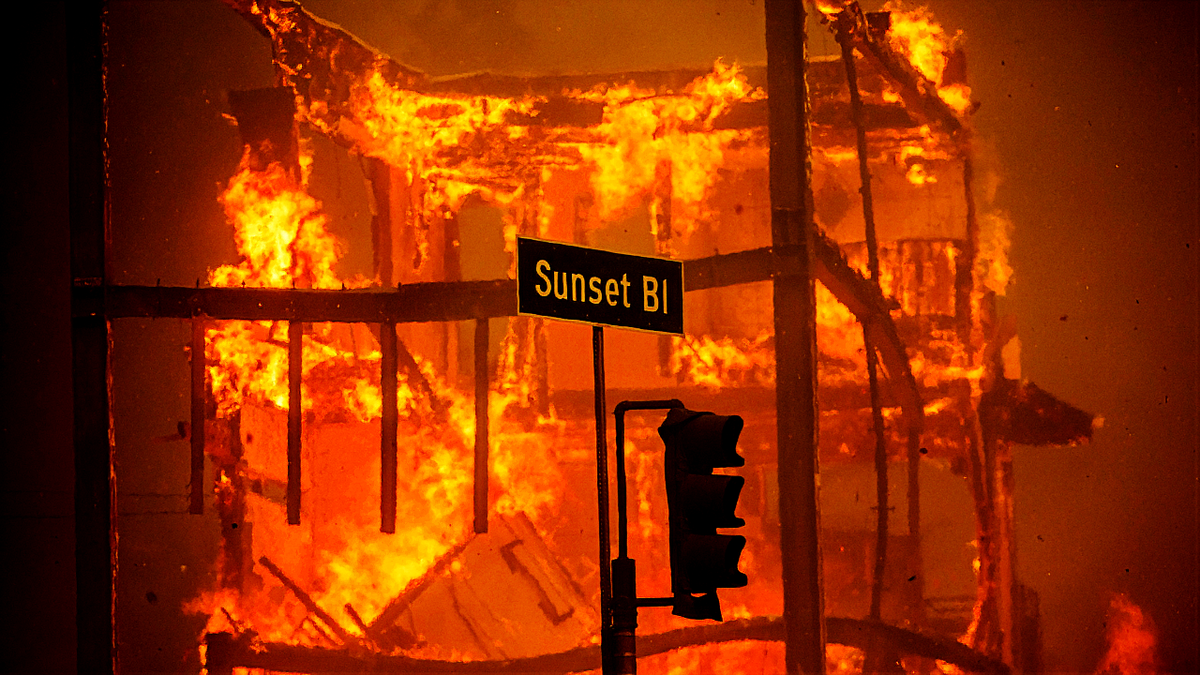
A year ago this week, the Palisades Fire erupted in the hills above Los Angeles, killing a dozen people and destroying nearly 7,000 homes and businesses. It became LA’s worst urban wildfire disaster. Governor Gavin Newsom blamed climate change. But the evidence now emerging from lawsuits filed on behalf of victims tells a different story: one in which California’s own environmental policies helped transform a small, manageable wildfire into an inferno. Federal investigators have determined that the Palisades fire was a “remnant fire” — a resurgence of a small New Year’s Eve wildfire that firefighters quickly contained. For six days, the fire smoldered underground in root systems in the state park, waiting for the Santa Ana winds to arrive. When they did, the results were catastrophic.
Why wasn’t the fire completely extinguished? And why didn’t anyone monitor the burn scar when the National Weather Service issued its most extreme fire danger warnings? The answer lies in California State Parks’ own policies — policies that, according to court filings, “put plants before people.” Documents obtained through public records requests show that just weeks before the fire, California State Parks completed a Wildfire Management Plan for Topanga State Park, which designated large areas as “avoidance areas” to protect endangered plant species and Native American archaeological sites.
Within these areas, normal firefighting tactics are limited. No heavy equipment. No retardant. No standard clean-up operations to extinguish smoldering hotspots ‘without the presence of an archaeologist’ or resource specialist. The plan’s stated preference: “let Topanga State Park burn in a wildfire.” Text messages between State Parks employees during the first fire show they are working together to limit the impact of firefighting to protect endangered plants. “There is an endangered plant population and a cultural site in the immediate area,” an official texted. “Can you please make sure there are no suppression impacts on the skull rock,” another replied later, referring to a spot close to the origin of the fire.
AFTER THE ASHES: THE LIFE OF A PALISADES RESIDENT IN THE DECIMED LA ENCLAVE A YEAR AFTER DEADLY WILDLIFE NEIGHBORS
When a State Parks employee asked a fire department heavy equipment supervisor about using bulldozers, he replied, “No, that area is full of endangered plants. I would be a complete idiot to ever put a bulldozer in that area.”
He was right to be careful. Damaging endangered plants, even during fire safety work, can have serious consequences. In 2020, Los Angeles paid $1.9 million in fines for damaging the same plant species – Braunton’s milkvetch – while replacing utility poles to improve fire safety.
This is California’s environmental bureaucracy in action: a system so mired in procedural requirements that firefighters must navigate botanical checklists while houses burn. In fact, evidence from the lawsuit suggests that a State Parks employee instructed firefighters to cover portions of their containment line with brush after the fire was declared under control — effectively undoing the fire breaks intended to stop its spread.
But the dysfunction doesn’t end with firefighting restrictions. California has also failed to address the underlying fuel loads that make these fires so catastrophic in the first place. In 2021, following the state’s worst fire year on record, Governor Newsom announced a plan to treat one million acres annually by 2025: clearing brush, thinning forests and conducting prescribed burns to reduce dangerous fuel buildups. After decades of inadequate land management, California’s landscapes had become dangerously overgrown, full of vegetation that could easily ignite into megafires. Five years later, the state’s own data shows it lagging far behind. According to California’s Interagency Treatment Dashboard, approximately 730,000 acres were treated in 2024 – well below the million-acre goal. The prescribed fire only reached about 189,000 hectares, compared to the target of 400,000 hectares.
Meanwhile, wildfires continue to far outpace treatment. Over the past decade, an average of more than 1.3 million acres have burned annually in California. In the catastrophic fire seasons of 2020 and 2021 alone, approximately 6.8 million hectares burned – roughly ten times as much as was covered during the same period. Southern California, where the Palisades Fire ignited, has been particularly neglected.
What’s holding California back? The same regulatory quagmire that hinders firefighting. Air quality regulations limit when prescribed burns can occur. Liability concerns keep private landowners from clearing brush. Environmental assessments delay projects for years. The very laws designed to protect California’s environment make it harder to protect Californians from environmental disasters.
Californians deserve better. They deserve a state that cleans up fuels before they become infernos, that allows firefighters to fight fires without consulting bureaucrats first, and that values human lives and homes at least as much as endangered plants.
Until then, the next catastrophe is not a matter of if, but of when.
