



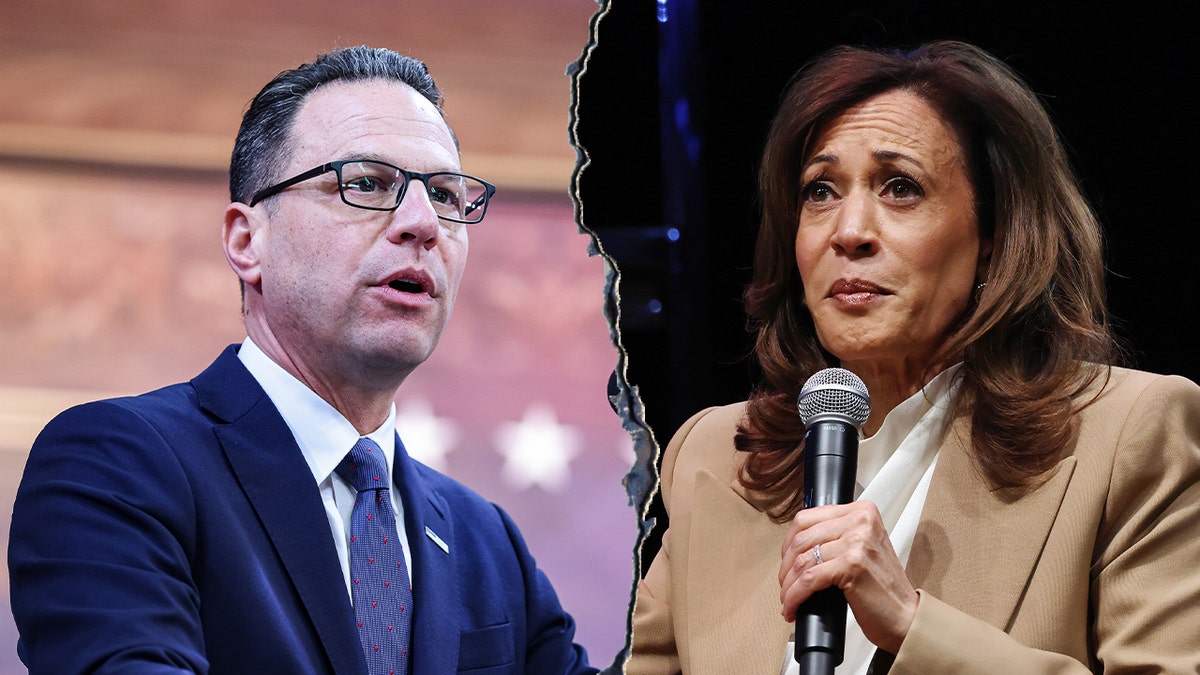
When Kamala Harris wrote in her memoir “107 Days” that Pennsylvania Governor — and fellow Democrat — Josh Shapiro insisted on being “in the room for every decision” if he were to become vice president, an angry Shapiro characterized her account as ‘bullsh–‘ and ‘blatant lies’. But Shapiro’s own upcoming memoir shows he’s not done taking on Harris yet. His book contains the explosive and damaging story that during the Harris team’s hostile vice presidential vetting process, Shapiro was asked if he had ever been an Israeli agent, bringing to mind the ugly association of Jews and dual loyalty.
The story is damaging to Harris in a number of ways. It reinforces the existing impression that she and her team were clumsy, but also adds the dimension that they may have been anti-Semitic. Indeed, even Joe Biden’s former envoys on anti-Semitism have done so indicted the interrogation of the Harris team as “horrific”. Shapiro’s devastating story is a reminder of Harris’ inability to understand a basic rule of life in the political big leagues: Don’t dish it out in your memoirs and be surprised when your targets respond.
Pennsylvania Governor Josh Shapiro’s new memoir hits back at Kamala Harris’ claims in her book “107 Days.” (Valerie Plesch/Bloomberg via Getty Images; Mario Tama/Getty Images)
In the modern era of staff memoir writing, there have been countless examples of aggrieved officials pushing back hard on memoirs that attacked people ostensibly on the same political team. A great example of this kind of revenge occurred in the aftermath of Arthur Schlesinger’s Pulitzer Prize-winning memoir of his time in the Kennedy administration, “A Thousand Days.” Some in the Kennedy camp were irritated by Schlesinger’s account, including former first lady Jackie Kennedy, who told Schlesinger he had gotten “too personal” with some of his revelations. Even worse was Kennedy’s Secretary of State, Dean Rusk. Schlesinger wrote that Kennedy had considered firing Rusk and that the “Buddha-like” Rusk would say little during White House meetings. Rusk, who was Lyndon Johnson’s secretary of state when the book came out, said he only kept quiet about Schlesinger because Schlesinger was a notorious gossip on the Georgetown cocktail party circuit.
Sometimes responses to a book can be less ad hoc and more systematic. Charlie Kolb, a domestic policy aide to President George HW Bush, wrote a critical memoir called “White House Daze,” which was released in 1993, after Bush lost to Bill Clinton. The memoir was particularly harsh on Kolb’s boss, Roger Porter, and on Bush’s Office of Management and Budget Director Dick Darman, with whom Kolb had clashed in the White House. Bush staffer Tom Scully, who had been Darman’s assistant, dismissed the idea that Kolb had had access to write a revelatory book, saying, “Charlie was so shut out of everything that it was a joke for him to write a book.” Scully was not the only one dissatisfied with Kolb, as the Bush alumni collectively sidelined Kolb. In 1999, years after the administration ended, Scully—who had initially supported Kolb’s hiring—told that “as far as I know, no one has spoken to Charlie in seven years. He’s the most unpopular man as a result of that book.”
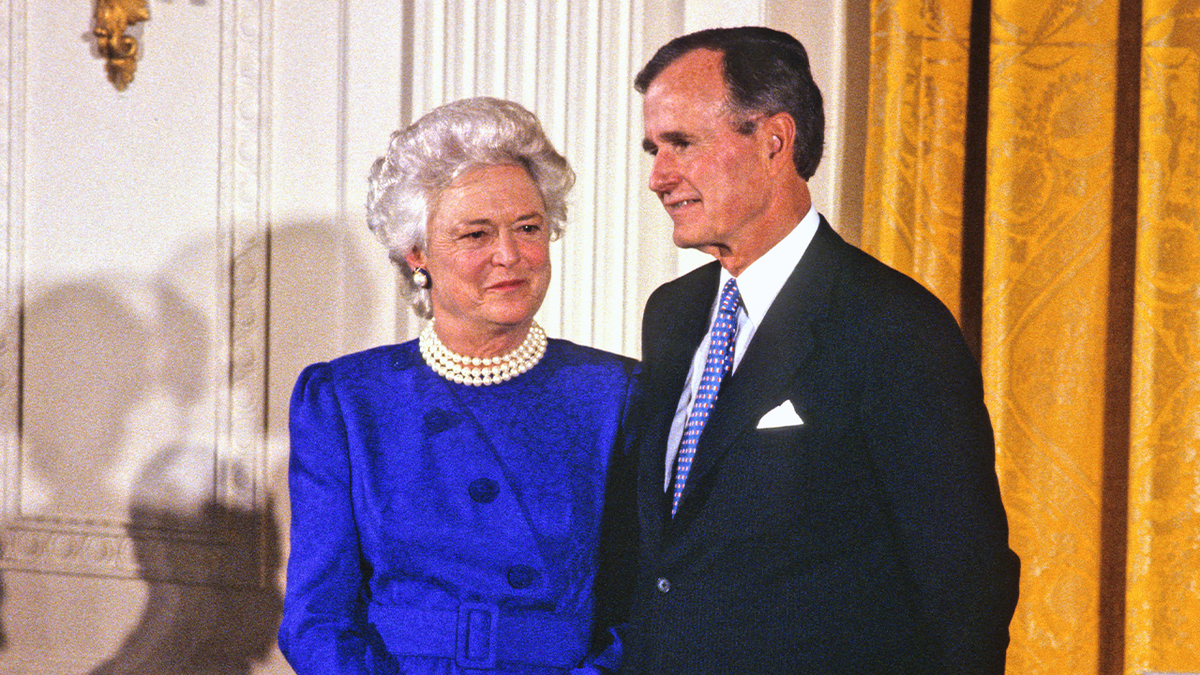
First Lady Barbara Bush and President George HW Bush seen in the East Room of the White House in 1989. (Photo by Ron Sachs/CNP/Getty Images) (Getty Images)
In contrast to the Kolb book, ‘All Too Human’ by George Stephanopoulos was published when President Clinton was still in power. Stephanopoulos’ revealing memoir called the sitting president’s behavior in the Monica Lewinsky affair “stupid, selfish and self-destructive.” Clinton staffers responded both on and off the record to Stephanopoulos’ best-selling book. Anonymous aides called Stephanopoulos a “conniving” and an “ungrateful.” Clinton ally Mandy Grunwald also snarled that if Clinton hadn’t given him the “opportunity of a lifetime,” he wouldn’t have become a “million-dollar book writer and commentator.”
KAMALA HARRIS RETURNS WASHINGTON POST, LA TIMES OVER NON-SUPPORT IN 2024
Another damaging memoir that came out during a government term was Scott McLellan’s ‘What Happened’. McLellan made a number of criticisms of President George W. Bush, writing that Bush “convinces himself to believe whatever suits his needs at the moment,” and that he was guilty of “self-deception.” McLellan also called the invasion of Iraq a “serious strategic blunder” and claimed that the Bush White House had “made the decision to turn away from candor and honesty when those qualities were needed most.”
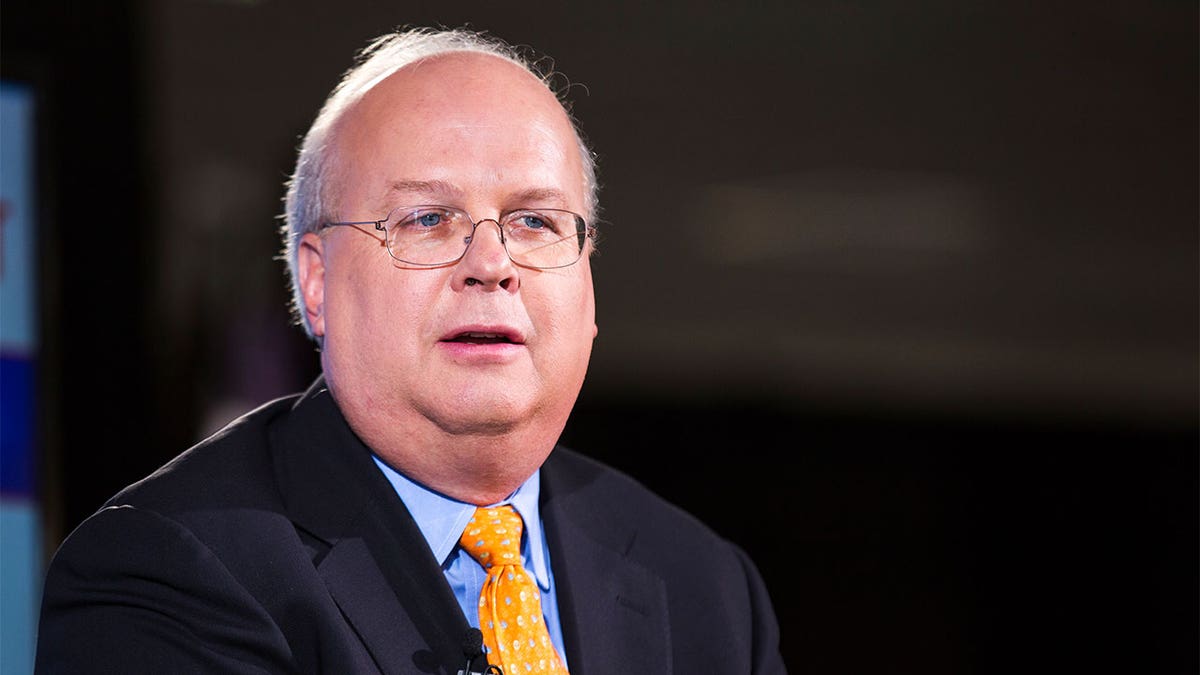
Republican strategist Karl Rove speaks at a breakfast for the Republican National Convention in Tampa. (Photo by Brooks Kraft LLC/Corbis via Getty Images) (Brooks Kraft Paper)
The Bush White House responded with an apparently organized effort to dismiss McLellan’s book.
After the memoir came out, several Bush allies criticized McLellan in similar terms. Senior Advisor Karl Rove said, “This doesn’t sound like Scott. It really isn’t. Not the Scott McClellan I’ve known for a long time.”
CLICK HERE FOR MORE FOX NEWS ADVICE
This kind of pushback is obviously fair game from those targeted by a negative memoir. John Bolton likely expected President Trump to criticize him and even call him a “liar,” following Bolton’s critical memoir of his time in the first Trump administration, “The Room Where It Happened.” He probably didn’t expect Trump’s second term, in which Bolton is investigated for misuse of classified information, an investigation that probably wouldn’t have happened without the book.
CLICK HERE TO DOWNLOAD THE FOX NEWS APP
Memoir writers don’t have to hire people by name, as Harris did with Shapiro. Sometimes memoirists conjure up anonymous antagonists. Examples of this include John Podhoretz, who created composite characters in his George H. W. Bush book “Hell of a Ride,” and Condoleezza Rice, whose memoir of the George W. Bush years, “No Higher Honor,” is filled with more than twenty uses of anonymous characters. This can be a way to spare someone’s feelings, but it can also reduce the chance that someone will retaliate. When someone is criticized by name, like Shapiro, the likelihood of a backlash is much greater, as Harris has now learned.
Memoirs are part of the game, but Harris should have known that going up against a smart player like Shapiro didn’t come without a cost. Had she paid more attention to the history, she might have been aware of the risks she was taking by calling out Shapiro. Her lack of awareness of what other politicians have done in response to bad memoirs is just one more sign of her lack of aptitude for politics — and made her vulnerable to Shapiro’s revenge.
CLICK HERE TO FROM TEVI TROY
