



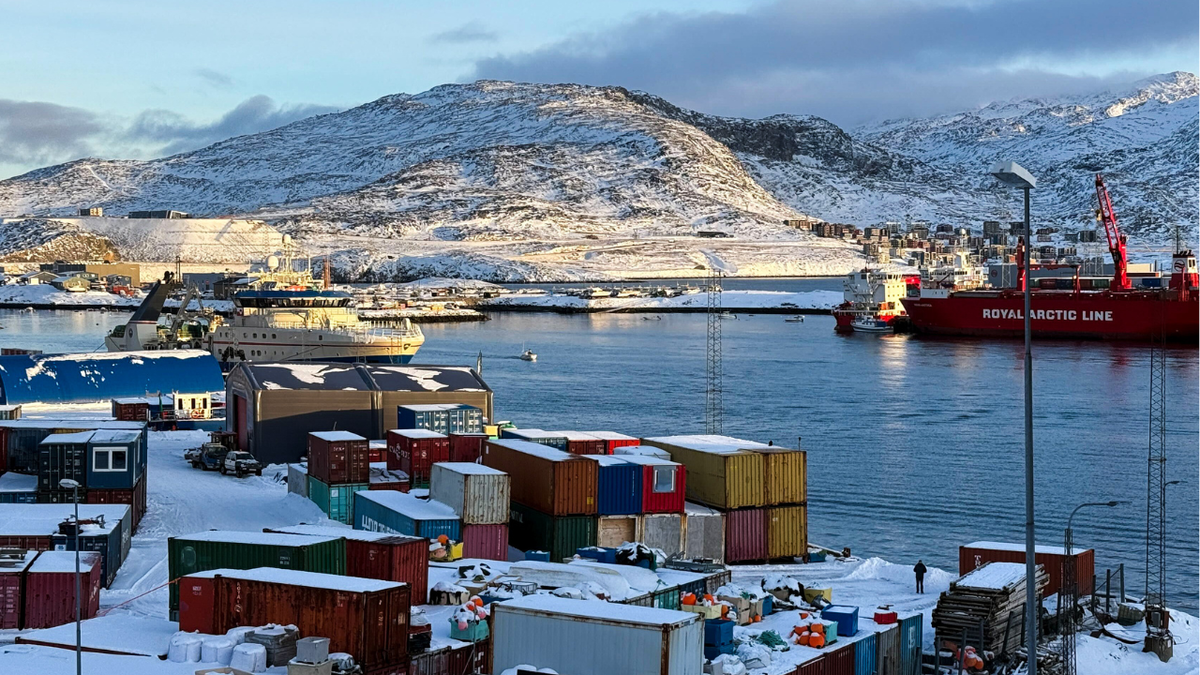
President Donald Trump’s announcement that the United States will impose a 10% tariff on eight European countries that oppose U.S. control of Greenland has brought a long-ignored Arctic debate into the open. Several European governments responded with immediate objections, while skepticism at home followed just as quickly.
Critics warn that tariffs risk alienating allies and putting pressure on NATO. Opinion polls show widespread public discomfort with any move resembling U.S. rule in Greenland. These concerns are real, but do not change the strategic facts. Rejecting Greenland as optional ignores a central lesson of modern history: the Arctic has never played a peripheral role in the defense of the American homeland.
Washington faced a similar – and much more dangerous – strategic dilemma during the Cold War.
TROOPS FROM EUROPE GO TO GREENLAND IN RAPID TWO-DAY MISSION AS TRUMP AIMES TO TAKE OVER US
During that period, U.S. defense planners did not view the Arctic as a remote theater. They considered it the most direct route of attack against North America. Soviet bombers and missiles followed the shortest routes over the Pole, forcing Washington to confront an unavoidable geographical reality.
As missiles and bombers traveled along polar paths, Arctic geography drove U.S. defense planning. Working with Canada and with Denmark’s consent in Greenland, the United States has established an unprecedented early warning system in the far north. The Pinetree Line, the Mid-Canada Line and the Distant Early Warning (DEW) Line together formed more than sixty radar stations stretching from Alaska across the Canadian Arctic towards Greenland. As intercontinental ballistic missiles replaced bombers as the primary threat, Washington adapted again and deployed the Ballistic Missile Early Warning System at Thule in Greenland, Clear in Alaska and Fylingdales in the United Kingdom – designed to provide decision makers with critical warning time in a nuclear crisis.
These lessons from the Cold War still apply today because missile flight paths, warning timelines, and homeland defense are still determined by Arctic geography.
Some analysts argue that existing defenses – especially those at Fort Greely, Alaska – reduce the need for strategic positioning in Greenland. Fort Greely is an essential part of the missile defense of the American homeland. But it doesn’t function on its own.
NEW TRUMP ADMIN SAYS US WILL NOT ‘CONQUER’ GREENLAND, EMPHASIZES TALKS WITH LOCAL GOVERNMENT, AS DENMARK BLOCKS IN MOTION
In a crisis measured in minutes, even small gaps in detection or tracking can mean the difference between deterrence and disaster.
Missile defense relies on multiple sensors and early warning systems deployed over long distances. Forward radar installations in the Arctic extend detection time and improve tracking against threats approaching from polar ranges. During the Cold War, Washington did not choose between Alaska and Greenland; it strengthened both. Defense planners still rely on geographic depth to preserve warning time and decision latitude.
However, Greenland’s importance extends far beyond missile defense and early warning.
HOUSE DEMOCRATS MOVE TO BLOCK TRUMP’S GREENLAND ‘BOONDOGGLE’
In addition to their military significance, Greenland’s deposits of rare earths and other crucial minerals have become a focal point of competition between the United States, Europe and China. These materials form the basis for modern weapon systems, energy technologies and advanced manufacturing. Unfortunately, the US remains uncomfortably dependent on Chinese-dominated supply chains.
The strategic objective regarding Greenland should not be a property right in itself. It’s access and denial: guaranteeing reliable access for the West while preventing Beijing from securing long-term influence over future supply. That goal can be pursued through long-term investment agreements and joint development and security partnerships with Greenland and Denmark – without annexation.
But access without security is vulnerable. China has repeatedly used commercial footholds to translate economic presence into political influence. Agreements will only last if they are backed by credible deterrence.
SENATE DEM JOHN FETTERMAN SUPPORTS PROSPECT OF US PURCHASE OF GREENLAND, CALLING ‘HUGE STRATEGIC BENEFITS’
For years, Arctic shipping routes were dismissed as speculative. That era is over. The Northwest Passage is becoming increasingly navigable, shortening transit times between Asia, Europe and North America. Russia already views the Arctic waters as sovereign corridors, enforced by military force. China is positioning itself for future control of ports, supply hubs and undersea infrastructure. Greenland occupies a central position along these developing Arctic routes.
An expanded NATO presence in the Arctic – including Greenland – would strengthen deterrence, especially if significant US forces were involved. But NATO remains a consensus alliance, and consensus slows decision-making in times of crisis.
During the Cold War, Greenland’s defense worked because American leadership was clear and operational authority was unambiguous, even as Danish sovereignty was fully respected. Effective deterrence requires clear authority and responsibility, and no uncertainty about who decides when time is scarce.
The way this debate is framed has real consequences. Talk of “taking” Greenland or dominating local opposition invites comparisons to imperial ventures that the United States should never repeat. America does not need occupying forces or another long-term insurgency. History – from the Philippines after 1898 onwards – provides blunt warnings about the costs of confusing strategic geography with colonial ambition.
Greenland and Denmark have made it clear that Greenland is not for sale. Tariffs can draw attention to this issue, but coercion should not become a substitute for diplomacy, investment and alliance leadership.
CLICK HERE FOR MORE FOX NEWS ADVICE
Polls show that many Americans are against acquiring or dominating Greenland. That skepticism reflects war-weariness and distrust of open-ended obligations. But it reflects an inability to explain the stakes – not the absence of them. Greenland is not Iraq or Afghanistan. There would be no nation-building project, no counterinsurgency campaign, and no attempt to impose governance.
This debate is about access, the basing of rights, the ability to provide early warning, and the denial of authority – objectives that the United States has previously pursued in Greenland, successfully and peacefully.
CLICK HERE TO DOWNLOAD THE FOX NEWS APP
Washington faces a choice often mischaracterized as empire versus restraint. In reality, the decision is whether to remain engaged, while respecting sovereignty and alliances, or step back as strategic competitors consolidate their influence. As China and Russia expand their reach in the Far North, American leadership – rooted in history, geography and restraint – remains indispensable.
America once learned that the Arctic is the front door to the homeland. To forget that lesson now would bring consequences far more dangerous than remembering it.
CLICK HERE TO ROBERT MAGINNIS
