



There is nothing wrong with questioning US policy toward Iran. In fact, it is essential. The press should investigate, Congress should challenge, and both sides should debate the wisdom of any possible military action. These are not trivial matters, and the stakes – American lives, regional stability and nuclear proliferation – are too high for anything less than serious investigation.
What has become disturbing, however, is how unserious the conversation has become around a single phrase: “imminent threat.”
Following recent testimony from Director of National Intelligence Tulsi Gabbard, some lawmakers — especially Democrats — expressed disbelief when she suggested that whether a threat qualifies as an “imminent threat” is ultimately a presidential decision. Some Republican voices, eager to distance themselves from the political risks of escalation, have expressed similar skepticism, suggesting that unless there is clear evidence of an attack in the short term, any preemptive stance is unwarranted.
Both sides are missing the point.
GABBARD AVOIDS IRAN ‘IMMINENT THREAT’ CLAIM UNDER SENATE GRILL
The role of the intelligence community is to assess capabilities, estimate timelines, and evaluate intentions. It offers a range of opportunities and scenarios. It does not – and should not – determine the final decision on when a threat becomes an ‘imminent threat’. That responsibility falls to the president, who must integrate intelligence with military preparedness, alliance considerations, and the broader strategic landscape.
The problem with the current debate is that an ‘imminent threat’ is treated as if it has a precise, universally accepted definition. That is not the case.
In a conventional setting, an imminent threat can be easy to identify: troops gather at a border, missiles are fueled, orders are relayed. But nuclear proliferation doesn’t happen that way. It is gradual, opaque and often deliberately ambiguous. A regime like Iran’s expands its capabilities incrementally—enriching uranium, refining armaments, and expanding delivery systems—without ever presenting a single definitive moment that clearly signals that the threshold has been crossed.
MICHAEL OREN: IRAN HAS BEEN WAR AGAINST AMERICA FOR 47 YEARS – TIME TO END IT
If the measure of an imminent threat is that the Ayatollah is about to press a launch button, then the United States has already forfeited its ability to prevent the outcome. At that stage, the available options are severely limited and the risks increase dramatically.
Since the Iranian revolution in 1979, the regime has consistently and openly defined itself in opposition to the United States and its allies. “Death to America” has not been a casually used slogan; it has been a defining feature of the regime’s identity.
A more realistic assessment recognizes that the convergence of capabilities and intentions defines an imminent threat.
And on the question of intention there should be no confusion.
Since the Iranian revolution in 1979, the regime has consistently and openly defined itself in opposition to the United States and its allies. “Death to America” has not been a casually used slogan; it has been a defining feature of the regime’s identity. Iran has funded and armed proxy groups across the region, targeted American interests and systematically worked to undermine stability from Lebanon to Yemen.
DAVID MARCUS: THE MAGA ‘CIVIL WAR’ OVER IRAN IS A MYTH
This is not a regime whose intentions are unclear or evolving. His attitude has been telegraphed for more than 40 years.
When this long-standing intent is combined with evolving capabilities, the nature of the threat changes.
TRUMP’S OPERATION EPIC FURY PROVES THAT REAGAN-STYLE PEACE IS BACK THROUGH POWER
If Iran develops a deliverable nuclear warhead within one to two years and simultaneously expands its ballistic missile capabilities, that timeline cannot be dismissed as remote. In strategic terms it is compressed. The closer these two tracks intersect, the fewer viable options remain to prevent a nuclear-armed Iran.
This is not a theoretical concern. The question is whether the United States and its allies retain the ability to influence the outcome at all.
Some Democratic critics argue that without concrete evidence of an impending strike, the threshold for an imminent threat has not been met. Their concern is understandably that broadening the definition risks justifying unnecessary conflict. That’s a legitimate fear and deserves to be part of the discussion.
GORDON SONDLAND: NO MORE ‘RESTRAINT’: EUROPE MUST STAND ON IRAN TOGETHER WITH AMERICA
At the same time, some Republican skeptics suggest that restraint should be the default unless the intelligence community can point to a specific near-term trigger. Although this position is expressed as a matter of caution, it risks ignoring the cumulative nature of the threat. Nuclear capacity is not built overnight, and waiting for a definitive signal often means waiting until it is too late to take effective action.
In both cases, the debate is framed around a false binary: the threat is either immediate and undeniable, or speculative and avoidable. The reality lies somewhere in between.
Presidential decision-making on national security rarely benefits from that kind of clarity. It requires evaluating imperfect information, weighing uncertain outcomes, and choosing between imperfect alternatives. Acting too early entails costs. Acting too late entails risks that can be much more serious – and irreversible.
WIN THE BATTLES, LOSE THE WAR? AMERICA MUST DEFINE THE END GAME IN IRAN
Therefore, the concept of an imminent threat cannot be reduced to a sound bite. It’s contextual. It depends on the trajectory: whether the threat accelerates or remains limited. It depends on ability – how close an opponent is to achieving his goal. And it depends on the intent – what that opponent has shown over time.
In the case of Iran, that trajectory was consistent. The regime has steadily developed its nuclear and missile programs while maintaining enough ambiguity to avoid decisive action. The country has also shown patience, exploiting divisions among its opponents and using time as a strategic asset.
Under these circumstances, a period of one or two years is not a comfort margin. It is a narrowing corridor.
DNI TULSI GABBARD SAYS TRUMP ACTED BECAUSE HE CONCLUDED THE Iranian REGIME ‘HAS AN IMMENDING THREAT’
The media’s fixation on whether a threat meets a narrow definition of ‘imminent’ risk obscures this broader reality. Focusing on the absence of a single, immediate trigger gives the impression that the situation is less urgent than it is.
This does not mean that a particular course of action is correct or unavoidable. There are valid arguments for diplomacy, for control and for pressure without military deployment. These options should be discussed in depth.
But that debate must be based on an accurate understanding of the threat, not on an artificially narrowed definition of when it will become real.
CLICK HERE FOR MORE FOX NEWS ADVICE
The president’s responsibility is not to wait for perfect certainty. The point is to determine when the risk of inaction is greater than the risk of action. That determination is based on intelligence, shaped by history and tested against consequences that no model can fully predict.
After all the information has been gathered, informed, challenged and discussed – after the charts have been reviewed and the timelines have been modeled – the final decision does not come from a spreadsheet.
It comes down to a judgement.
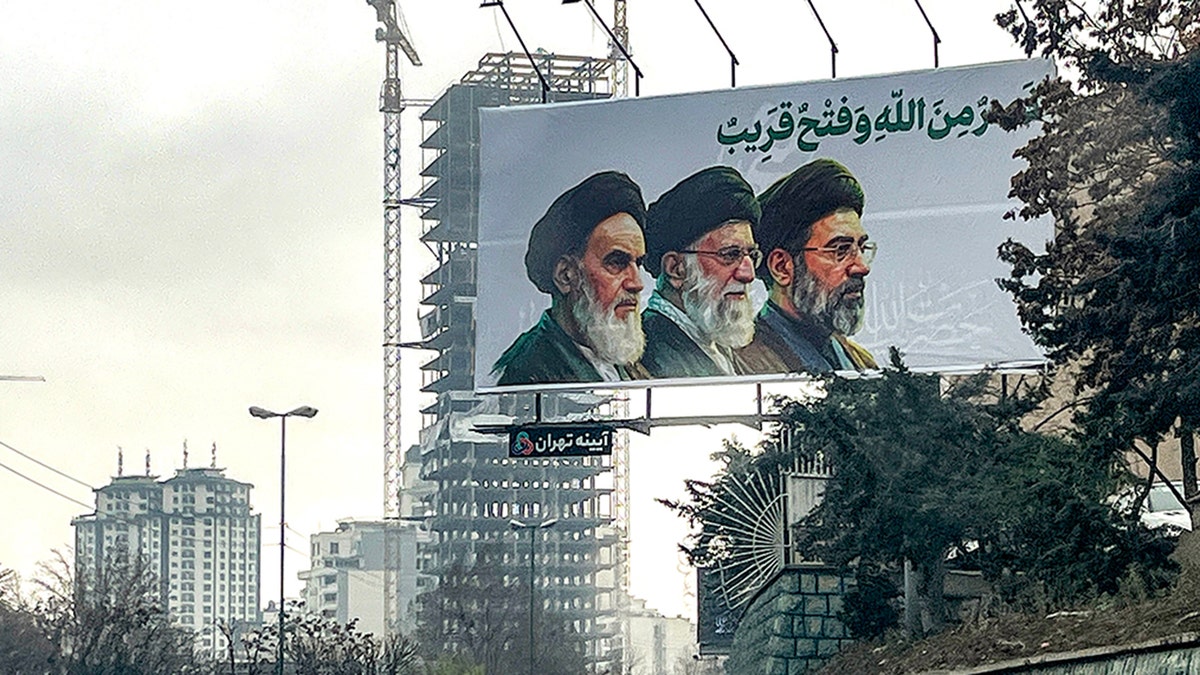
A billboard depicting Iran’s supreme leaders since 1979: (from left to right) Ayatollahs Ruhollah Khomeini (until 1989), Ali Khamenei (until 2026) and Mojtaba Khamenei (incumbent) is shown above a highway in Tehran on March 10, 2026. Iran marked the appointment of Ayatollah Mojtaba Khamenei in March to replace his father as supreme leader. 9, 2026. (AFP/via Getty Images)
It comes down to practical experience, pattern recognition and understanding how opponents actually behave. And yes, it comes down to something less tangible, but no less real: instinct.
CLICK HERE TO DOWNLOAD THE FOX NEWS APP
The commander in chief does not ultimately decide whether a definition has been met. The president decides whether the American people are in danger – and whether waiting increases that risk.
And in those moments, the decision ultimately rests on judgment — and on the president’s instincts, even those moments when the hairs on the back of his neck tell him what the data alone cannot do.
CLICK HERE TO FROM AMB. GORDON SONDLAND
