



Visit our Moral Money hub for all the latest ESG news, views and analysis from across the FT
Welcome back. Donald Trump’s apocalyptic threat to Iran yesterday was followed by a two-week ceasefire, rather than the death of “an entire civilization.” The price of Brent crude oil has fallen to around $94, from yesterday’s peak of almost $112, but still well above the $60 level at which it started the year. The energy market turmoil caused by the conflict appears likely to accelerate the world’s move towards non-fossil energy, the FT reported this morning.
While the world has been focused on the Trump show for the past fifteen months, the planet has continued to warm, increasing the risks of extreme weather events, from heat waves to floods, cyclones and winter storms. The direct costs of damage from these disasters are difficult to ignore. The ripple effects for companies are even greater.
Counting the costs of climate disruption
Following the ferocious passage of Cyclone Narelle, which turned the sky bright red as it passed over dusty, iron-rich ground, communities in northern Australia are working to repair the damage. That includes some of the country’s largest commodity exporters. But for these and other companies, the cost of repairing damaged buildings and equipment will be just the beginning of the economic hit.
Mining giant Rio Tinto is facing a revenue shortfall of more than $800 million – the current market value of the 8 million tonnes of iron ore the country has been unable to produce and ship due to Narelle and another cyclone in February. (The company said it “has found a way to regain about half of these losses,” and is now resuming shipping from three of its four port terminals.)
So were Australian exporters of liquefied natural gas, accounting for 8 percent of global supply forced to limit production – robbing them of huge revenues at a time when the US-Israeli war with Iran was driving up prices. Chevron’s large Wheatstone LNG plant will not resume full operations in the coming weeks.
Northern Australia is always threatened by cyclones. But the intensity of Narelle — and of a wave of similar events last year that cost Rio another 13 million tons of iron ore production — has reinforced scientists’ warnings that climate change is likely to make the strongest tropical storms even stronger as they draw more thermal energy from warmer seas.
It also highlights the broader global costs of business interruption due to extreme weather events, which can far exceed the cost of repairing physical damage to a company’s assets.
A global problem
A convincing study this area looked at a sample of Texas businesses affected by Hurricane Harvey in 2017, estimating the total damage bill at $125 billion. The companies in this study, by academics at Ohio State University, suffered direct damages worth $52 million. Their lost revenue due to the disruption was twenty times greater, at $1.08 billion.
Over the past year, extreme weather events around the world have resulted in significant revenue losses for affected companies and, in many cases, their customers.
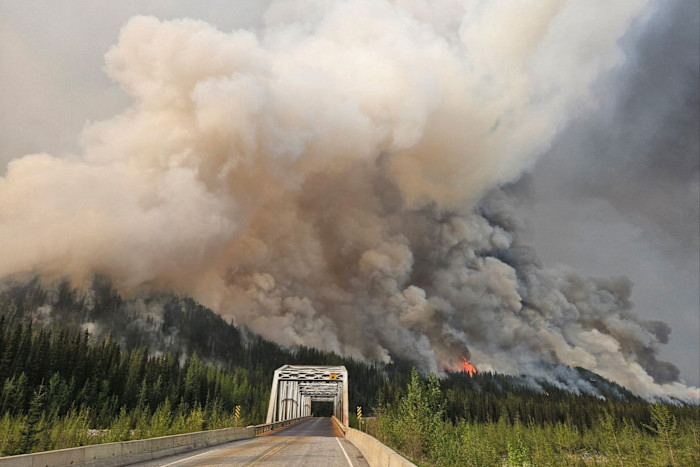
Wildfires in Canada last summer – the second worst in national historyAccording to the government – forced closure of gold and copper mines and oil fields. A heavy winter storm in January has reduced freight volumes in much of the US.
A European drought last summer River shipping volumes fell, reducing deliveries of products ranging from grain to chemical raw materials.
Late last year, a series of devastating storms and floods swept through Southeast Asia, killing more than 1,500 people and causing massive industrial disruption, particularly for Thai electronics and auto parts makers, who were unable to move products over flooded roads. “Repeated disruptions like this undermine confidence in Thailand’s reliability as a regional supply hub. If we cannot guarantee on-time delivery, buyers will look elsewhere,” warned the country’s Ministry of Commerce.
‘The losses that matter’
The Thai government is rightly concerned about the economic dangers posed by climate-related business disruptions. But for companies and their investors, quantifying these risks – amid long, complex global supply chains – is proving to be a daunting challenge.
Analysts at MSCI published this research on this topic last November, focusing on the stock portfolios of 18 major institutional investors on five continents, who had stakes worth $2 trillion in more than 11,000 companies.
MSCI’s modeling has shown that potential business disruptions due to extreme weather events could result in more than $1 trillion in annual revenue losses for these companies. This was due not only to highly visible disasters such as hurricanes, but also to the damaging effects of heat waves and unusually heavy rainfall on production. “For asset owners, the losses that matter are business interruptions, not repair bills,” MSCI warned.
“Asset damage from acute events such as hurricanes and floods often dominates headlines and boardroom discussions because the effects are immediate, tangible and easier to quantify. Business disruptions, in contrast, unfold more quietly through lost production, reduced labor productivity or longer recovery times.”
No easy answers
Most major companies now say they are taking steps to understand the risks they face from weather-related business disruptions, MSCI noted another study.
But judging by companies’ risk disclosures, they appear to be focusing heavily on the disruption risks arising from weather events that directly affect them – rather than on the risks that could cause disruption to their international supply chains. Insurer Swiss Re points out that of the weather risks disclosed by major companies, the vast majority pose a threat to their direct operations and not to the suppliers and logistics infrastructure on which they depend. “Their visibility of supply chain risks, especially beyond tier one suppliers, is often only partial,” Swiss Re warned.
Insurers can help companies manage these risks through non-traditional forms of protection, such as “contingent business interruption” coverage, which protects companies against third-party hazards critical to their own operations.
But even for those companies that do have such coverage, it is usually limited only to direct suppliers in the same country, and only if they are affected by a hazard for which the company itself is insured, note Larissa Gallagher and Michael Burg of insurance brokerage Gallagher Re. That’s a problem for companies with long, multi-stage international supply chains that are exposed to the full range of global weather hazards.
Data and analytics companies such as MSCI, as well as insurers such as Swiss Re, are developing technology products that companies can use to gain a more complete picture of climate threats to their supply chains. That can help them build supplier networks with less concentrated risks, and gain some insurance protection against future disruptions. But these measures can only mitigate, not prevent, the costs of climate-related business disruptions – costs that are already visible across the global business landscape.
