



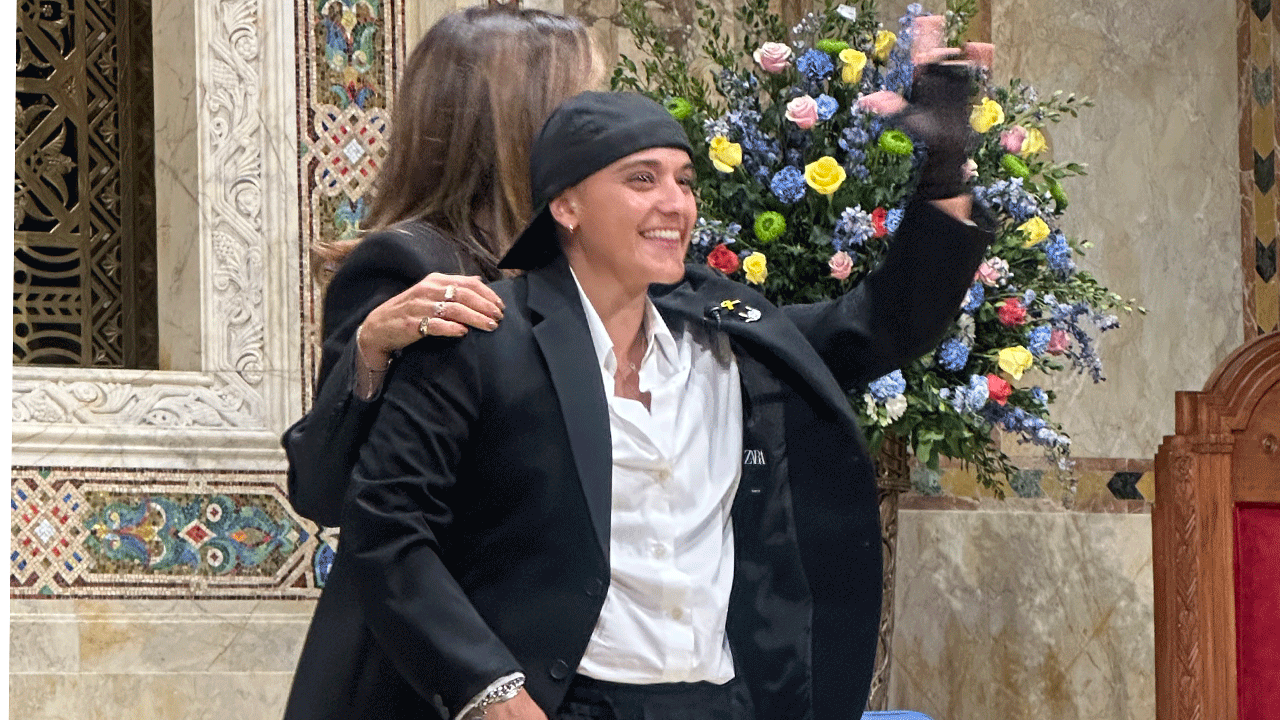
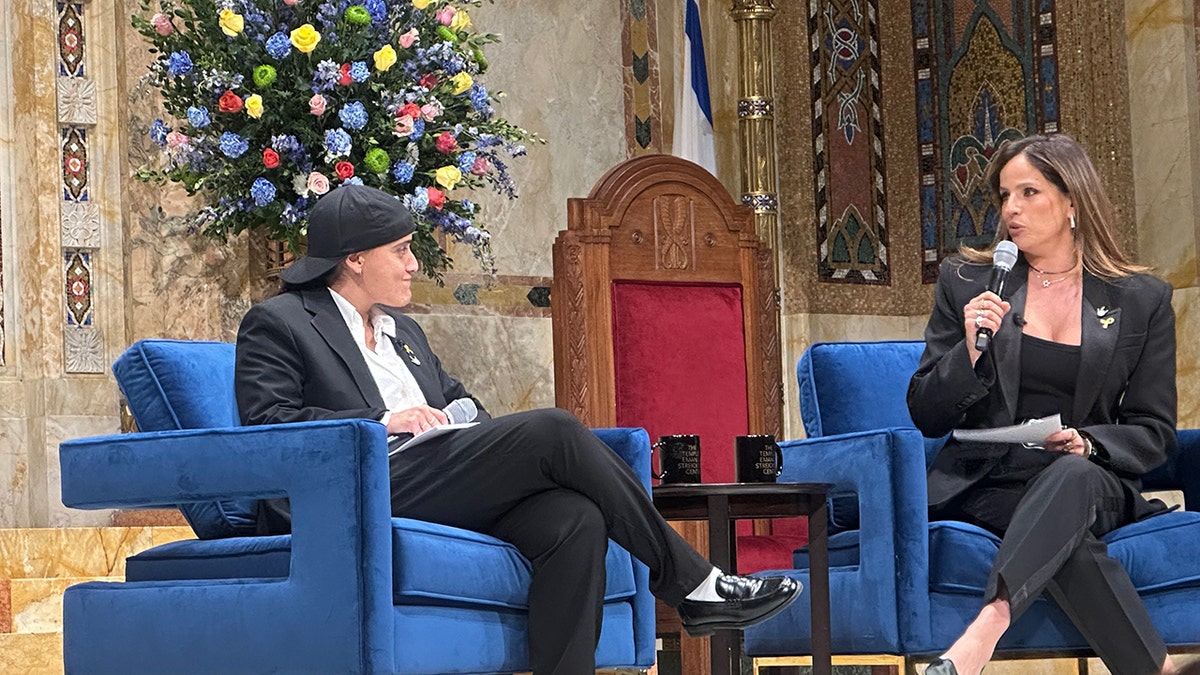
Standing before an audience at Temple Emanu-El in New York City, former Hamas hostage Emily Damari received a standing ovation before she even began to speak. The 28-year-old survivor, released after 471 days of captivity, addressed a packed synagogue alongside actress and activist Noa Tishbi and shared the experience that has shaped every minute of her life since October 7.
‘They shot in my hand. They shot my dog.”
FREED HOSTAGE LAMENTS ISRAELI FANS BELONGED TO BRITISH FOOTBALL GAME OVER CONCERNS OVER PRO-PALESTINIAN PROTESTS
Damari, whose moment of release went viral after she pushed the terrorist holding her while she was being transferred to the Red Cross, recounted the moment Hamas terrorists broke into her safe room on October 7. Her story is almost unbearable to hear, yet she smiled through it. That refusal to collapse, she said, was intentional.
“Even in the most difficult moment, I didn’t look down. I always looked up. I didn’t let the terrorists have the satisfaction of seeing me break. They didn’t break me.”
On October 7, Hamas terrorists stormed her home in Kibbutz Kfar Aza. “They were in the safe room and shot my hand. The first thing they did was shoot my hand.” Moments later they killed her dog. “They just looked at her… and immediately shot her in the head.”
She was dragged to Gaza and begged them to end her life on the spot. “I understand he’s not going to take me to a hospital in Ashkelon or Tel Aviv… so I say, no, no. Please shoot me. I don’t want to be a hostage.’
Instead, she was taken across the border.
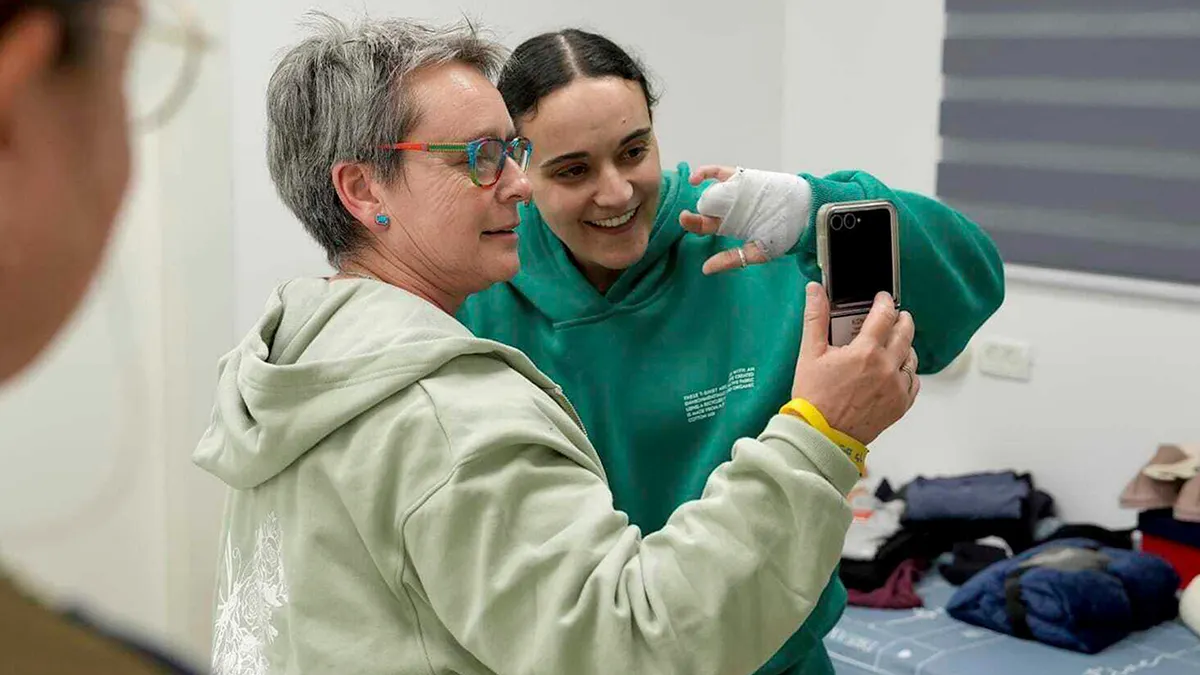
Emily Damari, right, and her mother Mandy are seen near Kibbutz Reim, southern Israel, after Emily was released from captivity by Hamas terrorists in Gaza on Sunday, January 19, 2025. (AP/Israeli Army)
She said at Gaza’s Shifa hospital she “saw many terrorists, dead bodies, hostages and weapons.”
One of the most important messages she wants Americans to understand, she said, is what she saw at Shifa Hospital, which is widely described abroad as a civilian medical facility, and that is incorrect.
“That hospital… you always see on Al Jazeera that there’s a civilian hospital and all that,” she added. “So just so you know… it’s not a civilian hospital.”
“Shifa Hospital is where I was treated by ‘Dr. Hamas’ – that’s how the doctor introduced himself to me – and where I saw a lot of terrorists, dead bodies, hostages and weapons. Imagine going to your local hospital and seeing armed terrorists and dead bodies.”
For more than fifteen months, she was held in more than thirty different locations – apartments, schools, tunnels, garages and even a tire storage room – often with days between showers and hardly any water. She slept in cramped, filthy spaces, sometimes ‘without a toilet’.
The most poignant memory, she said, came when she was taken deep underground. She was led to a small cage and saw a group of kidnapped girls. “The first thing you see is a 9-year-old girl … without her parents,” she said. “It was one of the most painful things I have seen in captivity.”
“You go to sleep every night… afraid they’re going to rape you,” she said. “There’s something about a woman’s life in captivity.”
Another moment she shared captured her strong personality. Emily said Hamas repeatedly called her a “prisoner” and she refused to accept this. “I said, OK, if you call me a prisoner, why don’t I get three meals a day? Why can’t I talk to my mother? Why do I never see the sun?’ She openly told them that if she really was a prisoner, she deserved basic rights. But the terrorists sent her away.
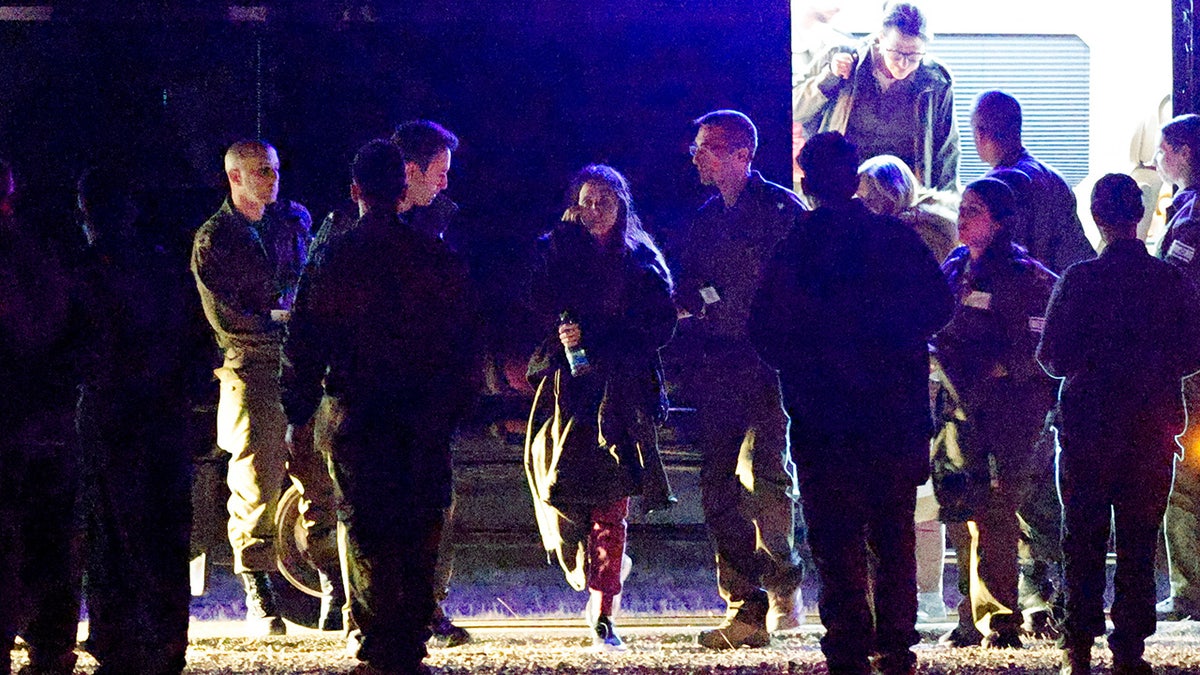
People walk towards Israeli military helicopters as Romi Gonen, Doron Steinbrecher and Emily Damari, three female hostages held in Gaza since the deadly October 7, 2023, attack, return to Israel as part of a ceasefire in Gaza between Hamas and Israel, at Israel’s border with Gaza in southern Israel, January 19, 2025. (REUTERS/Amir Cohen)
Damari said Hamas guards routinely played Al Jazeera broadcasts on battery-powered televisions. What she saw surprised her, especially the protests on the American campus.
As a gay woman who had to hide her identity to stay alive, she immediately noticed LGBTQ activists in the images. She said she confronted her captors directly.
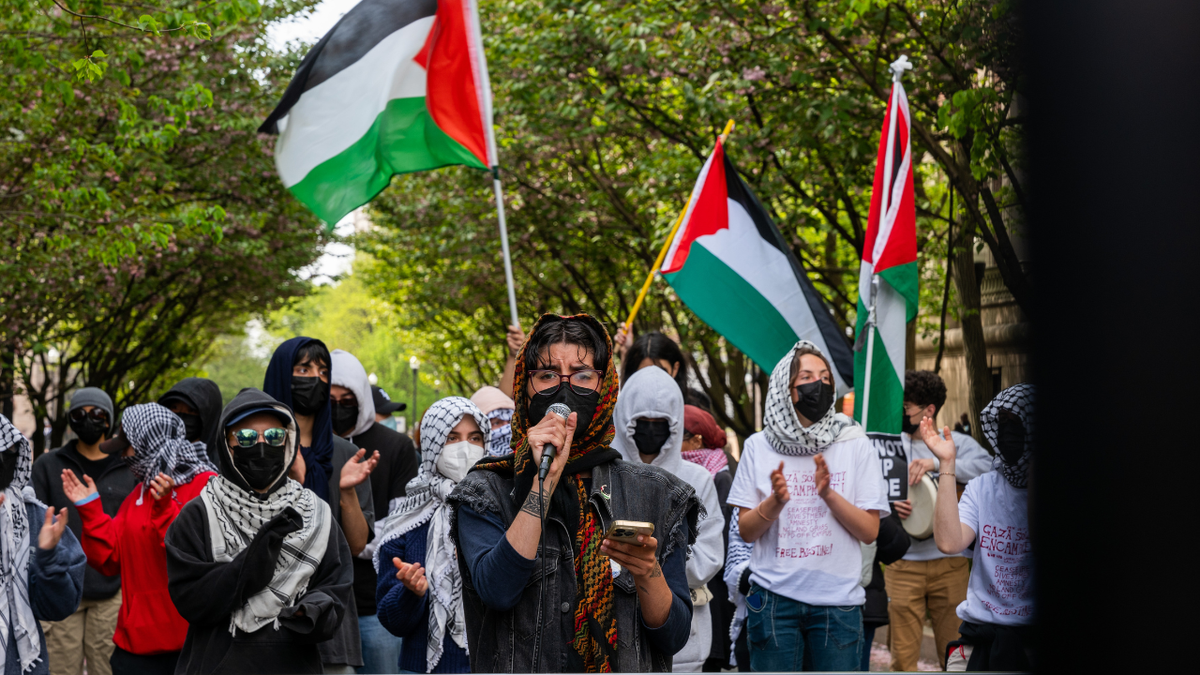
Extremists protest against Israel at Columbia University in New York City.
“I feel sorry for all these people because they are so uninformed and don’t take the time to understand the truth,” she said.
Damari said she and other hostages survived emotionally by clinging to every sign that the world was fighting for them. Weekly demonstrations in Israel were everything.
“We waited for that Shabbat every week… it was one of the greatest lights for us,” she said. “We watched the protest and knew they had not forgotten us. They did what they could to free us.”
HAMAS HAPERS EVER HAD NORMAL JOBS – ‘TEACHERS AND DOCTORS’, EX-ISRAELI HOSTAGE SAYS
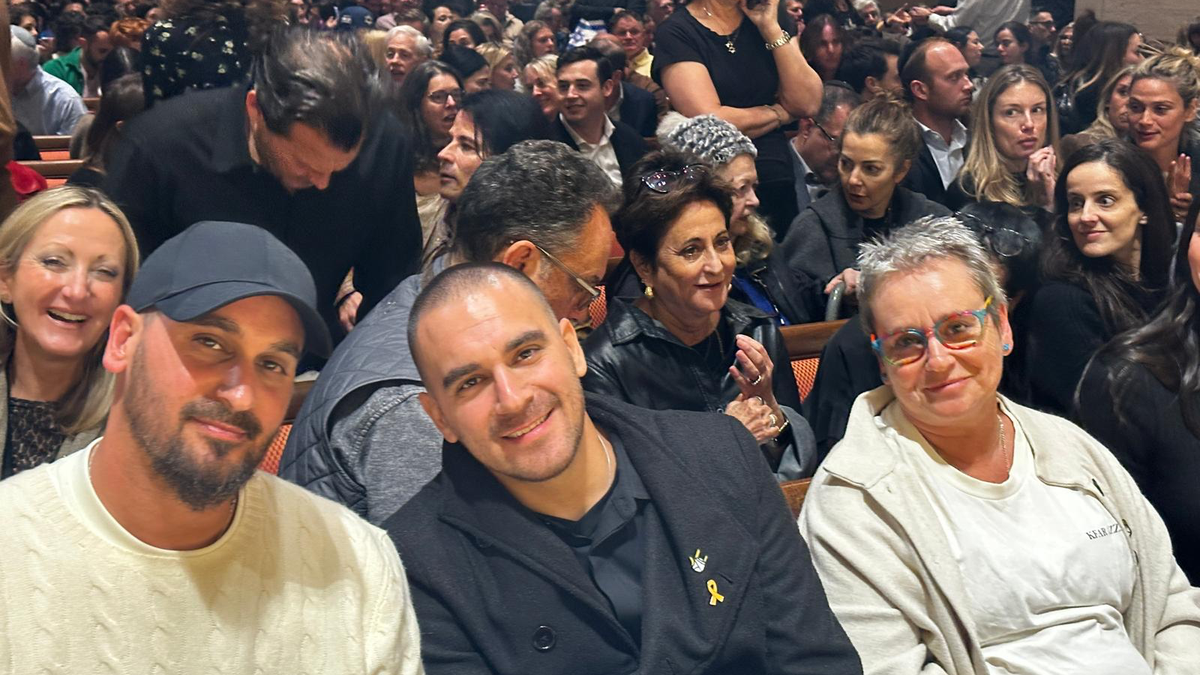
In New York, accompanied by her mother, Mandy, and her brothers, Tom and Ben, she described the pain of not knowing whether her family had survived the Kfar Aza massacre. Terrorists had reached “very close to my mother’s house” and her brother’s house.
She begged God for a sign that her mother was still alive. It only happened when guards briefly turned on a small TV. “The first thing we saw was someone showing my poster in the Knesset… and I thought, oh my God, it’s my mother. My mother is still alive.”
But she still didn’t know anything about her brother. She only learned the truth after returning to Israel. “They took me to the IDF and said, ‘Your family is fine… My brother is fine,’” she recalled through tears. “That was the moment I finally gave myself permission to breathe.”
Freedom carried its own weight. Her closest friends from Kfar Aza, Gali and Ziv Berman, remained in Gaza until the final hostage deal brokered by the Trump administration. Emily said their release on October 13 was the moment she truly felt free.
“I didn’t feel comfortable watching the sunset. I didn’t enjoy anything… as long as they were still there.”
“Now I feel great,” she said. “That was the real happiness I was looking for.”
When asked what comes next, she didn’t hesitate to say.
CLICK HERE TO DOWNLOAD THE FOX NEWS APP
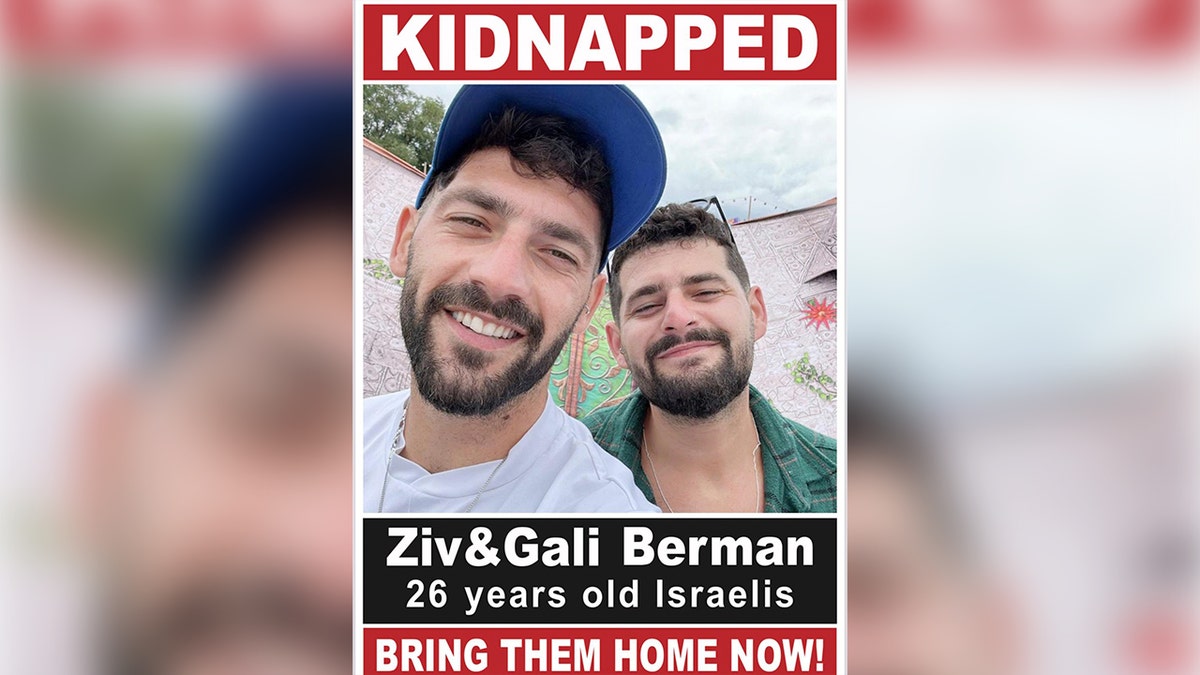
Hamas takes hostage posters of Gali and Ziv Berman, close friends of Emily Damari who were finally released from captivity last month. “I didn’t feel comfortable watching the sunset. I didn’t enjoy anything… while they were still there,” Damari said. (The Hostages and Missing Families Forum)
“I think there is a reason that God chose me to go through this terrible experience… I have the opportunity to speak to the world… and to share my story,” she said, adding that she has started writing a book. “Everyone should know everything about what we went through.”
She ended with a plea not to forget the four hostages still held in Gaza, one of whom is said to be returned later today. “Everyone should be given a dignified burial,” she said.
