




On Christmas Day, US forces unleashed targeted missile and drone strikes in Nigeria against Islamist terrorists who had been killing Christians and other civilians with impunity.
It put Nigeria in the headlines and left many Americans unaware of the growing conflict in Africa between Christians, radical Islam and others, spreading across the sub-Saharan region.
But a week earlier, I had just been on a fact-finding mission to Nigeria, and while the US Africa Command’s kinetic action was a surprise, it was not entirely unexpected. In November, President Donald Trump made it clear to Nigerian leaders that they needed to do more to combat terrorism. This strike was the result of close cooperation between Nigerian and American military planners.
In the nation’s capital, Abuja, the weekend before Christmas, I knelt at the Christian Reformed Church of Nigeria and prayed with Christians who live, work and worship in a capital that—at least for now—still feels normal. Children fidgeted on the couches. Families sang. It wasn’t all that different from my parish back home in Spokane, Washington.
Terror attack in Australia exposes ISIS resurgence as experts warn of global jihadist networks
Funerals for about 27 Christians allegedly killed by Islamist Fulani tribesmen on July 28, 2025 in Bindi Ta-hoss village, Nigeria. (Courtesy: Christian Solidarity International – CSI)
But at the same time, Christian farmers in Nigeria’s middle belt went to sleep wondering if armed men would come at night—if their village were raided, their church burned, their pastor threatened, their daughters taken, their sons murdered, their farms plundered.
That contrast – peace in the capital, fear in the countryside – is why our congressional delegation came to meet government officials.
We met faith leaders, Christians and others, who described what it means to live under threat. The scale is staggering. Estimates in the congressional record say that by 2025, more than 7,000 Christians have been murdered and more than 19,000 churches have been attacked or destroyed; and Vatican News reports that more than 52,000 Christians have been murdered since 2009.
FROM SYRIA TO SOMALIA, U.S. troops remain deployed this holiday season in missions that never formally ended
Islamic terrorism is not a problem we can wish away, and Nigeria is far more important to American security than most people realize.
Nigeria is Africa’s largest country and is expected to grow to a population of 400 million before 2050, becoming the third most populous country, surpassing the United States. It is home to vast oil and mineral resources, including rare earths, but its unstable political situation keeps one of the world’s most important democracies on the slow track.
As we begin a new year, Americans will leave the Christmas headlines behind them. Nigeria cannot do that. And neither should we.
CHRISTIANS TARGETED IN SYSTEMATIC KIDNAPPING CAMPAIGN IN NIGERIA BY JIHADI HERDERMEN, EXPERTS SAY
Nigeria is plagued by multiple violent groups, from criminal gangs to an Islamic extremist dimension: Boko Haram and ISIS-linked terrorists in the northeast, and – much closer to Nigeria’s heartland – Fulani jihadist militias that have terrorized rural communities, driven families from their lands and made normal life impossible.
The Nigerian government faces real challenges. The Fulani jihadist militias in parts of the Middle Belt present a solvable test of political will: disarm the militias, arrest and prosecute the leaders, and provide basic protection so that Christian farmers can stay on their land. The Boko Haram/ISIS-linked insurgency will require harder and longer efforts – it is a deep-rooted network with transnational ties that recruits, occupies territory and grows.
Islamic terrorism is not a problem we can wish away, and Nigeria is far more important to American security than most people realize.
We met with Nigerian officials to hear their assessment of the threat and where they need help. The best conversations were candid: Nigeria’s security services are overstretched; the country tries to keep core areas safe while violence continues on the periphery; and the fight is not just military – it is about governance, accountability and public trust.
America cannot – and should not – try to be the world’s policeman. But ‘not policing the world’ does not mean closing our eyes to real terrorist threats.
CLICK HERE FOR MORE FOX NEWS ADVICE
America does not need to put boots on the ground and drift in the endless wars of the past twenty years to make a difference: supplying weapons, as we have done in Ukraine, and targeted attacks, such as those that have put the Houthis and Iranian mullahs on their heels, can have a decisive impact.
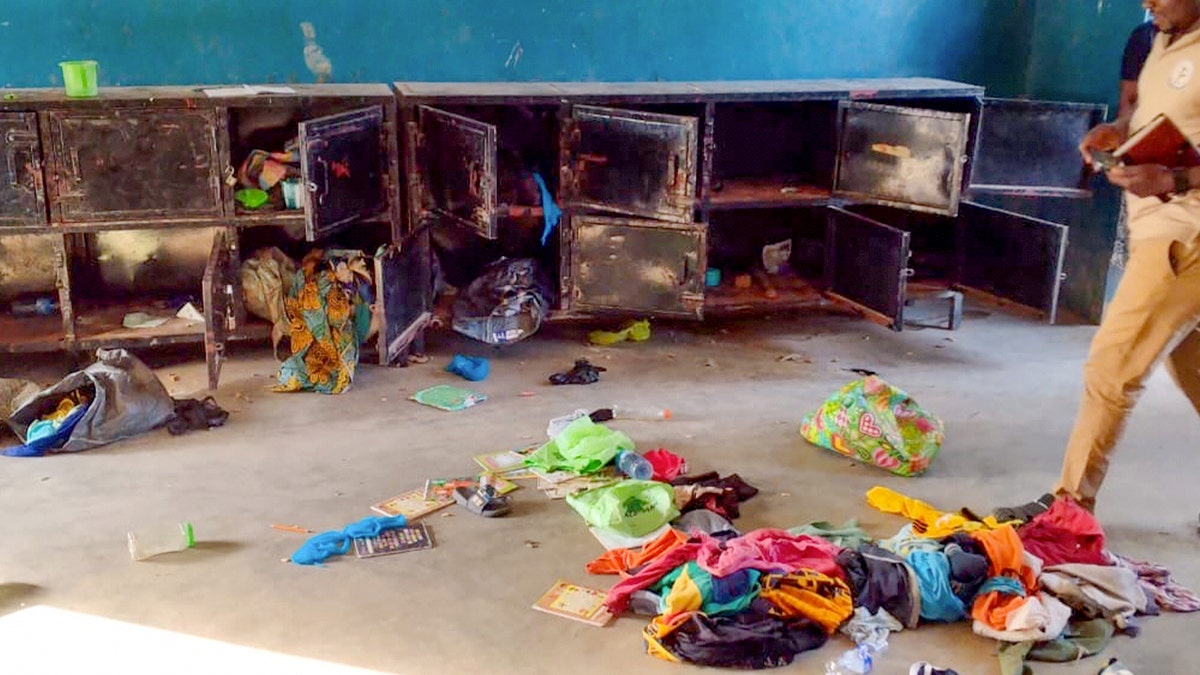
In this photo released by the Christian Association of Nigeria, a man walks past assets of St. Mary’s Catholic Primary and Secondary School after gunmen abducted children and staff in Papiri community, Nigeria, on November 21, 2025. (Christian Association of Nigeria via AP)
US involvement is crucial: improving intelligence cooperation, tackling the financing networks that profit from kidnappings, and supporting reforms that make security forces more professional and reliable.
CLICK HERE TO DOWNLOAD THE FOX NEWS APP
At the same time, we can learn from Israelis who have made it clear that the killing of Israeli Jews will be met with fierce retaliation wherever it happens. We must have the backbone to say the same about Christian communities, with our words – and with our Tomahawk missiles.
In Abuja I prayed in peace. Not far away, families prayed to survive the night. The Christmas strike against ISIS was a reminder that jihadist terror is still spreading – and that Nigeria is on the front lines. Religious freedom is worth defending. And America cannot pretend that this threat doesn’t matter. Nigeria’s leaders must act now to protect communities, end impunity and prove that the state can govern.
