MEXICO CITY: First-hand accounts are emerging from Americans caught up in this week’s cartel-related violence in Mexico following the death of cartel boss Nemesio Oseguera Cervantes, known as “El Mencho.”
As news spread of the killing of the Jalisco New Generation Cartel (CJNG) cartel boss, reports described armed clashes between rival criminal organizations and Mexican security forces, as well as coordinated vehicle burnings and temporary highway blockades. Mexican authorities say such operations are often linked to internal cartel disputes or targeted law enforcement actions.
As the situation improved, Americans in the tourist area of Puerto Vallarta and beyond shared their experiences of the violent scenes in which they were embroiled.
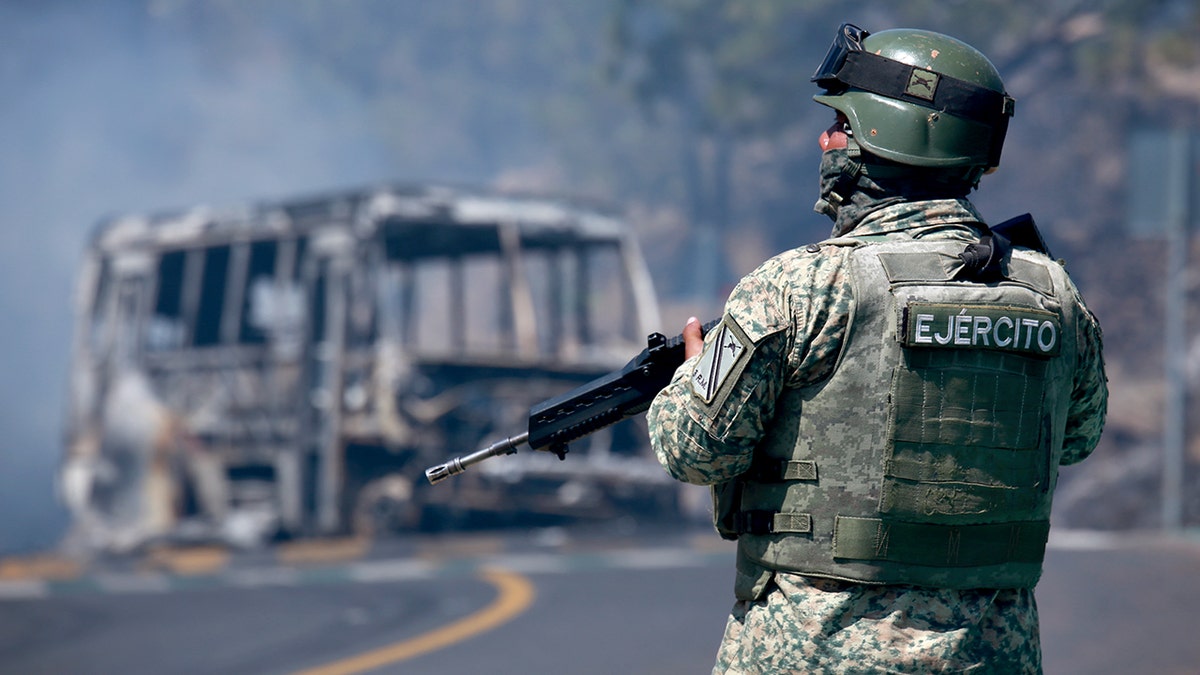
A soldier stands guard over a charred vehicle after it was set on fire in Cointzio, Michoacán state, Mexico, Sunday, February 22, 2026, following the death of the leader of the Jalisco New Generation Cartel, Nemesio Rubén Oseguera Cervantes, known as ‘El Mencho’. (AP Photo/Armando Solis) (Armando Solis/AP Photo)
“While we were trying to register what was happening, we saw a man with a gun coming from the other side of the bus. He waved it at us and gave us a hand signal to turn around, which we immediately did. We tried to go in the opposite direction, but we came across another burning car, essentially trapping us between the two.”
He continued, “We went to the only beach we had access to. One of the locals told us that the safest place for us would be the water. We took a tender boat to the snorkel boat we were supposed to be on and stayed there for a few hours. From the water we could see what appeared to be a large part of the city on fire.”
Posilkin said, “It took a long time to get a boat back to shore, and at one point we even considered going for a swim because there was no one on the beach to come get us. The captain said he had never seen the beach so empty in his life, and he grew up there. We eventually flagged down a passing tender that took us to shore. There were cartel members on a motorcycle shouting “Viva Mexico” at us, but we didn’t feel like they were threatening us in any way. Both our shuttle driver and locals assured us that the cartel was not interested in harming Americans and that it was still safest for us to get home that way.
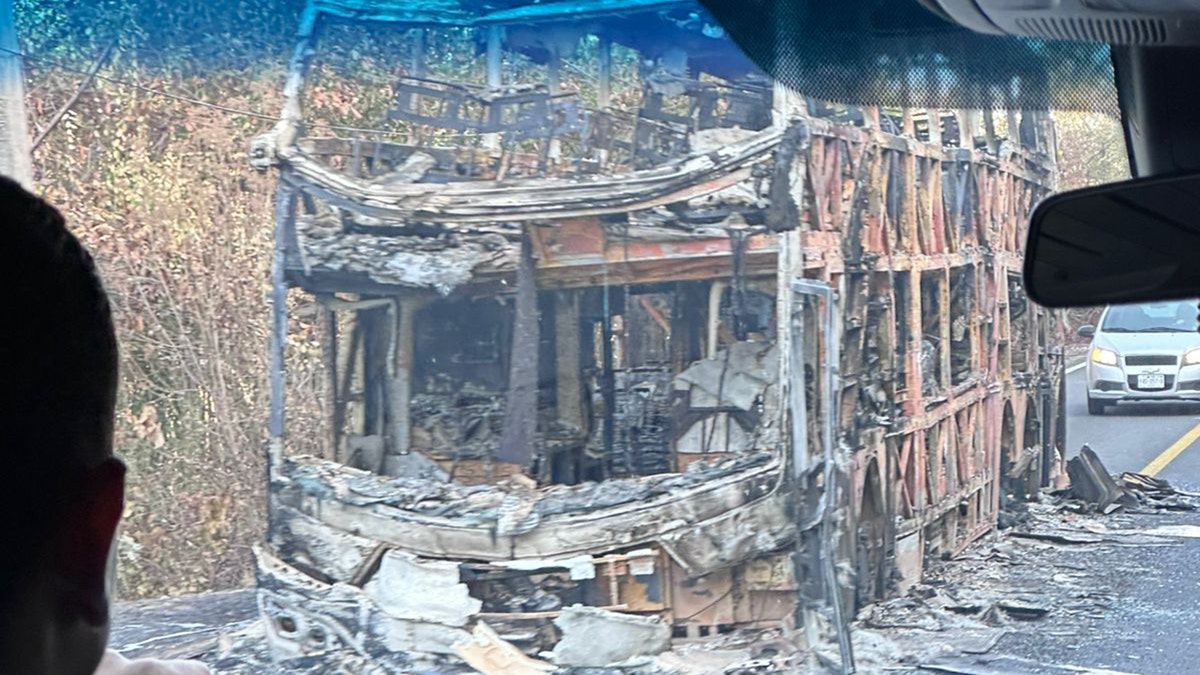
A burned-out bus in the Puerto Vallarta region of Mexico. (Photo courtesy of Scott Posilkin)
Posilkin credited locals for their help and support. “I want to highlight how the locals helped us go above and beyond during an incredibly stressful situation. Everyone we came into contact with – from our boat captain to our shuttle driver – had grown up here, and none of them had ever seen anything like this before… Above all, I feel sorry for the locals. Tourism is their livelihood and I worry about the impact it will have on them. This experience has not changed my love for travel or for Mexico, even though it was a serious ordeal.”
Troops reinforce PUERTO VALLARTA as unrest shows signs of easing following El Mencho’s death
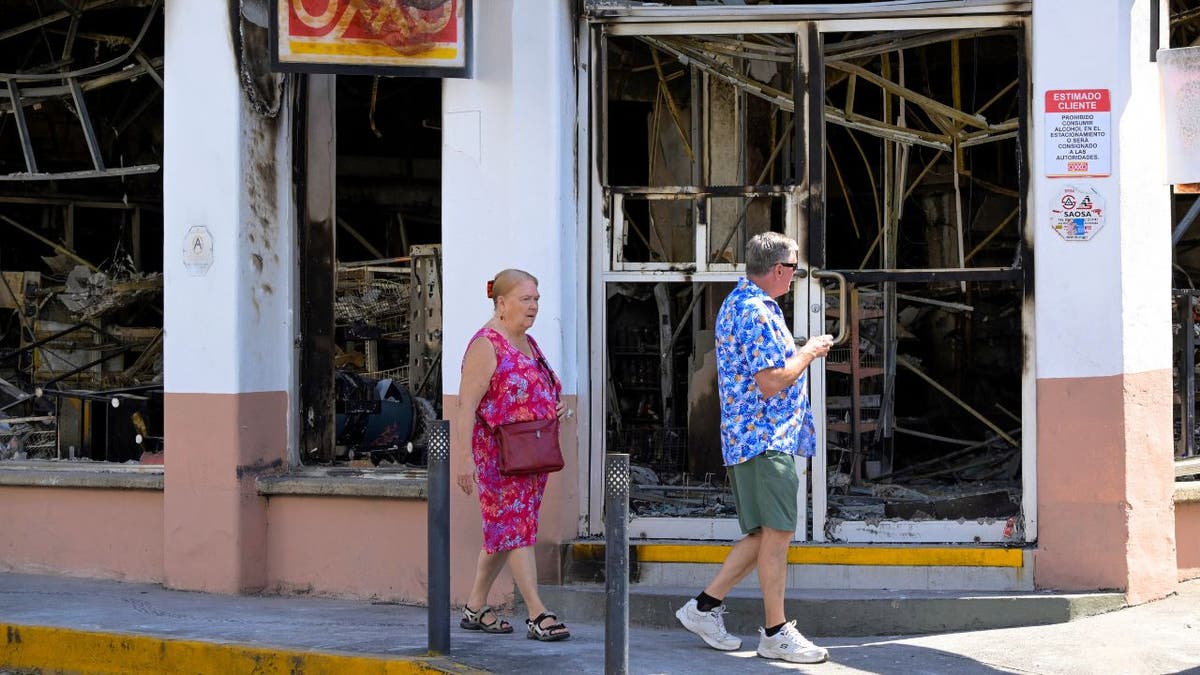
Tourists walk past a burned-out store in Puerto Vallarta, Jalisco state, Mexico, on February 24, 2026, after cartel-related violence broke out following the death of Jalisco New Generation cartel leader Nemesio “El Mencho” Oseguera Cervantes. (Alfredo Estrella/AFP via Getty Images)
He said: ‘On the way to Mexico City we saw cars and trucks that had been set on fire. This is just one example of how vulnerable we are, and it is amazing how these criminal organizations can terrorize the population. It is the authorities’ fault that they can grow and expand with highly effective criminal cells.’
Security analysts note that cartel violence often increases following high-profile arrests, internal leadership disputes or shifts in territorial control. Public displays of force – such as coordinated blockades or attacks on infrastructure – can serve as a demonstration of operational capacity.
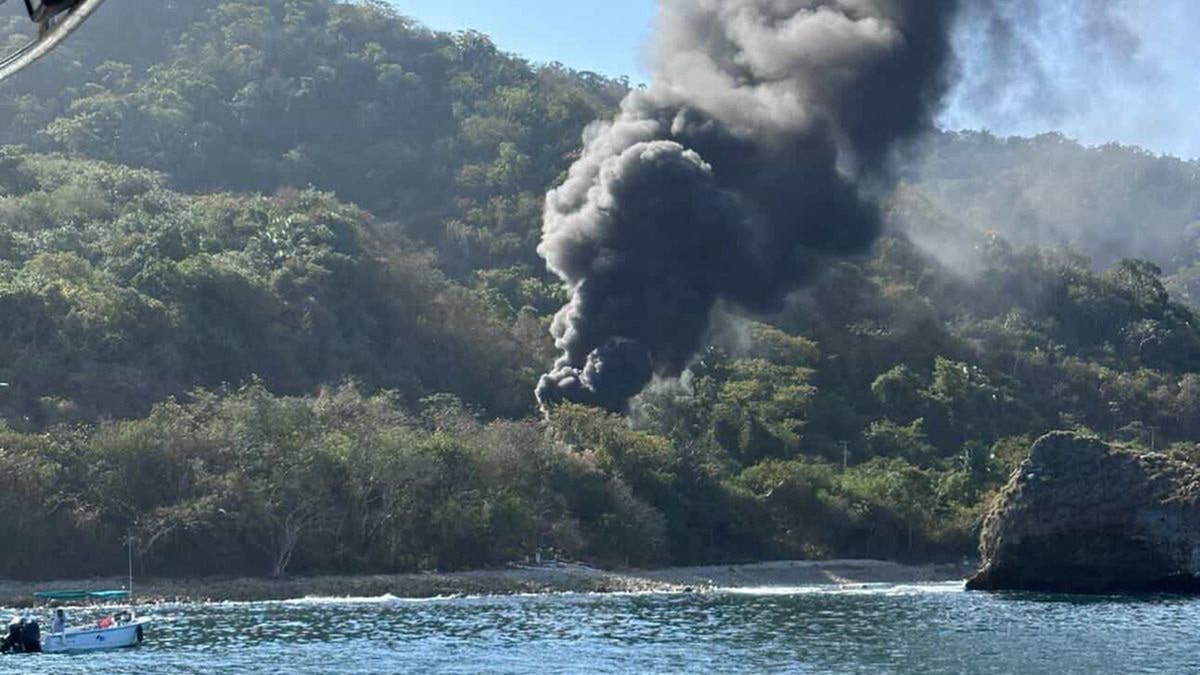
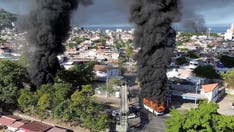
Smoke rises after violence hits Puerto Vallarta, Mexico. (Photo courtesy of Scott Posilkin)
CLICK HERE TO DOWNLOAD THE FOX NEWS APP
“I got all the way to Colima and then to Guadalajara. Later it got worse in my city. I heard they started burning gas stations and burning a supermarket. They closed the city so people couldn’t go in or out.”
Tuesday afternoon the US Embassy in Mexico posted an update stating that “US citizens are no longer urged to shelter in place.”
Related article