



Every year on Palm Sunday in the Catholic liturgy we read one of the great passion stories from the Synoptic Gospels. This year it’s St. Matthew’s. There are a number of distinguishing features in Matthew’s story, but the most distinctive and interesting to me is the evangelist’s treatment of Judas.
No other Gospel emphasizes the repentance and remorse of the betrayer more effectively. “Then Judas his betrayer, seeing that Jesus had been condemned, deeply regretted what he had done. He returned the thirty pieces of silver to the chief priests and elders, saying, ‘I have sinned by betraying innocent blood.’” This is not callous indifference or self-justification. This is a clear and honest admission of guilt.
We are then told that Judas threw the money into the temple and “went and hanged himself.” A terrible end to a sad life, in which the betrayer of Jesus falls into despair and kills himself. And this is why most figures in the great theological and spiritual tradition have assumed that Judas is in hell. Augustine thought so; Thomas Aquinas thought so; Dante depicted him continually chewing into Satan’s mouth. And if his betrayal of the Lord wasn’t enough to earn him a place in hell, then his suicide, most theologians agreed, certainly sealed the deal.
EVERYTHING YOU NEED TO KNOW ABOUT PALM SUNDAY: WHAT DO THE PALMS REPRESENT?
But I would like to draw your attention to an antitype – albeit a minority – exhibited in one of the capitals on a column in the beautiful Basilica of Vézelay in France.
On one side is a very vivid depiction of the hanging of Judas, with his eyes bulging and his tongue hanging out of his mouth. But on the other side is an image of the Good Shepherd carrying the body of Judas on his shoulders like the lost sheep. And the dead man seems to be smiling.
Pope Francis loved this image so much that he had a reproduction of it hanging above his desk in his papal office. It showed to him hope that even Judas could have been saved by the Lord’s overwhelming mercy.
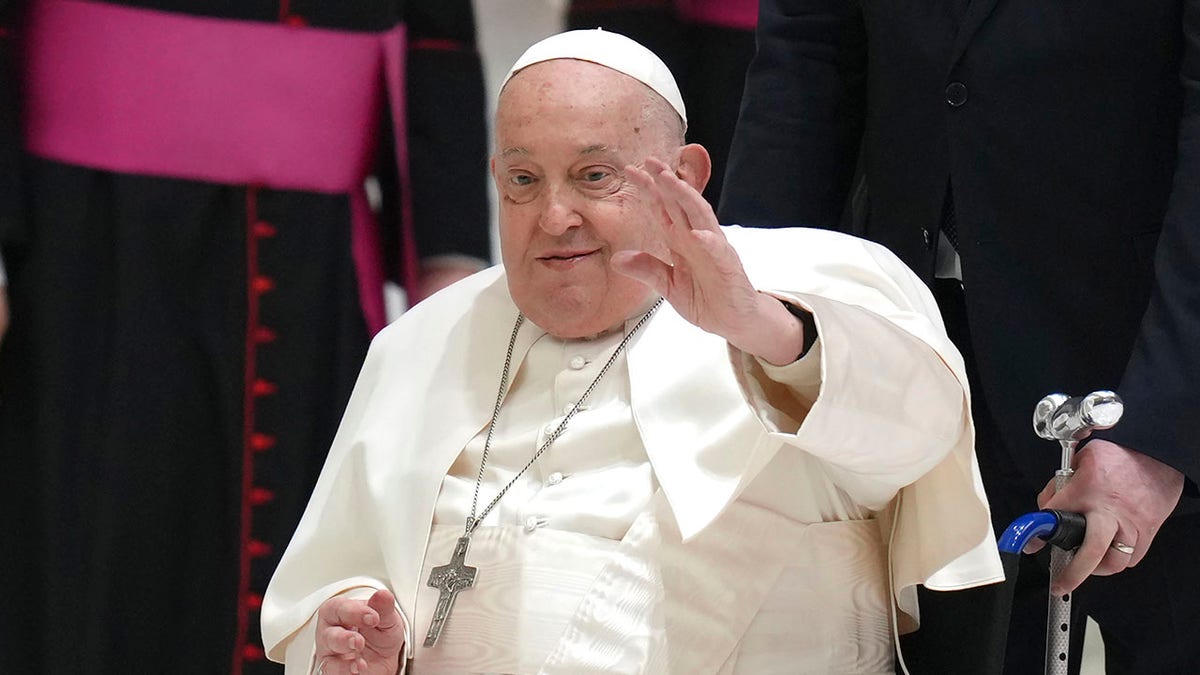
Pope Francis waves as he arrives for his weekly general audience in the Paul VI Hall at the Vatican, February 12, 2025. (AP Photo/Alessandra Tarantino)
Now I know (please don’t send me letters of complaint) that we cannot embrace a simple universalism that says we are completely certain that all people will be saved. Indeed, we must recognize the very real possibility of an eternal rejection of God. And yet Pope John Paul II emphasized that the Church has never made a definitive statement on whether a particular person is in hell. And Pope Benedict said that we must suspend judgment on Judas and entrust him to the mercy and justice of God. Then again, wouldn’t his suicide guarantee that he has gone to eternal doom?
CLICK HERE FOR MORE FOX NEWS ADVICE
On this point, listen to the Catechism of the Catholic Church: “We should not despair of the eternal salvation of those who have committed suicide. Only in ways known only to Him can God provide the opportunity for salutary repentance. The Church prays for those who have committed suicide” (2283).
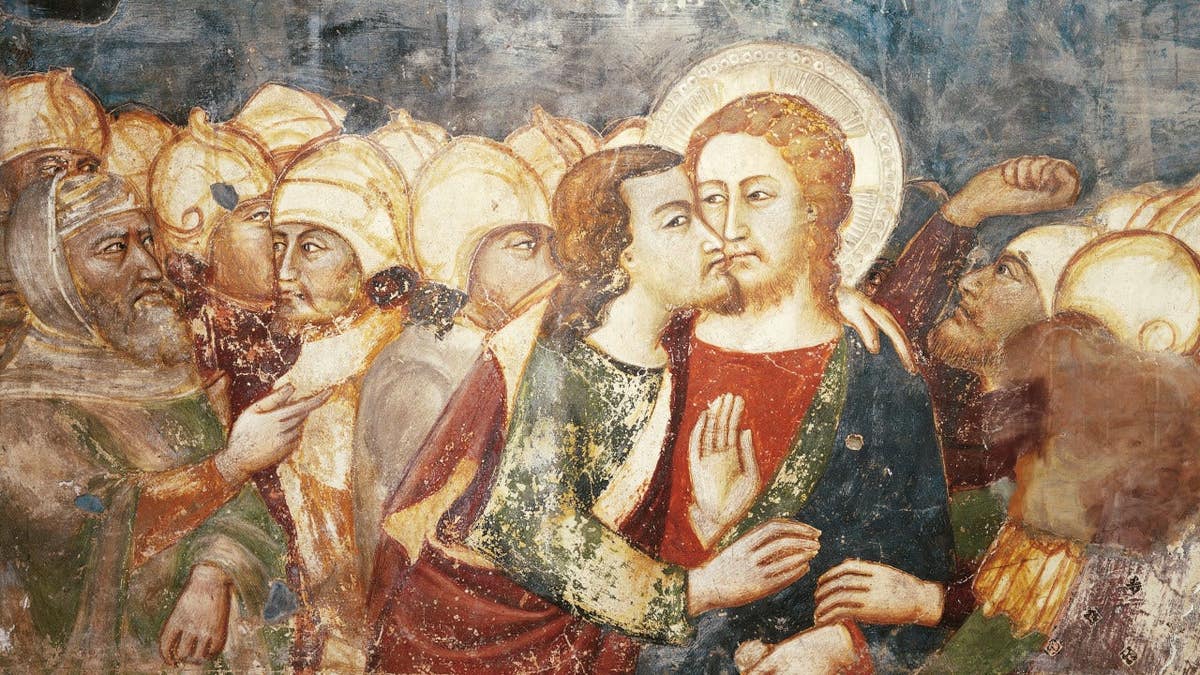
“Kiss of Judas”, 14th century fresco by the Master Trecentesco from Sacro Specol. Upper Church of the Sacro Speco Monastery, Subiaco, Italy. (DeAgostini/Getty Images)
The point is that God, in Christ, has gone to the very limits of Godforsakenness precisely to convey divine mercy even to that darkest place. When Jesus says from the cross, “God, my God, why have you forsaken me?” he indicates that he has fallen into the condition of the most desperate sinner. Certainly, he did not become a sinner, but he willingly embraced the psychological and spiritual condition of the sinner.
I do not recommend going easy on sin, or dismissing its terrible seriousness. But I do commend what Paul said: “Where sin abounds, grace abounds.”
Indeed, I emphasize that God’s mercy is greater than any sin we could ever commit, even the betrayal of Christ. So do we despair for those who have committed suicide? No. We pray for them and commend them to God’s mercy.
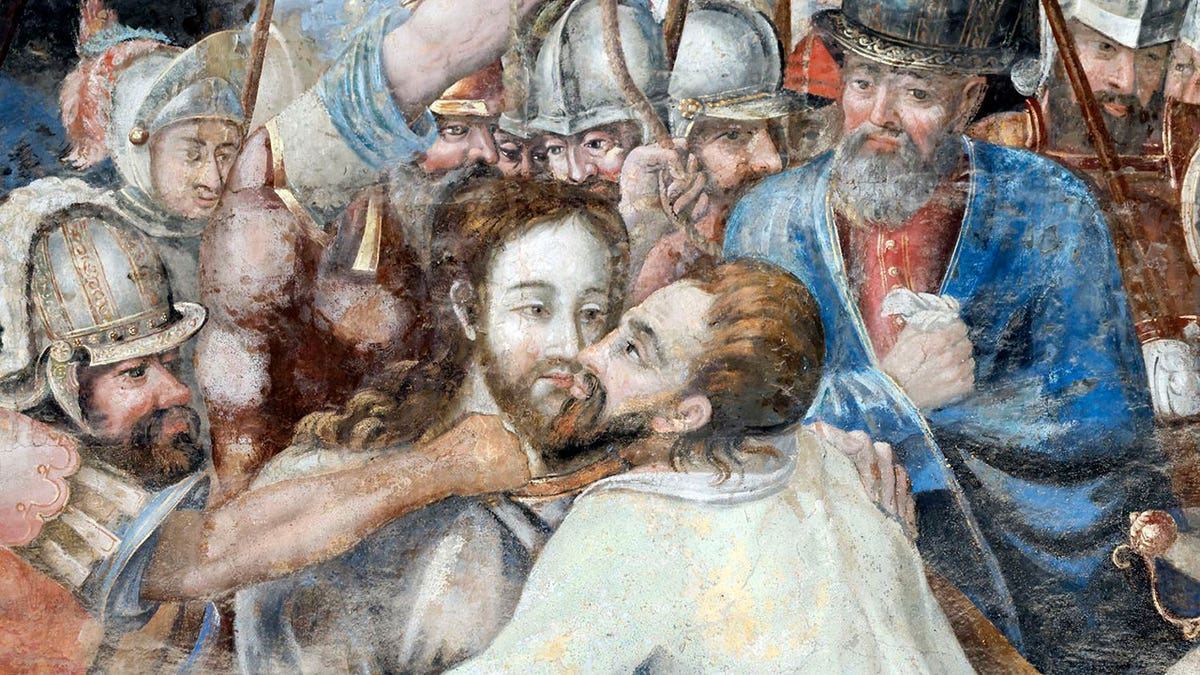
The Kiss of Judas, also known as the Betrayal of Christ, as depicted in a mural at the Royal Abbey of Fontevraud in Fontevraud-l’Abbaye, France. (Godong/Universal Image Group)
A story is told about a French couple in the 19th century, she deeply religious, he vaguely agnostic. At some point in their marriage, the wife asked her husband if she could hang a picture of the Sacred Heart of Jesus above their bed. With little enthusiasm, but out of concern for her feelings, he agreed. Over time, due to setbacks in his business and frustrations with his ambitions, the man fell into a deep depression.
Finally, in despair, he threw himself off a building and plunged to his death. His wife, utterly bereft and convinced of her own guilt in the matter, became desolate. At the end of her strength, she decided to speak to John Vianney, the famous priest of Ars, a man known as a spiritual teacher and soul reader. When she arrived in the small town near Lyon, she was shocked to see that the line of those seeking an audience with the great man stretched for a mile.
Frightened, she knelt at the communion rail and cried. To her great surprise, she then heard a voice calling her name. It was John Vianney. “How did you know my name?” she asked. He replied, “It doesn’t matter.” He continued: ‘You are in despair over the death of your husband. I want you to understand that as he was rushing to his death, God showed him that statue of the Sacred Heart that he had hung above your bed.” “How could you know something like that?” she gasped. “It doesn’t matter,” he replied. “What matters is that he was converted when he saw it.”
CLICK HERE TO DOWNLOAD THE FOX NEWS APP
The same Dante who placed Judas in the depths of hell also said that God only needs one tear of repentance to save a sinner.
What should we take away from a prayerful reading of the St. Matthew Passion story? God is mercy within mercy within mercy.
CLICK HERE TO BISHOP ROBERT BARRON
