



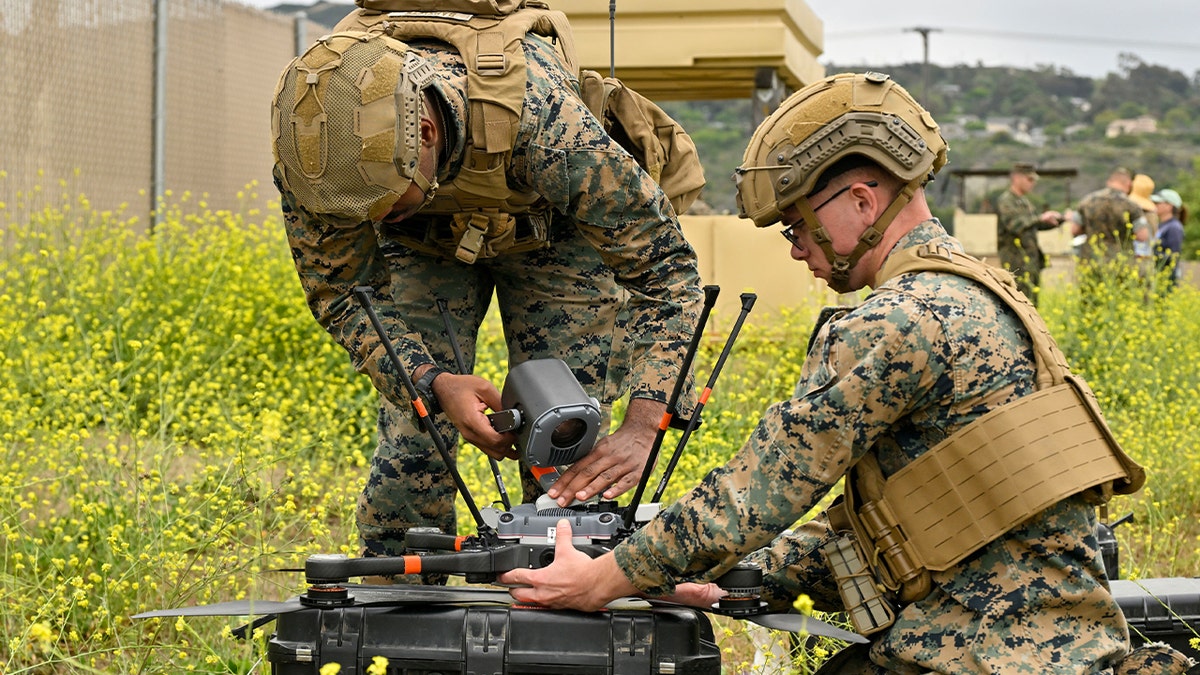
Battlefields in Ukraine and the Middle East have made one fact undeniably clear: small drones are no longer a niche capability. They are reshaping modern warfare. Now the world’s militaries can get persistent surveillance and precision attack options from small systems that are at the same time cheap, adaptable and mass producible. No traditional defenses have been created to combat these drones, which in large numbers can overwhelm old-fashioned fortifications.
Defense planners know this. Real-world warfare has validated war games and live-fire exercises, allowing us to see in real time that drones will shape future conflicts. Small drones have also become an important commercial product for both individual users and key civilian sectors such as agriculture, energy and law enforcement.
And yet America’s small drone industrial base is falling behind. We haven’t been able to make drones for long enough. Our production of small drones lags behind our competitors, especially China, which has cornered the commercial and military markets. Fortunately, coordinated action by Congress and President Donald Trump is poised to rebuild America’s drone industrial base within a few years.
More than a decade ago, the Chinese Communist Party (CCP) recognized that small drones would become a mainstay of modern warfare and commercial industry. The CCP proceeded to take over the small drone market. It dumped tens of billions of dollars into the industry and employed predatory pricing practices. American drone companies simply couldn’t compete. We watched our supply chains continue to wither away. That dynamic created a negative feedback loop that reduced the supply of U.S. drones and made them unaffordable for both military and commercial customers.
A DRONE FOR EVERY SOLDIER IN THE ARMY OF THE FUTURE, SAYS DRISCOLL
We have seen the facts and acted. Today, America is ready to rebuild its small drone industry, with a one-two punch of investment and tailor-made industrial policy.
First, Republicans in Congress, working with the Trump administration, have set aside $2.5 billion from the Defense Reconciliation Act for the Pentagon to purchase small drones. Previously, the military had rarely spent more than $100 million a year on the technology. This $2.5 billion demand signal will enable U.S. industry, along with key allies and partners, to rebuild non-Chinese supply chains for small drones and components.
More than $1 billion of that investment will flow into the new Drone Dominance program. This initiative has brought together 25 US suppliers that make small “Group 1” first-person view (FPV) drones. The companies gathered at Fort Benning in February for the first phase of a four-round competition.
IRAN’S DRONE SWARMERS CHALLENGE US air defenses as troops in the Middle East face growing threats
The eleven best artists were announced at the beginning of March. Based on future Gauntlet iterations, the victorious companies will win a portion of the funding and use it to scale up production of affordable FPV drones. They must do this quickly: 300,000 drones must be ready by 2027.
For the first time, the US small drone industry has received a clear sign of significant demand. But it must be persistent and must scale. By comparison, our Pentagon witnesses told us last week at a Senate Armed Services Committee hearing that Ukraine built 4.5 million Group 1 drones last year and is on track to build 6 million this year alone.
Second, Congress and the Trump Administration are working together to help protect this fledgling American industry, which is vulnerable to predatory Chinese business practices. Over the years, the Pentagon has taken steps to investigate trusted drone platforms. But Chinese drones are still the commodity of choice in the commercial sector, from agriculture and energy to law enforcement and search and rescue.
Last year, Congress ordered a national security review of major Chinese drone manufacturers. The bill, led by Senator Rick Scott and supported by the Senate Armed Services Committee, puts us on a path to ban the sale of these adversary-made components in the United States.
CLICK HERE FOR MORE FOX NEWS ADVICE
The Federal Communications Commission (FCC) is quickly implementing this law. Just before Christmas, the FCC announced a ban on future sales of foreign-made drones and drone parts in America. The FCC and the Pentagon are working together to process waivers for key Asian and European allies as these partners remain an essential part of our drone supply chain.
First, Republicans in Congress, working with the Trump administration, have set aside $2.5 billion from the Defense Reconciliation Act for the Pentagon to purchase small drones.
These investments and policies are a good start, but they are no more than that. We must continue these efforts in the coming years with a similar level of fiscal effort and a continued partnership between the Trump Administration, the Pentagon and Congress. Funding levels should remain stable in the coming years as the U.S. industry rebuilds itself. We should explore new grant and loan programs to accelerate the adoption of American-made drones, alongside our law enforcement and agricultural industries.
CLICK HERE TO DOWNLOAD THE FOX NEWS APP
When it comes to components, the drone industry largely relies on a similar supplier base – whether for commercial or defense buildings. The faster we create a sustainable U.S. and allied supplier base, the faster we get commercially viable drones that our military can also buy at reasonable prices. There is no path to U.S. military drone dominance without a U.S. drone industry that can compete commercially.
The first results are encouraging. Competition drives innovation, proprietary technologies advance, and the industrial base begins to scale up. These steps lay the foundation for a thriving American small drone industry that can affordably equip our military and provide competitive commercial drones.
CLICK HERE TO VAN SEN. ROGER WIKER
