



From the moment you hear a knock on the door to the moment you receive a folded American flag, Gold Star families face a life shaped by loss. Last week we celebrated Gold Star Spouses Day on April 5. April is also the Month of the Military Child. I invite you to reflect on the sacrifices of our military families, especially those whose loved ones made the ultimate sacrifice.
Losing a loved one in the service of our country affects us differently. These families are asked to carry on strength and dignity and embody the ideals their loved ones fought for. It is often referred to as an honor that no one wants.
I recently had the privilege of meeting with members of the Gold Star Wives of America in my office in Washington, DC. Their resilience, grace and determination to advocate for military families have left a lasting impression. Their stories are powerful reminders of the human cost of service delivery.
WATCH: PRESIDENT TRUMP REVEALS FAMILIES OF KILLED US SERVICE MEMBERS URGE HIM TO ‘DO THE WORK’
The sacrifice of our military families cannot be overstated. Every lost service member has consequences: lives are disrupted, the future is derailed, and families are left with only memories and a folded flag.
As the father of a beautiful little girl, I cannot imagine the pain of losing a child. A Gold Star mother recently told my office that she lost her son to an IED in Afghanistan in 2010. She said: “Increasing the death benefit will help new Gold Star families in many ways.” For her, this initial bridging payment helped cover the travel costs of family members who wanted to pay their respects; for others, it helped cover funeral expenses or other unpaid bills.
The sacrifice of our military families cannot be overstated. Every lost service member has consequences: lives are disrupted, the future is derailed, and families are left with only memories and a folded flag.
The grief does not end after the funeral. Families must face the fact that their loved one will never have another birthday or Christmas again. Spouses will mourn anniversaries and have to decide whether to stop wearing a wedding ring.
Gold Star children will have to live with disappointment for the rest of their lives, facing the reality of walking down the aisle without a father or choosing a wedding dress without a mother. These are all tragic possibilities that every service member knows they are at risk for when they sign up to serve, and a reality that far too many people face.
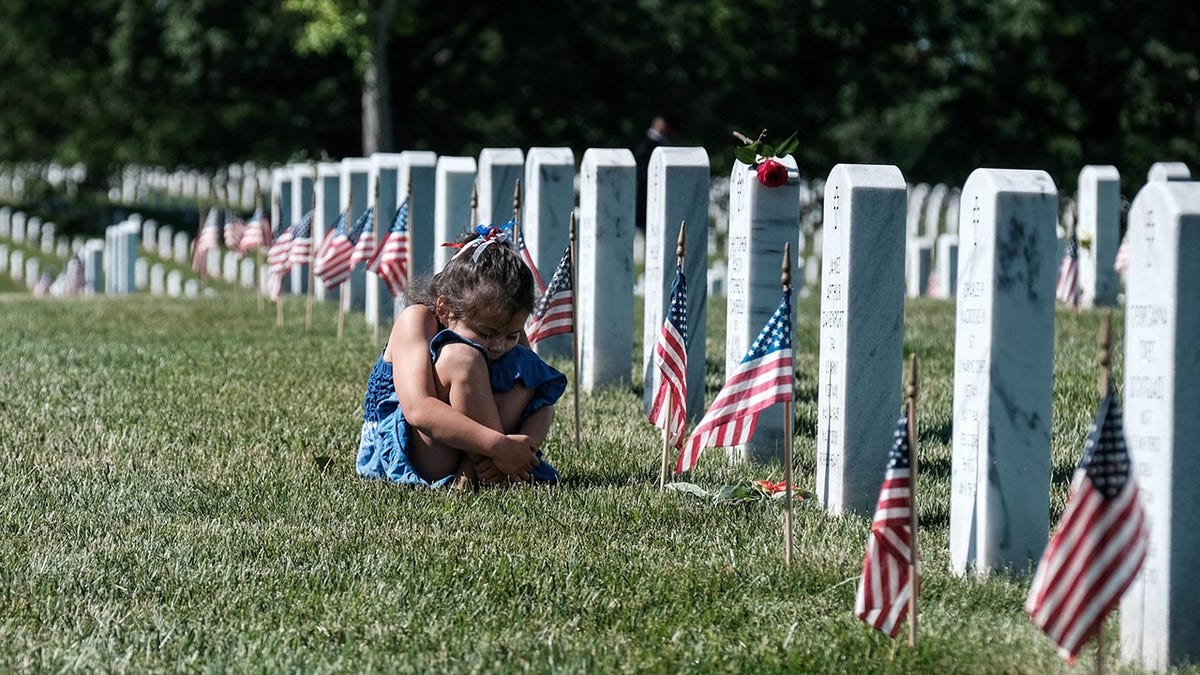
A girl reacts in front of a headstone during Memorial Day as visitors honor veterans and those lost in war at Arlington National Cemetery, Virginia, U.S., May 31, 2021. (Reuters)
In addition to emotional hardships, there are also practical concerns. Young spouses often put their own careers aside to support their military spouse. When the worst happens, they now have to figure out how to financially support themselves and their children, all while going through extreme grief.
The realities these families face underscore a crucial question: Why have survivor benefits not kept pace with modern needs? The initial payment that families receive upon the death of their loved one has not been updated in more than two decades. Other benefits, including Social Security, military pensions and federal salaries, are adjusted for inflation, but not for the “death tip” for our military families. It’s time to correct this mistake.
CLICK HERE FOR MORE FOX NEWS ADVICE
That’s why I introduced the bipartisan Honoring Our Nation’s Obligation to Remember (HONOR) Gold Star Families Act. This legislation would increase the military death gratuity — often called the bridge payment — from $100,000 to $200,000 for the families of fallen service members.
The bill also adds a cost-of-living adjustment so that future payments automatically increase with inflation, ensuring continued support for Gold Star families over time. This legislation was co-led by Armed Services Committee members Jen Kiggans, R-Va., and Jill Tokuda, D-Hawaii. It was also endorsed by the American Gold Star Mothers, the Gold Star Wives of America, Military-Veterans Advocacy and the National Guard Association of the United States (NGAUS).
Recent losses remind us that this burden continues. Take the recent conflict with Iran, in which thirteen soldiers were killed. One of those soldiers was Captain Cody Khork, a 35-year-old man who, according to to his family, was deeply patriotic and was defined by “love of country.”
Another military member who lost her life was Sgt. 1st Class Nicole Amor. That’s her survived by a son in his senior year of high school and a daughter in fourth grade. Chief Warrant Officer 3 Robert Marzan was also killed in the conflict.
His niece wrote on Facebook: “You are our hero with the heart of a servant, you lead with love and courage, you made the ultimate sacrifice for our country, an honorable soldier, and I believe God welcomed you with open arms and said, ‘Well done, my son, well done.'”
CLICK HERE TO DOWNLOAD THE FOX NEWS APP
The loss and grief these families are experiencing now cannot be quantified, but we can keep them in our prayers as they grieve, and we can support them in meaningful ways.
That’s why I made the HONOR Gold Star Families Act retroactive. My bill will apply to all families who lost a loved one during Operation Epic Fury, regardless of when my bill is signed into law.
Our Gold Star mothers, fathers, children, spouses and siblings have given so much to our nation. It’s time we give back to them – and this bill is just one way to do that.
