



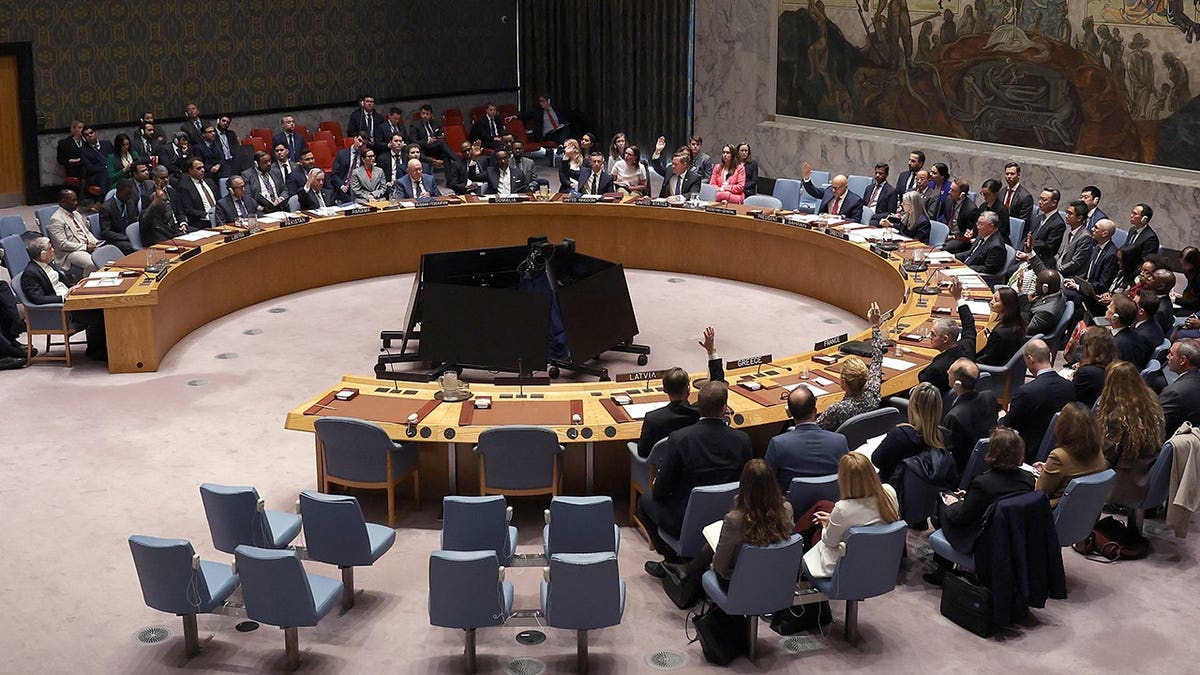
Russia and China on Tuesday vetoed a UN Security Council resolution aimed at reopening the Strait of Hormuz, just hours before President Donald Trump’s deadline for Iran to stop threatening the key waterway.
Trump has given Iran until 8 p.m. ET to reopen the Strait of Hormuz or face attacks on its power plants and bridges on Tuesday. The resolution received eleven votes in favor and two against, with abstentions from Pakistan and Colombia.
“No one should tolerate holding the global economy at gunpoint, but today Russia and China tolerated it,” US Ambassador Mike Waltz said on Tuesday. “They sided with a regime that seeks to intimidate the Gulf into submission even as it abuses its own people during a national internet blackout for daring to imagine dignity and freedom.”
“The failure to adopt this resolution sends the wrong signal to the world, to the people of the world – the signal that the threat to international waterways can pass without any decisive action by the international organization responsible for maintaining international peace and security,” Bahrain Foreign Minister Abdullatif bin Rashid Al Zayani added after the vote.
US EMBASSIES IN BAHRAIN AND EGYPT ISSUE WARNINGS AS IRAN THREATENS MIDDLE EAST UNIVERSITIES
Security Council members will vote on a resolution to unblock the Strait of Hormuz on April 7, 2026 at UN Headquarters in New York. China and Russia vetoed the resolution. (Timothy A. Clary/AFP via Getty Images)
The vetoed resolution tabled by Bahrain strongly encourages states interested in using commercial maritime routes in the Strait of Hormuz to coordinate their defensive efforts, in accordance with the circumstances, to contribute to ensuring the safety and security of navigation through the Strait of Hormuz.
The resolution also demanded that Iran immediately halt attacks on merchant and commercial ships and stop obstructing their freedom of navigation through the Strait of Hormuz and attacking civilian infrastructure.
According to The Associated Press, the wording of the resolution was significantly watered down to try to convince Russia and China to abstain rather than veto it.
The original Gulf proposal would have allowed countries to use “all necessary means” — U.N. language that would include military action — to ensure transit through the Strait of Hormuz and discourage attempts to close it.
WHY THE HORMUZ REGION MATTERS IF TRUMP ISSUES A NEW ULTIMATUM TO IRAN
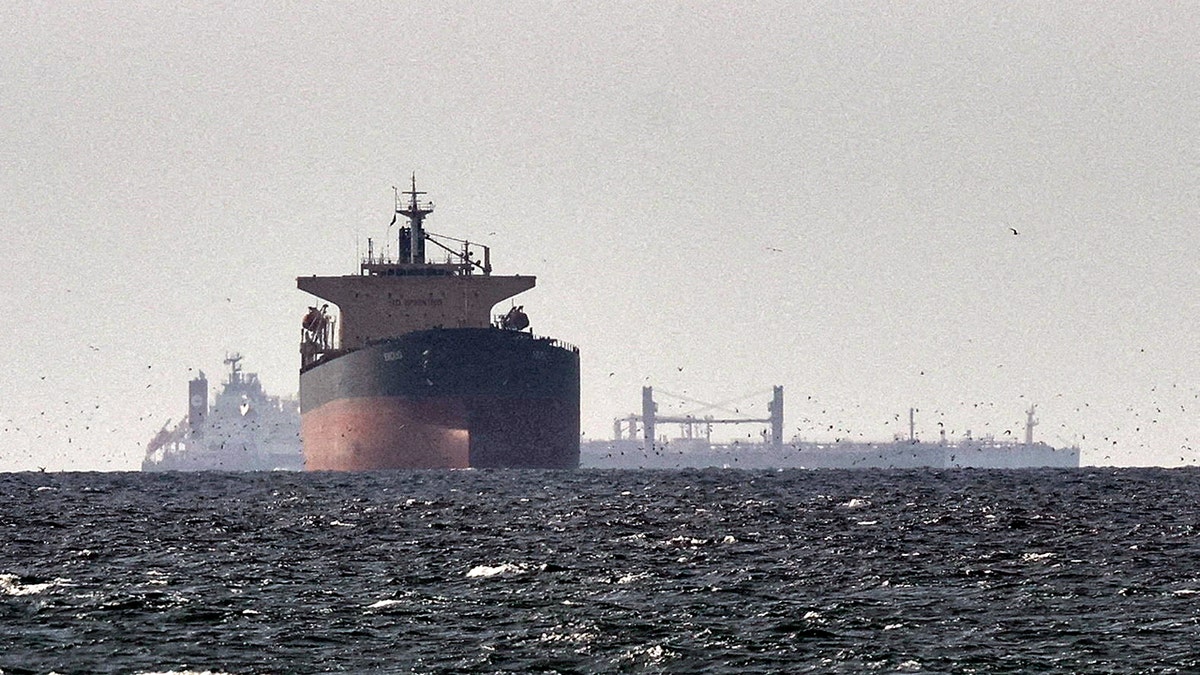
Cargo ships in the Gulf, near the Strait of Hormuz, as seen from northern Ras al-Khaimah, near the border with the Musandam Administration of Oman, in the United Arab Emirates, March 11, 2026. (Reuters/Stringer/File Photo/File Photo)
After Russia, China and France, all veto-wielding countries on the 15-member Security Council, expressed opposition to authorizing the use of force, the resolution was revised to eliminate all references to offensive action. It would have allowed only “all necessary defensive means.” A vote was expected on Saturday.
But instead, the resolution was further watered down to eliminate any reference to Security Council authorization – which is an order for action – and limit its provisions to the Strait of Hormuz. Previous designs included adjacent waters.
“Let me be clear: this text would only embolden the United States and the Israeli regime to continue their unlawful actions and heinous crimes, while protecting them from accountability,” Iran’s ambassador to the UN, Amir Saeid Iranani, said after the vote.
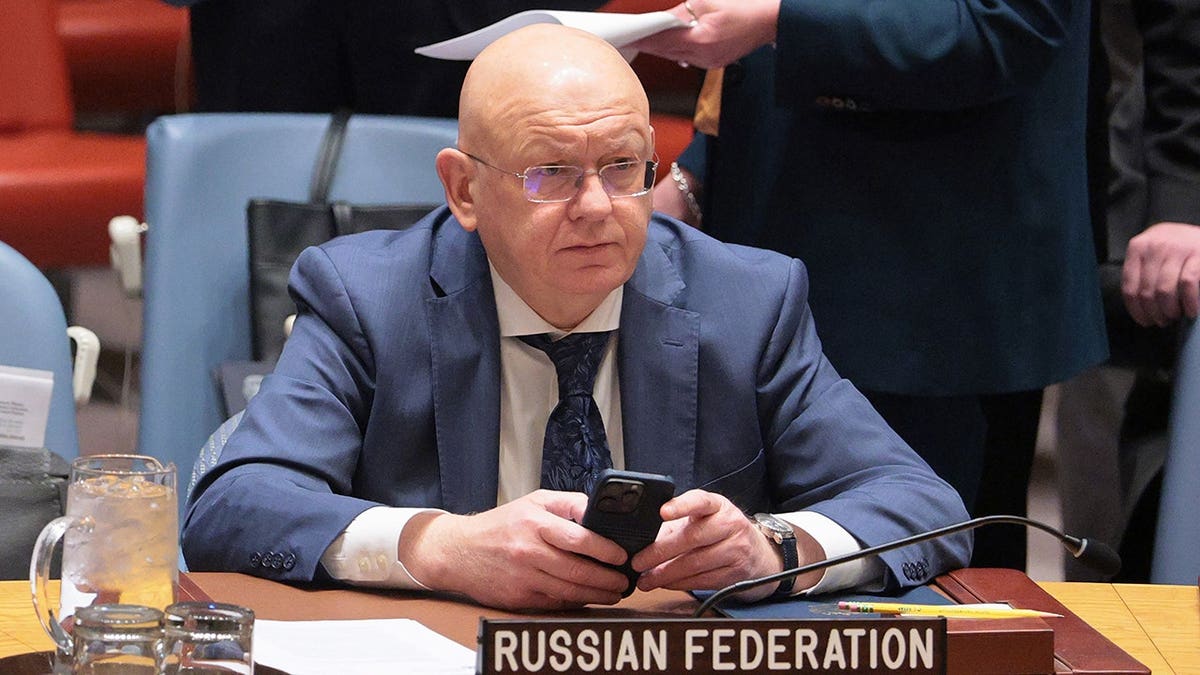
Ambassador Vassily Nebenzia of Russia awaits the start of a Security Council meeting on April 7, 2026 at UN Headquarters in New York City. (Michael M. Santiago/Getty Images)
CLICK HERE TO DOWNLOAD THE FOX NEWS APP
