



Exactly 23 years ago, I was a Marine bound for the Persian Gulf aboard the same ships that now transport thousands of Marines to Iran. Many of us had questions about President Bush’s intentions for Iraq, but asking them was not our job. Congress had voted and we had a clear task ahead of us.
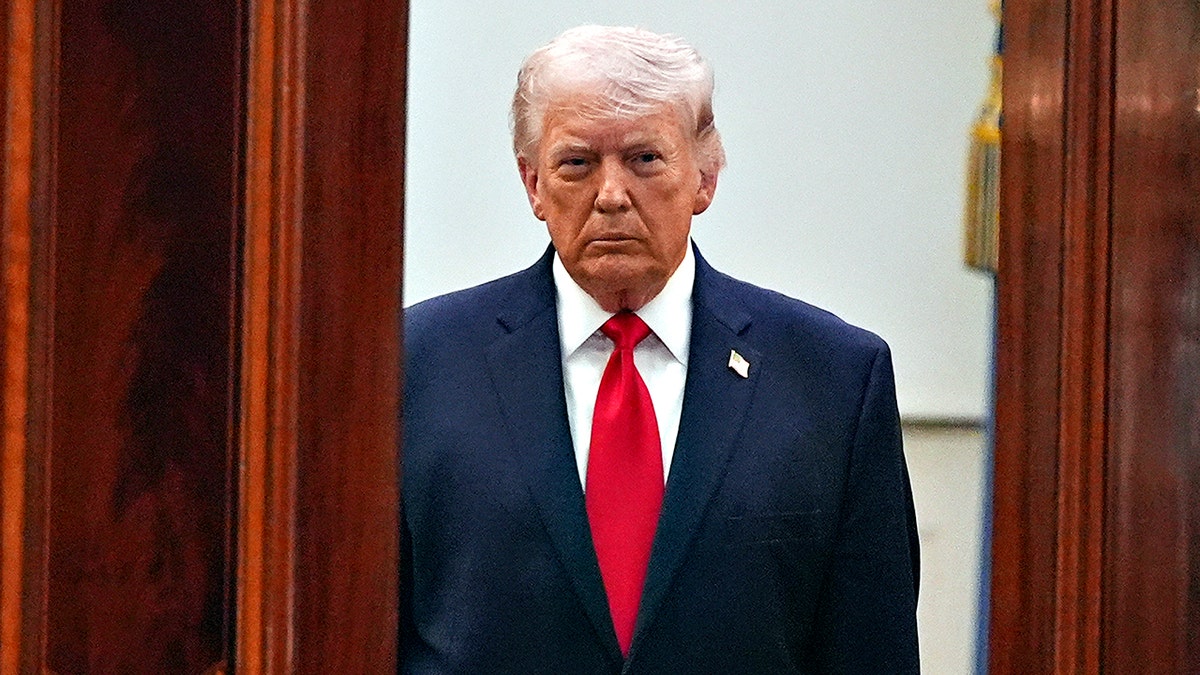
Today, as a member of the branch of government charged with declaring war, those questions are my job. And after President Trump’s speech on Wednesday, the American people have more questions than answers.
Instead of laying out a clear strategy to end this war or reopen the Strait of Hormuz, Trump made vague promises of escalation and even veiled threats of war crimes against the Iranian people. Financial markets plunged in real time during his speech, reflecting the same uncertainty and fear that our service members and their families are feeling right now.
WHY TRUMP FACES A PRINCIPAL DECISION ON CUTTING OUT IRAN’S OIL SUPPLY IF HE CAN’T GET A DEAL
We’ve heard many Trump administration goals that seem to shift by the day, from regime change, to “destroying ballistic missiles,” to seizing their oil. Last night it stopped Iran from projecting power and building a nuclear bomb. Aside from the fact that Iran has projected power much more violently and effectively since Trump started this war, and he supposedly “wiped out” its nuclear program last summer, none of the options involving ground forces will help put an end to that.
If Trump is serious about the two-to-three week escalation he outlined Wednesday night, these are the options he appears to be considering.
The first option is to conquer Kharg Island. It is Iran’s economic center of gravity, but to correct a common misunderstanding: it is not in the Strait of Hormuz. Trump’s logic seems to be that if you make this war extremely expensive from an economic perspective, Iran will succumb.
There are two problems with that logic. First, it makes no sense that Trump is willing to lift sanctions on Iranian oil in an effort to lower skyrocketing US gas prices, but would also be willing to take Iranian oil off the global market entirely by seizing Kharg Island. Second, a hardline theocratic regime is not particularly vulnerable to economic pressure.
His second plan is a risky special operations mission to secure the uranium from the bombed vaults in the mountains. The chance that such a complex operation will go completely smoothly is small, and even if it succeeds, we would be incredibly naive if we thought that Iran would not simply enrich more uranium in the long term. Opening the Strait wouldn’t help either, and it’s unnecessary: Obama accomplished this with a piece of paper in 2015.
The third plan is to forcibly reopen the Strait of Hormuz by occupying the Iranian coast. Such an amphibious assault would require tens or hundreds of thousands of American troops, thousands of American casualties, and no military endgame other than staying put forever.
Either option faces the same problem: the regime would still be intact. We have removed an older hardline leader and replaced him with a younger one who is even more radical, leaving us with only one military path: degrade Iran’s capabilities, then leave and watch them recover and rearm.
TRUMP’S IRAN STRATEGY SHOWS ‘DOCTRINE OF UNPREDICTABILITY’ Amid Strike Threats and Sudden Pause
The Pentagon’s self-reported request for a $200 billion supplemental bill tells you what they think each round will cost. That’s an expensive practice, costing the average taxpayer about $1,300 and costing the families of the troops we lose each time unimaginably more. Are you willing to spend $1,300 on Iran every few years?
Therefore, the only path that can truly end this war is a negotiated agreement. This is the path President Obama has taken us on with his nuclear deal. It was imperfect, but it removed the threat of a nuclear Iran, backed by inspections and constant electronic surveillance. Trump lied when he told the American people that Iran was not complying; its own first government-certified Iran followed suit. And it is telling that most of the nuclear proposals he is now making were already included in Obama’s deal.
Unfortunately, Trump has now made it more difficult to get back to the negotiating table than before. Both times the Iranians sat down to talk, he attacked them and incredibly today Iran has even more influence than before by closing the Strait.
IRAN RESPONDS TO REPORTS US WEIGHING GROUND OPERATIONS: ‘WE WILL NEVER ACCEPT HUMILIATION’
However, the longer we stay in this mess, the harder it becomes to get out. The more our goals expand, the harder it will be to claim victory, and the more influence Iran will gain. Imagine that in a few weeks Iran has captured several American troops, and we are back to the hostage crisis of forty years ago.
CLICK HERE FOR MORE FOX NEWS ADVICE
Trump says we need two or three more weeks of war. But he also claims that we have already achieved our military objectives and won. Both cannot be true. Either he is misleading the American people or he has no clear plan to end this war.
Iran is not a problem that the United States can solve militarily without the Americans having to bear much higher costs. We see this truth play out in real time.
CLICK HERE TO DOWNLOAD THE FOX NEWS APP
If the self-proclaimed President of Peace doesn’t want to be remembered for the worst strategic blunder in a generation, there is still – barely – time to make a deal.
He says he’s good at that.
CLICK HERE FROM REP SETH MOULTON
