



A Los Angeles jury on Wednesday returned a liability verdict against Meta and Google, ruling that their Instagram and YouTube platforms caused harmful digital addiction in children. The plaintiff was awarded $3 million in damages, 70 percent of which was to be paid by Meta and 30 percent by Google.
Later that day, the jury awarded $2.1 million in damages to Meta and $900,000 to Google. That’s just a fraction of the $1 billion in damages the plaintiff is seeking.
Full disclosure: I own shares in both companies. Snapchat and TikTok were originally named as co-defendants but settled prior to trial.
Does the verdict now mean doom for the social media giants among an avalanche of thousands of other similar lawsuits? No. It is doubtful that the verdict will withstand scrutiny from several appeals, especially if it reaches the U.S. Supreme Court.
UNDER OATH, META’S ZUCKERBERG EXPLAINS WHY BIG TECH CAN’T POLICE ITSELF
The case was brought to court by a 20-year-old California woman identified only as Kaley GM. Her lawyers argued that Meta and Google targeted children by designing their platforms to be harmfully addictive and deploying algorithms to keep them hooked.
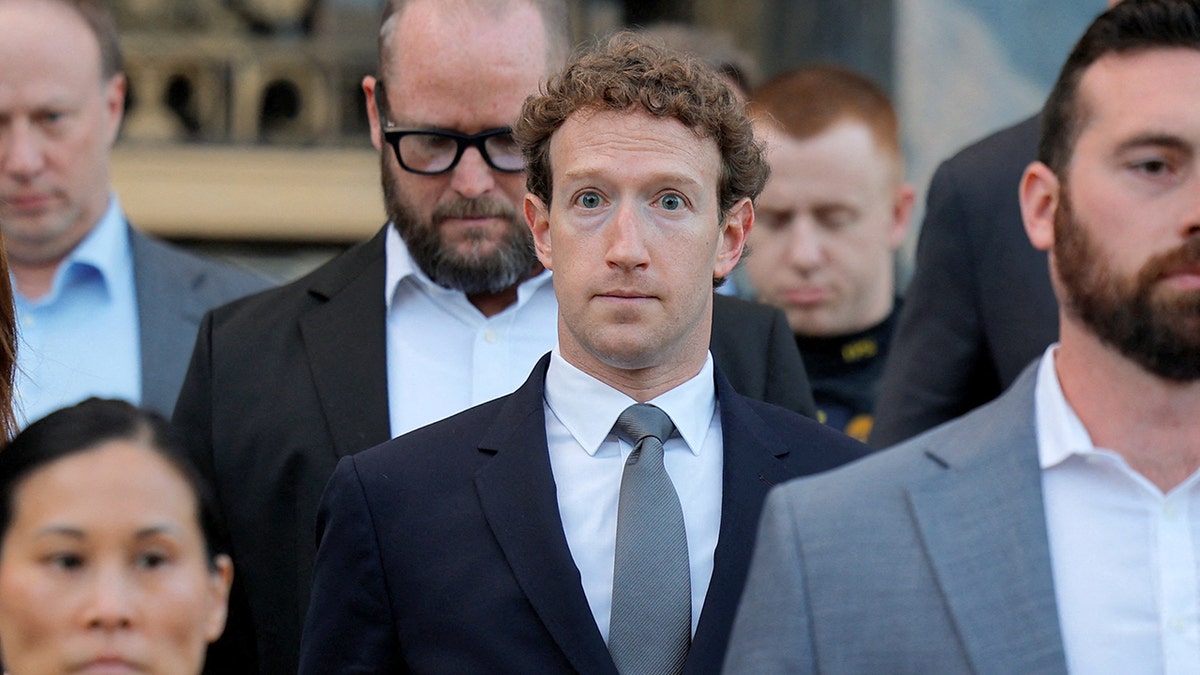
Meta Platforms CEO Mark Zuckerberg leaves court after taking the stand in a case accusing Meta and Google’s YouTube of harming children’s mental health through addictive platforms on February 18, 2026 in Los Angeles, California. (Mike Blake/Reuters)
Kaley logged onto YouTube when she was six years old, added Instagram when she was nine, and things escalated from there. It was documented that at the age of 16, she spent more than 16 hours a day on Instagram.
Kaley claimed that she developed acute depression, anxiety, body dysmorphia and suicidal ideation solely due to the addictive properties on the platforms. On the witness stand, she testified that negative online comments contributed to her declining mental state. But it didn’t get enough “likes” from subscribers.
YOUTUBE ALLOWS PARENTS TO RESTRICT OR BLOCK SHORTS FOR TEENS
“I would just get really angry and sad and feel like I wasn’t worth it, I guess,” Kaley said. As her dependency grew, so did her insecurity. “Without my phone, I felt like a big part of me was missing. Without my phone, I couldn’t see who liked my stuff,” she added.
By her own admission, Kaley’s compulsive or obsessive dependence on social media had everything to do with her involvement with its content posted by other users. That is the biggest obstacle for the plaintiff during the inevitable appeal.
Why? Because Congress passed the Communications Decency Act in 1996. Section 230 states that platforms cannot be held liable for the content posted on their sites. It is a form of immunity that has never been revoked.
GRIEVING MOTHER SAYS MARK ZUCKERBERG ‘MUST FACE THE MUSIC’ AS META CEO TESTIFIES IN LANDMARK ADDICTION TRIAL
In 2023, the Supreme Court upheld these legal protections by refusing to hold social media companies liable for harmful user-generated content amplified by their algorithms. Since that is the core of the plaintiff’s design defect theory against Meta and Google, the justices would have to deviate significantly from their established position to uphold the verdict. That’s unlikely.
But there is a broader First Amendment protection that has its roots in our federal Constitution. Internet companies are fundamentally concerned with freedom of expression. They are open forums for expression that function as a modern public square, and they enjoy the same protected rights as any other speech. Minors also have significant First Amendment rights, as previous Supreme Court decisions have stated.
In addition to this protection, there are other grounds for appeal. At first glance, Kaley’s story sounds pretty convincing. At least one juror was even seen crying as she testified. However, there were serious problems with her story as to what the real or proximate cause of the alleged damage was.
WHY PARENTS WANT TO DELAY SMARTPHONES FOR CHILDREN
Over several years, Kaley was treated by three therapists, none of whom had ever diagnosed social media addiction. Instead, the documentary evidence strongly suggested that her struggles coincided with a tumultuous home environment, in which alleged physical and emotional abuse occurred.
Additionally, the plaintiff’s attorneys filed the case based on the legal theory known as “product liability.” They argued that Instagram and YouTube were flawed in design and operation and therefore inherently unsafe for young people.
Meta founder and CEO Mark Zuckerberg testified that there was nothing defective with his platform. He explained to the jury that his company’s apps are created to provide users with something useful, not to make them addicted, and that Instagram is not trying to attract children as users.
META, GOOGLE FACE HUGE LIABILITY AS ‘ADDICT CHILDREN’ TRIAL CONTINUES IN LA
Zuckerberg emphasized that Meta has a strict policy that children under the age of 13 are not allowed on the platform and will be removed upon identification. He talked about efforts to confirm users’ ages and highlighted how safety tools were installed, such as privacy settings and content restrictions for minors.
There is compelling evidence that Kaley has abused social media through her incessant and chronic use. Of course, almost anything done excessively carries the risk of harm. This is where the concept of personal responsibility comes into play.
Granted, a child cannot always be expected to make reasonable decisions. Therefore, parental supervision and control are crucial. But here they seem to have been conspicuously absent.
There is compelling evidence that Kaley has abused social media through her incessant and chronic use. Of course, almost anything done excessively carries the risk of harm.
If a child constantly eats chocolate and then becomes obese, or worse, is a company like Hersey to blame? No sane person believes that chocolate bars are defectively designed to cause addiction, because we depend on the exercise of common sense in moderation and self-control.
CLICK HERE FOR MORE FOX NEWS ADVICE
Product manufacturers are in the business of creating and selling goods that appeal to consumers. But any product can be abused. Television shows and video games are similar examples where the goal is to keep people engaged. It is not a producer’s responsibility to act as personal guardian of each user. When minors are involved, that duty falls on a vigilant and caring parent.
CLICK HERE TO DOWNLOAD THE FOX NEWS APP
A sympathetic LA jury was swayed by the unfortunate state of Kaley’s young life. But shifting the blame from personal responsibility to a corporate scapegoat would set off an explosion of ruinous lawsuits by thousands of other plaintiffs that could cripple social media companies.
Ultimately, billions of active and responsible users would suffer the inevitable consequences.
CLICK HERE TO GREGG JARRETT
