



President Donald Trump did not start this war. The Islamic Republic did just that – on November 4, 1979, when it stormed the US embassy in Tehran and took 52 Americans hostage for 444 days. For nearly half a century, the world’s leading state sponsor of terrorism has killed and maimed more Americans than any other terrorist regime on Earth. There was even a plot to assassinate Trump himself twice.
The regime’s attacks on the United States and our allies are not a series of isolated incidents, but a single, ongoing war that the mullahs have been waging for 47 years. From the 1983 Beirut barracks bombing to the Iranian IEDs that killed 603 Americans in Iraq—roughly one in six American combat deaths—the regime operated under the assumption that Washington did not have the courage to respond. For years, that bet paid off. Tehran interpreted restraint not as caution, but as permission.
From Hamas’s Oct. 7 massacre of some 1,200 people, including 46 Americans, to more than 180 attacks on American troops last year, the regime has always told us what it wants: death for America.
To counter this looming threat, every American president since Jimmy Carter has chosen to set aside and call it diplomacy. That changed in 2020 when Trump ordered the attack on Qassim Soleimani, the regime’s top terrorist and IED mastermind. The foreign policy class in Washington criticized it, but the Iranian people welcomed it.
MICHAEL OREN: IRAN HAS BEEN WAR AGAINST AMERICA FOR 47 YEARS – TIME TO END IT
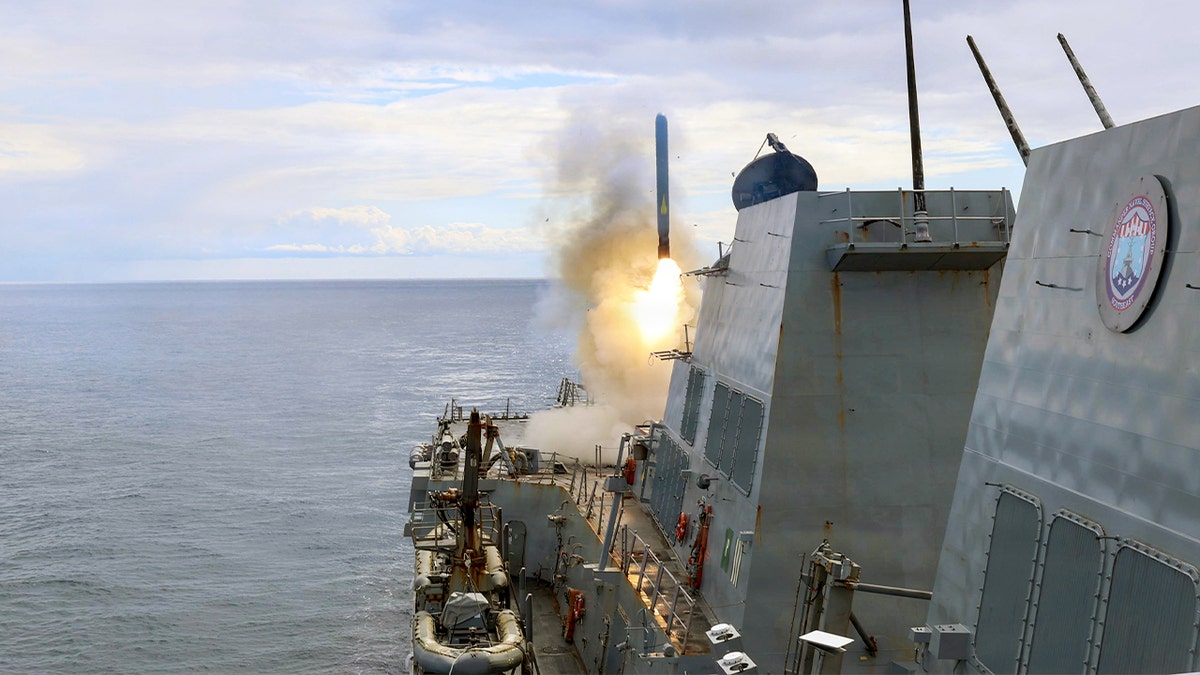
In this U.S. Navy flyer, the USS Thomas Hudner fires a Tomahawk land-attack missile in support of Operation Epic Fury at sea on March 1, 2026. (US Navy/via Getty Images)
When the regime massacred more than 40,000 protesters in January 2026 and tried to hide the atrocities from the world by shutting down the internet, people once again looked to Trump for help. He answered their call by doing what his predecessors never dared, by “putting an end once and for all to this long-standing danger.”
The case for action was strong. In addition to humanitarian grounds, US Special Envoy to the Middle East Steve Witkoff revealed details of the negotiations he and Special Peace Envoy Jared Kushner led that led to the conflict. Their Iranian counterparts proudly admitted that they had stockpiled enough uranium for eleven nuclear bombs, which was achievable within weeks. When the US offered to supply free Iranian nuclear fuel in exchange for halting enrichment, Tehran refused. Witkoff concluded that Iran had no intention of doing anything other than arming its stockpile.
This nuclear threat was built on decades of deception. The regime hid pipes from IAEA inspectors so it could secretly repair the Arak reactor. It hid an entire nuclear weapons archive from negotiators (later acquired by Israel) and then stopped international investigators investigating undeclared nuclear material and activities in multiple locations.
THE WAR IS COMING HOME: WHY FINANCIAL PAIN AND ECONOMIC UNCERTAINTY THREAT Trump’s Urge to OVERTELL IRAN’S REGIME
The Obama administration’s deeply flawed Joint Comprehensive Plan of Action (JCPOA) imposed no restrictions on the Islamic Republic. Instead, it legitimized and financed Iran’s gradual pursuit of nuclear weapons. Trump rightly called the JCPOA “the worst deal ever negotiated.” He left the accord in 2018 and instituted a maximum pressure campaign, denying the regime more than $200 billion in oil revenues that would otherwise have financed terror operations.
President Joe Biden inexplicably abandoned the strategy, giving Iran breathing room to accelerate enrichment — until Trump struck the regime’s nuclear facilities in Fordow, Natanz and Isfahan during Operation Midnight Hammer last June. When Iranian negotiators bragged about their bomb stockpile and told Witkoff, “We’re not going to give you diplomatically what you couldn’t take militarily,” Trump launched Operation Epic Fury.
The objectives of the operation — the embodiment of Trump’s “peace through strength” doctrine — are outlined by the War Department: destroy Iran’s offensive ballistic missile and production facilities, destroy naval and naval infrastructure, break up terrorist proxy networks, prevent nuclear weapons development by targeting related sites, and degrade the regime’s security apparatus — including Islamic Revolutionary Guard Corps (IRGC) command centers, air defenses, missile and drone launch facilities, and airfields.
LIZ PEEK: WAR IN IRAN COULD BECOME THE ACHIEVEMENT THAT GUARANTEES TRUMP’S LEGACY
So far the results are ahead of schedule. In a joint operation with Israel, Ali Khamenei, the regime’s leader, was assassinated, along with much of his inner circle and senior military command – including the heads of the IRGC and Basij, as well as senior power broker Ali Larijani.
More than 80% of Iran’s ballistic missile stockpile and production capacity has been destroyed, along with most of Iran’s naval fleet and port infrastructure. Iran’s proxy financing networks – the pipelines that kept Hezbollah, the Houthis and Hamas armed and operational – have been severed. Nuclear-related sites across the country have been destroyed. At least 49 senior regime officials have been killed or removed from the battlefield.
Their Iranian counterparts proudly admitted that they had stockpiled enough uranium for eleven nuclear bombs, which was achievable within weeks.
This unprecedented degradation of the regime’s repressive forces levels the battlefield and creates unprecedented conditions on the streets for the Iranian people to rise up and directly challenge the mullahs.
CLICK HERE FOR MORE FOX NEWS ADVICE
The job is not finished. But it is on track. If you stay the course, you’re done.
President Trump spoke directly to the Iranian people in his speech launching the operation: “[T]The hour of your freedom is near… When we are ready, take over your government. It’s up to you to take it.” That moment is now within reach.
CLICK HERE TO DOWNLOAD THE FOX NEWS APP
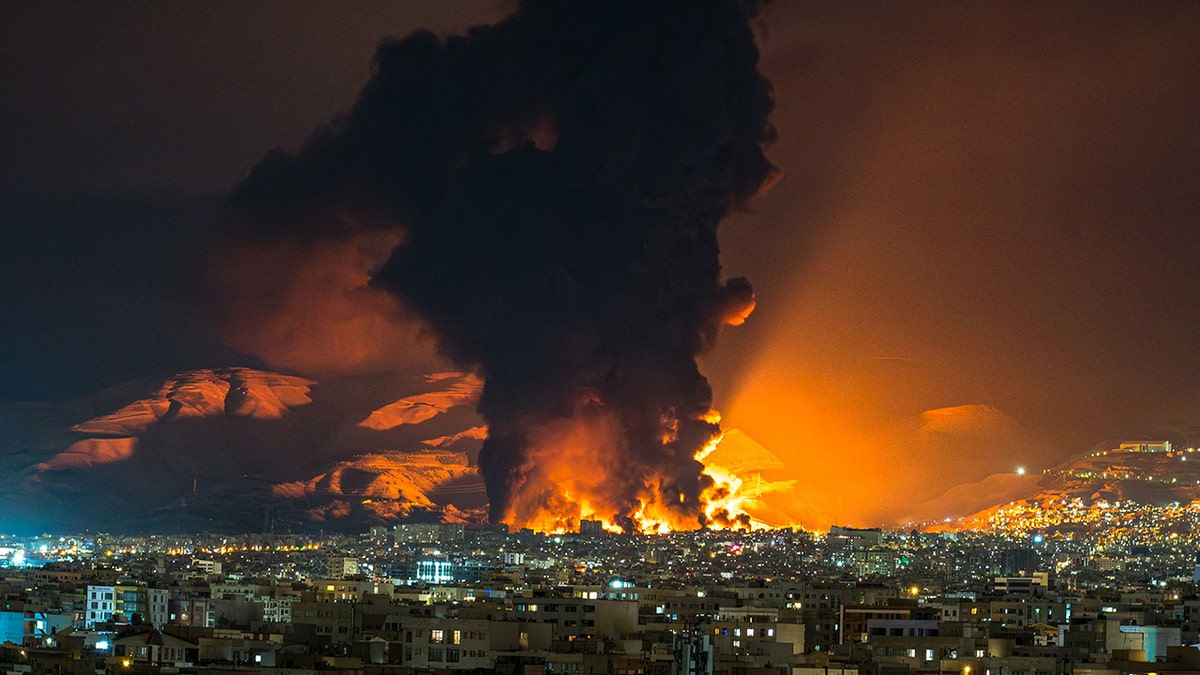
Smoke and flames rise at the site of airstrikes on an oil depot in Tehran on March 7, 2026. (Sasan/Middle East Images/AFP via Getty Images)
Trump’s strategy is working. His legs don’t waver and his commitment is unwavering: “We don’t want to leave early, do we? … We don’t want to come back every two years.” Half-measures against this regime have a 47-year history of failure. History will justify Trump’s decision to end it.
As Crown Prince Reza Pahlavi, the leader of Iran’s democratic opposition, put it: Donald Trump will be remembered as the leader who stood with the Iranian people when it mattered most – alongside history’s greatest liberators.
