



Secretary of State Marco Rubio said on Tuesday that US sanctions on Cuba are linked to political changes on the island as the country faces widespread power outages, unrest and a worsening economic crisis.
“Suffice it to say that the embargo is related to political changes on the island,” Rubio told reporters at the White House. “The law has been codified. But the bottom line is that their economy doesn’t work. It’s a dysfunctional economy. It’s an economy that has survived… That thing they have has survived because of subsidies from the Soviet Union and now from Venezuela. They don’t get subsidies anymore. So they’re in a lot of trouble. And the people in charge of them don’t know how to fix it. So they have to get new people in charge.”
Rubio’s comments come as Cuba faces a deepening energy crisis that has fueled protests and instability.
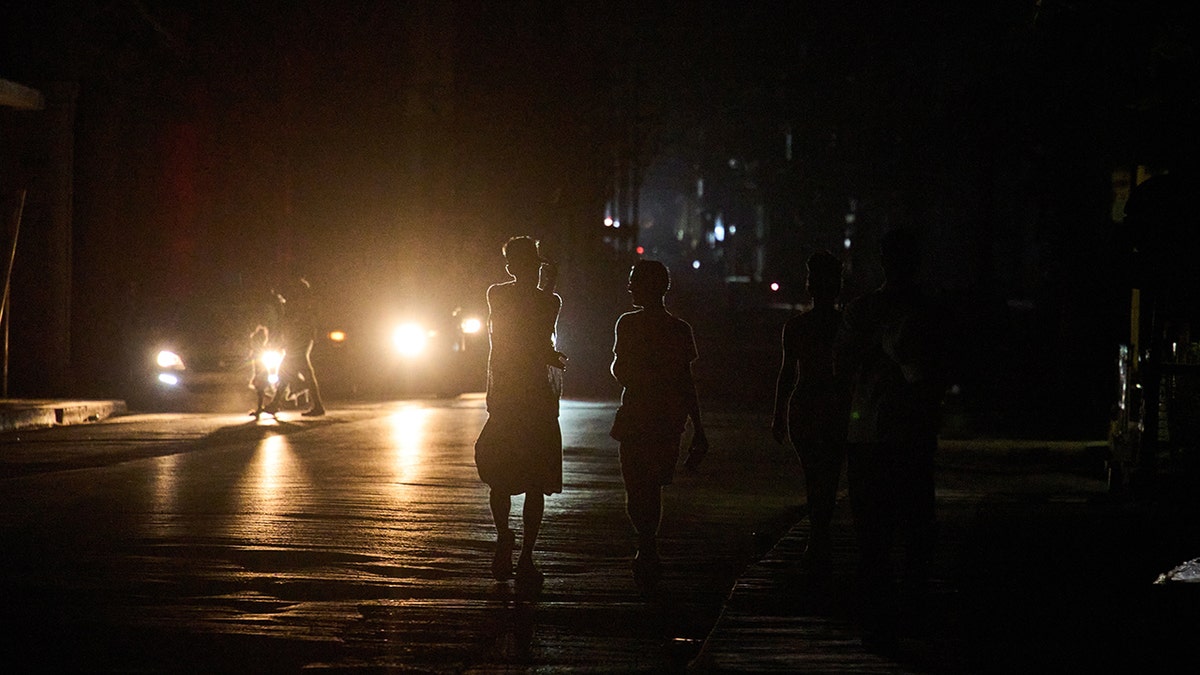
The collapse of the national power grid left about 10 million people without electricity, according to statements from the U.S. Embassy and Cuban authorities.
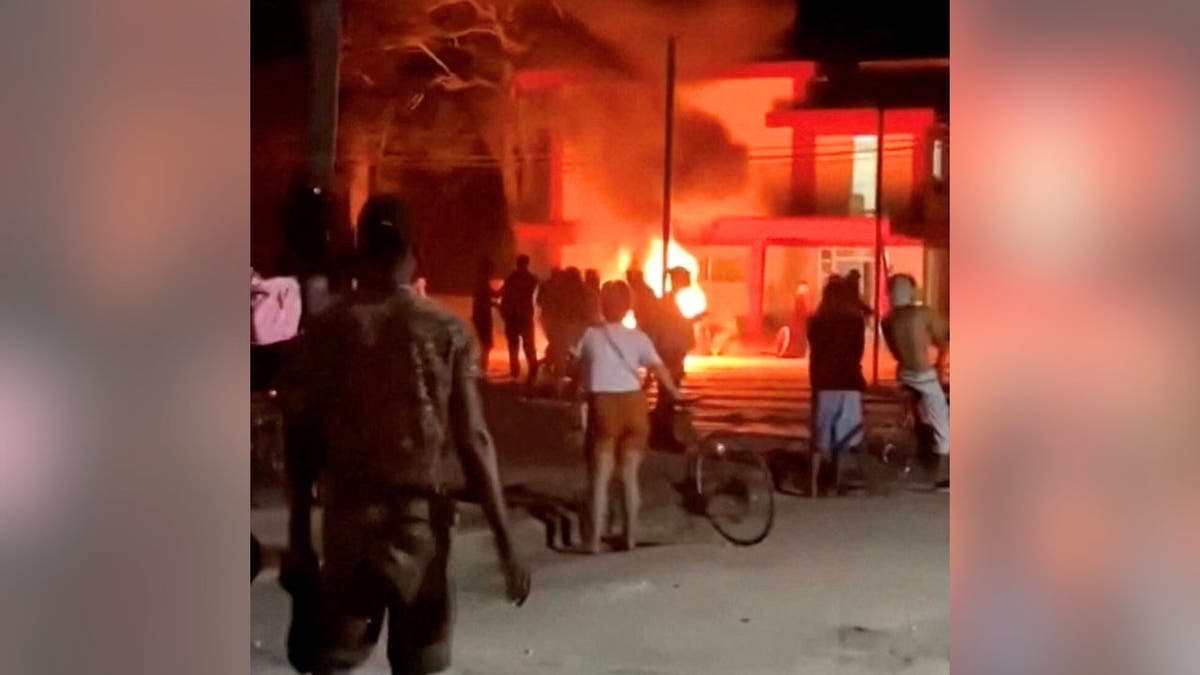
PROTESTERS set fire to Communist Party headquarters in CUBA as video appears to capture gunfire
People walk on the street during a power outage in Havana, March 16, 2026. (Ramon Espinosa/AP)
President Donald Trump indicated that his administration is actively involved.
“Cuba is in a very bad state right now. They’re talking to Marco,” Trump told reporters. “We will do something with Cuba very soon.… We are dealing with Cuba.”
Trump escalated his rhetoric against Cuba on Monday, saying he expected to have the “honor” of “taking Cuba in some form” and that “I can do anything I want” to the neighboring country.
A senior State Department official rejected claims that US sanctions are responsible for the humanitarian situation, saying: “Widespread power outages have unfortunately been common in Cuba for years – a symptom of the failing regime’s incompetence and inability to deliver even the most basic goods and services to its people.”
“This is the tragic result of more than 60 years of communist rule,” the official added. “An island that was once the crown jewel of the Caribbean has been plunged into extreme poverty and darkness.
TRUMP DECLARES NATIONAL EMERGENCY OVER CUBA, THREATENS TARIFFS FOR COUNTRIES SUPPLYING OIL TO COMMUNIST REGIME
Cuban human rights activist Rosa María Payá argued that the current crisis reflects the systemic collapse within the regime, and not external pressure.
She rejected claims that US sanctions are driving the humanitarian situation.
“Cubans are not suffering because of U.S. policies,” she said. “They are suffering under a dictatorship. The pressure on the regime is working. What hurts the Cuban people is its legitimization.”
“The only way to end the humanitarian catastrophe is to end the regime,” Payá added. “That is the demand of the Cuban people.”
Recent power outages and shortages have been linked to disruptions in key infrastructure, including the Antonio Guiteras thermoelectric power plant, and to fuel shortages due to U.S. moves to restrict oil shipments from Venezuela, one of Cuba’s main energy suppliers.
At the same time, Pentagon officials told lawmakers there are no plans to invade Cuba, even as they described it as a long-standing security problem.
Joseph Humire, who serves as assistant secretary of defense for homeland defense and U.S. security affairs, said he was “not familiar with any plans in Cuba” when asked at a House Armed Services Committee hearing on Tuesday.
CLICK HERE TO DOWNLOAD THE FOX NEWS APP
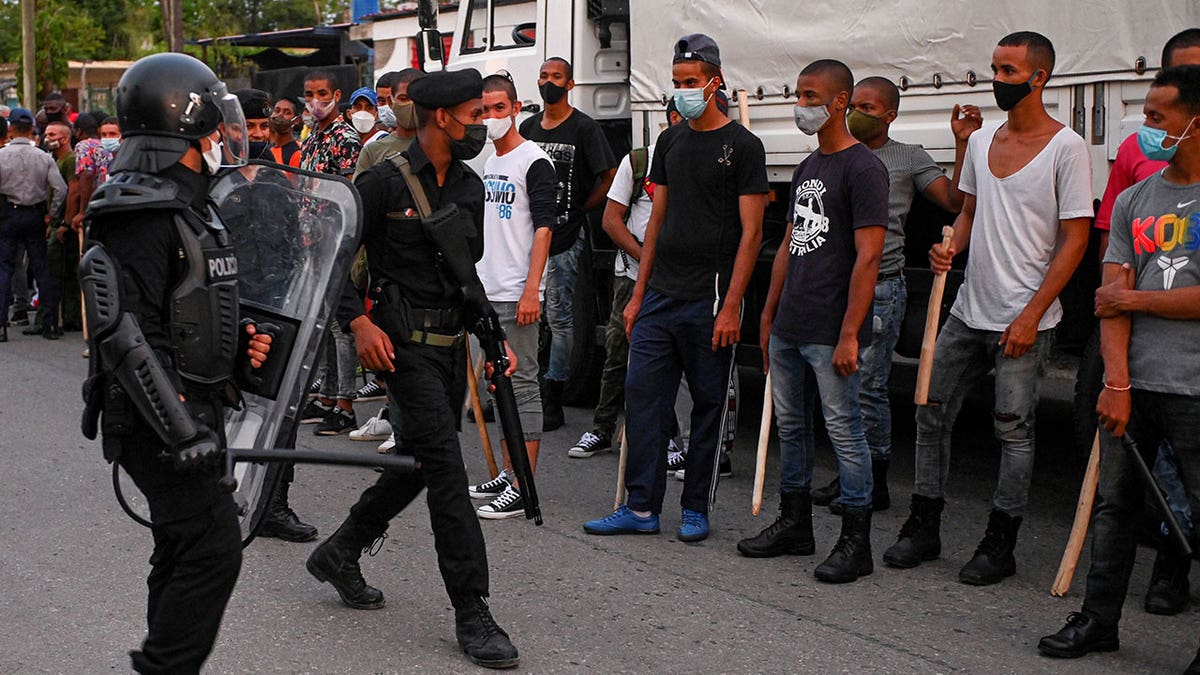
Riot police walk through the streets after a demonstration against the government of President Miguel Diaz-Canel in the municipality of Arroyo Naranjo, Havana, on July 12, 2021. (Yamil Lage/AFP)
He described Cuba as “one of the strongest intelligence adversaries we have had in the United States,” adding that Cuban officials have operated throughout the region and “defended Nicolas Maduro… in Caracas” in previous operations.
The Cuban government has blamed U.S. sanctions for worsening the crisis, while U.S. officials say it stems from decades of economic mismanagement and dependence on foreign subsidies.
