



As an internist, I cared for Alzheimer’s patients. Now, at sixty, I am one. My diagnosis is not the future most people hope for – but there is finally a generation of Alzheimer’s treatments that work for many patients, and I am one of them.
Before my diagnosis, I was a busy, high-achieving physician and a current husband and father. During my career, I completed an internal medicine fellowship at Johns Hopkins, oversaw a medical practice, and managed an academic clinic where I taught residents and medical students. I coached my children’s basketball teams and served as a deacon at my church.
I was someone who helped others, not someone who needed help myself. Then, three years ago, everything changed.
ALZHEIMER’S SCIENTISTS FIND THE KEY TO STOP BRAIN DECLINE BEFORE SYMPTOMS
One afternoon, my supervisor called me into her office and fired me for clumsy tasks that I used to handle with ease, asking pointedly, “What’s wrong with you?!” Suddenly I found myself without a job, without health insurance, and still needing answers. What was wrong with me?
My family also noticed my cognitive decline. I couldn’t keep up during game night, put the dishes back in the wrong place, lost track of my phone, and repeated questions my wife had already answered.
I was only 57 – younger than most people associate with Alzheimer’s – but tests soon revealed the truth. A new blood test that measures p-Tau217, a biomarker strongly associated with Alzheimer’s disease, came back abnormal. Further imaging confirmed what I feared most: I had Alzheimer’s.
As a doctor, I knew what this diagnosis usually meant. For years, our treatment tools were limited. We prescribed drugs that tried to ‘boost’ the brain. But mainly we watched the slow death of patients until they had difficulty speaking and eventually could no longer swallow. Then we would call in a hospice. Alzheimer’s care has been a difficult task for families. It was a long goodbye.
ALZHEIMER’S DISEASE CAN BE REVERSED BY RESTORING BRAIN BALANCE, RESEARCH SUGGESTS
But my wife, my superhero, wouldn’t let me go without a fight. She knew I still had so much to offer my family, my community, and my church.
My neurologist, Dr. Jeff Burns, head of the University of Kansas Alzheimer’s Disease Research Center, suggested that I be a candidate for a new monoclonal antibody treatment designed to clear abnormal plaques from the brain. I started regular infusions which have slowed my decline and improved my cognition.
I still have Alzheimer’s, but treatment has given me back the life I feared I would lose.
Hidden brain disease could quadruple the risk of dementia in older adults, research suggests
Before treatment, I had difficulty remembering my cues while serving as a deacon at the altar; After the treatment was successful, I had a shift where I was able to reach all points again.
I can babysit my 2-year-old grandson, Frank, twice a week. I was hired to teach medical students how to deliver bad news to patients, which I consider a solemn duty.
I go on bike rides, which remind me of what it was like to be a kid. I spend precious time with my children and grandchildren. I take five-mile walks with my dog. I write.
CANCER COULD TRIGGER AN UNEXPECTED DEFENSE AGAINST ALZHEIMER’S DISEASE, RESEARCHERS SAY
You would think that a treatment that could restore someone’s life would be readily available to others like me. But our healthcare system is still built for late-stage Alzheimer’s disease, not early intervention. Too often, cognitive decline is dismissed as normal aging, or patients are referred to specialists with long waiting times. By the time answers come, the window for effective treatment has closed.
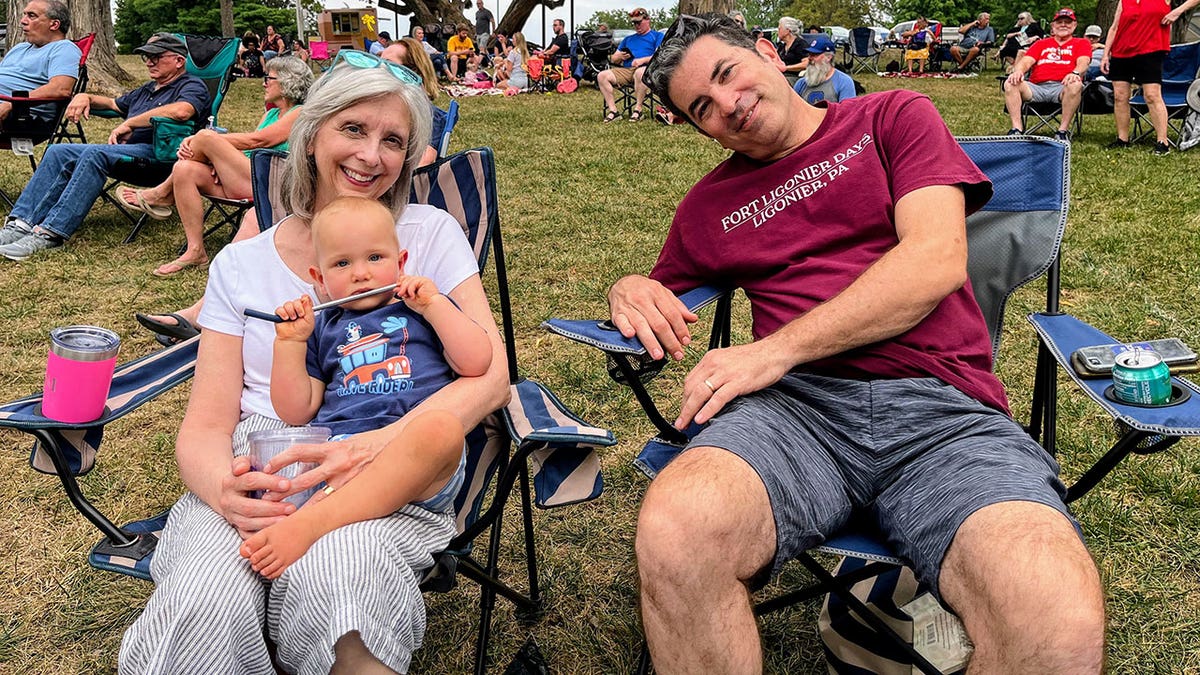
Brent and Cindy Beasley with Francis “Frank” Molenda, their grandson at Sar-Ko-Par Trails Park. Lenexa, Kan. in the fall of 2025. (Bridgette Molenda)
What helped me may not work for everyone. But even if there were a breakthrough in Alzheimer’s treatment tomorrow that worked in all cases, the same structural flaws would remain: people would still be diagnosed too late, overpriced for tests and treatment, and deprived of timely care.
That has to change.
Lurking risk of dementia, exposed by breakthrough test, 25 years before symptoms
Early detection of Alzheimer’s disease should become routine in primary care, using modern tools such as blood-based biomarkers to identify the disease early and validated cognitive assessments to detect meaningful changes. Although some assessments can now be taken digitally outside of specialist care, patients are still referred to neurologists, causing delays of six months to a year that cost critical treatment time. These tests should be accessible and covered, and not limited to academic centers or those who can afford to pay out of pocket.
My family also noticed my cognitive decline. I couldn’t keep up during game night, put the dishes back in the wrong place, lost track of my phone, and repeated questions my wife had already answered.
Once patients become eligible for an FDA-approved therapy, insurance regulations should no longer stand in the way. Persistent administrative hurdles and repeated denials of coverage disrupt care and force families to continually appeal.
CLICK HERE FOR MORE FOX NEWS ADVICE
My wife, Cindy, has spent countless hours fighting insurers to continue the treatment that has kept me alert, engaged and functioning. Sometimes these refusals have forced me away from treatment long enough to lose ground before we could start again.
A current proposal, sponsored by Rep. Young Kim, R-Calif., would expand Medicare coverage to people 65 and younger who have been diagnosed with Alzheimer’s. This legislation, called the BRIDGE Act, would ensure that people in my situation don’t face denials of coverage and access disruptions like I did.
Primary care providers – often overworked and lagging behind – are equipped to identify cognitive decline and can conduct cognitive assessments, provide timely diagnoses, and counsel patients on evidence-based lifestyle interventions such as regular physical activity, sleep optimization, and social engagement. These interventions are important and may help slow cognitive decline in some patients.
Finally, healthcare providers must be recognized as essential partners in healthcare. Cindy has made it possible for me to get treatment, stay organized, and continue living my life. Supporting families is one of the most effective ways to keep people with Alzheimer’s at home, engaged and connected.
CLICK HERE TO DOWNLOAD THE FOX NEWS APP
The science of Alzheimer’s has advanced. The policy has not done that.
If we want today’s breakthroughs to improve the lives of patients like me, their families, and future generations, we must build a system that detects the disease early and provides timely care.
