



Many have responded positively to Secretary of State Marco Rubio’s recent speech at a security conference in Munich. What they seemed to admire most was his willingness to look beyond some of the specific political and economic issues that concern policymakers on both sides of the Atlantic – the war in Ukraine, climate change, immigration, etc. – and to take into account the cultural beliefs that both Europe and America share.
Secretary Rubio lyrically invoked Dante, Cologne Cathedral, Shakespeare, democratic government, the university system – even the Beatles and the Rolling Stones – as representations of that common vision. But then he took another step that especially caught my attention. Very much in the spirit of both Pope Benedict XVI and the church historian Christopher Dawson, he noted that culture is closely linked to cult, that is, to religion. In short, all the things we value are in relation to what we value most. And that is why Secretary Rubio was not afraid to identify the Judeo-Christian faith as the deepest and most enduring source of what is best in Western culture. Only, he concluded, when both Europe and America together rediscover the sources of their common culture, will they find the coherence they both long for.
I was heartened to see this clarion call answered with a sustained standing ovation. I believe that even that rather jaundiced and secularized audience sensed the real spirituality behind Rubio’s rhetoric.
AOC MOCKED FOR ‘ABSOLUTE TRAINWRECK’ WEEKEND ON GLOBAL STAGE: ‘MADE A FOOL OUT OF HERSELF’
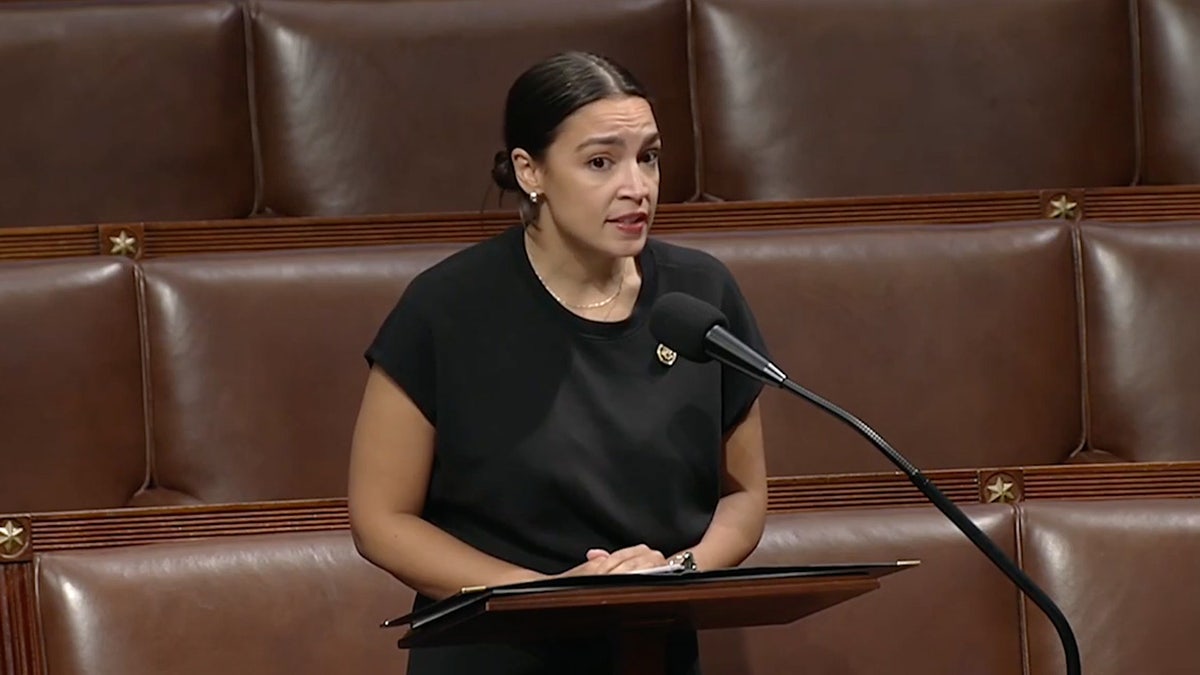
But not everyone was happy with his speech. Rep. Alexandria Ocasio-Cortez, who happened to be in Europe at the same time as Rubio, mocked the secretary of state for engaging with Western culture, which she characterized as “thin.” All cultures, she claimed, are fleeting, impermanent, and unstable; therefore, social analysts should not focus on irregular cultural achievements, but on the ‘material’ elements of a society that manifest themselves in the class struggle.
I would first like to say that it is simply breathtaking to claim that the culture that produced the university system, affirmed the rights and privileges of the individual and gave rise to the democratic constitutional state is ‘thin’. But secondly, I would like to draw attention to the disturbingly Marxist quality of AOC’s formulation. All serious students of political economy, Karl Marx believed, should focus their attention on the class conflict between those who have power and those who do not. He also believed that the various expressions of culture – art, literature, science, entertainment, and especially religion – are merely epiphenomenal superstructure features, the whole purpose of which is to protect the economic substructure. The responsible intellectual, then, should at best acknowledge culture, but by no means become preoccupied with it—precisely the recommendation AOC made in its light-hearted rejection of the West’s ideological foundations.
Something that increasingly concerns me is the pervasive presence of explicit Marxism in the rhetoric and practice of certain left-wing leaders in America. Recently we heard New York Mayor Zohran Mamdani extol the “warmth of collectivism” and one of his top aides insist that the people of our greatest city must become accustomed to the idea that government can and should confiscate private property and seize the means of production.
CLICK HERE TO DOWNLOAD THE FOX NEWS APP
Again, Marxism is not implicit or subtle; it is directly out in the open, unapologetically on display. And this should alarm every American. I would strongly encourage followers of Mamdani and AOC to speak to those who have fled the Marxist tyrannies of Russia and Eastern Europe, or to those working under communist oppression in North Korea, Cuba, Venezuela or China today. I sincerely doubt that any of them would gratefully acknowledge the “warmth of collectivism.”
CLICK HERE TO DOWNLOAD THE FOX NEWS APP
I speak out against this radicalism not only as a concerned American, but also as a bishop of the Catholic Church. Marx said that the first criticism is the criticism of religion. He meant that before we even arrive at an assessment of a capitalist political economy, and certainly before we engage in revolutionary praxis, we must throw off religion, which, as he famously put it, functions as “opium for the masses.” We must shake off our addiction to the drug of supernatural belief, which has dulled our sensitivity to our own suffering and provided cover for the oppressive class. It is important to note that the political adepts of Marxism closely followed their master in this regard. Consider the strategies of Lenin, Stalin, Mao Tse-Tung, Fidel Castro and Pol Pot, to name just a few of the most infamous examples. Their opening move was invariably to attack the churches.
Some may find the Marxism promoted by certain radical politicians today trendy and refreshing, something to be discussed at the cocktail parties of the Upper East Side. Given the historical record, I find it chilling.
CLICK HERE TO FROM BISHOP BARRON
